
A double-wall corrugated box is easier to source when the buyer defines the use case, proof required, sample decision, and quote inputs before supplier outreach.
Procurement should compare suppliers by the evidence behind the quote, not by a single unit price or a generic capability list.
Follow the checks below to turn the request into a controlled sample approval and a comparable supplier response.
Direct answer: The buyer’s real check is whether the specification, supplier evidence, sample result, quote assumptions, and named approval owner all describe the same order.
Copy this approval record into the RFQ file. Keep every checked item on the same revision before releasing the order.
- ☐ Final specification and intended use
- ☐ Supplier feasibility and documented exceptions
- ☐ Sample or inspection evidence
- ☐ Commercial assumptions, owner, decision, and date
Move the order forward only when each gate leaves written evidence for the next. Return an unresolved specification, sample, or quote exception to its owner before bulk production.
For brand owners and importers, keep the order quote-ready: specs to send, proof to request, sample checks to approve, and reorder notes to retain. The supplier review should connect those requirements to corrugated display stands, so the quote, specification, sample proof, and QC record describe the same production target.
What buyers should confirm before choosing double wall corrugated boxes
Compare supplier quotes against one RFQ revision. Each row should identify the requirement, approval evidence, and buyer action before production.
| Specification | Quality control | Verification method | Risk to avoid | Buyer action |
|---|---|---|---|---|
| Sample approval | physical sample made from the intended production material signed off against final dieline and spec sheet. | Compare physical sample to approved dimensions, board grade, flute type, and print registration. | Bulk production deviates from approved sample, causing fit or print failures. | Approve sample in writing only after all checks pass; record tolerance deviations. |
| MOQ and order quantity | Minimum order quantity per SKU confirmed in RFQ; line-item quote for exact quantity. | Request written quote showing unit cost at your target volume; verify MOQ 200 pcs per design. | Ordering below MOQ triggers hidden setup fees or per-unit cost overruns. | Request line-item quote for exact quantity; confirm MOQ per SKU in RFQ. |
| Material / substrate | Board grade (e.g., BC or EB flute), edge crush test (ECT) rating, and basis weight documented. | Request material certificate or test report for thickness, burst strength, and basis weight. | Substrate substitution reduces stacking strength or print quality. | Confirm material grade in RFQ; ask for sample swatch before production. |
| Finish or color control | Print color matches approved Pantone reference; coating type (e.g., aqueous, UV) confirmed. | Compare print proof to production sample under standard lighting; check coating adhesion. | Color shift or coating failure leads to brand inconsistency or returns. | Obtain print proof before bulk; approve only after color match sign-off. |
Use the comparison table as the decision scope. Read the rows as one approval sequence. Start with sample approval because bulk production deviates from approved sample, causing fit or print failures. Verify it by asking the supplier to compare physical sample to approved dimensions, board grade, flute type, and print registration. Then resolve MOQ and order quantity; ordering below MOQ triggers hidden setup fees or per-unit cost overruns., so request line-item quote for exact quantity; confirm MOQ per sku in rfq. Finish with material / substrate, confirm that the supplier can request material certificate or test report for thickness, burst strength, and basis weight., and confirm material grade in rfq; ask for sample swatch before production.
Keep the supplier response, marked sample, and approval owner under the same revision number. If any proof conflicts with the approved record, hold the quote, sample, or production release until the supplier explains the deviation in writing. Before closing the checkpoint, reconcile the latest drawing, sample, quotation, and approval comments, identify which record controls if they disagree, and document the resolution. Carry the signed table into the purchase order and production handoff so the same checks support quote comparison, sample approval, shipment release, and later reorders.
Supplier proof to verify
Collect a material certificate from the supplier that confirms the board grade, flute type, and edge crush test (ECT) rating. The supplier should also provide a physical sample made from the intended production material that matches the final dieline and print proof. Keep these documents tied to the same revision record to lock the specification before bulk production.
Use cases that fit
These boxes are suited for heavy or fragile products that require extra stacking strength during shipping, such as industrial parts, e-commerce electronics, or multi-pack retail items. The BC or EB flute combination provides puncture resistance and cushioning. Confirm the box internal dimensions and product weight to ensure the board grade matches the shipping route and stacking load.
RFQ and sample checks
In the RFQ, specify the exact internal dimensions, board grade, flute type, and printing method (flexo or digital). Request a cost breakdown based on your target quantity and confirm the MOQ of 200 pcs per design. Before approving the sample, perform a drop test with your actual product inside to verify protection, and only approve in writing before bulk production.
Which board structure fits the order
| Option | Best fit | Trade-off | Risk to avoid | Verification | Follow-up |
|---|---|---|---|---|---|
| Current specification | Matches the approved dieline, board grade, flute type, and ECT rating from the last order | No design change cost; may miss cost reduction from alternative board or flute | Supplier may substitute material if original spec is not locked in RFQ | Compare physical sample against signed-off spec sheet and record tolerance deviations | Document the current spec revision in the RFQ and request a material certificate |
| Alternative specification | Different board grade or flute type (e.g., EB instead of BC) for lighter product weight | Potential per-unit savings but may reduce stacking strength | Box failure during transit if alternative is not tested with actual product | The buyer should request a pre-production sample and perform a drop test with your product inside | Approve the alternative spec only after written drop test results and sample sign-off |
| Custom option | Non-standard internal dimensions, print method, or self-erecting design for automated packing | Higher tooling or plate charges; longer lead time for first article | Custom tooling cost is sunk if order quantity falls below MOQ | Confirm MOQ per SKU in RFQ and request a line-item quote for exact quantity | Shortlist only suppliers who provide a written cost breakdown for custom tooling and sample |
| Safer fallback | Standard double wall box with BC flute and 200 pcs MOQ for low-risk reorder | No performance or cost optimization; may over-pack light products | Over-specification increases unit cost and shipping weight | Check that internal dimensions match product fit and ECT rating meets shipping route load | Confirm standard lead time of 15-30 working days and request a sample before bulk order |
Use the matrix to choose the double-wall construction for the actual load and distribution route. Keep the current board only when the flute combination and ECT record match the approved structure; test an alternative with the packed product and document edge crush, puncture, and fit results; and verify a custom dieline by measuring internal dimensions, flap alignment, and compression points. Record the evidence that ruled out each rejected option before production handoff.
At the specification checkpoint, keep the supplier response, marked sample, approved specification, quotation, and approval owner under the same revision number. If the evidence conflicts with the approved record, hold the quote, sample, or production release until the deviation is explained in writing. Carry the signed decision record into the purchase order, production handoff, shipment release, and later reorder review so every team works from the same baseline.
Decision criteria to confirm
Compare each double wall corrugated box option against the approved spec revision. Verify that the board grade, flute type, and ECT rating match the product weight and shipping route. Request a physical sample made from the intended production material and perform a drop test before approving any alternative or custom option.
RFQ details to send
In the RFQ, specify internal dimensions, board grade, flute combination, print coverage, and the packed-product load case. Ask for the material certificate and ECT record tied to that construction, then cross-check the certificate reference against the marked structural drawing before accepting the proposed board.
Production handoff details
Use the production handoff details to check whether the approved artwork, structure, finish, and packing record match what the supplier will repeat in production.
For the structure-fit decision, see custom packaging solutions.
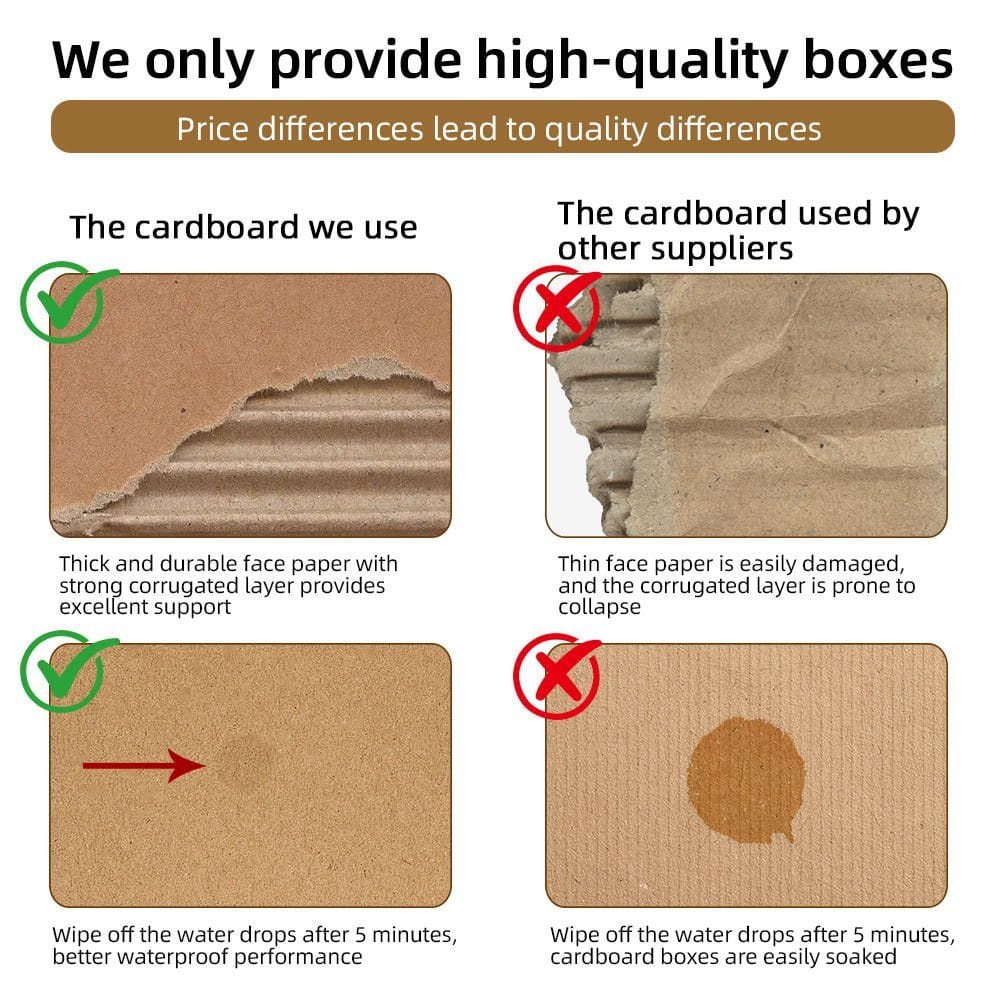
Which transit-protection checks buyers should request
Treat each protection check below as an RFQ inputs. Match each buyer input to written supplier confirmation, approval evidence, and the risk that would hold the quote.
- Board grade, flute type (BC/EB), ECT rating, internal dimensions: Locks the structural strength and fit for heavy or fragile products, preventing box failure during transit. Specify BC flute for stacking strength; confirm the edge-crush rating the load requires. Supplier may substitute a weaker board, causing collapse or product damage in shipping. Request a material certificate and physical sample; compare against signed spec sheet before RFQ release.
- MOQ per SKU and exact order quantity: Ensures the supplier can produce at your volume without hidden setup fees or per-unit cost overruns. Confirm MOQ of 200 pcs per design; ask for line-item quote at your target quantity. Ordering below MOQ may trigger tooling charges or force a price increase, eroding budget. Request written MOQ confirmation per SKU in the RFQ; shortlist only suppliers who provide a cost breakdown.
- Standard production lead time after spec and sample approval: Aligns delivery schedule with your inventory or launch timeline, avoiding stockouts or delays. Confirm 15-30 working days after all specs, artwork, and sample are approved. Unconfirmed lead time can cause missed shipment windows and emergency air freight costs. Request written lead time in the quote; include a penalty clause for late delivery in the PO.
- Cost drivers: board grade, flute type, print method, quantity: Reveals where the price comes from, enabling cost comparison and value engineering before commitment. Ask for a breakdown: material cost, plate charges, tooling, and per-unit price at target volume. Hidden costs like plate charges or setup fees may inflate the final invoice beyond the quoted price. Request a line-item cost breakdown in the RFQ; compare across shortlisted suppliers for transparency.
Supplier evidence to request
Use this checkpoint to confirm sample ownership, QC evidence, change-control responsibility, and the supplier contact who signs the record.
Sample approval evidence
Before approving the sample, perform a drop test with your actual product inside the double wall corrugated box to verify protection. Compare the physical sample against the approved dimensions, board grade, flute type, and print registration. Record any tolerance deviations in writing and only approve the sample after all checks pass, ensuring the production run matches the approved baseline.
Reorder control records
Add reorder control records to the RFQ with the artwork file, finish target, board choice, and packing notes so the sample is judged against one buyer-approved record.
For the protection-check step, see custom paper packaging.
Match board structure to product, logistics, and handling conditions
At this checkpoint, the product’s dimensions, weight, and distribution channel must be documented before specifying the double wall corrugated box design. This ensures the structure aligns with actual logistics and handling conditions.
Product and channel inputs that shape the box
The box structure must match the product’s fragility, stacking load, and shipping mode. For example, heavy items require higher burst strength, while e-commerce channels need tight fit to prevent movement. The Zhypacking editorial team recommends using the packaging dieline and custom packaging specs service to validate these inputs against standard flute combinations. A common spec is a 200#/ECT-48 double wall board for medium-weight goods.
Handling risks to test before ordering
Factory execution risks include fiber tear or delamination under humidity. Use ISO 2859-1 sampling inspection to verify edge crush and puncture resistance. For RFQ handoff, include a sample approval stage to confirm the box withstands drop and vibration tests. Reference Corrugated box design – Wikipedia for standard testing methods.
How to move these checks into an RFQ
At this checkpoint, the product’s dimensions, weight, and distribution channel must be documented before specifying the box structure. Confirm the exact internal dimensions with the buyer and verify that the combined board weight meets the required edge crush test (ECT) value. Ask the supplier: ‘What is the ECT rating for the proposed double wall construction?’ and request a written confirmation of the flute combination (e.g., BC or EB).
Specification details to confirm
Before ordering, verify the box style (regular slotted container, half-slotted container, etc.), the board grade, and the print specification. Use the buyer’s RFQ to cross-check the internal length, width, and depth. Do not accept a dimension that deviates more than the approved tolerance from the requirement without a signed deviation note. Confirm the flute direction relative to the box opening to avoid stacking failure.
Sample approval record
After receiving the pre-production sample, measure the actual dimensions and record the ECT value from the supplier’s test report. Compare the sample against the approved artwork and structural drawing. If the sample passes, sign and date the approval record. If it fails, document the non-conformance and request a revised sample. Use ISO 2859-1 sampling inspection for the production lot.
Production handoff notes
When handing off to production, include the approved sample, the signed specification sheet, and the inspection plan. Note any special handling instructions (e.g., ‘do not stack more than 5 pallets high’). Ask the factory to confirm that the corrugator setup matches the approved flute combination and that the printing plates are aligned before the run is released. A final pre-shipment inspection should verify the quantity, dimensions, and print quality against the RFQ.
Source check: ISO 2859-1 sampling inspection standard. These references ground the checks; record the project-specific acceptance rule, evidence owner, and approval step in the RFQ or quality file.
In conclusion
The final approval for double wall corrugated boxes requires you to compare the supplier’s sample against the approved specification, verify the board grade, flute type, and ECT rating, and document every cost driver and MOQ in the signed RFQ. Shortlist only those suppliers whose evidence—sample measurements, material certificate, and factory capability—matches the agreed revision before production release.
To approve a sample, visit corrugated boxes and confirm the final specification, quote assumptions, sample approval, QC evidence, approval risk, and supplier follow-up before bulk order.
Double-wall box FAQ
What should buyers confirm before ordering double wall corrugated boxes?
Yes, when the product’s internal dimensions, weight, and distribution channel are documented first. Confirm the exact internal dimensions, board grade, flute type (e.g., BC or EB), and printing method in the RFQ. Request a material certificate that confirms the edge crush test (ECT) rating and basis weight, and ask for a physical sample swatch made from the intended production material before bulk production. Confirm production lead time after specifications and sample approval are fixed. Separate material, setup, packing, freight, and reorder cost drivers in the RFQ. Ask the supplier to confirm factory capability and who owns follow-up.
How should buyers compare MOQ, lead time, and quote terms?
Compare MOQ, lead time, and quote terms by requesting a line-item quote for your exact quantity and confirming the MOQ per SKU in the RFQ. The standard production lead time is 15-30 working days after specifications, artwork, and sample requirements are confirmed. Ask the supplier to provide a written cost breakdown that includes any custom tooling fees, and shortlist only suppliers who confirm these terms in writing.
What sample, quality, or supplier checks reduce risk?
Before approving the sample, perform a drop test with your actual product inside the double wall corrugated box to verify protection. Compare the physical sample against the approved dimensions, board grade, flute type, and print registration, and record any tolerance deviations in writing. Use ISO 2859-1 sampling inspection to verify edge crush and puncture resistance, and approve the sample only after all checks pass to ensure the production run matches the approved baseline. Confirm MOQ and order quantity by color, width, artwork, and packing route. Confirm production lead time after specifications and sample approval are fixed. Separate material, setup, packing, freight, and reorder cost drivers in the RFQ. Ask the supplier to confirm factory capability and who owns follow-up.
For the FAQ checks, see paper packaging quality control.
RFQ handoff: Share product size, material, artwork, quantity, sample need, packing method, and deadline so the RFQ can be reviewed before sample approval. Send Specs for Review.
Ask a Packaging Question