
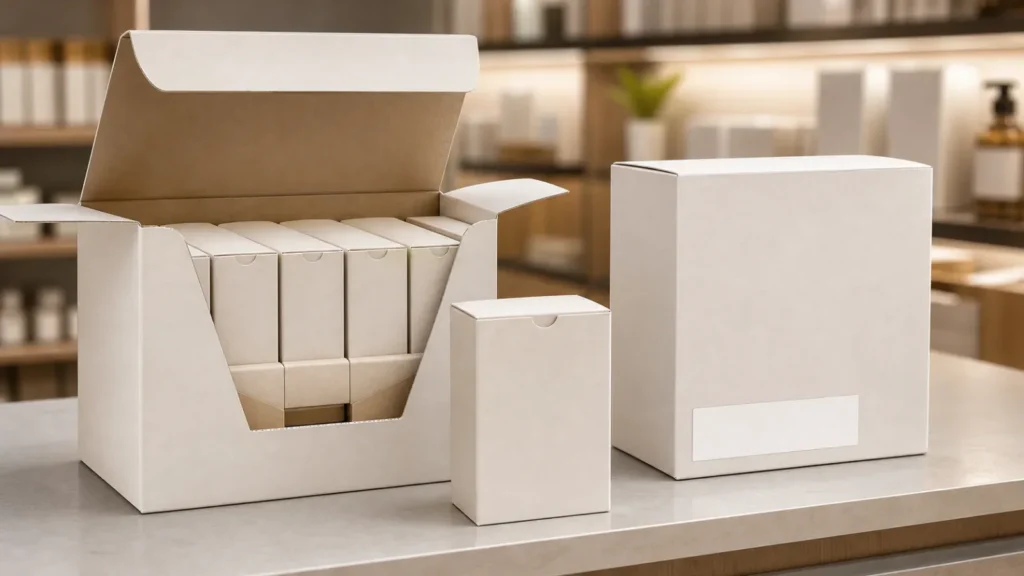
The sourcing record for retail multipack packaging is incomplete until it translates the use case into packaging specs, risks, and RFQ questions.
Multipack specs come from the shelf and the pack-out at the same time. Translating a use case into both is what makes RFQs comparable.
Direct answer: For retail multipack packaging, buyers should translate an industry use case into packaging specs, risks, and RFQ questions.
Shortlist Signals That Separate Real Proof From Brochure Claims
| Application | Fit condition | Risk to avoid | Specification or proof | Follow-up |
|---|---|---|---|---|
| Retail shelf multipacks for consumer goods | Rigid or folding cartons with die-cut handles and reinforced dividers | Handles tear or dividers collapse during transit, causing in-store damage | Sample drop test report and handle pull-test data | Request handle pull-test video and drop-test summary before bulk order |
| E-commerce subscription boxes with multiple SKUs | Corrugated mailer boxes with custom inserts and tamper-evident closure | Inserts shift or items collide, leading to returns and negative reviews | Insert fit check with actual product dimensions and closure strength test | Approve a pre-production sample with your exact product set |
| Retail display-ready multipacks for promotional bundles | Folding cartons with perforated tear-away panels and retail-ready graphics | Perforations tear unevenly, making shelf setup slow and unappealing | Perforation tear test and print color proof on final substrate | Verify perforation quality on a mock-up and sign off on color proof |
| Industrial or bulk multipacks for warehouse distribution | Heavy-duty corrugated boxes with internal bracing and pallet-friendly dimensions | Stacking strength insufficient, causing crushing during palletization | Edge crush test (ECT) and stacking load test data | Request ECT and stacking test results for your box grade |
For retail shelf multipacks for consumer goods, a poor decision can mean handles tear or dividers collapse during transit, causing in-store damage. Request written proof and compare it with the approved sample or specification.
For retail multipack packaging, preserve the retail shelf multipacks for consumer goods decision under one revision number: keep the supplier response, marked sample, approved specification, quotation, and approval owner together. If the evidence conflicts with the approved record, hold the quote, sample, or production release until the deviation is explained in writing. Once the buyer and designated technical authority have accepted the evidence, carry the signed Shortlist Signals That Separate Real Proof From Brochure Claims record into the purchase order, production handoff, shipment release, and later reorder review so every team works from the same baseline.
Supplier proof to verify
Ask for test reports that match your product's real handling. A drop test, handle pull test, or edge crush test proves the box survives transit and shelf life. If the supplier can't show data, request a video of the test or a sample you can test yourself. Don't rely on a brochure claim.
Use cases that fit
Match the box construction to your product's weight, fragility, and how it will be displayed. Rigid boxes suit premium items, while corrugated handles heavy loads. Inserts protect multiple SKUs. Consider whether the multipack will sit on a shelf, hang on a peg, or ship direct. Each use case demands a different design.
RFQ and sample checks
When you request a quote, include your exact product dimensions, weight, and quantity per pack. Ask for a pre-production sample before bulk order. Check the sample for fit, closure, and print quality. Confirm the MOQ and lead time in writing. A sample that matches your spec is your best proof.
Which retail multipack packaging use case fits each packaging format
- Retail multipack for shelf display: Confirm unit count, divider layout, and barcode placement Prevents shelf restocking errors and checkout scanning failures Verify against the packaging dieline and custom packaging specs
- Retail multipack for e-commerce: Check corrugated board grade and inner cushioning Avoids transit damage and costly return claims Request a drop-test report or sample for verification
- Retail multipack for club stores: Confirm pallet pattern and case pack quantity Ensures efficient warehouse handling and shelf restocking Document pallet dimensions and per-layer count in the quote request
- Retail multipack for promotional kits: Verify print finish, foil stamping, and window patch Protects brand image and prevents visual defects at point of sale Approve a pre-production sample before bulk release
Decision criteria to confirm
Before you choose a format, compare the physical sample against the retail shelf dimensions and the case pack configuration. A mismatch here leads to restocking delays and chargebacks. Confirm the unit count, divider layout, and barcode placement against the packaging dieline and custom packaging specs specs. This check turns a visual preference into a verified buying decision.
Production handoff details
At the production handoff, verify that the approved sample matches the bulk run. Check the first article against the dieline and the color proof. Confirm that the die-cut, folding, and gluing meet the tolerance you approved. This step catches errors before the full run, saving you from costly rework and delays. Document the approval in writing.
quote request checkpoint
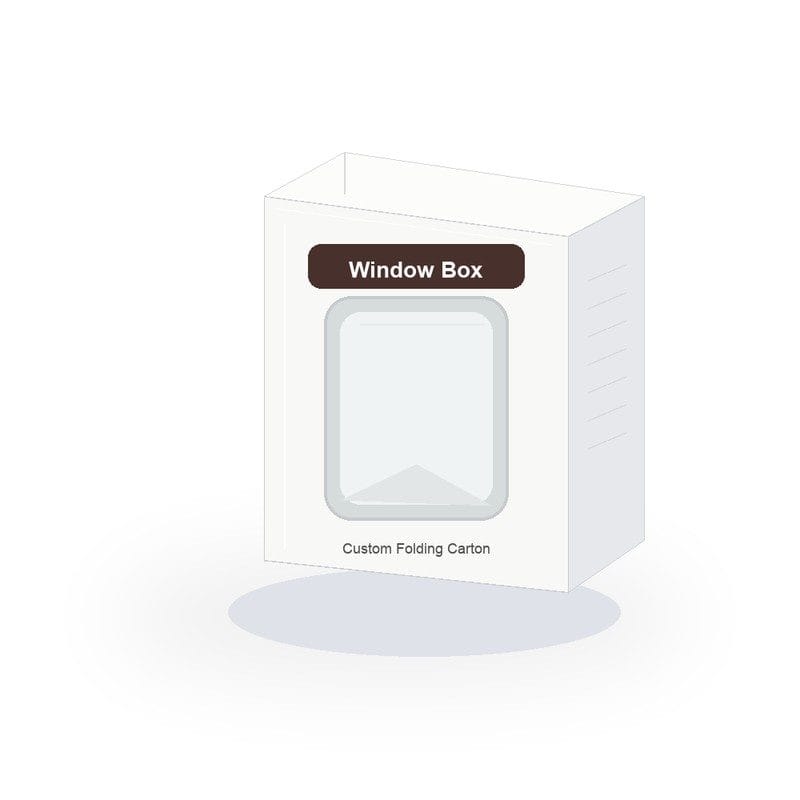
Visible product styles, inserts, window cartons, foil stamping, and dieline samples can be shown for buyer option evaluation.
How to translate retail multipack packaging use cases into specs
For retail multipack packaging, treat How to translate retail multipack packaging use cases into specs as a release rule: approve only when the supplier evidence matches the written requirement.
- Supplier can produce retail multipack packaging to specified dimensions and material grade. Factory test report or material data sheet showing GSM, flute type, and burst strength for the proposed board. Supplier's quality or production manager. Undersized or weak board causes pack failure on retail shelf or during transit. Verify the test report against your spec sheet before sample approval.
- Sample matches approved artwork, dieline, and structural integrity for multipack use. Signed sample approval form with photos of all panels, glue seams, and closure test. Supplier's sample room lead or QC inspector. Unapproved sample leads to production of non-conforming packs and rush rework charges. Hold the sample against your spec checklist and issue written sign-off.
- Supplier has capacity to run the multipack order within standard lead time. Production schedule showing your order slot and machine availability for the required run size. Supplier's production planner or account manager. Overbooked line causes late delivery and missed retail launch window. Request a written production timeline and confirm it fits your launch date.
- Supplier can maintain consistent print registration and color across the multipack run. Color density report or first-article inspection sheet from the press run. Supplier's print QC team. Color drift or misregistration makes packs look off-brand and triggers retail rejection. Inspect the first-article report and compare to your approved color standard.
Supplier evidence to request
Before you commit to a supplier for retail multipack packaging, ask for documented evidence of their capability to meet your spec. Request a material data sheet and a production schedule that shows your order slot. This step prevents mismatched board strength or capacity conflicts that could delay your retail launch.
Sample approval evidence
When the supplier sends a sample for your retail multipack, treat it as a binding proof point. Compare the sample against your approved artwork, dieline, and structural requirements. Sign off only after verifying all panels, glue seams, and closure fit. An unapproved sample risks production of non-conforming packs and costly rework.
Reorder control records
For repeat orders of your retail multipack packaging, verify that the supplier still holds the same spec and capacity. Request an updated production schedule and a color density report from the new press run. This check ensures consistent quality and on-time delivery for each replenishment cycle.
Use ecommerce packaging solutions to align the related specifications and quote request inputs.
Separate confirmed retail multipack packaging checklist inputs from supplier assumptions
At this process checkpoint, the buyer must have a frozen set of verified inputs before the supplier proceeds to production. The following ordered list distinguishes what the buyer must confirm from what the supplier must disclose.
Inputs the buyer must freeze for retail multipack packaging checklist
- Retail multipack packaging dimensions (length, width, depth) verified against product stack-up and shelf planogram.
- Material grade and thickness (e.g., corrugated flute type, film gauge) confirmed via physical sample or certified spec sheet.
- Printing method (flexo, digital, offset) and color standard (e.g., Pantone reference) locked in the quote request.
- Pack closure type (glue, tape, shrink, lock) and sealing temperature range if applicable.
- Unit count per multipack and required barcode placement (UPC, QR code location).
Assumptions the supplier must disclose for retail multipack packaging checklist
- Supplier’s default material sourcing region and any substitution policy if primary stock is unavailable.
- Supplier’s assumed production waste percentage and how it affects quoted MOQ.
- Supplier’s assumed stacking strength (e.g., compression test value) and pallet pattern for shipping.
- Supplier’s assumed inspection level per ISO 2859-1 and acceptable quality limit (AQL) for critical, major, minor defects.
- Supplier’s assumed lead time buffer for raw material procurement and tooling setup.
Use the table below to cross-check buyer inputs against supplier assumptions before quote request handoff.
- Material: Grade and thickness per spec; Default source and substitution rule
- Print: Method and color standard; Color tolerance and proofing process
- Strength: Required compression value; Assumed stacking and pallet pattern
- Inspection: ISO 2859-1 level and AQL; Sampling plan and defect classification
After freezing inputs and collecting supplier assumptions, proceed to sample handoff with a written quote request that references both sets. For packaging accessories, see packaging accessories.
Reconcile retail multipack packaging checklist sample evidence with the commercial offer
Begin with the physical sample record or measurement report that makes the decision verifiable. For example, a buyer receives a sample of a retail multipack with a divider layout and unit count. The sample record should list the exact material grade, structure dimensions, and divider configuration. Compare this record line by line against the supplier’s commercial quote. Any discrepancy—such as a different material thickness or unit count—must be flagged before proceeding.
Match the retail multipack packaging checklist sample record to the quote
Create a side-by-side comparison of the sample record and the quote. Use a table to highlight key specifications:
- Material grade: Corrugated board, 200 gsm; Corrugated board, 200 gsm; Yes
- Unit count per pack: as specified; as specified; Yes
- Divider layout: 3×4 grid; 3×4 grid; Yes
- Outer dimensions (mm): 300 x 200 x 150; 300 x 200 x 150; Yes
If any row does not match, request a revised quote or a corrected sample. This step ensures the commercial offer is based on verified physical evidence.
Resolve retail multipack packaging checklist exclusions before purchase approval
Review the quote for exclusions—such as artwork setup, die-cutting, or testing fees. Ask the supplier: “Which items from the sample record are not included in the quoted price?” Document the answer in writing. For example, if the quote excludes a specific divider material, confirm the cost impact and add it to the purchase order. Only approve the purchase when all exclusions are resolved and the total cost matches the verified sample record.
For the sample-to-quote reconciliation, record the approval risk if the evidence does not match the approved requirement before the buyer signs the approval record.
Source check: ISO 2859-1 sampling inspection standard.
In conclusion
The final approval of your retail multipack packaging comes down to verifying that every specification, cost assumption, and quality risk has been documented and matched against supplier proof. Check the sample against your approved dimensions, material, unit count, and divider layout, then compare the quote for hidden exclusions like artwork setup or color proofing fees. Confirm that the 15–30 working day lead time, counted after specifications, artwork, and sample requirements are confirmed, and the 200 pcs project-level MOQ fit your plan. Once the spec is validated and the sample is approved, you can confidently request a quote and move to production handoff.
To request a quote, visit custom retail packaging and confirm the final specification, quote assumptions, sample approval, QC evidence, approval risk, and supplier follow-up before bulk order.
Retail multipack packaging FAQ
What should buyers confirm before ordering Retail Multipack Packaging Checklist?
Buyers should confirm the exact material, structure, unit count, divider layout, and artwork dimensions before ordering. Check that the MOQ matches your project volume (default 200 pcs) and that lead time fits your schedule (15–30 working days after specifications, artwork, and sample requirements are confirmed). Verify the supplier’s quality certifications on file and request a physical sample to validate print registration, fit, and strength. Document all specifications in the quote request and approve a sample before production. Separate material, setup, packing, freight, and reorder cost drivers in the quote request.
How should buyers compare MOQ, lead time, and quote terms?
Shortlist quotes that align with your minimum order requirement (default 200 pcs) and standard lead time of 15–30 working days after specifications, artwork, and sample requirements are confirmed. Compare unit costs, but also verify that the quote includes all setup fees, artwork proofs, and shipping terms. Request a sample to confirm that the quoted material and print quality match the specification. Document the comparison in a matrix and approve the supplier that meets all criteria.
What sample, quality, or supplier checks reduce risk?
Check the sample against your approved specification for dimensions, color, material, and structural integrity. Use a standard sampling plan (e.g., ISO 2859-1) to inspect the production run. Verify supplier certifications and audit their factory for process consistency. Request a corrected sample if any attribute fails, and approve only after full compliance. Confirm minimum order and order quantity by color, width, artwork, and packing route. Confirm production lead time after specifications and sample approval are fixed. Separate material, setup, packing, freight, and reorder cost drivers in the quote request.
quote request handoff: Send Specs for Review.
If this stage leads into that check, compare it against our paper Tags vs Stickers Retail Packaging Comparison: Buyer Comparison. For the next step on this route, see our custom Magnetic Boxes: Buyer Use-Case Fit Checklist.

Ask a Packaging Question