

Direct answer: Match board construction, flute profile, and ECT rating to the product weight, stack height, and shipping path, then approve a pre-production sample before bulk production.
What corrugated box strength depends on
- Check product weight and shipping path against board grade and flute profile. Provide product weight, dimensions, fragility level, and stacking height during shipping. Supplier recommends single-wall or double-wall board, flute type (B, C, or BC), and edge crush test (ECT) rating. Under-specifying board grade leads to box collapse in transit; over-specifying increases cost without benefit. Compare supplier recommendation against your shipping environment (humidity, long transit) and approve structure before quoting.
- Verify lead time for custom corrugated boxes after specifications and sample approval. Confirm that specifications, artwork, and sample requirements are finalized. Supplier confirms standard production lead time of 15–30 working days after all approvals. Missing artwork or sample sign-off delays production start; unclear lead time risks missed shipment dates. Document the approval date and request a written production schedule from the supplier.
- Inspect pre-production sample for print registration, glue adhesion, and dimensional accuracy. Request a pre-production sample after agreeing on board grade, flute, and dimensions. Supplier provides sample with measured dimensions, print alignment, and glue seam check. Sample defects in print or adhesion indicate bulk run quality issues; approving a flawed sample locks in errors. Measure sample against your spec sheet and sign off only when all checks pass; retain a signed reference.
- Document buyer follow-up actions for reorder and quality consistency. Record approved board grade, flute, dimensions, and sample reference for future orders. Supplier provides a reorder code or spec sheet referencing the approved sample and production parameters. Without documented specs, reorders may drift in board quality or dimensions, causing packaging failures. Store the approved spec sheet and reorder code in your procurement system; use it for all repeat orders.
Product weight, shipping path, size, and structure
The product's weight, dimensions, fragility level, and stacking height during shipping directly determine the required board grade and flute profile. A heavy or fragile item needs double-wall board with a higher edge crush test rating to prevent collapse. Verify the shipping environment—high humidity or long transit—and compare supplier recommendations against your actual load conditions before approving the structure.
Why branding and protection must be planned together
Custom corrugated boxes serve both protection and branding. Print registration, glue adhesion, and dimensional accuracy must be checked on a pre-production sample before bulk production. A box that looks good but fails in transit damages your brand; one that protects but has poor print quality hurts shelf appeal. Plan both requirements in the same RFQ to avoid costly rework or missed deadlines.
Shipment details buyers should confirm first
| Requirement | Factory control | Evidence to verify | Order risk | RFQ follow-up |
|---|---|---|---|---|
| Sample approval | Pre-production sample must match approved artwork, dimensions, and structure. | Request a physical sample; measure critical dimensions and compare to spec sheet. | Mass production deviates from approved sample without sign-off. | Approve sample in writing before production release. |
| Material / substrate | Board grade, flute type, and basis weight per agreed specification. | Inspect material certificate and measure grammage on sample. | Substituted lower-grade board reduces box strength and stacking performance. | Request material data sheet and confirm grade in RFQ. |
| Finish or color control | Print color must match Pantone reference within buyer-approved color tolerance. | Use spectrophotometer on production sample against approved color standard. | Color drift leads to brand inconsistency and customer rejection. | Submit color standard with RFQ; approve first-article color report. |
| Packing format | Boxes shipped flat, bundled, or palletized per agreed packing instruction. | Inspect pallet stability, stretch wrap, and bundle count at loading. | Improper packing causes damage in transit and delays fulfillment. | Document packing format in PO and confirm with supplier before shipment. |
Read the rows as one approval sequence. Start with sample approval; use the risk and buyer-action columns to decide whether its evidence is sufficient. Verify it with the inspection method and approval evidence recorded in the table.
Keep the supplier response, marked sample, and approval owner under the same revision number. If any proof conflicts with the approved record, hold the quote, sample, or production release until the supplier explains the deviation in writing. Before closing the checkpoint, reconcile the latest drawing, sample, quotation, and approval comments, identify which record controls if they disagree, and document the resolution. Carry the signed table into the purchase order and production handoff so the same checks support quote comparison, sample approval, shipment release, and later reorders.
Product weight, fragility, fulfillment path, and carton packing
Before finalizing the corrugated box spec, document the product's weight, fragility level, and whether it will ship via parcel carrier, pallet LTL, or container. The fulfillment path determines required edge crush test (ECT) and burst strength. For fragile items, specify internal dividers or foam inserts. Also confirm the packaging dieline and custom packaging specs specs to ensure the carton fits the secondary packaging system without rework.
Where damage usually happens
Damage most often occurs during pallet stacking, conveyor transfers, or last-mile handling. Weak corner joints, insufficient flute height, or mismatched box dimensions cause collapse under compression. To mitigate, request a stacking test report from the supplier and verify that the box's ECT rating exceeds the calculated stack load. A pre-production sample with actual product weight is the best validation.
Corrugated structure choices to compare before RFQ
| Criteria | Baseline option | Confirmed option | Buyer meaning | Risk to avoid | Follow-up |
|---|---|---|---|---|---|
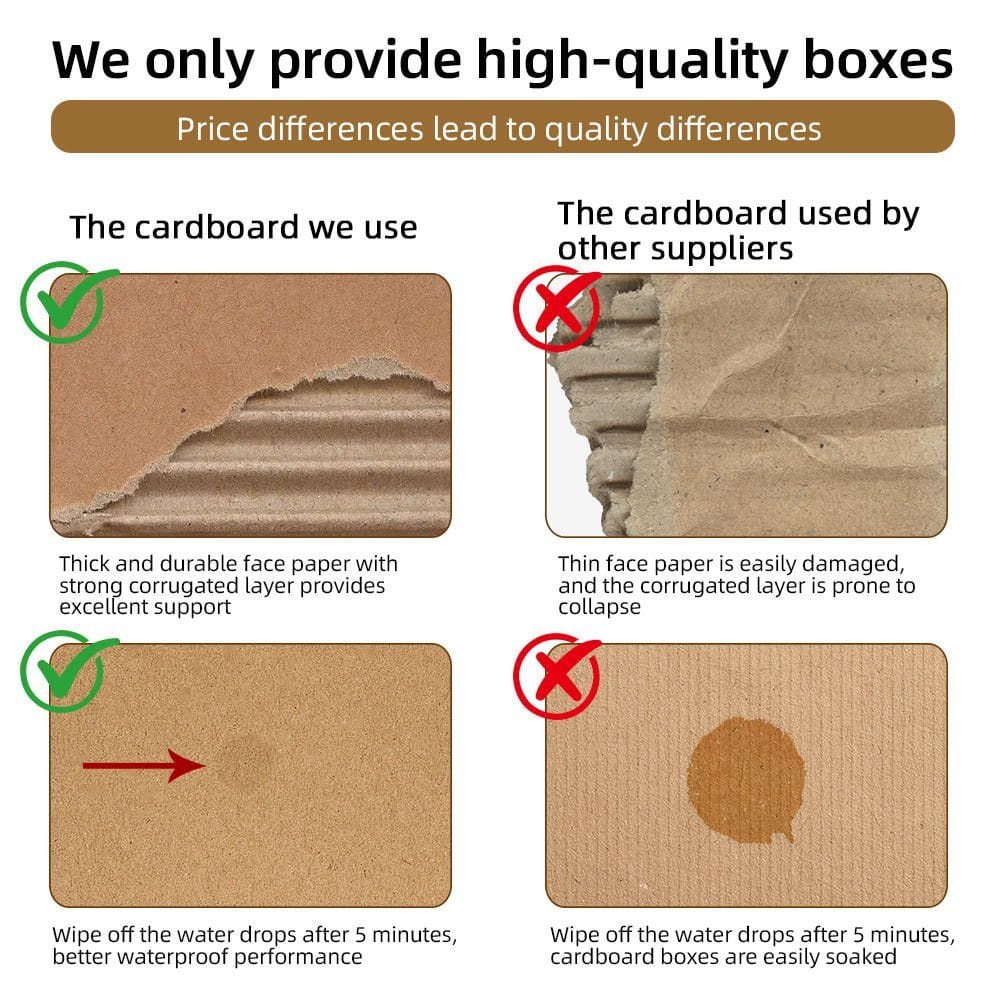
| Board construction | Single-wall corrugated | Double-wall corrugated | Single-wall uses one fluted layer between two liners; double-wall uses two fluted layers for higher stacking strength. | Under-specifying single-wall for heavy loads causes collapse during pallet stacking or transit vibration. | Match board construction to product weight and stack height; request ECT and burst test data. |
| Flute profile | B-flute (medium crush resistance) | C-flute (higher stacking strength) | B-flute offers flat crush resistance for printed surfaces; C-flute provides better vertical compression for stacked boxes. | Choosing the wrong flute profile leads to box deformation under load or poor print registration. | Verify flute profile against your product's weight distribution and stacking plan. |
| Edge crush test (ECT) rating | 32 ECT (single-wall typical) | 44 ECT or higher (double-wall typical) | ECT measures vertical compression strength per inch; higher ratings resist stacking pressure without collapse. | Under-rating ECT causes box failure in humid or high-stack environments, leading to damage claims. | Document required ECT rating on RFQ; request supplier's test certificate for the board grade. |
| Box style and closure | Regular slotted container (RSC) | Half-slotted container with cover (HSC) | RSC has four flaps meeting at center; HSC has a separate cover for easy access and resealing. | Wrong closure style causes inefficient packing line speed or inadequate sealing for heavy contents. | Match box style to your packing process and closure method (tape, glue, strapping). |
For the board construction checkpoint, keep the supplier response, marked sample, approved specification, quotation, and approval owner under the same revision number. If the evidence conflicts with the approved record, hold the quote, sample, or production release until the deviation is explained in writing. Carry the signed decision record into the purchase order, production handoff, shipment release, and later reorder review so every team works from the same baseline.
Board and structure assumptions
When you send an quote request, suppliers assume a default board grade and flute unless you specify otherwise. If your product is heavy or stacks high, double-wall with BC flute is standard. For lightweight e-commerce items, single-wall B flute saves cost. Always state the expected stack height and pallet load so the supplier quotes the correct ECT and wall construction from the start.
Size, closure, insert, and packing effects
Box dimensions and closure type directly affect board usage and packing labor. A standard RSC with tape is fastest for uniform items, but odd shapes may need a custom die-cut box with self-locking bottom. Inserts add cost but prevent movement. Confirm the closure method and insert design during sample stage to avoid rework and higher per-unit costs in bulk production.
Sample and QC checks for shipping box approval
- Document the edge crush test (ECT) value and burst strength from the supplier's material certificate. These two numbers directly determine stacking strength and puncture resistance for your shipping box. Boxes may collapse during transit or warehouse stacking, causing product damage and returns. Request the mill test report for the specific board grade quoted and compare it to your stacking load.
- Confirm the flute profile (B, C, BC, or EB) and board construction (single-wall vs. double-wall) in the quote. Flute choice affects cushioning, flat crush resistance, and overall box rigidity for your product weight. A heavy glassware shipment needs BC double-wall for vertical strength, while lightweight e-commerce can use single-wall B flute. The wrong flute may cause inadequate protection or unnecessary freight cost from over-packaging. Check the supplier's flute sample against your product's fragility and stacking plan before approving the spec.
- Verify the lead time in working days from spec approval to shipment, including sample iteration time. Production lead time directly impacts your inventory replenishment cycle and launch schedule. Standard lead time is 15–30 working days after specifications, artwork, and sample requirements are confirmed; confirm this in the quote. Unplanned delays in bulk production can cause stockouts or missed retail shelf dates. Ask the supplier to state the lead time in writing and include a buffer for sample revisions.
- Check the MOQ per box size and whether it applies per SKU or per total order line. MOQ structure affects your total commitment and whether you can test multiple sizes in one run. Project-level MOQ is 200 pcs unless a product-specific exception is confirmed; confirm if each custom retail packaging size must meet that minimum separately. You may be forced to order excess inventory of a slow-moving size or pay a premium for split runs. Request a written MOQ breakdown by SKU and negotiate a combined order if you have multiple sizes.
- Document the cost driver per box: board grade, flute, print colors, and any finishing like coating or lamination. Each specification change directly alters the unit price; knowing the driver helps you control budget. Switching from single-wall to double-wall may add cost; adding a fourth print color adds setup charges. You may approve a quote that later increases due to undisclosed cost drivers or change orders. Ask the supplier to itemize the quote by material, print, and finishing line items so you can compare options.
What to record before production
Document the approved sample's dimensions, board grade, flute profile, print colors, and closure method. Note the lead time commitment in working days and the minimum order of 200 pcs. Record any special handling instructions for the warehouse. Share this record with your supplier as a signed approval. This file becomes your QC benchmark for every future reorder and protects both parties from specification drift.
Quote checklist for custom corrugated shipping boxes
- Compare board construction to shipment weight and stacking height: Single-wall boxes crush under heavy loads, causing damage and returns Match the box's edge crush test (ECT) rating to the product's weight and pallet stack plan Box collapse during transit leads to product loss and customer claims Document the required ECT minimum on the quote and sample approval form
- Confirm burst strength for rough handling environments: Burst strength prevents side-wall rupture during sorting and loading Request the supplier's burst test report for the proposed board grade Side-wall blowouts cause package failure and shipment delays Approve only after the burst test report matches the quote specification
- Verify flute direction and box joint strength: Vertical flute alignment carries stacking force; weak joints split under pressure Inspect the pre-production sample for flute orientation and manufacturer's joint glue bond Boxes split at the seam, spilling contents in transit Require a joint peel test on the sample before production release
- Check slotting and scoring dimensions against product fit: Oversized slots reduce stacking strength; undersized scores cause corner cracks Measure slot width and score depth on the sample using a caliper Boxes fail to close properly or crack during erecting, slowing packing lines Document acceptable slot and score tolerances on the inspection checklist
- Inspect print registration and coating for handling durability: Misaligned prints or weak coatings cause brand rejection and moisture damage Run a rub test on the printed sample and check coating coverage under light Labels smear, boxes look unprofessional, or moisture weakens the board Hold production until the sample passes rub and coating adhesion checks
Inputs that affect MOQ, cost, and lead time
Board grade, flute type, and printing complexity directly impact minimum order and lead time. Thicker, custom-strength boards often require special sourcing, raising minimums and extending production. A simple single-wall box with stock flutes keeps costs low and turnaround fast. Always confirm these inputs early to avoid surprises.
Supplier questions before ordering
Ask the supplier: Is the proposed board grade a stocked item? What is the lead time for custom flute or liner? Can you provide a pre-production sample for compression testing? Do you have past ECT test data for this combination? These questions help you verify strength and avoid delays.
Strength evidence to request before ordering
- Does the supplier provide an edge crush test (ECT) or Mullen burst test certificate with each board grade offered? ECT and Mullen values directly predict stacking strength and puncture resistance for your shipping environment. Without a test certificate, you cannot verify the board meets your load requirements. Supplier provides a dated test certificate from their corrugator showing ECT value (e.g., 32 ECT) and flute type for each board grade quoted. Boxes may collapse under stacking load during transit or warehouse storage, causing product damage and returns. Request the test certificate for the board grade quoted and compare the ECT value to your stacked weight per box.
- What is the combined weight of your product plus inner packaging, and how many boxes will stack on top during palletizing? The total load on the bottom box determines the minimum edge crush strength needed. Guessing this number leads to over-spec or under-spec board grade. Buyer provides a clear weight per box (product + dunnage) and the maximum pallet stack height in boxes. Under-spec board fails under load; over-spec board increases box cost unnecessarily. Calculate the required ECT using your weight and stack height, then confirm the quoted board grade meets or exceeds that value.
- Does the supplier offer a pre-production sample that matches the exact board grade, flute, and dimensions before bulk production? A sample lets you physically verify board stiffness, flute profile, and print registration before committing to a full run. Skipping this step risks approving a box that fails in the field. Supplier agrees to produce a sample using the same board grade and flute as the quote, and provides a timeline for sample delivery. Bulk boxes may differ in board quality or fit, leading to rejected shipments or damaged goods. Confirm the sample will be made from the same board grade and flute as the quote, and inspect it for crush resistance and dimensional accuracy upon receipt.
What to send for the first quote
For the first quote, send your product weight, dimensions, stacking height, and shipping environment details. Also specify whether you need single-wall or double-wall board and any moisture resistance. This lets the supplier recommend the right ECT value and flute profile, avoiding strength mismatches that cause box failure.
When to request sample review
Request a pre-production sample after agreeing on board grade, flute, and dimensions but before bulk production begins. Use the sample to verify print registration, glue adhesion, and actual compression strength. Approve the sample in writing only after it passes your load test and visual checks to prevent costly bulk defects.
Source check: ISO 2859-1 sampling inspection standard; D5639/D5639M Standard Practice for Selection of Corrugated Fibe…; PEER-REVIEW ARTICLE.
For corrugated box, use custom packaging solutions to align the applicable specification, proof record, supplier responsibility, and quote request handoff before comparing quotes.
In conclusion
The sourcing choice for custom corrugated shipping boxes comes down to how thoroughly you compare the specification, cost, and risk factors before committing to production. By verifying the board grade, flute profile, and edge crush test (ECT) rating against your shipment details, you can shortlist a supplier that meets both structural requirements and budget constraints. Documenting these checks in the quote request and approving a pre-production sample ensures the final boxes match your quality expectations, while confirming the 200 pcs project-level minimum order and the standard lead time of 15–30 working days after specifications, artwork, and sample requirements are confirmed aligns with your project timeline. This systematic approach minimizes the chance of costly failures during transit and storage, giving you confidence in the packaging you order.
To request a quote, visit paper box size options and confirm the final specification, quote assumptions, sample approval, QC evidence, approval risk, and supplier follow-up before bulk order.
Corrugated shipping box strength custom orders FAQ
Which product and shipping details affect corrugated box strength?
The product’s weight, dimensions, fragility level, and stacking height during shipment directly determine the required edge crush test (ECT) and burst strength. Document these details before requesting a quote, as they influence board grade, flute type, and the number of plies needed.
Also verify the shipping environment—whether boxes will face high humidity, long transit times, or multiple handling points. Provide this data to the supplier so they can recommend a corrugated structure that meets your strength needs without over-specifying cost. Confirm minimum order and order quantity by size, artwork, and packing route. Confirm production lead time after specifications and sample approval are fixed. Ask how QC will check the sample, color, finish, packing, and bulk order.
How should buyers compare corrugated structure options before requesting a quote?
Compare board grade (e.g., single-wall vs. double-wall), flute profile (B, C, or BC), and liner weight options side by side. Ask the supplier if each proposed grade is a stocked item, because non-stocked grades can change the minimum order and lead time.
Request a quote that itemizes cost per box for each structure option, and confirm the minimum order and lead time for your chosen specification. This lets you balance strength requirements with budget and delivery schedule before moving to sample production.
What sample checks reveal corrugated shipping box risk?
Perform a drop test with your actual product inside, check for corner crush resistance, and measure the box’s ability to withstand stacking pressure without deformation.
Also inspect print registration and glue adhesion on the sample. If the sample fails any check, document the issue and ask the supplier to adjust the corrugated structure or manufacturing process before approving full production. This step reduces the risk of receiving boxes that collapse during transit. Separate material, setup, packing, freight, and reorder cost drivers in the quote request.
quote request handoff: Send Specs for Review.
For the next step on this route, see our corrugated Shipping Box Strength Checklist for Custom Orders.
Ask a Packaging Question