
Custom printed candle boxes quotes become unreliable when artwork files, print targets, board choice, finishing, and sample approval are handled in separate messages.
For custom printed candle boxes, quote review should connect the design file to physical sample evidence before the buyer approves print or finish details.
Use this guide to decide what to send, what to sample, and what proof to keep before bulk production.
Direct answer: For custom printed candle boxes, the direct buying decision is whether the written specification, supplier proof, sample result, quotation assumptions, and approval owner describe the same order.
Copy this custom printed candle boxes approval record into the RFQ file. Keep every checked item on the same revision before releasing the order.
- ☐ Box material, size, color target, and packing format
- ☐ Artwork revision, print method, placement, and repeat
- ☐ Approved sample, production reference, and exception notes
- ☐ Quantity, schedule, quote assumptions, owner, and approval date
Move the custom printed candle boxes order forward only when each gate leaves written evidence for the next. Return an unresolved specification, sample, or quote exception to its owner before bulk production.
For brand owners and importers, keep custom printed candle boxes quote-ready: specs to send, proof to request, sample checks to approve, and reorder notes to retain.
What buyers should confirm before choosing custom printed candle boxes
| Application | Fit condition | Risk to avoid | Specification or proof | Follow-up |
|---|---|---|---|---|
| Retail candle gift sets | Rigid box with insert and foil stamping | Insert may not secure candle weight, causing damage in transit | Insert dimensions, material thickness, and drop-test report | Request a physical sample and verify insert fit before approving bulk production |
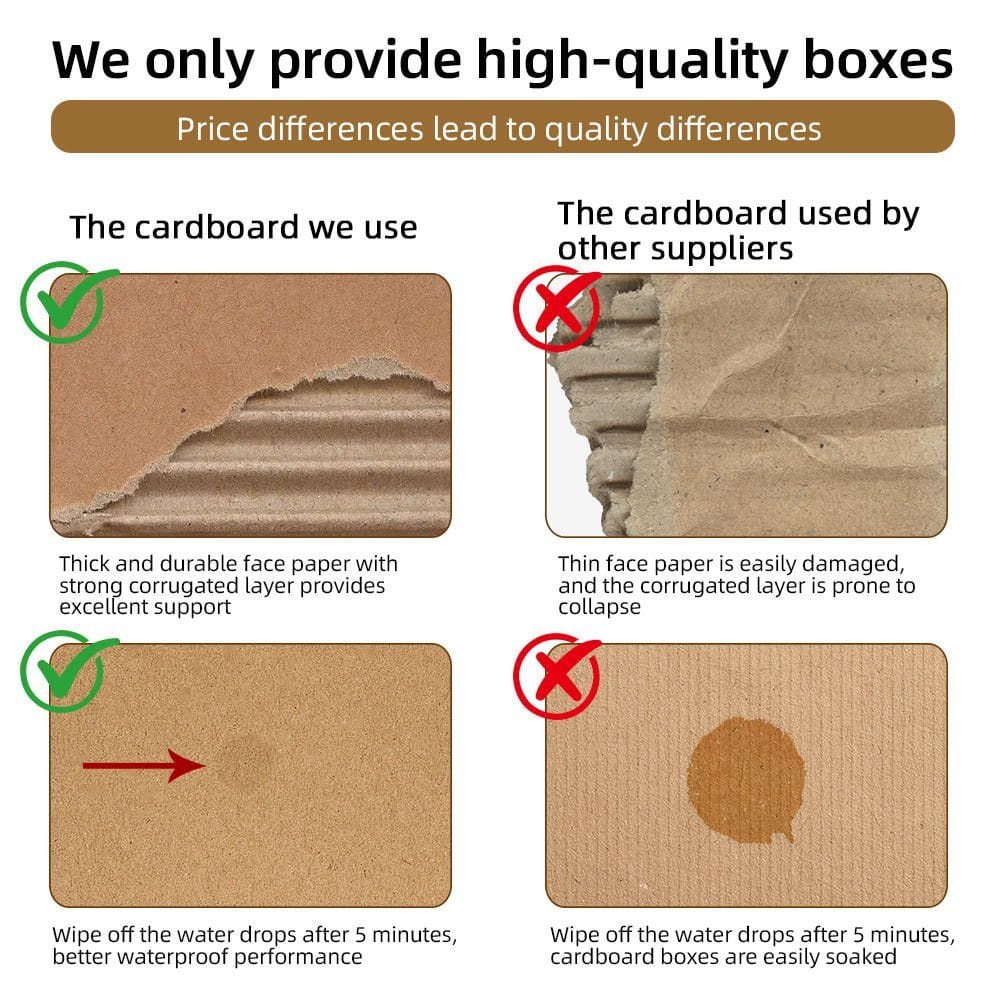
| E-commerce single candle shipments | Corrugated mailer with matte lamination | Under-spec board grade leads to crushing during last-mile delivery | Edge crush test (ECT) value and burst strength certificate | Confirm ECT rating in the RFQ and ask for a material swatch before sample approval |
| Subscription box candle refills | Folding carton with gloss lamination and barcode | Barcode misprint or placement error delays warehouse scanning | Barcode verification report and print-ready dieline with safe zones | Send the dieline to the supplier and request a pre-production proof with barcode scan |
| Luxury candle brand launch | Rigid box with embossing and spot UV | Embossing die alignment off, causing misregistered logo on finished box | Embossing die drawing and a signed sample approval form | Review the die drawing against the artwork file and approve only after physical sample matches |
Read this application fit table as one approval sequence. For retail candle gift sets, a poor decision can mean insert may not secure candle weight, causing damage in transit. Request written proof and compare it with the approved sample or specification, then request a physical sample and verify insert fit before approving bulk production. For e-commerce single candle shipments, a poor decision can mean under-spec board grade leads to crushing during last-mile delivery. Request written proof and compare it with the approved sample or specification, then confirm the ECT rating in the RFQ and ask for a material swatch before sample approval. For subscription box candle refills, a poor decision can mean barcode misprint or placement error delays warehouse scanning. Request written proof and compare it with the approved sample or specification, then send the dieline to the supplier and request a pre-production proof with barcode scan.
For the retail candle gift sets checkpoint in custom printed candle boxes, keep the supplier response, marked sample, approved specification, quotation, and approval owner under the same revision number. If the evidence conflicts with the approved record, hold the quote, sample, or production release until the deviation is explained in writing. Carry the signed decision record into the purchase order, production handoff, shipment release, and later reorder review so every team works from the same baseline.
Supplier proof to verify
Request a material certificate for board thickness and burst strength, plus a barcode verification report if applicable. For embossed or foil-stamped boxes, ask for a die drawing and a pre-production sample. Compare the sample against the signed spec sheet and record any tolerance deviations before bulk production.
Use cases that fit
For each use case, record what to check, why it matters, and what buyer action follows. Rigid boxes with inserts suit retail gift sets where presentation and product protection are critical. Corrugated mailers work for e-commerce single candle shipments, balancing cost with shipping durability. Folding cartons with barcodes fit subscription box refills that require automated scanning. Luxury launches demand rigid boxes with embossing or spot UV for brand impact.
RFQ and sample checks
In the RFQ, specify exact dimensions, material grade, print colors, finish, and packing method. Confirm the MOQ (200 pcs project-level) and lead time (15–30 working days after sample approval). Request a physical pre-production sample and approve it in writing before bulk production. Verify the sample against the spec sheet for color, dimensions, material, and finish.
Lock candle fit, insert clearance, print area, and finish tolerances
Start the specification check for custom printed candle boxes with this evidence:
- For custom printed candle boxes, premium buyers require exact board thickness and burst strength to withstand candle weight and shipping. Confirm board grade (e.g., ECT rating for corrugated) and material certificate for thickness and burst strength.
- For custom printed candle boxes, premium buyers must verify insert fit and closure security to prevent candle movement during transit. Verify insert dimensions and closure type (e.g., tuck-end, magnetic) against the approved sample.
- For custom printed candle boxes, premium buyers need to lock MOQ and order quantity to avoid hidden setup fees or per-unit cost overruns. Confirm MOQ per SKU (Zhypacking project-level MOQ is 200 pcs) and request a line-item quote for exact quantity.
- For custom printed candle boxes, premium buyers must document approval records to ensure reorder consistency and supplier accountability. Keep sample version, spec sheet, decision date, approver, and supplier confirmation under one revision number.
Premium buyers should also assess approval risk by verifying the sample against the spec before bulk production. Compare physical sample against signed-off spec sheet for color, dimensions, material, and finish; record tolerance deviations.
Decision criteria to confirm
Premium buyers must verify that the custom printed candle box specification matches the approved sample before bulk production. Compare board thickness, insert fit, and closure security against the signed spec sheet. Document any tolerance deviations and require written supplier confirmation. This prevents costly rework and ensures consistent quality across the order.
RFQ details to send
In the RFQ, freeze the box dimensions, board grade, artwork revision, print colors, finish zones, insert position, and packing orientation. Ask the supplier to return a marked dieline showing every controlled area. Use that marked file as the reference for the print proof and reject any response that leaves foil, coating, or insert placement undefined.
Production handoff details
Before production release, ensure the signed sample, approved spec sheet, and supplier confirmation are under the same revision number. Carry this record into the purchase order and production handoff. If any evidence conflicts, hold the order until the supplier explains the deviation in writing. This ensures every reorder starts from a verified baseline.
Use custom paper boxes to align the related specifications and RFQ inputs.
RFQ checkpoint
Match the retail packaging option to the buyer scenario, proof requirement, and RFQ step before sampling custom printed candle boxes.
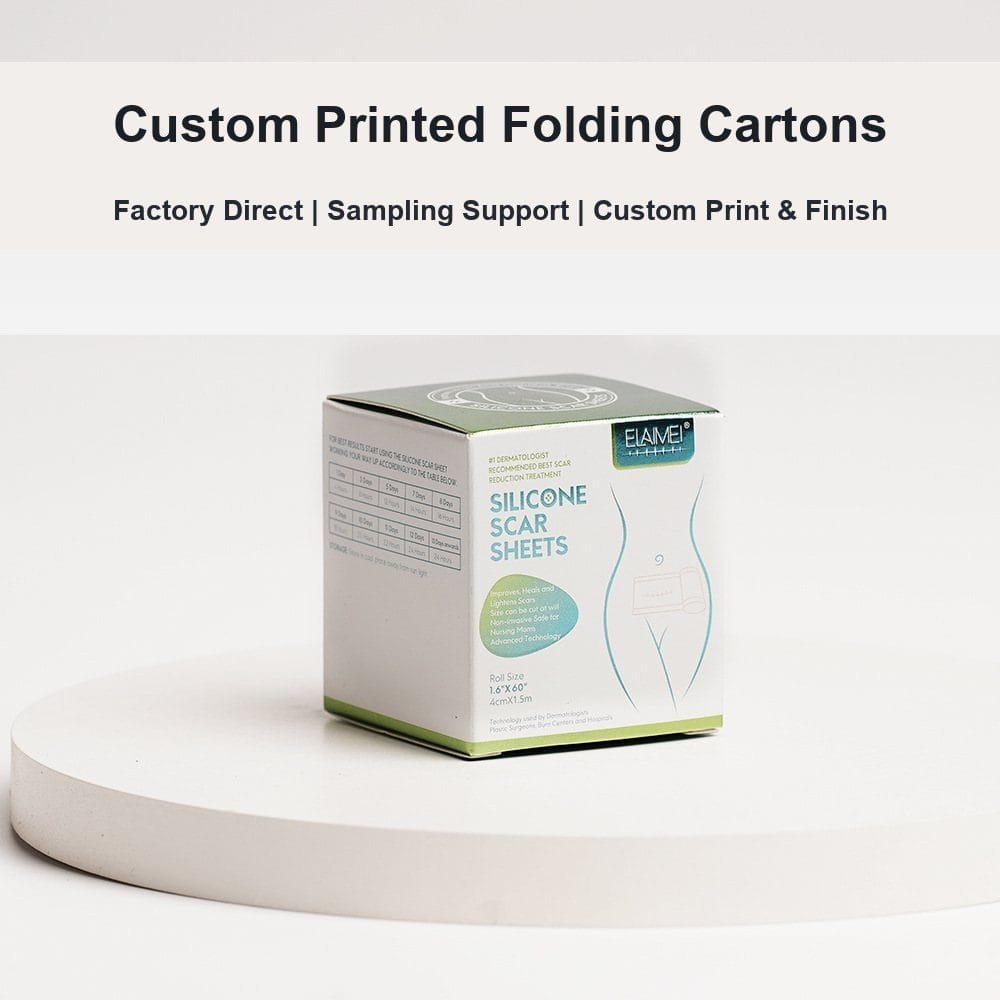
How Custom Printed Candle Boxes choices affect launch timing and approval
For custom printed candle boxes, treat launch timing and approval as a release rule: approve only when the supplier evidence matches the written requirement.
- Supplier can produce rigid or corrugated candle boxes with insert fit and closure security. Material certificate for board thickness and burst strength; die drawing for embossed or foil-stamped boxes. Supplier quality or production team.
- Supplier has equipment and process to apply matte/gloss lamination, foil stamping, or embossing. Pre-production sample showing finish accuracy; in-line inspection photos during production. Supplier production supervisor or QC manager. Finish mismatch delays launch and adds rework cost.
- Supplier can meet project-level MOQ of 200 pcs and standard lead time of 15–30 working days after sample approval. Line-item quote confirming MOQ per SKU and lead time; written confirmation of setup fees if below MOQ. Supplier sales or account manager.
- Supplier can provide barcode verification and ensure correct placement on folding cartons for automated scanning. Barcode verification report; pre-production proof with barcode scan. Supplier prepress or QC team. Barcode misprint or placement error delays warehouse scanning, causing shipment hold.
Additional RFQ items include the supplier’s FSC Chain of Custody and ISO 9001 certificates, the amfori BSCI audit report, and CE and Sedex documents, available on request for compliance scope. Scanned certificate with validity date and scope; written confirmation that certification covers the production site. Supplier compliance or quality manager.
Define the requirement and success criteria
For custom printed candle boxes, the requirement must specify board thickness, insert fit, closure security, and finish type. Success criteria include measurable tolerances for dimensions and color. Document these in a signed spec sheet before sample production. This prevents ambiguity and ensures the supplier’s capability matches your launch timeline.
Confirm execution details with the factory
After defining requirements, confirm the supplier’s equipment can produce the specified finish and insert. Request a material certificate and die drawing for embossed or foil-stamped boxes. Verify the MOQ (200 pcs project-level) and lead time (15–30 working days after specifications, artwork, and sample requirements are confirmed) in the RFQ. This locks commercial terms and avoids hidden setup fees or delays.
Approve samples and control reorder risk
Approve the physical pre-production sample against the signed spec sheet. Document tolerance deviations and require written supplier confirmation. Carry the signed sample, spec sheet, and approval record into the purchase order and production handoff. For reorders, use the same baseline to verify consistency and avoid quality drift.
Review paper packaging quality control to confirm how the supplier records print and finish checks.
Use custom printed tissue paper products for related options.
Lock artwork, color, and finish evidence for custom printed candle boxes
When a buyer approves a digital proof but the production run shows a shifted PMS match or a gloss level that dulls the brand logo, the root cause is often missing reference files. The factory cannot reproduce what it has not seen as a locked physical or high-resolution digital standard. To close this gap, require a signed-off reference file set that includes the approved CMYK/PMS values, the selected substrate swatch, and a finish sample (e.g., matte lamination vs. spot UV). This set becomes the single source of truth for press setup and inline inspection.
Reference files to approve for custom printed candle boxes
Before production begins, the buyer must submit or confirm three items: a color-accurate PDF with embedded ICC profile, a physical or digital substrate sample showing the exact board thickness and texture, and a finish mock-up that demonstrates the intended gloss level and any tactile effect. The factory then cross-checks these against its own material inventory and press capabilities. If the buyer cannot provide a physical finish sample, a certified digital reference with a spectrophotometer reading is acceptable.
Production checks that protect the custom printed candle boxes result
During the run, ask the factory to apply ISO 2859-1 sampling inspection at the agreed sampling plan level for color deviation, finish uniformity, and dimensional accuracy, and to compare each inspection lot against the locked reference files. Agree in writing what happens when a sample falls outside the agreed tolerance: whether the lot is held, how the buyer is notified, and whether the buyer accepts a re-run or a discounted lot. This protocol ensures that the final custom printed candle boxes match the approved evidence, not a memory of the proof.
| Checkpoint | Reference Required | Buyer Verification Question |
|---|---|---|
| Color match | Signed-off PMS/CMYK values + spectrophotometer reading | Do you have a certified digital reference with a buyer-approved color tolerance? |
| Substrate | Physical swatch or certified digital sample with thickness callout | Can you provide a substrate swatch or a confirmed spec sheet? |
| Finish | Physical mock-up or gloss/UV reading from approved sample | Do you have a finish sample that shows the exact gloss level? |
| Dimensional accuracy | Approved die-line or CAD file with tolerance | What is the confirmed tolerance for length and width? |
Once the buyer confirms each reference file and the factory passes the first-article inspection, the production run proceeds with a locked quality baseline. Any subsequent change—even a minor substrate swap—requires a new reference file set and a fresh approval cycle.
Use packaging dieline and custom packaging specs for related specification options.
How to move Custom Printed Candle Boxes checks into an RFQ
When a buyer approves a digital proof but the production run shows a shifted PMS match or a gloss level that dulls the brand logo, the failure mode is a mismatch between approved sample and bulk output. The control that prevents this is a structured three-stage check: supplier proof check, sample approval check, and reorder control check.
Supplier evidence to request
Before production, verify that the supplier’s proof matches your RFQ specs—box dimensions, material grade, print colors, finish, and packing method. Use a checklist to confirm each spec against the RFQ. This step catches errors early, reducing production risk and cost overruns.
Sample approval evidence
Request a pre-production sample and inspect it against ISO 2859-1 sampling standards. Check for color accuracy, gloss level, structural integrity, and print registration. Approve only after all specs are met. This ensures the bulk run matches the approved sample.
Reorder control records
For repeat orders, confirm that the supplier uses the same materials, dies, and print settings as the original approved sample. Request a new pre-production sample if any change occurs. This maintains consistency and avoids rework.
These checks form a decision framework that reduces ambiguity and ensures factory execution aligns with your brand standards. Use them during RFQ and sample handoff to secure consistent quality.
Source check: ISO 2859-1 sampling inspection standard. Record the acceptance rule, evidence owner, and approval step in the RFQ or quality file.
In conclusion
For custom printed candle boxes, the final approval sequence requires you to check the supplier’s pre-production sample against the signed spec sheet for board thickness, insert fit, and closure security, then verify that the quoted MOQ (200 pcs project-level) and lead time (15–30 working days after sample approval) match the approved evidence. Document any tolerance deviations and require written supplier confirmation before releasing bulk production. Shortlist only those suppliers whose evidence—sample measurements, material certificate, and barcode verification report—matches the agreed revision, and carry the signed decision record into the purchase order and production handoff so every reorder starts from a verified baseline.
To request a quote, visit custom retail packaging and confirm the final specification, quote assumptions, sample approval, QC evidence, approval risk, and supplier follow-up before bulk order.
Custom printed candle boxes FAQ
What should buyers confirm before ordering custom printed candle boxes?
Buyers should confirm the exact box dimensions, material grade, print colors, finish, and packing method in the RFQ. Request a physical pre-production sample and compare it against the signed spec sheet for board thickness, insert fit, and closure security. Document any tolerance deviations and require written supplier confirmation before bulk production. Confirm production lead time after specifications and sample approval are fixed. Separate material, setup, packing, freight, and reorder cost drivers in the RFQ.
How should buyers compare MOQ, lead time, and quote terms?
In the RFQ, specify your exact quantity and request a line-item quote to avoid hidden setup fees. Confirm the project-level MOQ and standard lead time of 15–30 working days after sample approval. Verify that the quoted terms match the approved sample and spec sheet before releasing the order. Ask the supplier to confirm factory capability and who owns follow-up.
What sample, quality, or supplier checks reduce risk?
Obtain a material certificate for board thickness and burst strength, plus a barcode verification report if applicable. For embossed or foil-stamped boxes, ask for a die drawing and a pre-production sample. Compare the sample against the signed spec sheet and record any tolerance deviations before approving bulk production. Confirm production lead time after specifications and sample approval are fixed. Separate material, setup, packing, freight, and reorder cost drivers in the RFQ. Ask the supplier to confirm factory capability and who owns follow-up.
RFQ handoff: For custom printed candle boxes, send artwork files, logo placement, material, finish target, quantity, and sample timing so print and structure can be reviewed together. Send Specs for Review.
If this stage leads into that check, compare it against our custom Paper Tubes Wholesale: Structure, Print and Closure Specs.
Ask a Packaging Question