
Paper Packaging Quality Control From Sample to Shipment
Inspect supplier proof before trusting claims about packaging quality control, from the approved sample through production and packing.
Lock the spec first: most failures start as an unclear brief
A mailer box, rigid box, paper bag or paper tube ordered without a confirmed internal size, material direction, finish, product weight or packing count is a quality problem waiting to happen. The first control is to turn those assumptions into a reviewed specification before sampling, so the sample you approve solves the right problem. A box can look perfect and still crush in transit; a bag can look premium and fail at the handle.
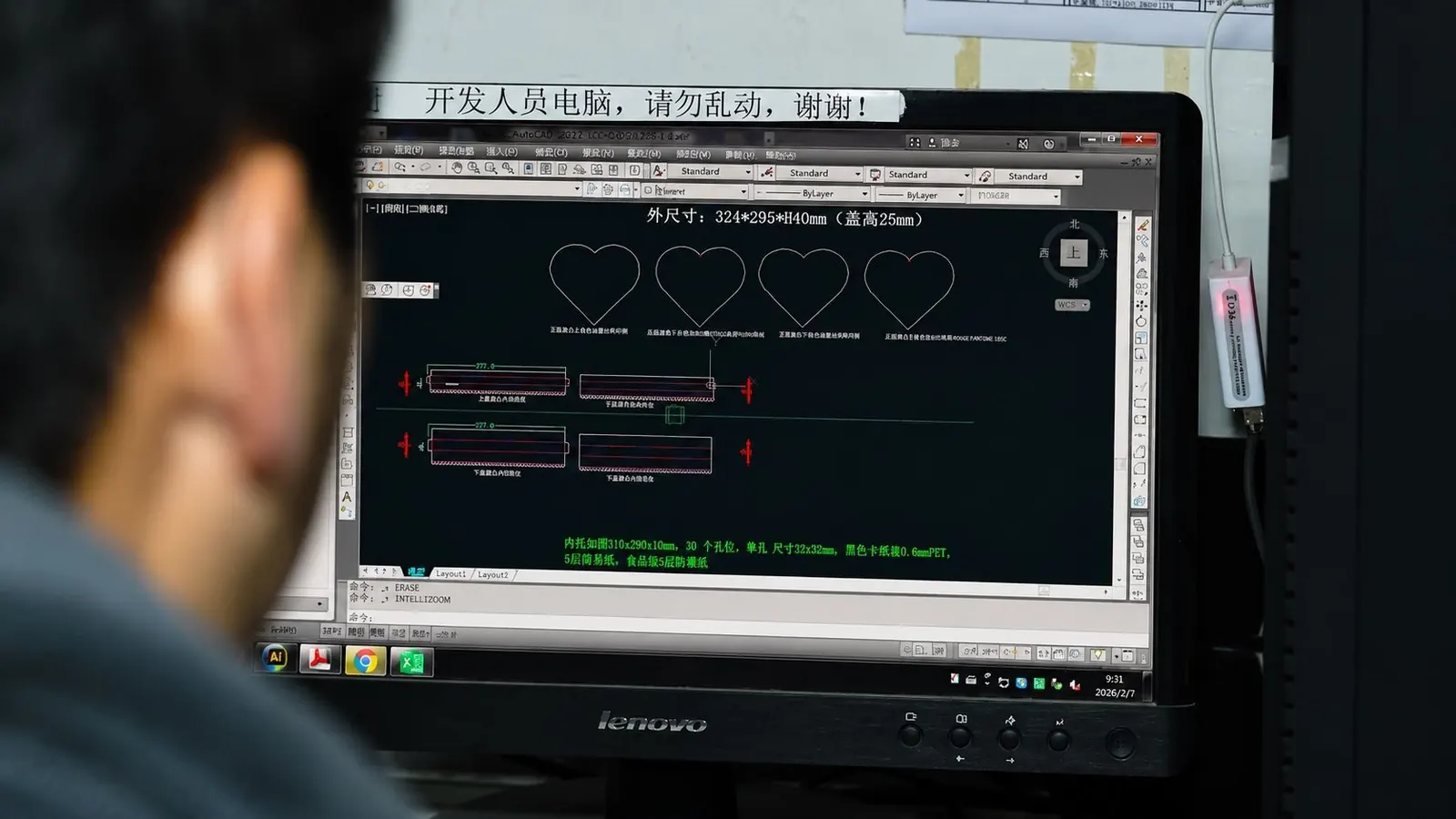
- The internal size is fixed before sampling: box internal L × W × H, bag width by gusset by height, or tube diameter by height: because a sample built to a guessed size proves nothing.
- Paper material, board direction, flute, insert material, handle type, and the finish are settled up front, since the same artwork on the wrong board behaves like a different product.
- Artwork status, color direction, the barcode area, legal copy, and the dieline are confirmed before plates are cut, so the proof checks the real file rather than a placeholder.
- The sample approval notes are agreed before bulk starts, so what gets produced is the version you signed off, not the latest revision in the thread.
The sample you sign off becomes the benchmark for the batch
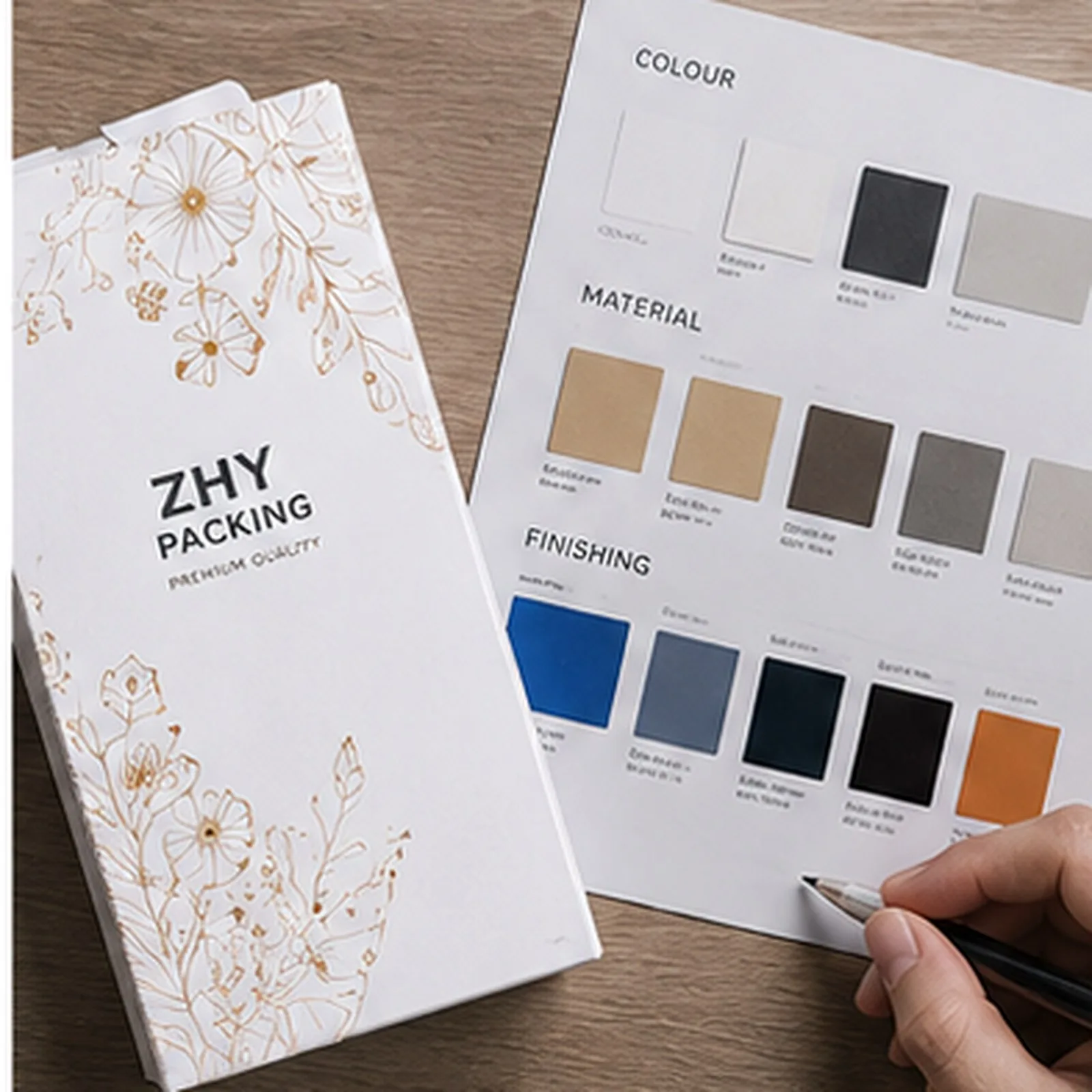
The physical sample you approve: the golden sample: is the single reference both sides work to. It fixes structure, color direction, finish position, insert fit, and packing method as one physical object, not a photo that can be read two ways. We keep the approved sample at the factory; you keep the matching one. Any later question is settled against the same object, so “it didn’t match” has an answer instead of an argument.
- Structure and board direction held to the approved sample, not a render.
- Color direction and finish position fixed on a physical reference.
- Insert fit, closure behavior, and packing count confirmed before bulk.
Four checkpoints, so a defect is caught where it starts
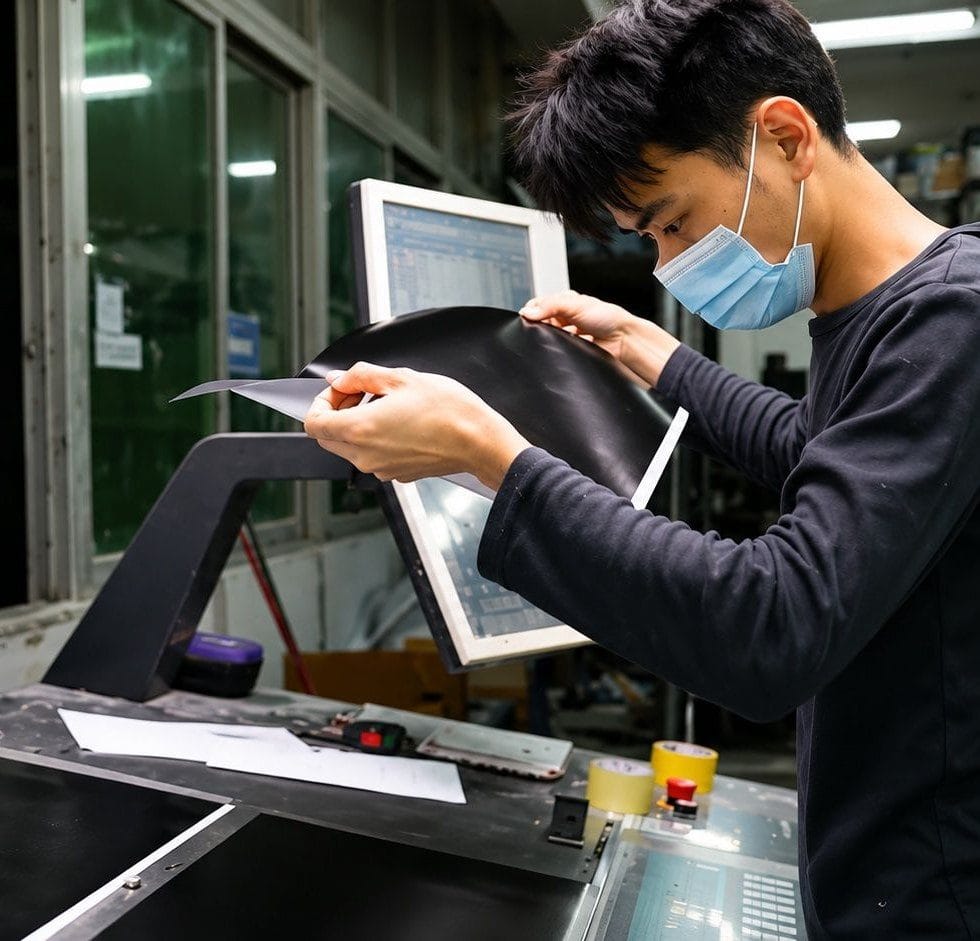
Incoming board, print, die-cut, and finished assembly are each checked in sequence: a wrong material direction is cheaper to catch before printing than after assembly, and a print or crease problem is caught before it spreads through the whole run.
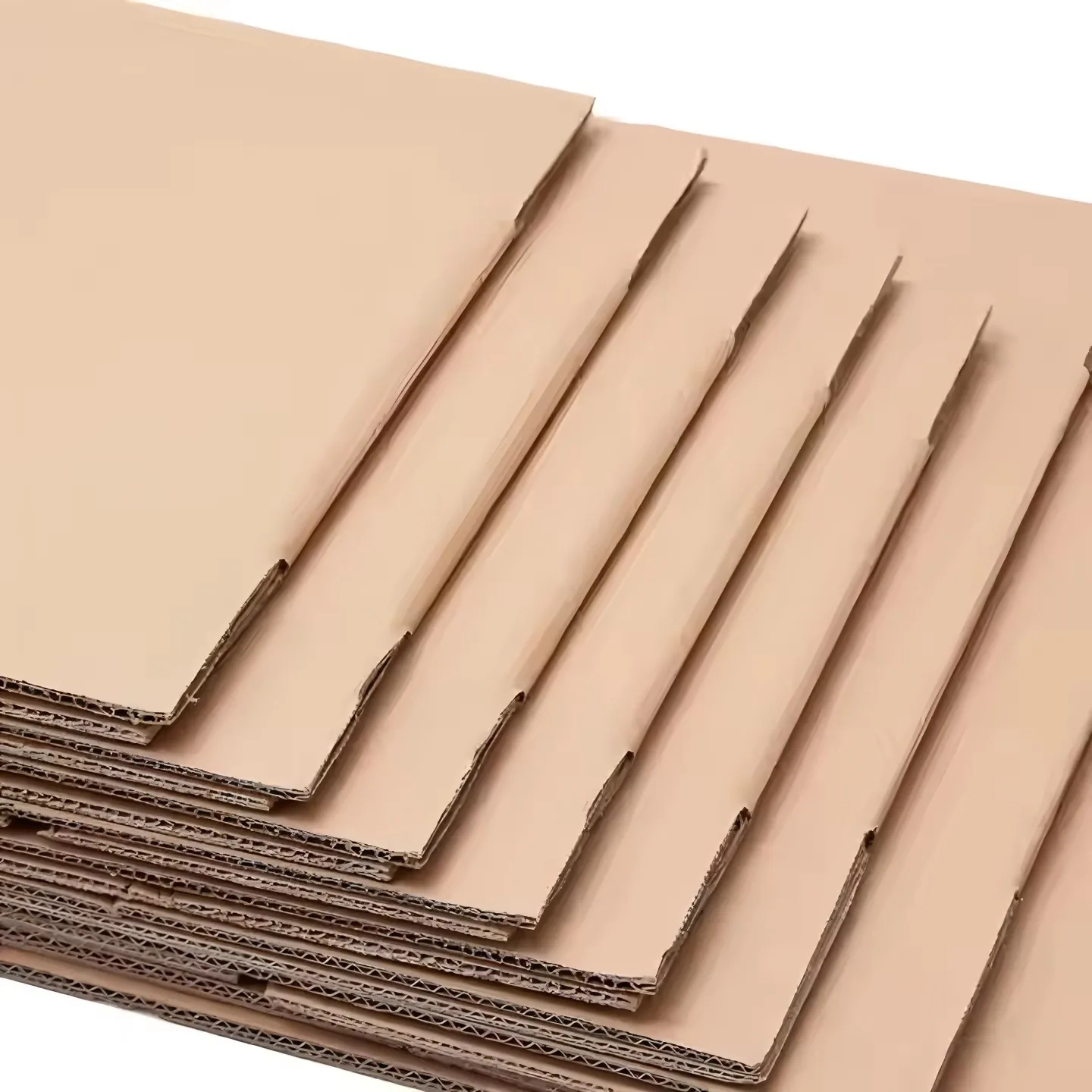
Board & material
Paper type, board direction, flute, surface, and visible defects checked against the quote assumption before anything is printed.
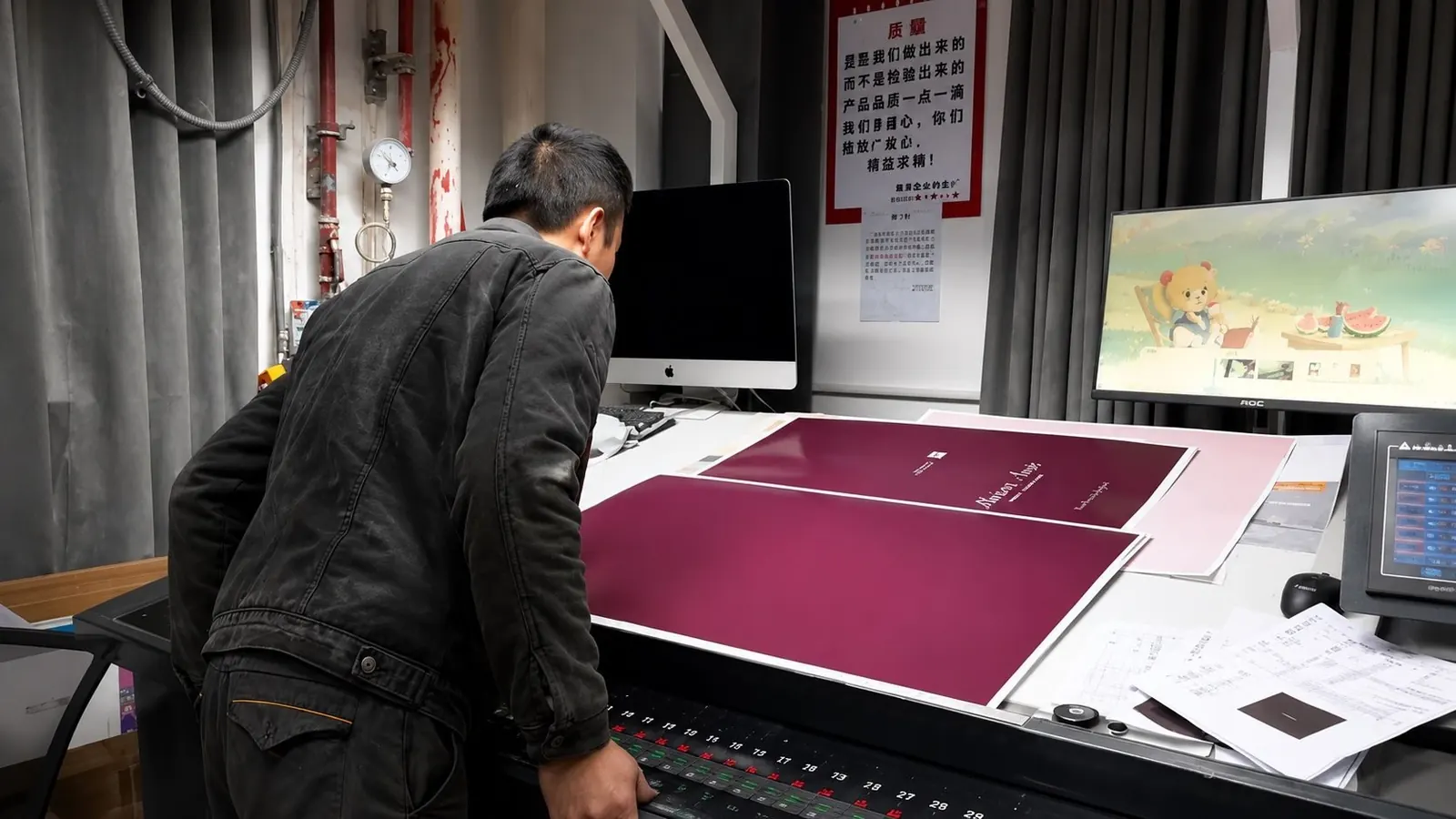
Print & finish
Color direction, registration, foil, emboss, spot UV, lamination, and barcode area compared to the approved proof before finishing.
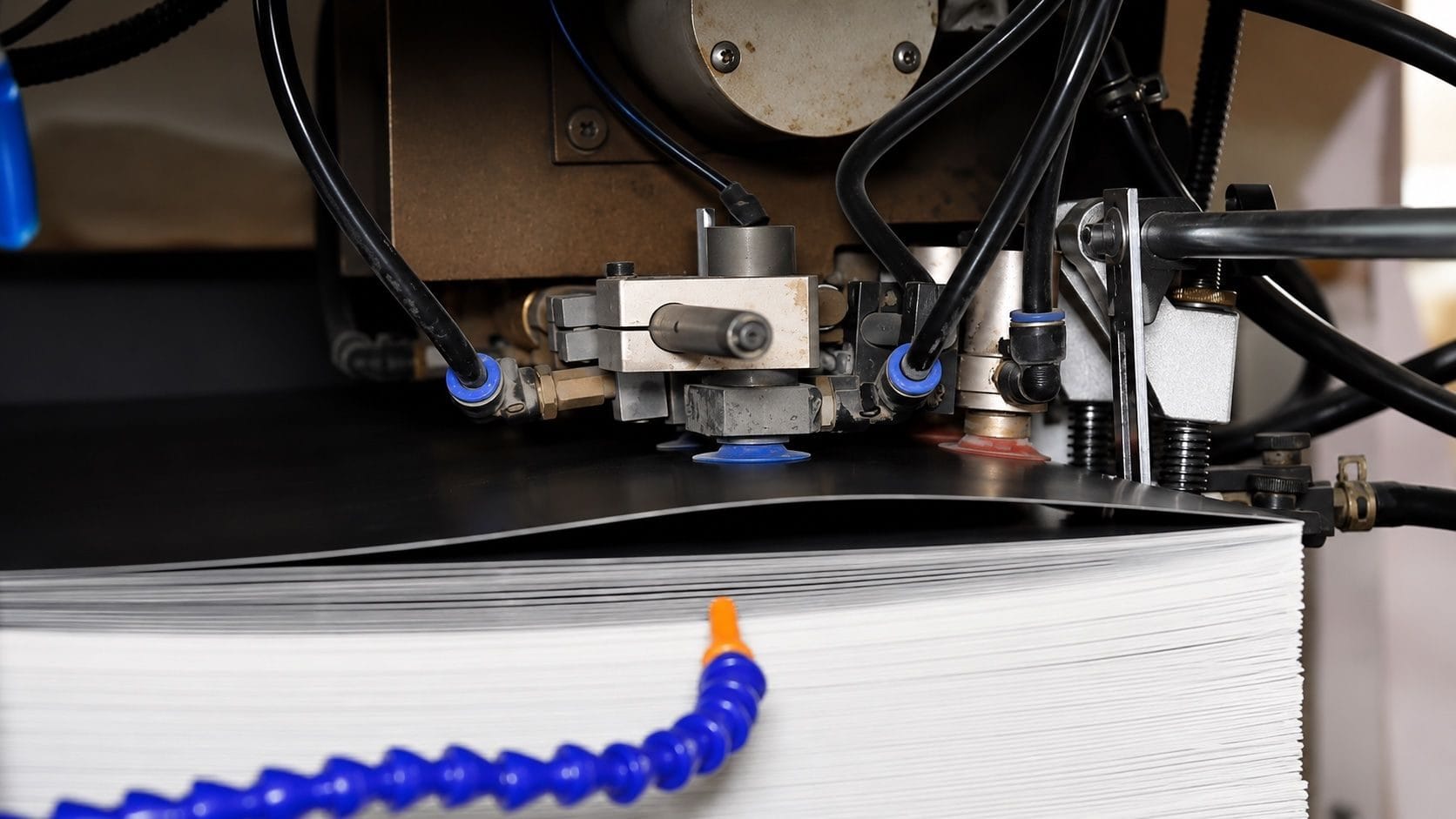
Die-cut approval
Crease position, cut accuracy, window and insert slots, and closure behavior checked against the approved dieline.
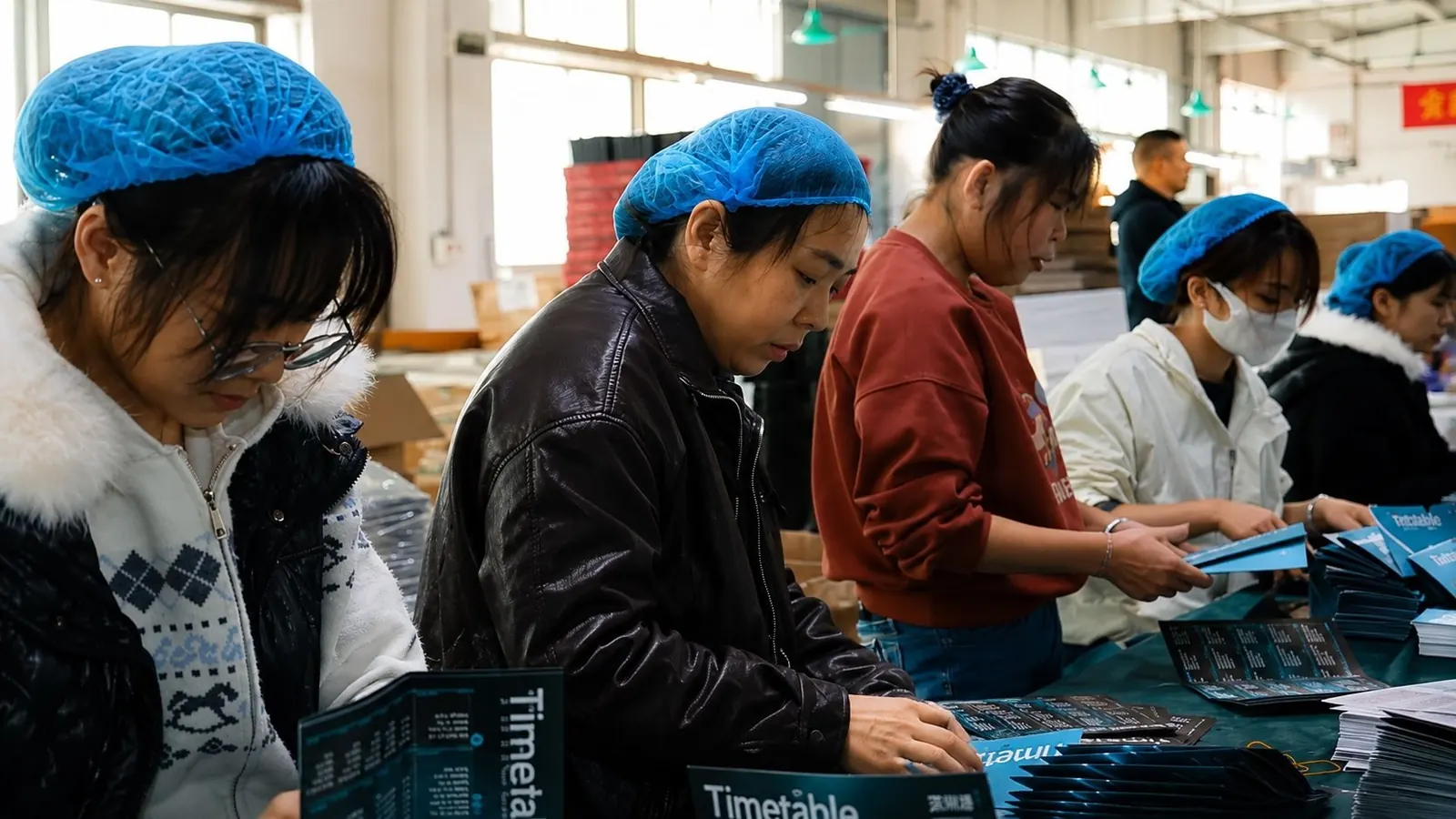
Assembly & sampling
Glue strength, handle strength, tube-lid fit, insert tolerance, and packing count sampled so the box can be packed, opened, carried, and shipped.
Documents you can check before relying on them
Here are scanned certificates on file, each described only within the scope it actually covers, with the numbers and registries your team can check independently.
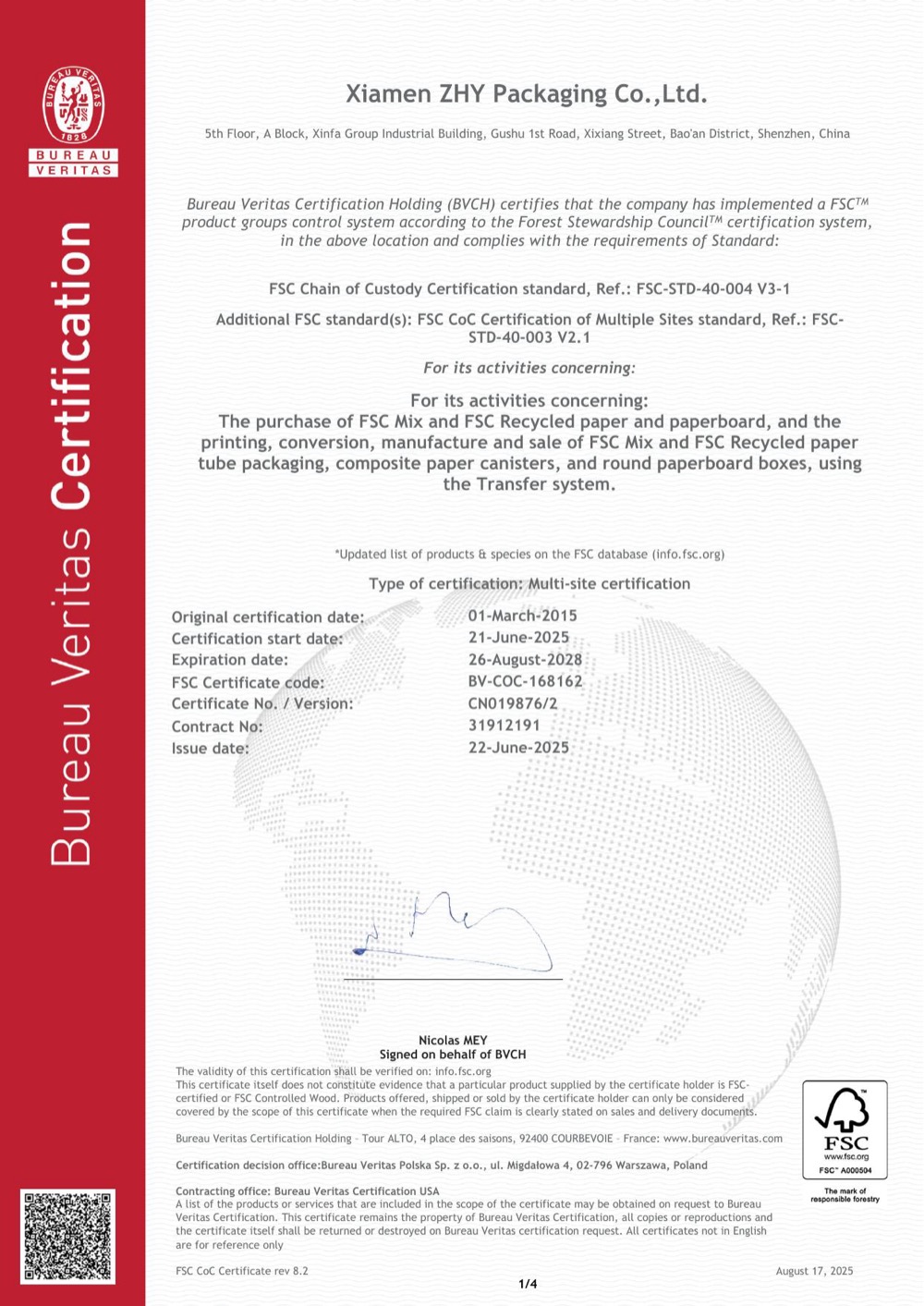
Purchase of FSC Mix and FSC Recycled paper and paperboard; printing, conversion, manufacture and sale of FSC Mix and FSC Recycled paper tube packaging, composite paper canisters and round paperboard boxes. Bureau Veritas, BV-COC-168162, valid to 2028-08-26.
Verify at info.fsc.org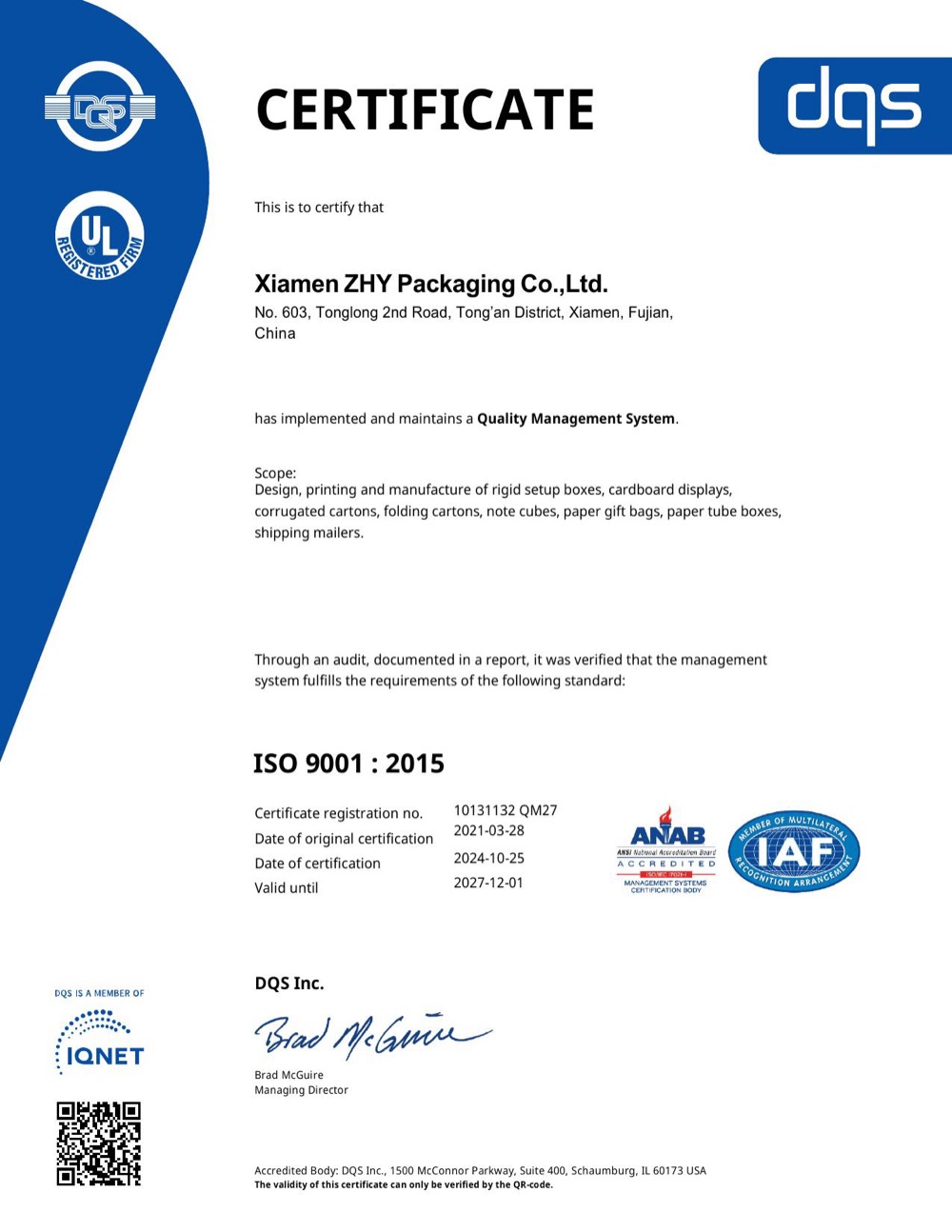
Quality management for rigid boxes, displays, corrugated and folding cartons, gift bags, tube boxes, and shipping cartons. Reg. 10131132 QM27, valid to 2027-12-01.
Confirm with issuer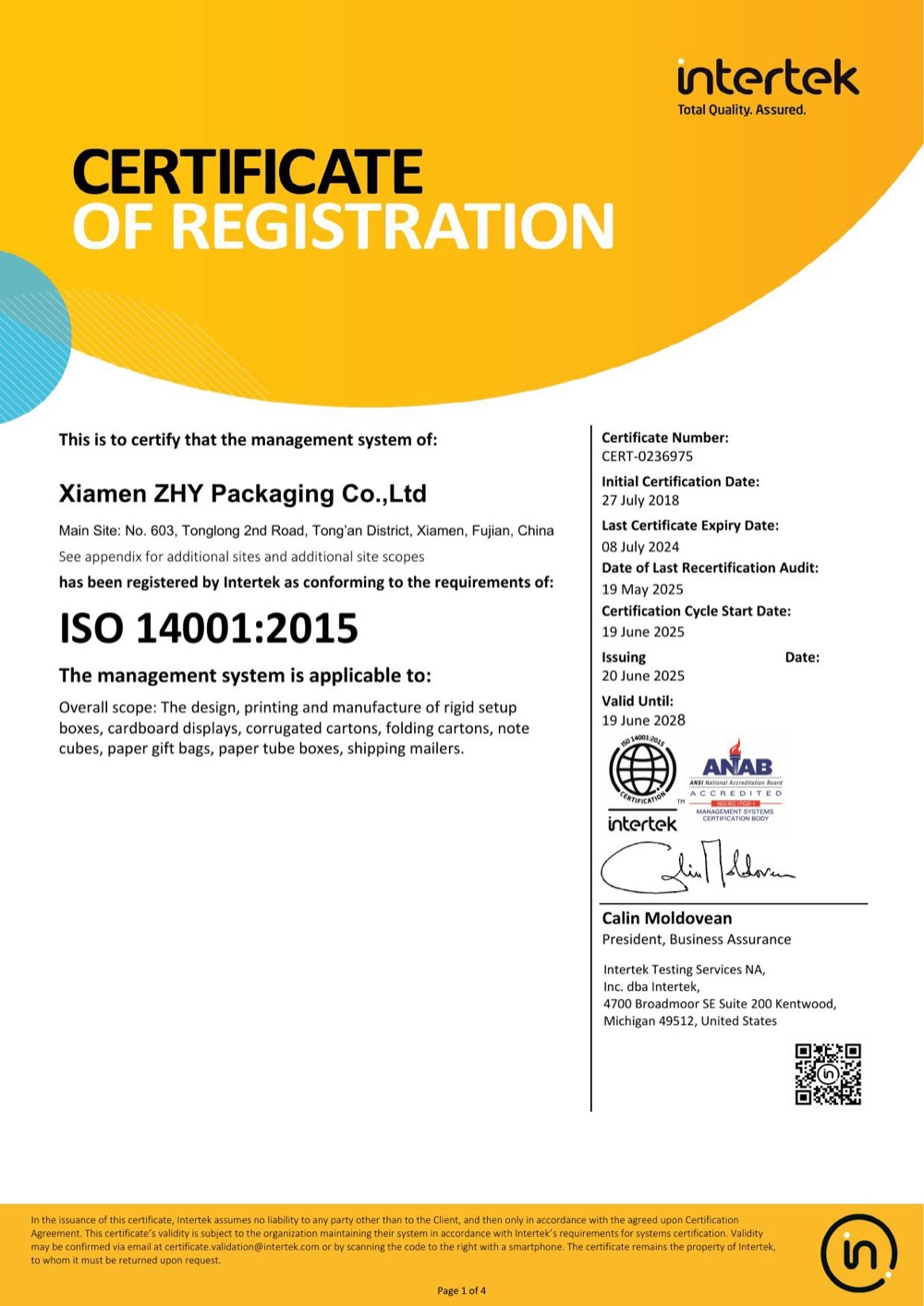
Environmental management for rigid setup boxes and paper packaging. Intertek, certificate no. 0138391, valid to 2028-06-19.
Confirm with issuer
Social-compliance audit of the producer. DBID 361152, audit 361569, audited 2025-12-07. Validity is maintained on the amfori platform.
Audit on amfori platform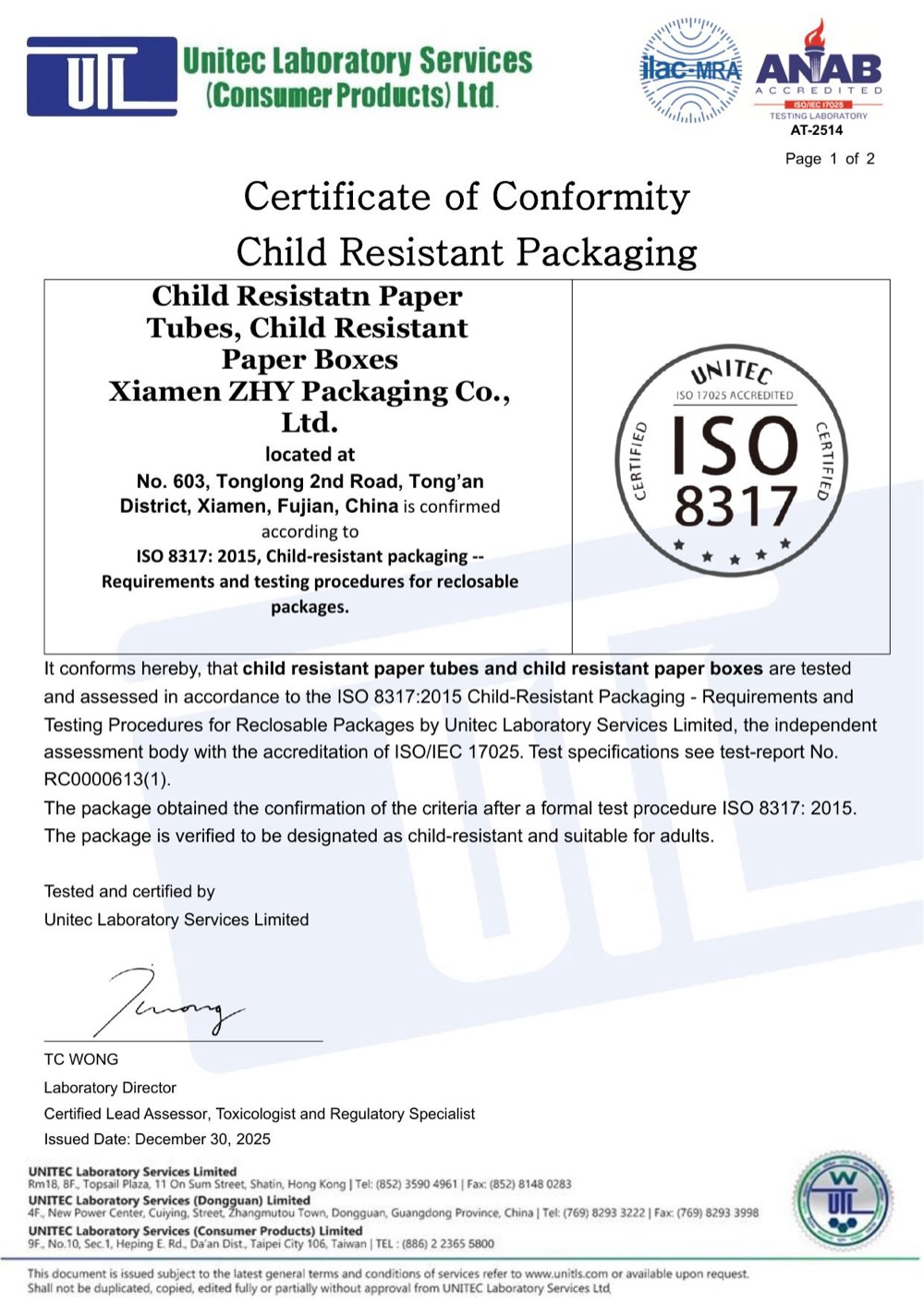
Child-resistant conformity for child-resistant paper tubes and boxes only: a product-specific test, not a management system. Issued 2025-12-30, Unitec Laboratory Services.
Product-specific scopeNeed food-contact, recycled-content, compostable, biodegradable, FDA, LFGB, RoHS, REACH, CE, or Sedex documents? Send the requirement and we confirm the document scope before it appears in a quote. Contact Zhypacking about document scope.
Pre-shipment review your importer or marketplace can actually use
Before shipment is booked or the balance is paid, your team, importer or marketplace customer may need a final review. State those requirements in the RFQ so the quotation can confirm which finished-product photos, packing photos, carton-mark checks, sample-comparison notes or document copies are available. A third-party inspection can also be discussed in advance; the inspector, access, timing, sample plan and reporting scope need to be agreed for the order.
Finished-Product Photos
Finished goods and packing photos before the balance payment or shipment release.
Carton-Mark Confirmation
Export carton marks, packing method, and count confirmed against your shipment requirement.
Certificate Scope Scans
Document scans only for the scope that applies to the order you are quoting.
Third-Party Inspection Window
SGS, Intertek, QIMA, or your own inspector coordinated when booked before scheduling.
What buyers ask before they trust the quality claim
How do you actually check quality: what gets inspected before my boxes ship?
Quality is checked in stages, not once at the end. Incoming board and paper are checked against the quote assumption, print and finish are compared to the approved proof, the die-cut sample is checked against the dieline, and assembled, finished boxes are sampled for glue, fit, closure, and packing count. A pre-shipment review then compares finished and packed goods to the sample you approved before the order is released.
What is a pre-shipment inspection and when does it happen?
It is normally arranged after the packaging is finished and packed but before shipment release. The agreed check can compare finished goods and packing with the approved sample, quantity, carton marks and acceptance criteria. If a third-party inspector is required, confirm the visit window, access, sample plan and report responsibility in advance.
What happens if the bulk run doesn’t match the approved sample?
The approved sample is the reference, so a bulk run that drifts from it is treated as a check failure. We isolate the affected pieces, compare them to the approved sample, dieline, and color proof, find the cause: print, die-cut, glue, assembly, or packing: and correct the process before release. We do not ship a batch as approved when it no longer matches the sample you signed off.
What is a golden sample, and who keeps a copy?
A golden sample is the physical sample you approve before bulk: it becomes the benchmark for structure, color direction, finish position, insert fit, and packing. Both sides work to one reference: we keep the approved sample at the factory, and you keep the matching one, so any later question is settled against the same physical object rather than a photo.
Do you inspect incoming board and material, or only the finished boxes?
Both. Incoming board and paper are checked first: paper type, board direction, flute, surface, and visible defects against the quote assumption: because a wrong material direction is cheaper to catch before printing than after assembly. Print, die-cut, and finished-box checks follow, so a defect is caught where it starts instead of spreading through the batch.
How do you stop the printed color drifting from the approved Pantone proof?
Color is confirmed on a physical proof before bulk and then checked against that proof at the press. We compare CMYK and Pantone direction, registration, the position of foil, emboss, and spot UV, the barcode area, and how lamination shifts perceived color. The approved proof, not a screen, is the reference: so the printed result is judged against what you signed off.
Can I send my own third-party inspector (SGS / Intertek / QIMA) before shipment?
Yes. Third-party inspection is welcome if it is booked before the order is scheduled, so the inspection window fits the production plan. Send your inspection rules: acceptance criteria, sample size, and which checks you require: with the RFQ, and we coordinate access to finished and packed goods at the pre-shipment stage.
If a defect is found, what do you do: and how are buyer complaints handled?
We do not promise zero defects; we show how they are caught and handled. Found pieces are isolated from accepted goods, compared to the approved sample, dieline, or proof, and the cause is corrected before packing continues. If you raise a complaint, send photos and the carton or batch detail; we compare against the approved reference, explain the cause, and agree the correction rather than ship the same mistake again.
How do I verify an FSC or ISO certificate?
Request the current readable copy, then check the holder, issuer, registration number, validity and documented scope. Use the issuer or public registry shown on the document where available, and confirm that the scope is relevant to the product being quoted.
Can I request pre-shipment photos, carton-mark checks and packing evidence?
Yes, state exactly what your importer or marketplace needs to see in the RFQ. Zhypacking can then confirm which evidence can be prepared, when it will be shared and whether a third-party inspection is also required before shipment release or balance payment.
How long has ZHY Packing operated in Xiamen?
ZHY Packing has operated since 2006 from a 3,000 m² site in Xiamen. Confirm the exact production route and proof scope for the quoted product.
Which production route applies to this order?
The quotation should identify the route for the selected structure, material, finish and quantity rather than treating the full supply range as one production claim.
What proof can I review before bulk production?
Ask for the approved sample, artwork or dieline revision, relevant inspection points and packing reference for the quoted product.
How are MOQ and production timing confirmed?
MOQ starts from 200 pcs, and bulk production takes 15–30 working days after specifications, artwork and sample requirements are confirmed.
Send your QC requirements with the RFQ
Quality control only protects you if the inputs come in before sampling. Send the sample and inspection points you need confirmed, your acceptance and third-party inspection rules, and the document scope: and the QC path stays comparable to your other quotes. MOQ 200 pcs; production 15–30 working days after specs, artwork, and sample are confirmed.