

Direct answer: Define each layer by function and contact boundary. Primary packaging contains or directly contacts the product; secondary packaging groups, presents, or protects primary packs; shipping packaging supports handling and distribution. Assign material, dimensions, artwork, compliance evidence, supplier owner, pack-out, and acceptance checks to each layer, then test the complete loaded system before release.
- Map product contact and function before naming a structure.
- Give every layer its own specification, owner, and approval evidence.
- Identify shared dimensions, labels, inserts, and packing interfaces.
- Verify the layers together in the intended distribution configuration.
Method and limits: ISO/IEC Guide 41:2018 frames packaging functions, and ISTA lists distribution procedures chosen for shipment context. These sources do not determine a project’s legal contact classification, structure, material, or acceptance limits. Confirm market-specific requirements for the product and validate the complete layer stack. Reviewed 24 August 2026.
A primary secondary shipping packaging RFQ layer matrix needs a written RFQ path before price comparison, because material, structure, print, packing, and timing all change the supplier answer.
For primary secondary shipping packaging RFQ layer matrix, the useful factory reply is specific: what material, structure, artwork, packing, MOQ, and proof must be confirmed before sampling.
Use the sections below to make the quote, sample, and supplier follow-up easier to compare.
For brand owners and importers, keep primary secondary shipping packaging RFQ layer matrix quote-ready: specs to send, proof to request, sample checks to approve, and reorder notes to retain.
Decide what each packaging layer must do before RFQ
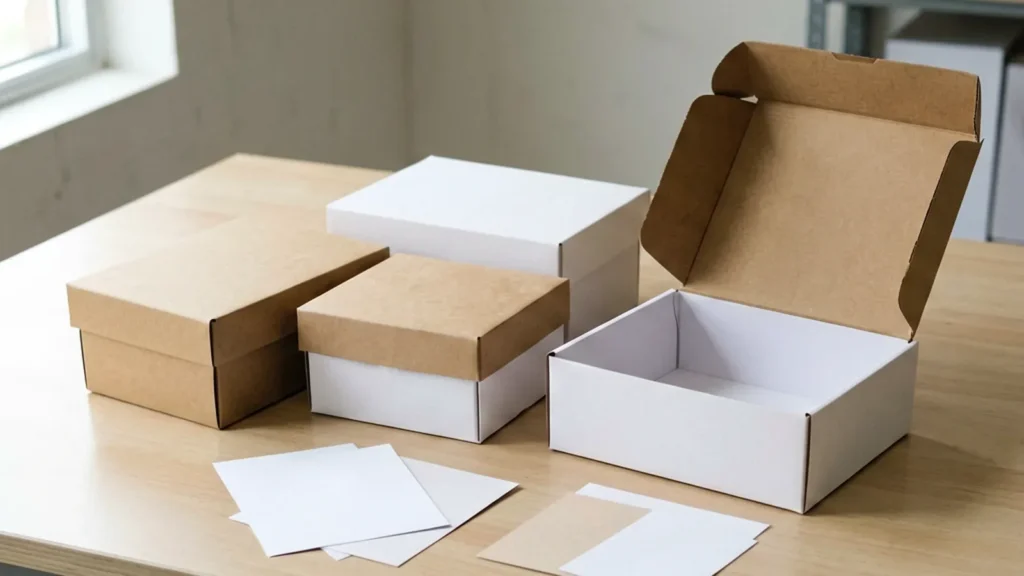
Start by assigning one job to each layer. The product-facing pack manages fit and presentation, the secondary layer groups or protects units, and the shipping layer carries the packed configuration through fulfillment. A supplier cannot price the same scope as another supplier if those jobs remain mixed together.
| Layer | Job to define | RFQ inputs | Approval proof | Risk if left vague |
|---|---|---|---|---|
| Primary or product-facing | Hold, present, and open around the actual product. | Product dimensions, orientation, contact points, artwork, finish, closure, and insert needs. | A loaded sample checked against the approved dieline and product fit. | A visually correct empty sample can shift, rub, or fail to close when loaded. |
| Secondary or grouping | Group units for display, handling, kits, or inner-carton packing. | Unit count, arrangement, dividers, labels, barcodes, packing method, and handling route. | A pack-out showing the correct count, orientation, and scan-ready label position. | Unit count, shelf presentation, or packing labor can differ from the quote assumption. |
| Shipping or transit | Protect the packed configuration through warehousing and delivery. | Packed weight, carton dimensions, closure, void control, ship method, pallet or case assumptions, and destination. | A packed shipper reviewed under the buyer’s agreed transit and handling checks. | The project can be under-protected, overbuilt, or quoted without the real carton and freight basis. |
Primary packaging or product-facing presentation requirements
Give the supplier the real product, orientation, finish expectation, and opening sequence. Ask which assumptions are still provisional before the dieline is approved.
Secondary grouping, presentation, and handling requirements
Buyers can document how many units sit together, how they are separated, and whether the layer works on shelf, in a kit, or only inside a shipper.
Shipping protection, carton packing, and fulfillment requirements
Quote the shipping layer from the packed configuration, not the empty box. Record the packed weight, carton count, closure, labels, handling path, and destination assumptions.
Use custom packaging solutions to route the finished layer matrix to the application page that matches the order.
Map the layer stack to ecommerce, retail, cosmetic, and launch use cases
- Ecommerce primary and secondary packaging layer: Incoming material QC and in-process inspection checklist Undocumented QC leads to inconsistent box quality and reorder variation Request documented QC plan with checkpoints before production release
- Retail packaging with multiple SKU variations: Confirm whether the MOQ applies per design variation or per project An unclear MOQ basis can cause hidden unit price increases Confirm MOQ per size artwork and structure before comparing unit prices
- Cosmetic packaging for brand launch and reorder: Post-sample approval handoff file with final specs and QC checkpoints Without handoff reorder batches may deviate from approved sample Move approved sample into production handoff document listing material structure print and QC steps
- New product launch with tight timeline and quality risk: Physical pre-production sample sign-off before bulk production Skipping physical sample risks color mismatch or structural failure at full production Require signed-off physical sample and record accepted tolerances for production
Use custom packaging specification support when the layer map needs a shared dieline, insert, artwork, or approval record across ecommerce, retail, cosmetic, and launch packaging.
RFQ checkpoint
Send the product, channel, quantity, artwork, pack-out, and shipping details for a layer-by-layer packaging review.

Build a layer-by-layer RFQ matrix
- Supplier must demonstrate production capability for each specified packaging layer (primary, secondary, shipping). Production capability sheet or factory audit report detailing layer-specific equipment, tolerances, and process flow. Supplier provides only generic marketing brochures without layer-specific process or QC details. Supplier shares a documented layer-by-layer production flow with QC checkpoints and dimensional tolerances per layer.
- Approving a supplier without layer-specific proof increases risk of spec mismatch, reorder variance, and hidden costs. Signed-off sample approval record and deviation log from a comparable packaging layer order, including accepted tolerances. Supplier cannot provide a prior sample approval record or tolerances accepted by a previous buyer. Supplier delivers a sample approval record with buyer sign-off, documented tolerances, and reorder reference number.
- Buyer must systematically verify received proof against the RFQ layer matrix and record the approval decision. Completed proof verification checklist with buyer notes, date, and explicit buyer follow-up (shortlist, revise, or reject). Buyer requests proof but does not document the verification outcome or buyer follow-up in the RFQ record. Buyer creates a written proof verification record with signature, date, and decision stored with the RFQ and supplier file.
Review the ecommerce packaging solution when the RFQ matrix must separate the customer-facing pack from the protective shipping layer.
Approve samples and pack-out without leaving a layer untested
Quote drift starts when a buyer approves a primary sample but never checks how the secondary carton or shipping box behaves with the packed product. The control is a layer-by-layer pack-out test before any production sign-off.
Product fit, opening, closure, insert, and presentation checks
Verify the primary pack fits the product without forcing, that the closure holds after repeated opening, and that inserts stay in place. A sample that looks correct empty can fail when loaded. Risk to avoid: approving a dieline that causes product shift or lid pop-open in transit. Verification method: pack the actual product, close the box, and tilt or shake it. If the insert moves or the closure does not hold under the agreed fit check, pause approval and request a revised dieline before RFQ.
Carton count, void, scuff, label, and shipping handoff checks
Confirm the secondary carton holds the correct unit count without excessive void space, that labels are scannable and positioned per your spec, and that the outer shipper shows no scuff or crush risk. Risk to avoid: a packed carton that bulges or rattles, leading to damage or rejected shipments. Verification method: request a packed carton photo or video from the supplier’s QC line. If the packed units rattle, the carton bulges, or void space is not controlled by the agreed pack-out, ask for a revised carton size or insert before approval. buyer follow-up: document the approved layer stack—primary fit, secondary count, shipping label position—and attach it to the PO as the production handoff record.
Compare the available custom paper packaging structures only after the loaded pack-out test confirms how the primary, secondary, and shipping layers work together.
Compare supplier quotes without mixing layer scope
Before comparing supplier quotes, separate each packaging layer’s material, tooling, print, packing, and shipping assumptions. A supplier that bundles all layers into one line item hides where costs actually come from. The risk is approving a low unit price that later increases due to undisclosed setup fees or shipping exclusions. The output needed before sampling: a line-item breakdown per layer so you can compare apples to apples.
- Request a separate cost line for each layer: primary, secondary, shipping. Verify that material grade, tooling, print colors, and finish are specified per layer.
- Ask the supplier to confirm whether the quoted price includes sample fees, die charges, and packing costs. If not, request a separate quote for those items.
- Check that the shipping assumption matches your delivery terms. If the quote uses FOB but you need DDP, the comparison will be off.
- Document the accepted layer stack and attach it to the RFQ as the production handoff record. This prevents reorder drift.
Separate material, tooling, print, packing, and shipping assumptions
Start by asking the supplier to split the quote into line items by layer. For primary packaging, confirm the material type, board grade, print coverage, and finish. For secondary, verify the carton size, flute choice, and void fill method. For shipping, request the box strength, pallet pattern, and packing method. Without this separation, a supplier can mix high-cost primary with low-cost shipping to make the total look competitive. In the sample room, pack the actual product in the primary layer, close the secondary carton, and check the outer shipper for crush risk. Any layer that fails must be revised before approval.
Flag exclusions and substitutions before shortlist approval
Review each line for exclusions—sample fees, tooling, artwork proofing, or rush charges. Also check if the supplier allows substitutions, like downgrading flute grade or finish to meet a target price. If a substitution is not approved in writing, the order may arrive with lower quality than expected. The buyer follow-up: request a written confirmation of what is fixed and what can change, and who approves the change. For related sourcing steps, review the solutions page at Zhypacking.
Send a quote-ready packaging layer brief
A physical sample of each layer—primary, secondary, and shipping—is the only proof that your spec sheet matches what the supplier will produce. Without it, you risk approving a quote based on assumptions that fail during pack-out. The buyer check block below turns each layer into a verifiable RFQ input.
- Primary layer spec: Confirm material grade, dieline, print colors, finish, and closure type. Risk to avoid: approving a dieline that causes product shift or lid pop-open. Verification: pack the actual product, close the box, and tilt or shake it. If the insert moves or the closure does not hold under the agreed fit check, pause approval and request a revised dieline before RFQ.
- Secondary layer spec: Verify carton size, flute choice, unit count, void fill method, and label position. Risk to avoid: a packed carton that bulges or rattles, leading to damage or rejected shipments. Verification: request a packed carton photo or video from the supplier’s QC line. If the packed units rattle, the carton bulges, or void space is not controlled by the agreed pack-out, ask for a revised carton size or insert before approval.
- Shipping layer spec: Confirm box strength (ECT or burst), pallet pattern, and packing method. Risk to avoid: under-specified board leads to crush damage in transit; over-spec adds freight cost. Verification: request a compression test report or drop-test data from the supplier’s QC lab before approving the outer shipper.
The layer specification sheet to attach
Attach a single spec sheet that lists each layer’s material, dimensions, print, finish, and packing method. Ask the supplier to confirm that the sheet matches the sample proposed for production. Without this, a low unit price may hide undisclosed setup fees or shipping exclusions. Buyer follow-up: request a written confirmation of what is fixed and what can change, and who approves the change.
The solution route and supplier questions to use next
Once the layer spec sheet is complete, move to the solution page that matches your use case. Ask the supplier: can you provide a packed sample for each layer before production? What is your standard QC check for material grade and print registration? How do you handle reorder consistency? The supplier’s answers will tell you whether they can support the layer matrix with stable production capability and documented sample approval. For related sourcing steps, review the solutions page at custom packaging solutions.
- Decision matrix: choose the primary secondary shipping packaging rfq layer route only after product fit, customization scope, quote assumptions, sample approval, and reorder control are comparable.
- Best-for check: match the primary secondary shipping packaging rfq layer route to the use case and approved specification before comparing price.
- Trade-off check: compare buyer control, development scope, cost drivers, lead-time assumptions, quality risk, and repeat-order consistency.
In conclusion
The sourcing choice for primary, secondary, and shipping packaging hinges on comparing each layer’s line-item breakdown, verifying it with a physical pack-out sample, and documenting the approved layer stack as the production handoff. Without this discipline, bundled quotes hide setup fees and untested pack-outs risk damage during transit. The supplier must separate material, tooling, print, and shipping costs per layer, confirm the project-level MOQ of 200 pcs, and commit to the 15–30 working day lead time after specifications, artwork, and sample requirements are confirmed. Quality risk is minimized when you request a written confirmation of fixed items, then validate the spec against a packed sample of each layer before approving the RFQ.
Before moving to bulk order, shortlist only suppliers that can provide a layer-by-layer spec sheet, demonstrate a documented QC process for material grade and print registration, and agree to a pack-out test covering primary fit, secondary carton count, and shipping box crush resistance. The final step is to attach the approved spec sheet to the RFQ, request a written confirmation of what is fixed and what can change, and then request a quote from the shortlisted supplier.
To request a quote, visit custom packaging solutions and confirm the final specification, quote assumptions, sample approval, QC evidence, approval risk, and supplier follow-up before bulk order.
Primary, secondary, and shipping packaging FAQ
What belongs in primary, secondary, and shipping packaging specs?
The spec for each layer must include material grade, dimensions, print and finish details, packing method, and tooling assumptions. It depends on whether the supplier can separate line items per layer to avoid hidden costs. Request a line-item breakdown and confirm the project-level MOQ of 200 pcs and lead time of 15–30 working days after specifications, artwork, and sample requirements are confirmed. Risk: bundled quotes hide setup fees. Verify by attaching the spec sheet to the RFQ and requesting written confirmation of fixed items. Ask how QC will check the sample, color, finish, packing, and bulk order.
Can one box cover retail display and shipping?
A single box can serve as retail display and shipping only if it meets structural strength for stacking and print quality for shelf presence. German-language teams can use the German shipping box vs retail packaging decision guide to decide whether one structure can do both jobs or the layers should be separated. It depends on the product weight, distribution channel, and whether the box must pass a drop test. Specify a combined board grade and print finish, then verify with a packed sample. Risk: choosing a box that fails either function. Follow-up: request the applicable distribution test evidence and test the packed box under shipping conditions.
What should buyers test in a layered packaging sample?
Buyers should test the fit of the product in the primary layer, the count and void fill in the secondary carton, and the crush resistance of the shipping box. It depends on the actual product dimensions and packing configuration. Request a physical pack-out test for each layer before production approval. Risk: a sample that looks correct empty fails when loaded. Verify by packing the product, closing the box, and tilting or shaking it. Document the approved layer stack and attach it to the PO.
Which sample or QC proof should buyers request?
Request a physical pre-production sample of each layer—primary, secondary, and shipping—along with a packed carton photo or video from the supplier’s QC line. It depends on the complexity of the structure and the number of print colors. Verify that the material grade, dimensions, and print registration match the spec sheet. Risk: approving a quote based on assumptions that fail during pack-out. Follow-up: document the approved sample and request a written confirmation of what is fixed and what can change before bulk production.


Ask a Packaging Question