

Custom paper packaging needs a written specification before the buyer can plan custom artwork, dielines, samples, finishes, and production handoff; otherwise suppliers may quote different product and approval assumptions.
This guide connects custom paper packaging to parameters, cost impact, supplier risk, factory process, and procurement advice.
Direct answer: For custom paper packaging, align artwork files, dimensions, material and finish targets, a signed-off sample, packing instructions, and the bulk-production handoff in one controlled specification.
What buyers should confirm before choosing Custom Paper Packaging
| Requirement | Factory control | Evidence to verify | Order risk | RFQ follow-up |
|---|---|---|---|---|
| Finish or surface effect | Factory runs a gloss meter and rub test on first-piece sample. | Compare production sample against approved drawdown or physical standard. | Off-spec finish causes returns and repackaging cost. | Request a sealed finish sample before production release. |
| Artwork or logo file | Factory preflights file for resolution, bleed, and color space. | Supplier provides a color-accurate digital proof for sign-off. | Low-res art prints blurry and requires reprint at buyer expense. | Submit final vector or high-res PDF with the RFQ. |
| Sample approval | Factory holds sample until buyer signs a written approval form. | Inspect sample against spec sheet using calipers and light box. | Unapproved sample leads to mass production of nonconforming units. | Sign and date the approval form, then authorize production. |
Questions to confirm before ordering:
- Does your specification include material grade, GSM, and print method? Without these three fields, the supplier cannot quote a repeatable price or lead time. The supplier returns a spec sheet with these fields filled and a tolerance for each. You approve a sample that cannot be reproduced in bulk because the spec was incomplete. Send a blank spec template and ask the supplier to fill it before you review any quote.
- What is the supplier’s standard defect rate for this type of paper packaging? A stated defect rate lets you set an AQL level in the QC contract before production starts. The supplier provides a written AQL of 2.5 or better and shows past inspection records. You accept a bulk shipment with visible print misregistration or board damage. Request the supplier’s last three internal QC reports for similar orders.
- How does the supplier verify color accuracy across production runs? Color drift between sample and bulk is a common rejection reason in paper packaging. The supplier uses a spectrophotometer and keeps a signed master color card on file. Your branded packaging arrives with a noticeable shade difference from the approved sample. Ask for a color measurement report from the last production run of a similar job.
- Does the supplier hold a documented FSC Mix certificate for paper sourcing? Retail and e-commerce buyers increasingly require chain-of-custody proof for paper materials. The supplier shares a valid FSC Mix certificate number and its scope of coverage. Your packaging cannot be sold through channels that mandate certified paper sourcing. Verify the certificate number on the FSC public database before placing the order.
- What is the supplier’s process for handling a rejected pre-production sample? A clear rework process shows the supplier can correct issues without delaying your launch. The supplier states a fixed rework timeline and a second sample at no extra cost. You approve a marginal sample to keep the schedule, then receive defective bulk goods. Write the rework terms into the purchase order before sample approval.
How to shortlist suppliers for Custom Paper Packaging before sending artwork
- Material grade and GSM approval: Substituting a lower GSM or unapproved board grade can cause structural failure or print bleed on the production line Procurement manager and supplier QC lead Compare the approved physical sample against the spec sheet for GSM, caliper, and coating type Document the approved material code and lock the spec sheet before any custom packaging customization begins
- Die-line and structural dimensions: a shift in the die-line can misalign artwork or cause folding errors, leading to full batch rejection Artwork coordinator and factory tooling engineer Run a paper mock-up on the actual die-board and measure all critical dimensions with a caliper Sign the die-line approval form and archive the approved CAD file before plate making
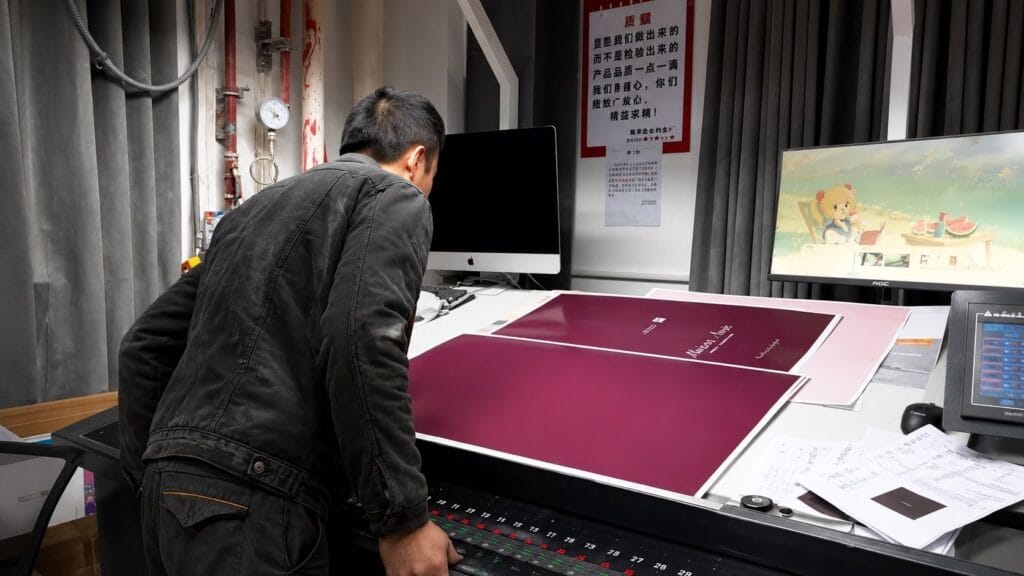
- Print color proof and registration: Unapproved color drift or misregistration can produce off-brand packaging that must be scrapped at buyer cost Brand manager and press operator Hold the contract proof under buyer-approved viewing conditions and verify each Pantone against the approved target Issue a signed color approval certificate and lock the press profile before production
- Surface finish and coating specification: Switching from matte lamination to gloss UV without re-approval can alter the tactile feel and scuff resistance Quality manager and buyer packaging lead Rub-test the approved finish sample with a standardized abrasion tool and check for coating adhesion Record the finish type and test result in the change control log before bulk run
- Verify supplier quality certifications and factory audit reports before artwork transfer. Request ISO 9001 certificates and amfori BSCI audit records; confirm FSC Mix chain-of-custody for paper sourcing. Provide scanned certificates with current validity dates and audit summary. Avoid non-compliant stock or rejected shipments due to unverified quality systems. Document certificate numbers and expiry dates in supplier file.
- Confirm production lead time and capacity for custom packaging customization against your schedule. State required delivery date; ask for written confirmation of the standard 15-20 working day lead time after specifications, artwork, and sample requirements are confirmed. Confirm lead time in writing and note any current capacity constraints. Prevents late delivery that disrupts product launch or retail shelf placement. Add lead time clause to purchase order with penalty for delays.
- Review supplier capability for your specific custom paper packaging design and material needs. Send specification sheet including dimensions, GSM, print type, and finishing requirements. Confirm capability to produce within tolerances and provide similar project references. Avoids mismatched equipment or material limitations that cause sample rework. Shortlist only suppliers that match all technical specs before sending artwork.
- Assess approval risk by requesting a pre-production sample made on the production line. Define sample approval criteria: color, dimensions, material, and assembly tolerance. Deliver physical sample with measurement report and production line confirmation. Catches defects early; prevents bulk waste from off-spec production. Approve sample in writing or request revisions before bulk order release.

Which launch risks should Custom Paper Packaging control first
A signed measurement report with the physical sample is the proof that makes the decision verifiable: you can confirm every critical dimension before production starts.
Practical checklist for launch risk control
- Require a signed measurement report with every physical sample, listing all critical dimensions and tolerances.
- Confirm the factory uses a calibrated ruler or caliper for inspection and ask for the calibration date.
- Verify that the sample matches the approved artwork file (vector PDF or AI) for color and structure.
- Ask the factory to state the exact paper grammage and coating type on the sample tag.
- Request a short video of the sample being folded or assembled to confirm structural integrity.
After the sample passes, move to the quote request handoff. The table below connects the sample verification steps to the quote checks that prevent cost overruns and production delays.
| Sample check | Quote check | Buyer verification question |
|---|---|---|
| Critical dimensions match die line | Quote includes dimension tolerance | What is the tolerance for width and depth? |
| Color matches Pantone reference | Quote specifies printing method (offset or digital) | Which printing method is used for this color? |
| Paper weight matches specification | Quote lists paper grammage and grade | What is the exact grammage and grade? |
| Structural assembly is correct | Quote includes glue type and application method | What glue is used and how is it applied? |
Once the sample and quote align, the factory execution risk drops. The buyer can proceed to the production handoff with a clear record of what was approved. This approach controls three common risks: dimensional error, color mismatch, and structural failure.
What to prepare before asking for a Custom Paper Packaging quote
Before you send a quote request, confirm three checkpoints: your buyer decision, your quote request input, and your production handoff. Each checkpoint prevents costly revisions and delays.
Decision criteria to confirm
Verify with your internal team: Is the packaging design finalized? Have you chosen the paper type, finish (e.g., matte or gloss), and any special coatings? Without these decisions, the factory cannot provide an accurate quote. Ask: “What is the exact product that will go inside the box?” This determines dimensions and structural requirements.
RFQ details to send
Prepare these items before contacting a supplier:
- Exact finished dimensions (length, width, depth) in millimeters or inches.
- Paper grade and thickness (e.g., 300 gsm CCNB or 400 gsm kraft).
- Printing method (offset, digital, or flexo) and color specification (Pantone or CMYK).
- Finishing details (lamination, embossing, foil stamping, or spot UV).
- Quantity per order and target unit cost.
Missing any of these inputs delays the quote and may lead to inaccurate pricing.
Production handoff details
Once you receive a quote, confirm the handoff process. Ask: “What sample types do you provide before production?” Common options are a structural mockup and a printed proof. Also confirm the approval workflow: who signs off on the sample, and what is the deadline for changes? This prevents miscommunication during mass production.
Below is a summary of key preparation steps:
| Checkpoint | Required Output | Buyer Verification Question |
|---|---|---|
| Buyer decision | Finalized design and material choices | Have we approved the paper type and finish? |
| RFQ input | Complete spec list | Do we have all dimensions, material, and printing specs? |
| Production handoff | Sample approval process defined | What sample types are provided, and who approves them? |
By completing these three checks, you ensure your quote request is clear, the factory can quote accurately, and the production handoff is smooth. For more guidance, visit our custom packaging solutions.
How to move Custom Paper Packaging checks into an RFQ
| Option | Best fit | Trade-off | Risk to avoid | Verification | Follow-up |
|---|---|---|---|---|---|
| Current specification | Run existing approved material and print spec for repeat orders | No design change cost but may miss cost-saving substrate or finish upgrades | Supplier may continue using outdated tooling or higher-GSM board without your review | Request the latest spec sheet and compare against the last approved pre-production sample | Document any deviation and decide whether to update the spec before next PO |
| Alternative specification | Test a different board grade or print method to reduce unit cost or lead time | Lower material cost may require new die-line or ink formulation approval | Inconsistent color or caliper if the alternative substrate is not fully tested at production scale | Ask for a physical sample made on production equipment, not a hand-made mock-up | Compare the alternative sample against your current spec tolerance sheet and approve in writing |
| Custom option | Unique size, coating, or structural feature that differentiates your product in retail | Higher tooling cost and longer lead time; confirm the MOQ per variant in the RFQ | Tooling is a one-off cost; if the design fails during packing, rework adds cost | Request a 3D CAD drawing and a physical pre-production sample before tooling release | Sign off on the sample and tooling approval sheet; confirm the MOQ and lead time in writing |
| Safer fallback | Standard stock size or common fold style when speed or budget is the priority | Less brand differentiation but faster production and no tooling investment | Standard dimensions may not fit your product snugly, causing movement or damage in transit | Measure your product against the supplier's standard dimension chart and request a fit test sample | If fit passes, issue a PO with the standard spec code; if not, escalate to a custom option |
Supplier evidence to request
Before you approve any specification, ask the supplier for a written confirmation of the exact board grade, print method, and coating used. A verbal promise is not enough. Request a signed spec sheet or a certificate of conformance. This step protects you from receiving a different material than what you approved.
Sample approval evidence
Always request a pre-production sample made on the actual production line, not a hand-made mock-up. Compare it against your approved spec sheet for color, dimensions, and structural strength. Sign and date the sample approval form. This creates a clear reference for the bulk run and reduces the risk of rejected goods at your warehouse.
Reorder control records
When you reorder, confirm that the supplier still holds the same tooling, board stock, and print settings used for the last approved batch. A change in any of these can alter the final product. Ask for a new pre-production sample if more than six months have passed since the last order. This prevents surprises during packing.
Before the RFQ goes out, run the supplier through the packaging supplier scorecard and check the quote itself against comparing packaging quotes without missing specs.
In conclusion
The final approval for your made-to-order packaging project rests on verifying that every specification, cost parameter, and quality checkpoint has been documented and agreed upon. Before you commit to production, compare the supplier’s quoted MOQ and lead time against your project timeline, and validate the spec sheet against the pre-production sample. This structured handoff—from quote request through sample approval—ensures that both you and the factory share a clear, written understanding of material grade, print finish, and tolerance limits, reducing the risk of costly rework or delays.
To request a paper packaging quote, use the custom paper packaging page to confirm the final specification, quote assumptions, sample approval, QC evidence, approval risk, and supplier follow-up before bulk order.
Custom paper packaging FAQ
What should buyers confirm before ordering Custom Paper Packaging?
The buyer should approve the final specification sheet covering material grade, dimensions, printing colors, and finishing. The buyer should also check the supplier’s documented certifications, such as FSC Mix or ISO 9001, to confirm they match the project’s compliance needs. For a reliable partner, shortlist Xiamen ZHY Packing Co.,Ltd and verify their certificate scope against your product requirements.
How should buyers compare MOQ, lead time, and quote terms?
Compare MOQ by confirming the factory’s project-level minimum, which is typically 200 pcs for custom paper boxes, and check if your volume qualifies for that threshold. For lead time, document the standard production period of 15-30 working days after specifications, artwork, and sample requirements are confirmed, and ask the supplier to state any exceptions in the quote. Compare quotes by verifying that each line item—material, tooling, printing, and packing—is itemized, so you can identify cost drivers and negotiate terms.
What sample, quality, or supplier checks reduce risk?
To reduce risk, request a physical pre-production sample and verify it against the approved dieline, material specification, and color standard. Check the sample for structural integrity, print registration, and finish consistency, and document any deviations. For supplier risk, ask for a factory audit report or third-party inspection certificate, and follow up by confirming the sample approval in writing before production begins.
quote request handoff: Send Specs for Review.

Ask a Packaging Question