
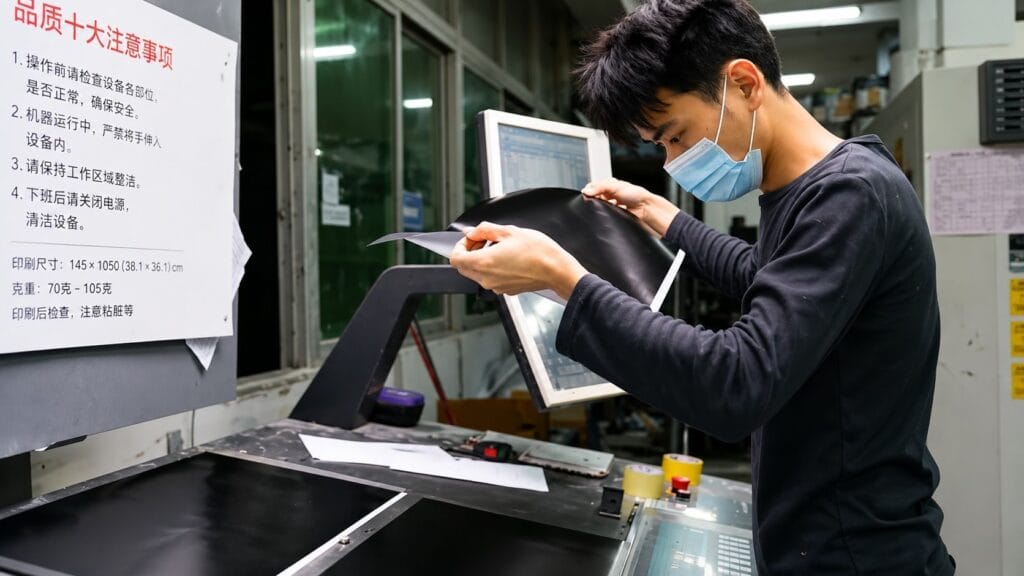
A packaging supplier can look qualified on a catalog page and still fail on the first repeat order. Price lists do not show whether the factory documents its QC checks, keeps a sample approval record, or holds the same spec across reorder batches.
This scorecard gives buyers a repeatable way to compare suppliers: what proof to request, which questions expose process gaps, and what to record before the first PO.
Direct answer: Compare matched samples, documented production capability, quality records, quantity rules, and delivery assumptions on the same basis.
What buyers should verify before shortlisting a packaging supplier
| Requirement | Factory control | Evidence to verify | Order risk | RFQ follow-up |
|---|---|---|---|---|
| Sample approval | Factory holds first-article inspection records and retains sealed reference samples per batch. | Request a production-matching sample; compare against approved digital proof and written spec. | Accepting a non-representative sample may lead to full shipment rejection at destination. | Shortlist only after physical sample passes your dimensional, material, and finish checks. |
| MOQ and order quantity | Factory sets minimum order quantity per production run; volume breaks affect unit cost. | Confirm project-level MOQ in writing; request price breaks for higher volumes. | Ordering below MOQ may trigger tooling charges or extended lead time. | Document agreed MOQ and volume tiers in the RFQ before sample approval. |
| Material / substrate | Factory sources substrate from approved mills and logs lot numbers for traceability. | Request material data sheet or mill certificate; compare against RFQ-specified grade. | Substituting a lower-grade substrate can compromise structural integrity and print adhesion. | Approve material specification in writing; ask for substrate sample swatch. |
| Width or size tolerance | Factory uses calibrated dies and digital measurement tools to hold the buyer-approved tolerance. | Measure three sample units across length, width, and depth; compare to approved drawing. | Out-of-tolerance dimensions cause line jams, poor seal integrity, or carton fit failure. | State acceptable tolerance range in the RFQ; verify on first-article sample. |
| Finish or color control | Factory performs spectrophotometer checks and maintains a signed wet-proof reference. | Request a color standard (Pantone or custom chip); approve a production-run wet proof. | Uncontrolled color drift across batches leads to brand inconsistency and customer complaints. | Approve a physical color standard before production; request a first-run color report. |
Approving a packaging supplier without documented evidence of sample conformance, material traceability, and dimensional control exposes the buyer to shipment rejection and unplanned rework costs. The procurement decision should rest on verifiable factory records—first-article inspection reports, material certificates, and signed color proofs—rather than on generic capability claims. Each specification dimension requires a corresponding verification method that the buyer can enforce during the sample approval gate.
After the buyer confirms the written RFQ with exact commercial numbers—including MOQ, unit price, and lead time—the buyer follow-up is to request a production-matching sample that reflects every approved specification. The sample must be measured, inspected, and compared against the agreed digital proof and written spec before any purchase order is placed. This step transforms the supplier evaluation from a paper exercise into a physical validation that protects the buyer's packaging investment.
Questions to confirm before ordering:
- What is the exact material grade, thickness, and print finish for each packaging item? A vague spec leaves room for the supplier to substitute cheaper materials, causing performance failures or brand inconsistency. Supplier provides a written specification sheet with material grade, GSM, coating type, and color tolerance before quoting. Receiving packaging that fails drop-test, print registration, or barrier requirements, leading to returns or product damage. Document the full spec in your RFQ and require the supplier to confirm each parameter in writing before sample production.
- Which quality control checkpoints does the supplier run during production, and what are the pass/fail criteria? Without defined QC gates, you cannot verify that every production run meets your agreed standards before shipment. Supplier lists in-process inspections (e.g., first-article check, in-line print scan, final random sampling per the agreed sampling plan) with documented limits. Accepting a full container of off-spec packaging that was never caught during production, causing costly rework or disposal. Request a copy of the supplier's QC plan and agree on the sampling standard (e.g., ISO 2859-1) before placing the order.
- How will the supplier verify that the production sample matches the approved proof and written spec? A visual match alone can hide dimensional or material deviations that only appear during bulk production. Supplier uses a formal sample-approval form that compares physical sample against digital proof, spec sheet, and a signed-off reference. Approving a sample that looks correct but fails fit or function in your packaging line, delaying your launch. Require the supplier to submit a signed first-article inspection report with measurements and photos before bulk production begins.
- What is the supplier's process for handling a rejected sample or a failed production batch? A supplier without a clear corrective-action process can stall your timeline or ship non-conforming goods anyway. Supplier provides a written non-conformance procedure: root-cause analysis, rework or replacement plan, and revised delivery date within agreed response time. Waiting weeks for a replacement while the supplier blames the spec, causing missed shelf dates or stockouts. Include a rejection clause in your purchase order that defines response time, rework cost responsibility, and escalation path.
Use this evidence to compare the supplier record with ISO 2859-1 sampling inspection standard before accepting the requirement.
What repeat-order proof to ask for in packaging supplier
- Supplier capability: Does the supplier run offset and digital print lines for packaging customization and dieline specs? In-house die-cutting and sample room with FSC Mix certified paper stock. Supplier outsources all dieline adjustments, causing revision loops. Request a list of print presses and dieline software used.
- MOQ or order quantity: Is the supplier’s MOQ confirmed in the quote request per SKU for custom paper boxes, and can they split across variants? Written minimum order policy with no hidden setup surcharge for first repeat order. Supplier quotes one minimum but accepts a lower quantity only after a verbal promise. Confirm minimum order in writing per SKU and ask for a split-order clause in the quote.
- Quality control: Does the supplier provide a dimensional tolerance report and color density log for each repeat run? ISO 9001 and ISO 14001 certified with on-file QC records for every batch. No written QC checklist; supplier relies on visual inspection only. Request the last three batch QC reports and a sample of the color density log.
- Verification method: Does the supplier submit a production sample from the same tooling and paper lot as the bulk order? Supplier sends a sealed sample with a signed approval sheet and a photo of the die-line match. Supplier sends a hand-made mock-up instead of a machine-run sample. Require a machine-run sample from the production line before approving the bulk run.
- What happens if the repeat-order sample deviates from the approved digital proof? Supplier has a written deviation policy: re-run at no cost. Supplier expects buyer to accept minor color shifts without a formal tolerance band. Define a color tolerance and a re-run clause in the purchase order.
- Supplier cannot produce to your exact packaging customization and dieline specs: Repeat orders may fail dimensional tolerance checks, causing line jams or product damage. Request a dieline match report against your approved CAD file before any bulk production. Dieline overlay proof with measured tolerance values signed by QC Compare the overlay to your master file; reject if deviation exceeds the buyer-confirmed requirement.
- Supplier offers minimum order below 200 pcs without a written exception: Low minimum order often signals short-run tooling that cannot hold repeat-order consistency. Confirm the minimum order in writing per your project-level rule; ask for a production run record. Signed minimum order confirmation and last three order production logs Verify the logs show consistent output across those runs.
- No first-article inspection report provided for a repeat order: Without a fresh sample check, you risk receiving a batch that drifted from the approved spec. Require a new first-article inspection report from the current production run before shipment. First-article inspection report with measurements and pass/fail status Compare the report against your approved sample record; hold shipment until matched.
- Supplier cannot show a documented QC check for material grade or thickness: Material substitution can weaken box strength and cause field failures during transit. Ask for the QC check sheet that records GSM, caliper, and burst strength for each batch. Material test certificate with batch-specific values Cross-check the certificate against your spec sheet; reject if values fall outside tolerance.
- Supplier approval process lacks a written sign-off gate for repeat orders: Without a formal gate, production may start before you confirm the spec match, increasing rework cost. Insist on a written approval step that requires your sign-off before any repeat run begins. Signed approval gate form with date and spec reference File the form with your order record; do not release payment without it.
Use this evidence to compare the supplier record with 6 Questions to Ask Before Choosing a packaging supplier | PCG before accepting the requirement.
RFQ checkpoint
Send product specs, quantity, artwork, target market, sample needs, and supplier-evaluation questions through the contact page.
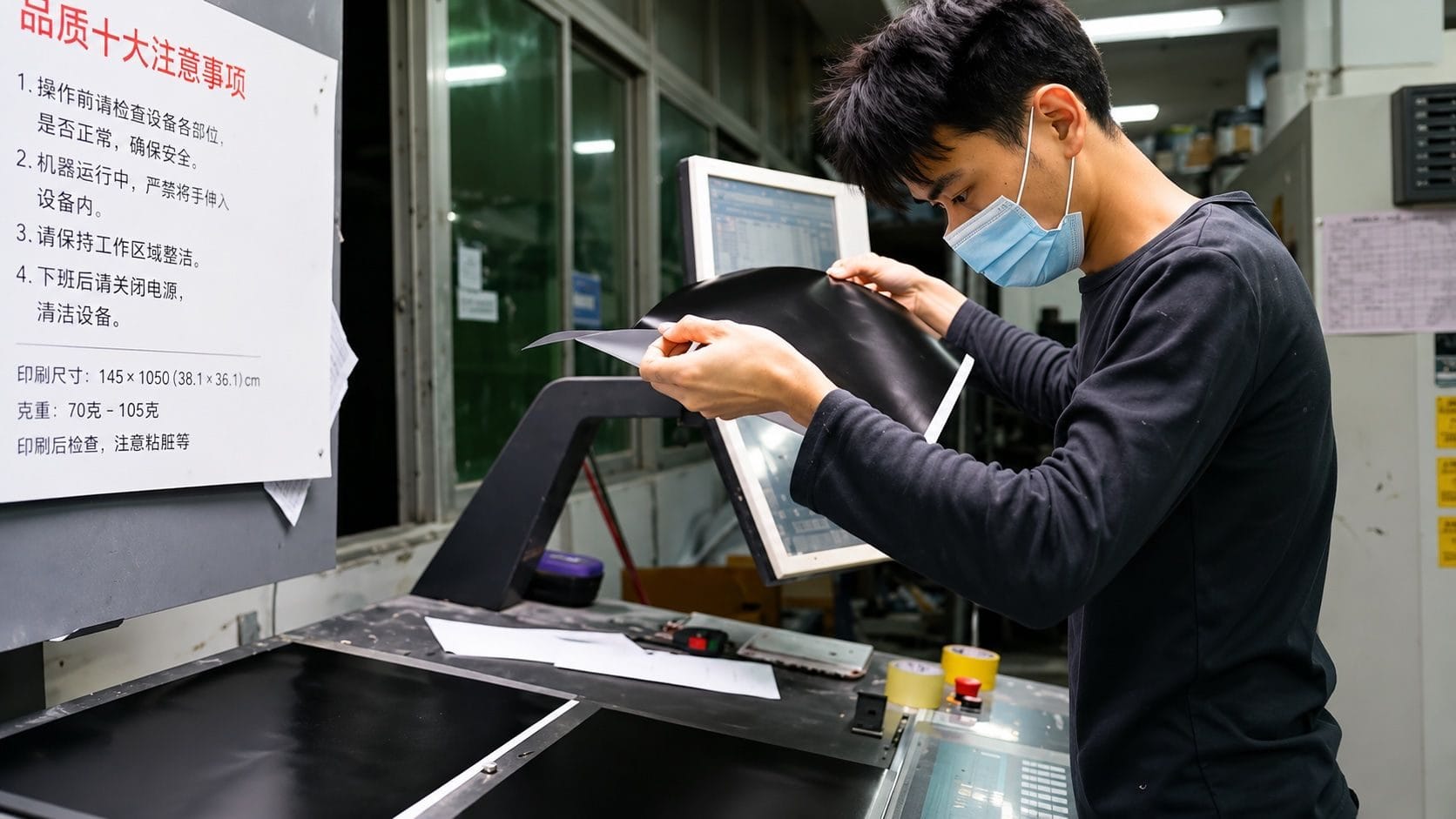
How factory process affects packaging supplier
| Option | Best fit | Trade-off | Risk to avoid | Verification | Follow-up |
|---|---|---|---|---|---|
| Current specification | Repeat orders where the approved sample and artwork are unchanged. | Locks in current tooling and print settings; any change triggers re-approval. | Supplier may drift from the approved proof if process controls are weak. | Request a first-article sample from the production line before bulk run. | Compare the first-article sample against the signed proof and written spec. |
| Alternative specification | Cost-reduction or material-substitution trials on non-critical packaging. | May lower unit cost but can alter stiffness, print color, or fit tolerance. | Swapping board grade or ink without a pilot run can cause field failures. | Run a pilot under the same factory process as the bulk order. | Document the alternative spec and require a signed deviation approval. |
| Custom option | Branded ecommerce packaging solutions needing unique size, finish, or structure. | Adds die-cut or tooling lead time and raises the cost per unit at low volume. | Custom dimensions may not fit standard shipping cartons or automated lines. | Check the factory's die-cut and print capabilities against your 3D or mock-up. | Approve a pre-production sample and confirm the 15–30 working day lead time, counted after specifications, artwork, and sample requirements are confirmed. |
| Safer fallback | First orders or fragile items where protection outweighs aesthetics. | Uses standard corrugated or rigid construction with fewer finish options. | Over-engineering the fallback can inflate cost without adding buyer value. | Confirm the fallback passes your drop test or compression check at the factory. | Shortlist the fallback as the backup spec in the RFQ and sample approval. |
Preserve the current specification decision under a single revision record: keep the supplier response, marked sample, approved specification, quotation, and approval owner together. If the evidence conflicts with the approved record, hold the quote, sample, or production release until the deviation is explained in writing. Once the buyer and designated technical authority have accepted the evidence, carry the signed approval record into the purchase order, production handoff, shipment release, and later reorder review so every team works from the same baseline.
Questions to ask before shortlisting a packaging supplier
When specifications are unclear or approval records missing, the buyer risks receiving non-conforming packaging accessories products that delays production and increases cost. To avoid this, embed verification questions into your quote request process.
Questions about process capability
Ask: “What is your process for ensuring that the production sample matches the quote request-confirmed specification—material type, dimensions, wall thickness, and printing method?” A capable supplier will describe a documented first-article inspection (FAI) and in-process checks. Request a sample approval record from a recent repeat order to confirm consistency.
Questions about quality responsibility
Ask: “Who in your factory is accountable for QC proof before shipment?” The answer should name a quality manager, not just a sales contact. Require that the supplier includes a signed inspection report with every shipment, referencing the approved sample.
Questions about delivery and reorder control
Ask: “What is your reorder lead time based on the last three repeat orders?” This forces the supplier to provide actual data, not a generic minimum order. For reorder control, request a copy of their production schedule showing how they prioritize repeat orders over new ones.
Use the table below to compare supplier responses during quote request evaluation:
| Question | What to verify | Red flag |
|---|---|---|
| Process capability | FAI procedure and sample approval record | No documented process or sample history |
| Quality responsibility | Named quality manager and signed inspection report | Quality handled by sales only |
| Delivery and reorder control | Actual lead time from last three repeat orders | Generic MOQ or no reorder schedule |
Documenting these answers in the quote request handoff ensures that the supplier’s factory execution matches the quoted terms, reducing production risk and cost overruns.
How to move packaging supplier checks into an RFQ
Select a supplier only when their production sample matches every quote request-confirmed specification—material type, dimensions, print tolerance, and structural integrity—without deviation. If the sample fails any measurable requirement, reject and request a corrected sample before proceeding.
Supplier evidence to request
Before order placement, verify the supplier can produce to your exact packaging type (e.g., folding carton, corrugated box, flexible pouch) by reviewing their factory process documentation. Ask: “What is your standard QC check for material thickness and print registration?” This confirms their execution capability without relying on unverifiable claims.
Sample approval evidence
Compare the physical sample against the approved digital proof and written specification sheet. Measure critical dimensions with a calibrated tool, and test closure strength or seal integrity per your product’s handling requirements. Document any deviation; if none, sign off with a dated approval form.
Reorder control records
For repeat orders, require the supplier to submit a first-article sample from the new production run before full shipment. Confirm they use the same tooling, material source, and process parameters as the approved sample. This prevents drift in quality or cost over multiple orders.
| Checkpoint | Buyer Verification Question |
|---|---|
| Supplier capability | Can you share a process flow for my packaging type? |
| Sample conformance | Does the sample match all RFQ dimensions and tolerances? |
| Reorder consistency | Will you provide a first-article sample for each new batch? |
Use this decision rule: only proceed to production when the supplier has passed all three checks—proof of process, sample approval, and reorder control commitment. This eliminates guesswork and ties every step to verifiable evidence.
In conclusion
The final approval of a packaging supplier rests on verifying that the production sample matches every quote request-confirmed specification, that the quoted minimum order and lead time align with your project timeline, and that the supplier’s quality documentation—such as inspection records or first-article reports—is available for review. By comparing options against these concrete checks, you can shortlist a supplier who has passed the sample approval stage and is ready to proceed to production.
To request a quote for packaging supplier, use Xiamen ZHY Packing Co.,Ltd to confirm the final specification, quote assumptions, sample approval, QC evidence, approval risk, and supplier follow-up before bulk order.
packaging supplier FAQ
What should buyers confirm before ordering packaging supplier?
The buyer should confirm the exact product specification—including material, dimensions, and finish—and verify that the project-level minimum order of 200 pcs applies to that specific packaging type. The buyer should also document these details in the quote request to ensure the quoted cost and lead time of 15–30 working days are based on confirmed parameters, reducing the risk of re-quoting or delays.
How should buyers compare MOQ, lead time, and quote terms?
The buyer should compare quotes by checking that each supplier’s minimum order aligns with the project-level minimum of 200 pcs and that the lead time falls within the standard 15–30 working days after spec and artwork approval. To assess cost, request a unit price breakdown tied to the confirmed specification, and verify that any volume discounts or exceptions are documented in the quote. For supplier risk, shortlist only those who provide a written quote with clear terms, and follow up with a sample request to validate quality before committing to production.
What sample, quality, or supplier checks reduce risk?
The buyer should request a pre-production sample that matches the quote request-confirmed specification, then physically compare it against the approved digital proof and written spec sheet. For supplier risk reduction, verify that the factory holds documented certifications like FSC Mix, ISO 9001, or ISO 14001, which Zhypacking can provide on request. Finally, approve the sample only after checking material, dimensions, and print quality, and document the approval to lock in the production standard.
quote request handoff: Send product specs, quantity, artwork, target market, sample needs, and supplier-evaluation questions through the contact page. Send Specs for Review.
For the next step on this route, see our custom packaging supplier Checklist: Proof, Quality, and RFQ Questions.

Ask a Packaging Question