
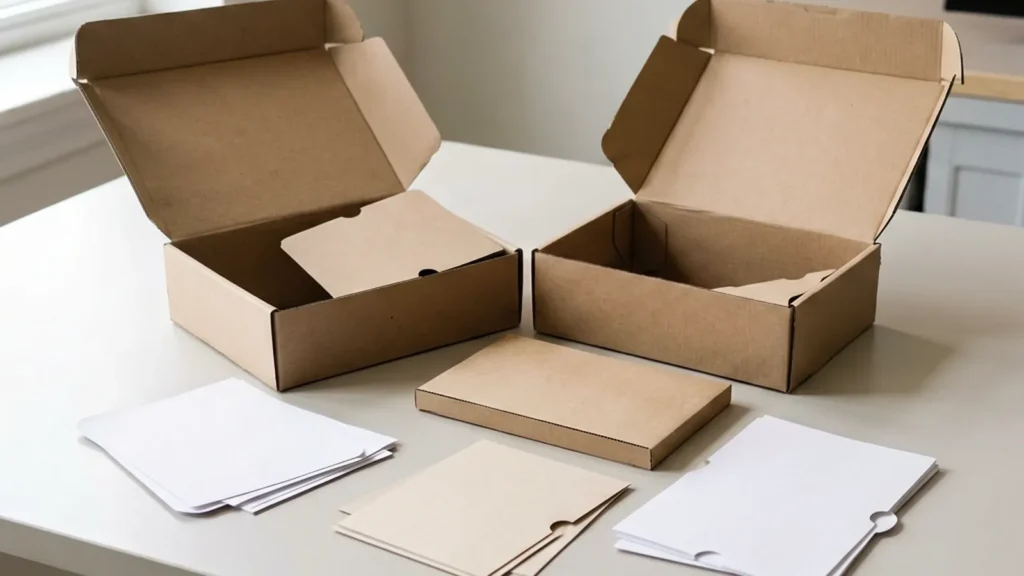
Planning mailer boxes: custom program planning starts with the product dimensions and distribution route, because both affect board, structure, print, insert clearance, packing, and the sample used to release production.
This packaging guide turns those choices into a dieline brief, sample sign-off record, and quote checklist for comparing suppliers on the same specification.
Direct answer: For mailer boxes: custom program planning, align artwork files, dimensions, material and finish targets, a signed-off sample, packing instructions, and the bulk-production handoff in one controlled specification.
Define the Buyer Requirement
The buyer needs to decide which supplier or factory signals are strong enough for the shortlist: what to confirm, what supplier proof to request, and which RFQ, sample, or approval step comes next.
| Requirement | Factory control | Evidence to verify | Order risk | RFQ follow-up |
|---|---|---|---|---|
| Finish or surface effect | Factory applies approved finish swatch to a sample panel before production | Compare production run to sealed finish standard under buyer-approved viewing conditions | Unmatched gloss or texture can cause brand inconsistency across batches | Request a finish mock-up on your substrate before approving the spec sheet |
| Artwork or logo file | Factory preflights file for resolution, bleed, and color space compliance | Check digital proof against your original file at actual size | Low-res or wrong-color artwork leads to reprints and delayed launch | Supply CMYK, 300 DPI PDF with the approved bleed; approve the color proof |
| Sample approval | Factory holds first-article sample for dimensional and print sign-off | Measure critical dimensions with calipers; visually inspect print registration | Unapproved sample can result in full batch rejection at final inspection | Sign and date the sample approval form; return a copy to the factory |
Confirming the buyer requirement for mailer boxes means translating your brand specifications into measurable factory controls. Each line item in this table defines what the supplier must check, how you verify compliance, and the consequence of skipping that gate. The approval sequence protects your program from mismatched finishes, artwork errors, and sample deviations that would otherwise surface only during final inspection or, worse, after delivery. Treat this matrix as your procurement checklist before issuing the purchase order.
Once you have reviewed each requirement, the next buyer action is to attach the confirmed specification sheet to your written RFQ. Do not rely on verbal agreements for finish, artwork, or sample standards. Ask the supplier to confirm the commercial numbers—MOQ, unit price, and lead time—in the quote request response before you approve any pre-production sample. This step locks the commercial terms separately from the technical specs, reducing the risk of cost surprises during production.
For mailer boxes: custom program planning checklist, use the define the buyer requirement evidence check to compare the supplier record with ISO 2859-1 sampling inspection standard before accepting the requirement.
Compare the Available Routes
| Option | Best fit | Trade-off | Risk to avoid | Verification | Follow-up |
|---|---|---|---|---|---|
| Alternative specification | Choose when you need a different board grade, print finish, or size to reduce cost or improve durability. | May require new die lines, sample approval, and extended lead time. | Selecting an untested alternative without a physical sample can cause structural failure in transit. | Ask for a pre-production sample of the alternative spec and test it under your actual fill weight. | Document the alternative spec and submit it for a revised quote and sample run. |
| Custom option | Ideal for unique brand requirements like custom paper boxes with a proprietary coating or insert. | Higher engineering cost, longer development cycle, and minimum order quantity of 200 pcs. | Over-specifying features that add cost but don't improve customer experience or protection. | Review the factory's capability sheet and request a mockup or digital proof before committing. | Provide a detailed brief and ask for a feasibility assessment and cost breakdown. |
| Safer fallback | Use when your primary spec is delayed or the supplier cannot meet the original requirements. | May use standard stock materials and simpler print, reducing differentiation. | Accepting a fallback without verifying it meets your minimum strength and branding standards. | Confirm the fallback spec matches your critical-to-quality parameters: burst strength, print registration, and coating. | Approve the fallback spec in writing and update your internal spec sheet for the current order. |
For alternative specification, a poor decision can mean selecting an untested alternative without a physical sample can cause structural failure in transit. Ask for a pre-production sample of the alternative spec and test it under your actual fill weight. Use the result to decide whether this checkpoint can proceed or must stay on hold.
Preserve the alternative specification decision under one revision number: keep the supplier response, marked sample, approved specification, quotation, and approval owner together. If the evidence conflicts with the approved record, hold the quote, sample, or production release until the deviation is explained in writing. Once the buyer and designated technical authority have accepted the evidence, carry the signed approval record into the purchase order, production handoff, shipment release, and later reorder review so every team works from the same baseline.
For mailer boxes: custom program planning checklist, use the compare the available routes evidence check to compare the supplier record with Top 12 Trusted Custom Mailer Box Manufacturers in the . before accepting the requirement.
Review the Required Proof
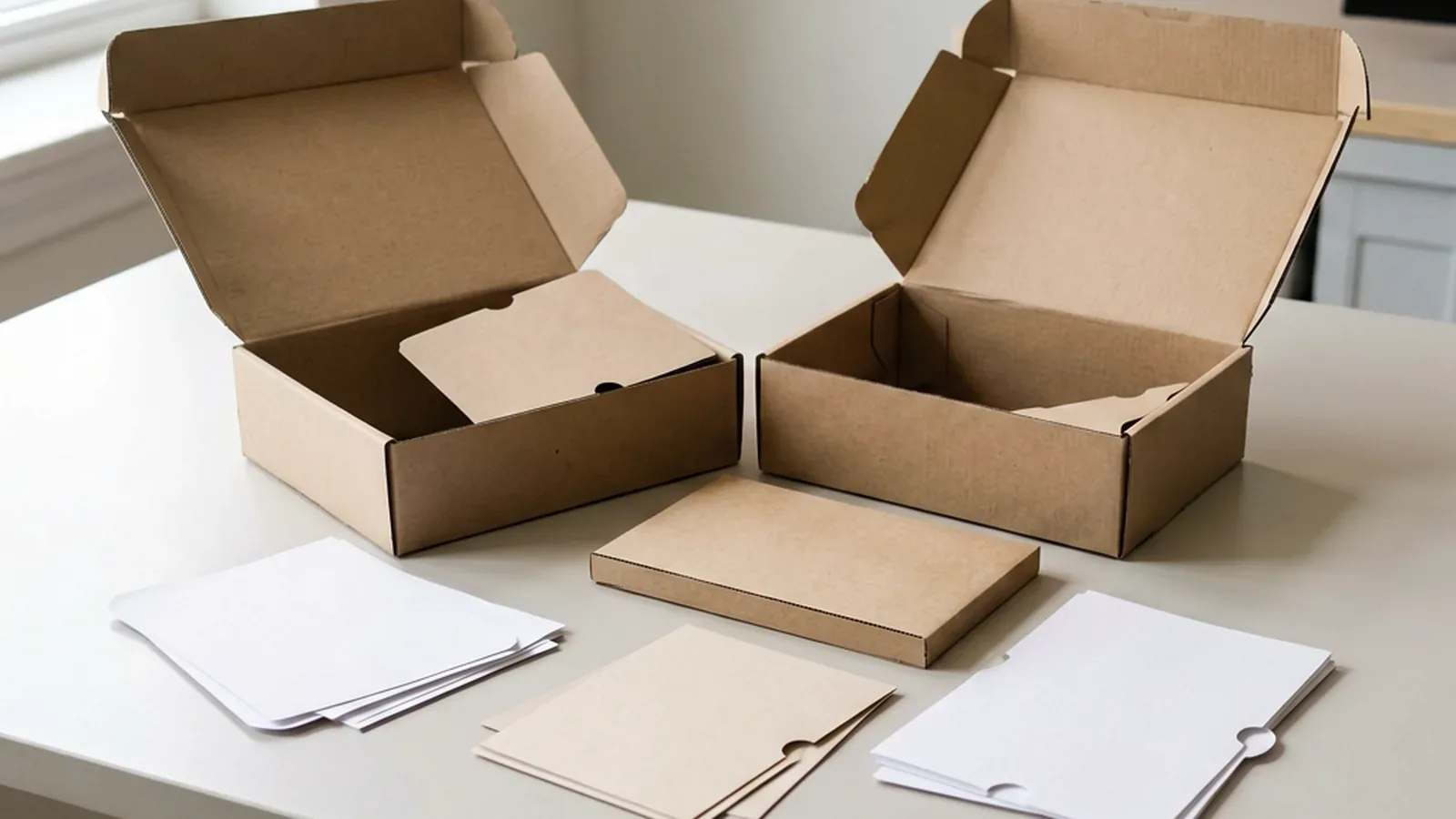
Before approving a production run, verify the physical proof or digital mockup against your spec sheet. This step eliminates costly rework and ensures factory execution matches your design intent.
- Specs & Cost/MOQ: Confirm dimensions, material grade (e.g., E-flute vs. B-flute), print method (offset vs. digital), and any finishing (matte lamination, spot UV). Check that the quoted cost and MOQ align with the proof.
- Production Risk: Inspect for color shift, die-cut misalignment, or structural weakness (e.g., flap closure). Request a folding test and a light-fastness check if using metallic inks.
- Factory Execution: Ask for a signed proof approval form and a production sample from the same run as the final order. Validate that the factory uses calibrated equipment for consistent output.
- quote request/Sample Handoff: Attach the approved proof to your quote request and include a checklist for the sample handoff—include a photo of the proof next to a ruler for scale.
Use this checklist to gate the proof review: mark each item as pass/fail before moving to production.
| Check Item | Pass/Fail |
|---|---|
| Dimensions match spec within the agreed tolerance | |
| Color matches approved Pantone | |
| Die-cut lines align with artwork | |
| Folding test passes (no cracking) |
Once all items pass, sign off and proceed to the next stage. For more on customization steps, see our custom packaging customization.
Build the Decision Asset
At this stage, the record needed before the next stage is a verified supplier shortlist with documented proof of capability. Without this asset, sample approval and reorder control lack a reliable baseline.
Supplier Proof Check
Verify each candidate’s factory process references and capability for mailer boxes. Request quote request documentation and sample handoff protocols to confirm alignment with your spec sheet, cost structure, and production risk tolerance.
Sample Approval Check
Before approving a production run, verify the physical proof or digital mockup against your spec sheet. This step eliminates dimensional, material, or print discrepancies. Document approval criteria and sign-off authority to prevent costly rework.
Reorder Control Check
Establish reorder triggers and quality benchmarks. Define how factory execution will be measured across repeat orders. Use a simple table to track key decision points:
| Checkpoint | Key Action | Risk Mitigated |
|---|---|---|
| Supplier Proof | Verify factory references | Unqualified vendor |
| Sample Approval | Match mockup to spec | Production errors |
| Reorder Control | Set quality thresholds | Inconsistent output |
Use this decision matrix as an approval sequence to ensure each gate is passed before committing to volume. For more on custom program planning, visit custom packaging solutions.
Prepare Comparable RFQ Inputs
- Does the supplier run in-house paper packaging quality control on incoming board stock? Inconsistent board thickness or moisture content causes print misregistration and box failure during fulfillment. Supplier provides a documented incoming inspection log with GSM and moisture readings for each reel or sheet lot. Approving a sample made from premium stock while production uses variable-grade material leads to field failures. Request a copy of the last three incoming inspection reports before shortlisting.
- What verification method does the factory use to confirm mailer box crush strength before shipment? Crush strength directly affects stackability in your warehouse and transit survival through parcel networks. Factory runs an edge crush test (ECT) on every production lot and shares the numeric results with the buyer. Without a documented crush test, you approve a design that may collapse under normal pallet stacking loads. Add ECT minimums to your quote request and require test certificates with each shipment.
- What is the supplier's procedure for segregating first-article samples from bulk production? First-article samples are often hand-made with extra care, so they do not represent actual production quality. Factory runs a separate sample line and provides a written first-article inspection report before bulk release. Signing off on a hand-made sample without a production-equivalent first article leads to rejected bulk units. Require a production-equivalent first article from the same die and print run before approving bulk production.
In conclusion
The final approval for your custom mailer box program comes down to verifying that every specification, cost parameter, and quality checkpoint has been documented and agreed upon. Compare your shortlisted suppliers against the decision matrix you built earlier—check that each candidate can confirm your exact board grade, dimensions, print method, and lead time within the 15–20 working day standard after specifications, artwork, and sample requirements are confirmed. Validate the physical pre-production sample against your approved artwork and structural requirements, then document the reorder triggers and quality benchmarks that will govern future runs. Once you have locked the specification sheet and sample sign-off, you are ready to request a quote and move into production with confidence.
To request a quote, use mailer boxes to confirm the final specification, quote assumptions, sample approval, QC evidence, approval risk, and supplier follow-up before bulk order.
Frequently Asked Questions
How should a b2b buyer plan custom order?
Only if you first shortlist suppliers by their ability to confirm your exact mailer box specifications—internal dimensions, board type, print method, and closure style—before requesting a quote. Compare each supplier’s MOQ (project-level minimum order is 200 pcs) and standard lead time of 15-20 working days after specifications, artwork, and sample requirements are confirmed, then verify sample quality against your approved artwork to reduce production risk.
Which supplier proof should buyers request for mailer boxes?
Request a physical pre-production sample that proves your mailer box’s structural integrity, print registration, and color accuracy before bulk production. Check that the sample matches your approved specification sheet, document any deviations, and approve only after passing a pass/fail gate on dimensions, material thickness, and print alignment to avoid costly rework.
What should buyers lock before approving custom program planning checklist?
Lock the final artwork file, confirmed specification sheet (including board grade, flute type, and coating), and signed-off sample approval before approving the custom program planning checklist. Verify that the supplier’s production lead time and minimum order align with your order volume, and confirm that QC benchmarks for color tolerance and box crush strength are documented in the purchase order.
quote request handoff: Send Specs for Review.
Ask a Packaging Question