
Sourcing is cleaner when the buyer defines use case, required proof, sample decision, and quote inputs before outreach.
Compare suppliers by the evidence behind the quote, not by a single unit price or a generic capability list.
Follow the sample and commercial checks that make supplier replies comparable before bulk release.
Direct answer: For cereal packaging box, release the order only after the intended use, approved construction, test record, commercial terms, and sign-off responsibility all match. If one item remains unresolved, return it to the responsible buyer or supplier before bulk production.
Copy this approval record for cereal packaging box into the RFQ file. Keep every checked item on the same revision before releasing the order.
- ☐ Final specification and intended use
- ☐ Supplier feasibility and documented exceptions
- ☐ Sample or inspection evidence
- ☐ Commercial assumptions, owner, decision, and date
Move the order forward only when each gate leaves written evidence for the next. Return an unresolved specification, sample, or quote exception to its owner before bulk production.
For brand owners and importers, keep cereal packaging box quote-ready: specs to send, proof to request, sample checks to approve, and reorder notes to retain.
Quick Decision: Lock the RFQ Inputs
Lock the board, finished dimensions, closure, artwork, quantity by design, and pack-out before requesting prices. Every supplier should repeat the same baseline, identify any exception, and state which proof will confirm it before production.
- Board and structure: Name the board grade or measurable construction, box style, closure, and tooling status. Ask for a material declaration and dimensioned dieline; reject a response that substitutes a lighter structure without labeling the alternative.
- Artwork and finish: State the artwork revision, print system, color standard, coverage, coating, and special finish. Request a proof and define who approves color or finish changes before the physical sample is made.
- Product fit and pack-out: Provide the filled inner bag or liner, internal dimensions, shelf constraint, units per master carton, and delivery basis. Approve the assembled box with the actual product and record the controlling revision.
Send the baseline as a revision-controlled sheet rather than scattered email notes. The response is complete only when the supplier marks each line as confirmed, proposed alternative, or pending buyer input. Route every alternative back through price, sample, and approval review so a material or structural change cannot enter the production file silently.
Product and Application Requirements
Use one RFQ revision to compare the product, board, print, and pack-out requirements. Each row links the requirement to approval evidence and the buyer action required before production.
| Specification | Quality control | Verification method | Risk to avoid | Buyer action |
|---|---|---|---|---|
| Sample approval | Pre-production sample made with production-intent board, print, and closure. | Compare physical sample against approved dieline, artwork file, and product fit. | Accepting a sample that does not match locked RFQ inputs leads to mid-production cost changes. | Request a pre-production sample and sign an approval record tied to one revision number. |
| Material / substrate | Board grade, caliper, and basis weight per the approved specification sheet. | Measure caliper with a micrometer and verify board grade against the supplier's material certificate. | Substituting a lower-grade board can cause delamination, print defects, or structural failure. | Confirm the board grade in the RFQ and request a material certificate before sample production. |
| Finish or color control | Color match to a signed proof or physical standard under buyer-approved viewing conditions. | Use a spectrophotometer to measure buyer-approved color tolerance against the approved color standard. | Color drift after production start leads to rejected batches and reprint costs. | Approve a physical color proof or digital standard before sample production; request a color report. |
| Packing format | Pack-out configuration: inner liner, bag, or tray, plus master carton quantity and pallet pattern. | Inspect a packed master carton for product fit, closure integrity, and pallet stability. | Incorrect pack-out causes shipping damage, higher freight costs, or retail shelf rejection. | Specify the pack-out format in the RFQ and request a packed sample for approval. |
Read the rows as one approval sequence. Start with a production-intent sample because a sample made to different inputs cannot validate the bulk order. Compare it with the approved dieline, artwork, product fit, board specification, and closure before signing the release.
Keep the supplier response, marked sample, and approval owner under the same revision number. If any proof conflicts with the approved record, hold the quote, sample, or production release until the supplier explains the deviation in writing. Before closing the checkpoint, reconcile the latest drawing, sample, quotation, and approval comments, identify which record controls if they disagree, and document the resolution. Carry the signed requirements table into the purchase order and production handoff so the same checks support quote comparison, sample approval, shipment release, and later reorders.
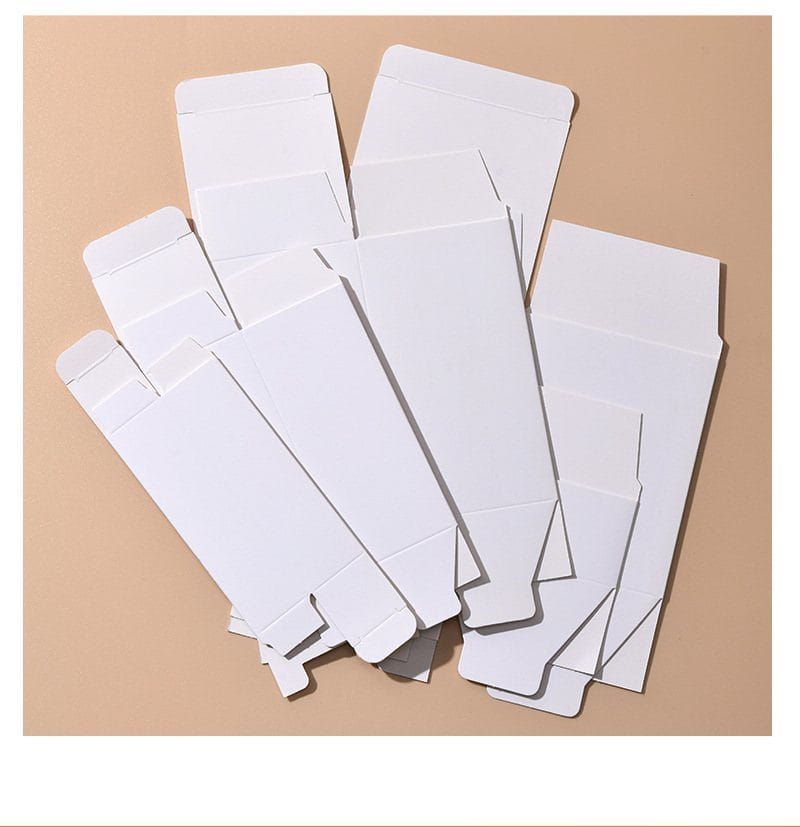
Review packaging dieline and custom packaging specs before freezing the RFQ and sample baseline.
RFQ checkpoint
Check the product route for sizes, structures, materials, finishes, and RFQ details before sampling cereal packaging box.
Specifications That Change the Quote
These four specifications change both the production method and the commercial comparison. Ask each supplier to name the selected input, show how it will be checked, and state any assumption in the quotation.
- What board grade and GSM does the supplier recommend for this cereal box? Board grade drives box rigidity, print quality, and cost per unit. A supplier that cannot specify the grade by name and GSM may lack material control. Supplier names the board grade (e.g., 350 GSM CCNB) and confirms it matches your product weight and shelf stacking requirement. Wrong board grade causes box collapse, poor print adhesion, or mid-production material substitution that changes cost and minimum run. Document the board grade in the quote request and ask for a material data sheet before sample production.
- How does the supplier verify print coverage and color accuracy on this cereal box? Print coverage affects ink cost, drying time, and color consistency. Without a verification method, the sample may not match production. Supplier uses a spectrophotometer and a signed proof, and runs a first-article check before bulk run. Color drift or coverage variation leads to rejected retail packaging and reprint costs that delay shipment. Request a color proof and a print coverage statement before approving the sample.
- What closure method is specified, and does the supplier have tooling for it? Closure method (tuck-end, glue, lock-bottom) changes tooling cost, minimum run, and production speed. A supplier without the right tooling may quote a different method. Supplier confirms the closure method by name, states tooling availability, and includes it in the quote. A changed closure method after sample approval can increase minimum run and cost per unit due to new tooling or setup. Lock the closure method in the quote request and confirm tooling lead time before sample production.
- What is the supplier's QC check for cereal box dimensions and product fit? Dimensions control product fit, shelf presentation, and packing efficiency. A QC check ensures the box matches the approved dieline. Supplier measures length, width, and depth on an assembled sample and compares against the dieline tolerance. Out-of-tolerance dimensions cause product damage, poor shelf fit, or packing line jams, leading to returns and rework. Request a dimensional inspection report with the sample and approve only if within tolerance.
Use ecommerce packaging solutions to align the related specifications and quote request inputs.
Sample and Document Approval
At the process checkpoint, the required output is a signed-off physical sample and a corresponding document package that confirms all specifications before production begins. Without these, the factory cannot proceed to mass production, and any deviation becomes a costly change order.
- Specs, Cost, or MOQ: The sample approval document must list the exact board grade, print coverage (e.g., 4-color process plus spot UV), closure method (e.g., tuck-top with glue flap), dimensions (length, width, depth), and quantity band. Any mismatch between the sample and the quote triggers a re-quote or price adjustment.
- Production Risk: A signed sample reduces the risk of color mismatch, structural failure, or print registration errors. The factory uses the approved sample as the sole reference for setup, cutting, and printing. Without it, the production line may interpret the spec differently, leading to rework or scrap.
- Factory Execution: The factory’s quality team holds the sample and document package as the master control. They compare each production run against it. If the sample shows a specific die-cut line or fold score, the factory must replicate that exactly. Any deviation requires a new approval cycle.
- RFQ/Sample Handoff: The handoff from RFQ to sample approval includes a document with the buyer’s signature, date, and a checklist of all critical parameters. The factory then issues a production-ready file and a pre-production sample for final sign-off. This step closes the RFQ loop and opens the production order.
For more on our factory process, see paper packaging quality control.
Cost, MOQ, and Lead-Time Drivers
Price and timing should be traced back to the board, converting method, artwork coverage, tooling status, run quantity, and approval sequence. Ask suppliers to separate those inputs instead of returning one unexplained unit figure.
MOQ structure by material and process
The minimum run may change when the selected board must be ordered separately, when a print process needs dedicated setup, or when multiple artworks cannot share the same production layout. Request the threshold for each material-process combination and a second quantity tier so the trial order is not compared with a different production basis.
Sampling and bulk lead-time assumptions
Ask the supplier to separate dieline confirmation, proofing, physical sampling, buyer approval, material preparation, converting, and packing. The production schedule should begin from a named approval event and identify which dates move if artwork, structure, or color proof changes.
Rush-order and reorder constraints
A rush request is credible only when the factory confirms material availability, tooling readiness, and the inspection step that will not be skipped. For a repeat order, verify whether the old tooling, approved color standard, and packing record remain usable or require a new check.
RFQ Handoff and Supplier Questions
At the quote request handoff checkpoint, the required output is a complete, unambiguous quote brief that your supplier can price without follow-up calls. Before sending, verify that every variable that changes cost or risk is written down: board grade, print coverage, closure method, dimensions, and quantity band. If any of these are missing, your quote will come back with assumptions that may not match your actual needs.
Use the following ordered list to structure your handoff and supplier Q&A:
- Specs lock: Confirm board grade (e.g., 24pt SBS vs. ECT-32 corrugated), print coverage (spot vs. full bleed), and closure method (tuck-end, glue, or lock-bottom). Ask: “What board grade and print coverage did you base this quote on?”
- Cost and minimum run clarity: Request a line-item price breakdown by component (board, printing, finishing, tooling) and ask: “What is the minimum run for each component, and how does price scale at 1.5x and 2x volume?”
- Production risk: Ask: “Which spec is most likely to cause a production delay or quality issue, and how do you mitigate it?” This reveals whether the supplier flags risks proactively.
- Factory execution: Confirm how they handle print color matching and dimensional tolerances. Ask: “What is your process for approving a print proof before full production?”
Additional RFQ items include sample and quote request handoff: Request a pre-production sample and a written spec sheet that matches your quote request. Ask: “What documentation do you provide with the sample, and how do I sign off on it?”.
These questions turn your quote request from a price request into a risk-management tool. For a deeper look at paper box options, see our paper box size options.
In conclusion
For cereal packaging box, the next procurement action is a written RFQ and sample approval record, not only a preferred style or unit price. Confirm the specification, MOQ assumption, artwork version, supplier capability, sample approval method, QC checkpoint, approval risk, and quote follow-up before bulk production.
If any material, structure, logo, finish, packing detail, or supplier proof changes, ask the supplier to update the quote and sample record before approving production.
Frequently Asked Questions
What inputs should buyers confirm for cereal packaging box?
Lock the finished dimensions, board grade, print coverage, closure, insert or liner, order quantity by artwork, and pack-out. Require the supplier to repeat these inputs in its response and label every exception.
What sample evidence is needed for cereal packaging box?
Use a production-intent sample tied to the approved dieline and artwork. Record product fit, closure performance, color approval, board declaration, and any limitation that the sample does not test.
What should be included in a cereal packaging box RFQ?
Include the frozen specification, artwork revision, quantity bands, sample level, packing method, delivery basis, approval owner, and requested delivery window. Ask the supplier to itemize tooling, proofing, production, and logistics assumptions.
What MOQ should buyers confirm before approving cereal packaging box?
Ask whether the threshold applies per size, artwork, material, or combined production run. Put the answer beside the corresponding price tier and obtain separate reorder terms.


Ask a Packaging Question