
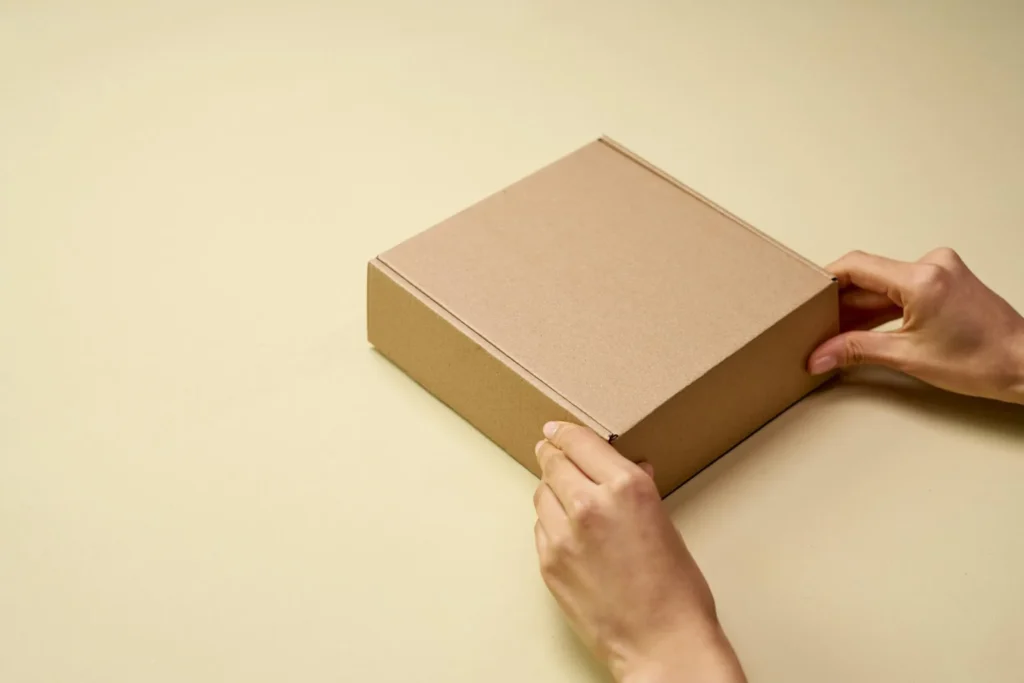
Planning custom kraft paper boxes starts with the product dimensions and distribution route, because both affect board, structure, print, insert clearance, packing, and the sample used to release production.
This packaging guide turns those choices into a dieline brief, sample sign-off record, and quote checklist for comparing suppliers on the same specification.
Direct answer: For custom kraft paper boxes, prepare the RFQ by locking measurable specifications, sample evidence, packing details, quantity terms, and approval checkpoints before requesting a supplier quote.
Why kraft quotes diverge before pricing starts
Kraft quotes separate long before anybody multiplies a unit cost, because each factory fills the empty specification fields with its own default. One supplier prices a tuck-end carton cut from 300 gsm kraft board with a single spot colour; another prices a self-locking mailer on E-flute with a laminated wrap. Neither offer is dishonest, and the two totals describe different objects. The damage lands later, at sample stage, when the buyer who awarded the lowest number discovers that the cheaper build was the lighter one and the programme restarts from a dieline.
Three commercial assumptions ride inside that gap. Volume first: the project minimum order quantity is 200 pcs, and a kraft run below it is a stock-item conversation rather than a custom one. Volume is also the strongest cost driver in this family, because plate, die and make-ready work are paid for once and then spread across the run, so a price taken at trial size and released at scale is not the price that was quoted. Schedule second: standard production is 15–30 working days, and that clock starts when specifications, artwork, and sample requirements are confirmed rather than when the purchase order is signed. Every unresolved field — a board substitution, a colour standard, a put-up — is another round trip inside a delivery window you have already promised downstream.
Cost then moves in a stable order on kraft work: quantity, printing and finishing, paper and material, structure and size. Uncoated kraft is inexpensive on material and demanding on print discipline, which is why the build that looks most affordable is usually the one where the artwork was quietly reduced to a single dark colour on a lighter sheet. That can be the right answer. It should be an answer you chose rather than one nobody mentioned.
The table below is the specification record that closes those fields. Each line names what a quote is quietly assuming, what happens when the assumption stays unwritten, how to check it, and what to send next.
| Spec | Acceptable range | Risk if ignored | Verification check | Next action |
|---|---|---|---|---|
| Structure family | Mailer, tray and sleeve, or tuck-end carton, named per SKU | Two factories price different builds and the gap reads as margin | Compare the dieline each offer is drawn from, not the rendered image | Name the structure on every RFQ line |
| Board construction | Kraft board 250-450 gsm, plus E, B or EB flute where the box carries load | Cartons crush under stack weight and the loss is filed as transit damage | Weigh a board sample cut from the production lot | State gsm and flute profile in the spec sheet |
| Fibre and tone | Recycled or virgin kraft, with a batch tone reference held on file | The reorder arrives a visible shade away from the first delivery | Keep a signed sheet from the approved run as the tone standard | Attach the tone reference to the approval record |
| Print route | Spot colours on uncoated kraft, or a laminated wrap for full-colour artwork | Artwork approved on a screen and then printed on a brown porous sheet | Require a press proof pulled on the production board | Attach the proof requirement to the RFQ |
| Packed dimensions | Inner size of the filled product plus the clearance the pack line needs | Boxes hold the product but jam at the erecting station | Fit-test the sample with the production unit rather than a prototype | Send inner and outer dimensions together |
| Put-up | Flat or erected, boxes per inner, inners per master carton | Freight quoted against the wrong cube, and the margin goes at the container | Confirm the master carton build and measure the stacked cube | Record the put-up on the purchase order |
Send these quote inputs beside the table, as one document, and ask each factory to return it filled in:
- Structure per SKU, described as a build rather than as a style name.
- Board grade and fibre type, with the gsm tolerance you will accept.
- Colour count, ink type, and whether an opaque base is needed beneath any pale area.
- Inner dimensions of the packed product and the erecting method at your line.
- First-release volume, plus the reorder cadence you expect behind it.
- Sample terms, the person on your side who signs the approval, and the inspection point you intend to use.
Suppliers publish their own defaults openly, which is useful. One converter specification sheet lists kraft paperboard at 300 to 400 gsm beside white SBS and corrugated E-flute options — three builds sold under a single keyword. The demand side shows the same spread: kraft paper boxes are marketed across food, retail, cosmetics, e-commerce and event packaging for their flexibility, strength and natural premium appearance, which is a wide range of loads for one word to carry. Kraft names a family, and a family cannot be priced. Send the fields, collect the returned sheets, and let the blanks do the shortlisting before any money moves.
Kraft is sourced against a written grade, not a label. The published specification for machine finished kraft paper defines the sampling and test methods for kraft used in dry-food packaging, which is exactly the reference you can name in an RFQ. Without it, two suppliers can both answer ‘kraft’ and still quote different basis weights, moisture content and strength. Name the grade and the test method, and the returned sheets become comparable.
Structure choice: mailer, tray or sleeve
Structure decides how a kraft box is manufactured, and it is the first field a serious factory will want closed before it quotes. A mailer is one die-cut blank that travels flat and locks itself at the pack station. A tray and sleeve is two components, which means a second die, a second gluing pass and an assembly step somebody has to staff. A tuck-end carton is the lightest build of the three and the least protective. Choosing between them is a supplier question as much as a design question: not every plant runs the gluing and erecting capacity for a two-part sleeve at volume, and the factories that do price it very differently from the ones that subcontract the step and hope nobody asks.
The wrong structure is also a quality problem disguised as a design problem. A sleeve that was priced for hand assembly arrives at an automated line and stops it; a mailer chosen for a heavy jar fails at the base seam and the returns are recorded as product damage. Put the questions below to each shortlisted manufacturer before the structure is frozen, and judge the answers on whether they describe a build or a brochure.
- Which of the three structures do you run in-house, and which step leaves your floor?
- What is the largest dieline your gluing line handles, and what does a bigger blank add?
- Can you show a packed sample of this structure at my product weight, and what inspection did it pass?
- Which build would you recommend for a parcel route, and what failure are you designing out?
- How is the structure recorded on the approval sample so a reorder two years later matches it?
Converters tend to sell the surface and leave the build to a default. A wholesale offer such as custom product boxes with logo printing leads on low minimums and free design support and says nothing about which structure the price assumes — which is exactly the field you have to fill yourself. Name the structure on the RFQ line and use the vocabulary your supplier uses, so the mailer boxes paper boxes family and the tray-and-sleeve family are never collapsed into one quoted item.
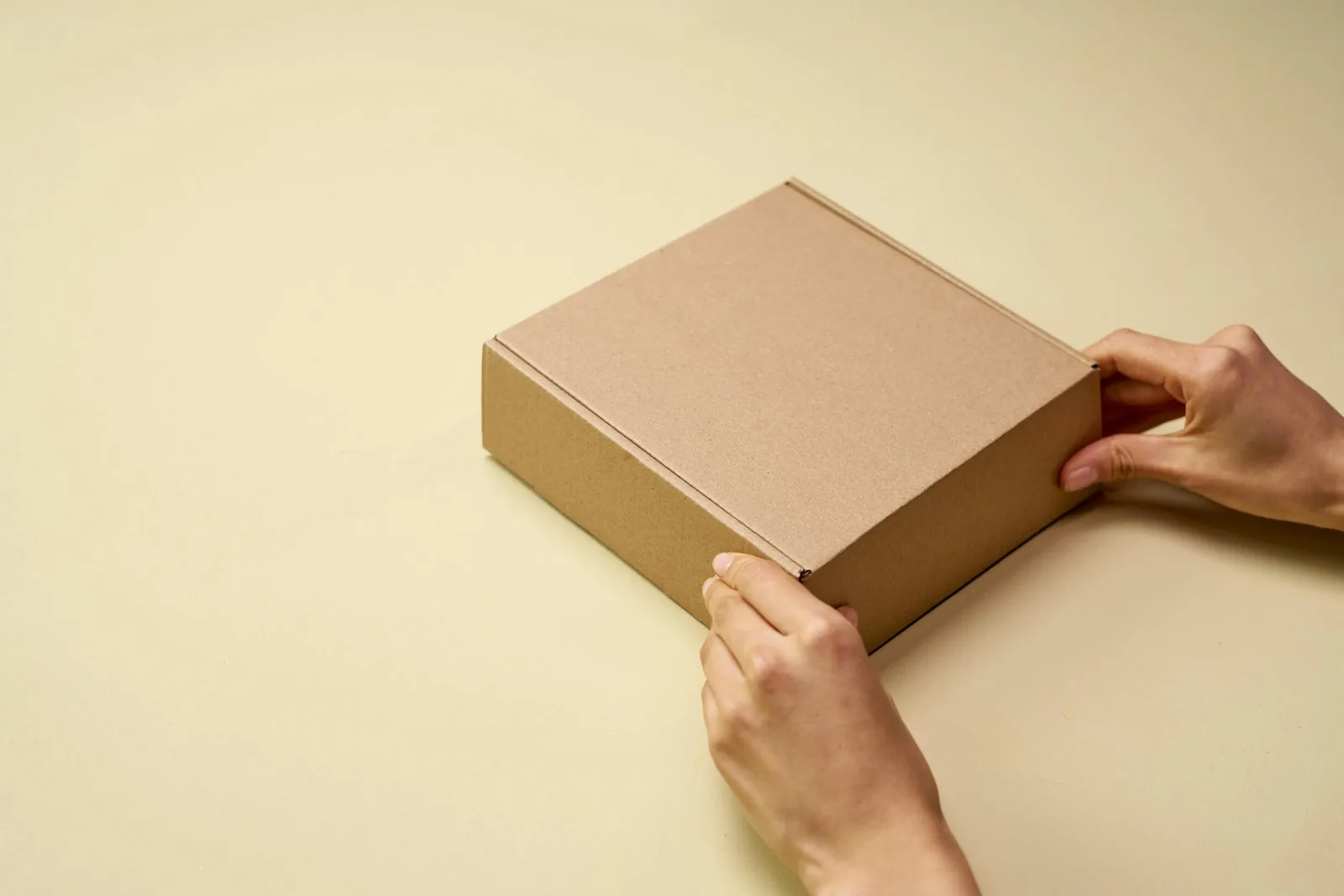
Board grade and the weight it must carry
Board grade is the load path of a kraft box, and it should be chosen from the heaviest moment in your route rather than from the weight of the product sitting on a shelf. A light carton that stacks six high inside a master carton needs more crush resistance than a heavy carton that ships loose in a fitted tray. Specify the sheet by gsm and fibre, never by the word kraft alone, and write down what the finished box has to survive: packed product weight, stack height, whether it travels flat or erected, and how many times it is handled before the customer opens it.
Material and specification fit
Kraft board for a folding carton usually sits in the 250-450 gsm band, while corrugated builds use E, B or EB flute where the box has to stack or survive a parcel drop. Recycled fibre is stiffer for its weight and duller in tone; virgin fibre prints cleaner and costs more. Both are legitimate. The defect to avoid is an unspecified sheet, because an unspecified sheet is one the factory chooses for you on the day it runs your job. Ask which mill sheet the price assumes, what substitution policy applies when that sheet is unavailable, and whether a substitute comes back to you for approval or simply appears in the shipment.
MOQ, cost structure, and lead time
Grade is where quantity and schedule meet. The project minimum order quantity is 200 pcs, and a heavier sheet or a second component pushes the same run into a longer window; standard production is 15–30 working days once specification, artwork and sample requirements are all confirmed. Heavier gsm raises material spend directly. A substituted sheet raises it indirectly, because a factory covering an unavailable grade quotes the nearest alternative and leaves the buyer to find the difference at incoming inspection. Price the grade you wrote down, and treat every change to it as a re-quote rather than a note in the packing list.
Supplier reliability and quality checks
A dependable manufacturer will state the gsm tolerance it holds, the instrument it measures with, and where in the run the measurement happens. Require a board sample cut from the production lot rather than a swatch book, weigh it, and record the result against the approval sheet. Where the programme needs documented fibre sourcing, FSC Chain of Custody is the certificate to request, and its scope is the part worth reading: it certifies paper and paperboard conversion, not the environmental performance of your finished product. Finishing and print options that a chosen grade has to carry are set out on the custom packaging customization page, and each of them adds a pass that the board must tolerate without cockling or cracking at the fold.
Print limits on uncoated kraft
Uncoated kraft absorbs ink instead of sitting on top of it, so the print specification has to be written against the sheet rather than against a mockup on a white screen. This is where most kraft programmes lose their artwork: the design is approved in a bright digital proof, then produced on a brown, porous, unevenly toned board that swallows pale tints and shifts every colour toward the fibre.
Decision criteria to confirm
Decide what the artwork has to survive before deciding how many colours it gets. Process CMYK loses contrast on kraft, tints below a heavy ink film go muddy, and white appears only where an opaque base is laid down first. One or two spot colours in a dark ink read sharply and hold from run to run, which is why they are the default for this material. If the brand artwork depends on pale tints or a photographic hero, that is a decision to take now, because the alternative — a printed wrap laminated to the kraft — is a different component with a visible seam, an extra conversion pass, and a quality profile that has to be approved separately.
RFQ details to send
Write the print route into the quote request as measurable fields: ink type, number of colours, whether an opaque base is required, coverage described as an area of the dieline rather than as a vague full-colour claim, and the board the offer assumes. Name the colour standard — a Pantone reference or an approved physical swatch — and state which of the two wins when they disagree on a brown sheet. Varnish, foil and embossing each need their own line, because each is a separate pass with its own tool, and a quote that bundles them is a quote that cannot be compared against one that does not. Public kraft ranges itemise the same list — window die-cuts, foil stamping, box inserts, embossing and spot UV all appear as separate add-ons in custom kraft box finish options — and every line on it is a line the offer has to price.
Production handoff details
Proof on the board you are buying. A monitor proof, or a sheet pulled on coated white stock, tells you nothing about ink hold-out on uncoated kraft. Require a press proof or a drawn sample on the actual production sheet, signed and dated, and file it with the purchase order. At handoff, confirm which approved proof the run is matched against, who on your side signs off a colour deviation, and what happens to the batch when the deviation sits outside the agreed tolerance. That last answer is the one that decides whether a disagreement stays a negotiation or becomes a rejected container. Route options for combining print with other packaging components are described on the custom packaging solutions page, and the proof is the document that makes any of them enforceable.
Size logic before the RFQ
Size is the one specification a buyer can settle without a factory, and it is the field most often handed over blank. A quote requested against a product weight and a photograph returns a box the supplier invented. Working the dimensions out first takes an afternoon and removes the largest single source of quote variation, because every downstream decision — board grade, structure, put-up, master carton — is downstream of the packed size.
Run the sequence below in order. Each step produces a number or a decision that the next step depends on, and skipping one means the following answers are guesses dressed as specifications.
- Measure the product in the state it ships: assembled, filled, wrapped, with any insert, tissue or desiccant already in place. A bare product measurement is the most common origin of a box that will not close.
- Add the clearance your pack station actually needs. Hand packing tolerates a snug fit; an automated erecting and filling line does not, and the jam shows up as a line stoppage rather than as a packaging defect.
- Decide whether you own the inner dimension or the outer one. Retail shelf space and courier surcharges constrain the outside; product fit constrains the inside. Give the factory both, and say which one is fixed.
- Convert the packed size into a flat dieline envelope and check it against the largest sheet the converter can run. A box that needs an oversized blank is a box that gets redesigned later, at your expense rather than theirs.
- Choose the erecting method and test it. Self-locking bases, tuck flaps and glued sleeves behave differently under load, and the difference is only visible once the box is filled and stood on its corner.
- Set the put-up: flat or erected, boxes per inner, inners per master carton, and the pallet pattern behind that. Cube is where a well-sized box can still lose money, because a loose put-up ships air.
- Record the tolerance you will accept on each dimension and the method used to measure it. A tolerance nobody wrote down is a tolerance argued about after the container is loaded.
Verification is what turns these numbers into a specification rather than a preference. Fit-test the approval sample with the production unit, not with a prototype or a hand-made mock, and do it at the speed your line runs rather than on a bench. Then stack the filled boxes to the height they will travel at and leave them there long enough for the board to relax — kraft creeps, and a carton that passes a ten-second squeeze can fail an eight-hour stack.
Where a defect appears, record it against the dimension that caused it and not against a general workmanship label. A lid that will not seat is a flange tolerance; a box that bows is a board grade; a carton that arrives crushed is a put-up. Naming the cause is what lets the next order be corrected instead of re-inspected. The inspection stages this feeds into are described on the quality control process page, and the dimensional record is the evidence those stages run on.
Only then send the quote request. A quote request that carries the packed dimensions, the fixed side, the erecting method, the put-up and the tolerance returns offers that can be laid side by side. One that carries a photograph returns seven different boxes with seven different prices, and comparing them is a job for a sample room rather than a spreadsheet.
Checks to finish before requesting quotes
A quote request is a document, and the quality of the answers you get back is set by the quality of that document. Kraft programmes often lose time here, not in production: the offer arrives, a field turns out to be missing, the question goes back, and the sample clock restarts. Closing the checks below before you send anything is what separates one comparable set of offers from five descriptions of five different boxes.
- Freeze the structure and board on a single page, per SKU, and give that page a revision number. Every later conversation refers to the revision rather than to an email thread.
- Attach artwork in a print-ready form: outlined type, embedded images, dieline on its own layer, bleed stated, and the fold and cut lines distinguished from each other. A flattened JPEG invites the factory to redraw your artwork, and the redraw is what gets approved.
- State the colour standard and the proof you will accept. Name the reference — a Pantone code or a physical swatch — and require the proof to be pulled on the production board rather than on a coated substitute.
- Define the inspection point and the acceptance level. Say whether you inspect at the factory, at the port, or on arrival, and what sample size and defect threshold the lot is judged against. An inspection with no written level is an argument.
- List the documents the shipment needs: packing list, commercial invoice, certificate of origin, and any fibre-sourcing document the programme relies on. Requesting them after booking is slower and more expensive than requesting them at quote stage.
- Set the sample gate. Specify how many samples, on which board, in which finish, who pays, how long the round trip takes, and who signs. The signature matters more than the sample: an unsigned approval is an approval nobody can produce during a dispute.
- Name the approval owner on your side and the counterpart you expect on theirs. A quote answered by a sales desk and approved by a production manager is a quote that changes between those two people.
- Write the volume and the reorder expectation, including whether the artwork will be versioned per market or per season. Repeat orders are where a well-documented first run pays for itself.
Quality checks are worth finishing before the quote rather than after the sample, because a defect you did not define is a defect you will discover. Decide now which failures you treat as critical — a base seam that opens, a board grade below specification, a colour outside the agreed tolerance — and which you treat as minor. Then say how each is measured and who measures it. A factory that is told the acceptance level in advance prices the job once; a factory that is told afterwards prices it twice and adds a contingency the first time.
Verification at this stage is documentary, and that is the point. Each item above should leave a file: the frozen specification page, the artwork package, the colour reference, the inspection plan, the document list, the signed sample record. When the offers come back, the files are what let you compare them line by line instead of reading five paragraphs of adjectives.
Send the pack as one attachment and ask for it returned completed, with every field either filled or explicitly marked as an assumption. The marked assumptions are the negotiation, and the unfilled fields tell you which parts of the programme that factory would be guessing about. That is a stronger shortlisting signal than any turnaround promise, and it costs nothing to obtain.
In conclusion
A kraft box offer is only comparable when every factory priced the same structure, the same board, the same print route and the same put-up. The checks above exist to take those four variables out of the negotiation, so what remains is a real difference in capability and cost rather than a difference in assumption. The commercial exposure in skipping them is not a higher price; it is a container of cartons that will not erect on the pack line, discovered after the deposit has cleared.
Send the specification as one document, request the filled sample, compare the returned sheets line by line, and approve the factory that answered the fields rather than the one that answered fastest. The custom paper boxes route carries the family options behind this specification, and it is the page to validate against before the quote request goes out.
FAQ
Which kraft structure ships flat?
Mailers and tuck-end cartons do, because each is a single die-cut blank that folds at the pack station. A tray and sleeve ships as two flat components that somebody has to assemble, so the saving in cube is partly given back in labour. Rigid erected boxes do not travel flat at all. Whichever you choose, put the put-up on the quote request and confirm the count per master carton, because flat and erected versions of the same design are priced and freighted differently.
Can one-color print hold on recycled kraft?
It is the most reliable route on that material. Recycled sheet varies in tone from batch to batch, and a single dark spot colour absorbs that variation far better than a pale tint or a four-colour build, which both drift visibly across a run. Require a press proof on the production sheet, agree the batch reference the run is matched against, and keep a signed copy with the order.
Do customers really care about custom packaging?
In a wholesale programme the question that actually decides the order is whether the receiving party accepts the box. A retail buyer inspects shelf presentation, an e-commerce team inspects damage on arrival, and an importer inspects whether the carton survives the route. Ask whoever signs the delivery what their acceptance criteria are, then write those criteria into the approval sample so the answer is documented rather than assumed.
What should buyers verify before approving custom kraft paper boxes?
Five things, in this order: board gsm and fibre against the specification sheet; packed dimensions against the production unit rather than a prototype; colour against the signed proof pulled on the actual board; closure and erecting method against the speed of your line; and put-up against the master carton. Approve a filled sample, not a loose one, and record who signed it and on what date.
Where can I buy Kraft paper window boxes?
Window patching is a converting operation rather than a catalogue item, so the useful question is which steps a converter runs itself: the film, the die, and the patching station. Ask what film thickness and clarity the window uses, whether the patch adhesive is compatible with your product, and how the window is inspected for lifting at the corners. Then treat the window as a separate approval line on the sample sheet, because it fails on its own and not with the board.
quote request handoff: Send Specs for Review.

Ask a Packaging Question