
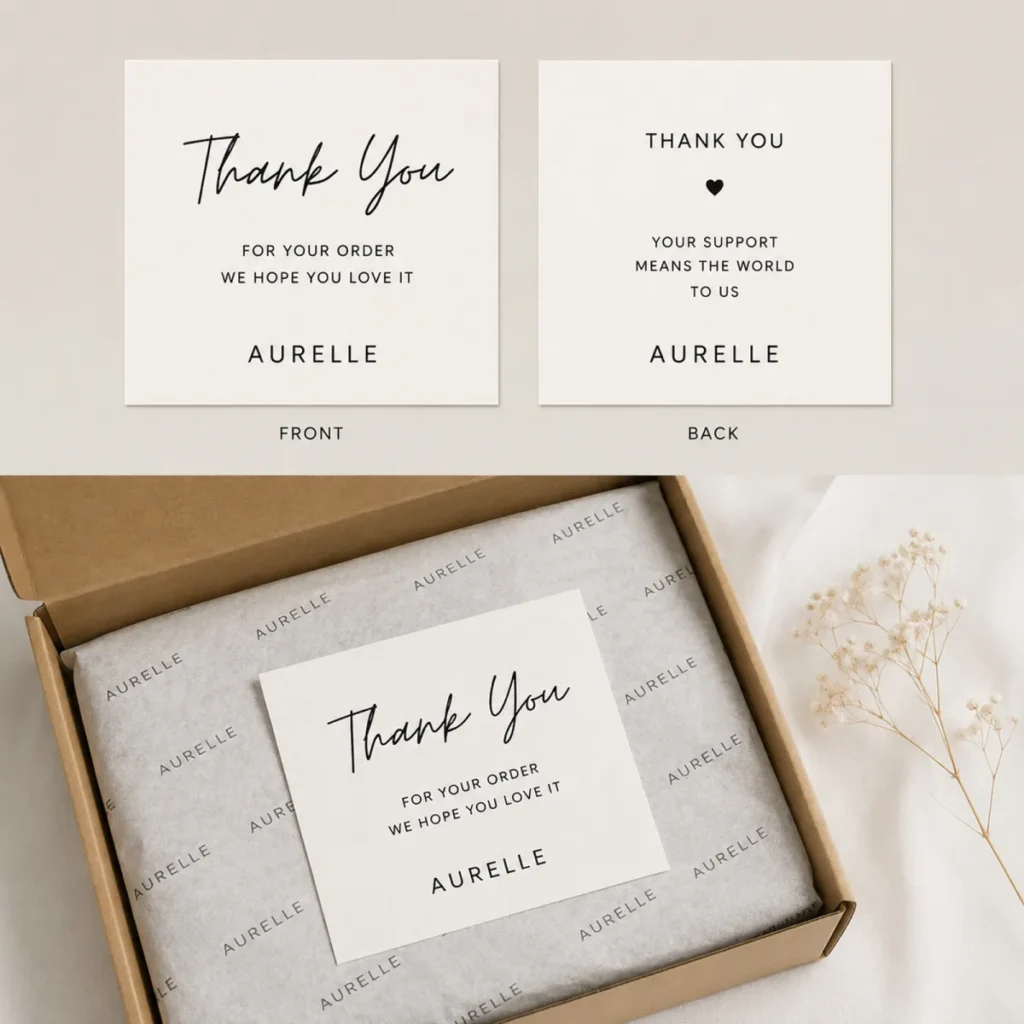
Quotes drift when artwork files, print targets, material choice, finishing, and sample sign-off live in separate messages.
Quote review should connect the design file to physical sample evidence before print or finish is approved.
Use this guide to decide what to send, what to sample, and what proof to keep before bulk production.
Direct answer: Release this program only after artwork revision, production material, finish sample, packing proof, and commercial terms are approved together.
For brand owners and importers, keep the card order quote-ready: specs to send, proof to request, sample checks to approve, and reorder notes to retain. The supplier review should connect those requirements to custom cards printing, so the quote, specification, sample proof, and QC record describe the same production target.
Define the Card Use Size and Pack-Out
| Specification | Quality control | Verification method | Risk to avoid | Buyer action |
|---|---|---|---|---|
| Finish or surface effect | Confirm finish type (matte, gloss, soft-touch, foil) is uniform and defect-free. | Perform tape pull test and rub test on production-intent stock sample. | Wrong finish causes ink rejection, pen smudge, or flaking during handling. | Request a production-intent sample with finish applied; approve only after tape test passes. |
| Packing format | Verify pack-out method (shrink wrap, paper band, or poly bag) is itemized in quote. | Request a sample run to confirm insertion compatibility and pack-out integrity. | Mismatched pack-out causes fulfillment line slowdowns or damage in transit. | Ask supplier to confirm standard pack-out format for your card size and quantity. |
| Sample approval | Sign off physical sample matching approved artwork, finish, and size. | Compare sample against approved specification, die line, and finish swatch. | Approving without sample leads to production deviations and rework cost. | Shortlist supplier who provides pre-production sample with tape pull and rub test results. |
| MOQ and order quantity | Confirm the MOQ for this card specification in the RFQ. | Request written MOQ confirmation in quote; compare to approved specification. | Ordering below MOQ triggers setup surcharges or delays lead time. | Verify MOQ in RFQ and confirm price break tiers for larger quantities. |
Keep the supplier response, marked sample, and approval owner under the same revision number. If any proof conflicts with the approved record, hold the quote, sample, or production release until the supplier explains the deviation in writing. Before closing the checkpoint, reconcile the latest drawing, sample, quotation, and approval comments, identify which record controls if they disagree, and document the resolution. Carry the signed table into the purchase order and production handoff so the same checks support quote comparison, sample approval, shipment release, and later reorders.
Set finished size orientation and quantity per order
Specify the card’s finished width, height, and orientation relative to the envelope slot or insertion machine tolerance. Confirm the paper stock’s ability to accept handwritten notes without smudging or bleeding by requesting a tape pull test and rub test on the production-intent stock. Compare the results against your approved finish swatch before approving the specification.
Questions to confirm before ordering:
- Verify the paper stock’s ability to accept handwritten notes without smudging or bleeding by requesting a tape pull test and rub test on the production-intent stock. A finish that smudges under pen pressure or flakes during handling ruins the customer’s unboxing experience and increases return rates. As an illustrative example, a coated stock may reject ink adhesion, causing the handwritten message to smear, while an uncoated stock may bleed if not sealed. Without these tests, the production run may deliver cards that are unusable for handwritten notes, forcing a costly reprint or a downgrade in customer experience. Ask the supplier to provide a signed test report with the results of the tape pull and rub tests on the exact stock before approving the specification.
- Define the pack-out method (shrink wrap, paper band, or poly bag) and confirm it is itemized separately in the quote. Pack-out cost varies by method and volume; an un-itemized quote hides the true unit cost and may lead to unexpected charges at fulfillment. As an illustrative example, shrink wrap adds material and labor cost per pack, while a paper band is cheaper but may not protect cards during transit. Without a separate pack-out line item, the buyer cannot compare total costs across suppliers or verify that the method matches the fulfillment line speed. Request a sample run of the pack-out method to confirm insertion compatibility and ask the supplier to confirm the standard format for your card size and quantity.
- Confirm the MOQ for the card order in writing. An MOQ above your order quantity forces you to buy excess inventory, tying up capital and increasing storage costs. As an illustrative example, if the supplier’s MOQ is 500 pcs but your initial order is 300 pcs, you must either increase the order or find a different supplier. Without confirming the MOQ, the supplier may reject the order or charge a premium for a lower quantity, disrupting the budget and timeline. Ask the supplier to confirm the MOQ in writing and compare it to your order quantity before issuing the purchase order.
The insert location—whether the card is placed loose, attached to a product, or inside an envelope—determines the card size, finish stiffness, and pack-out method. Ask the supplier to confirm the card’s final position and how it will be packed to match your fulfillment line speed. Request a sample run to verify insertion compatibility before bulk production.
The finished card size and orientation must match the envelope slot or insertion machine tolerance to prevent jams or misalignment. Confirm the quantity per order against the MOQ confirmed in the RFQ to avoid excess inventory or order rejection. Request a die-line proof showing the finished size before approving the sample to prevent dimensional mismatches.
Choose Paper Stock and Stiffness
| Cost driver | What changes it | Quote signal | Risk to avoid | Buyer action |
|---|---|---|---|---|
| Paper stock grammage and finish type | Coated stocks add lamination or UV cost; textured stocks increase waste during cutting | Supplier itemizes stock grade, finish, and waste allowance per 1,000 cards | Wrong finish causes ink rejection or pen smudge; rework raises unit cost | Obtain a tape pull test and rub test on the production-intent stock before approving the spec |
| MOQ or order quantity | Quantity below the confirmed MOQ may trigger setup fee or per-unit premium | Quote shows the MOQ basis and any separate setup charge for reorders | Ordering below MOQ delays production or adds hidden line-change fees | Confirm the MOQ applies to the total order, not per design variant |
| Lead time | Finish curing time (e.g., foil or UV) can affect the production schedule | Supplier states production lead time in working days after sample approval | Unrealistic lead time forces expedite fees or misses launch date | Ask the supplier to confirm the lead time in writing after the finish is selected |
| Pack-out method and insertion labor | Shrink wrap vs paper band vs poly bag changes per-unit pack-out cost | Pack-out method is itemized separately in the quote with unit cost | Unspecified pack-out leads to insertion jams or fulfillment line stoppage | Collect a sample run to verify insertion compatibility before bulk production |
| Quality control and rework allowance | Tape pull test, rub test, and dimension tolerance affect scrap rate | Supplier includes QC steps and scrap allowance in the quote assumptions | No QC evidence means defective cards reach the fulfillment center | Require written confirmation of the QC method and acceptance criteria in the RFQ |
For the paper stock grammage and finish type checkpoint, keep the supplier response, marked sample, approved specification, quotation, and approval owner under the same revision number. If the evidence conflicts with the approved record, hold the quote, sample, or production release until the deviation is explained in writing. Carry the signed decision record into the purchase order, production handoff, shipment release, and later reorder review so every team works from the same baseline.
Compare coated uncoated textured and recycled options
Coated stocks resist moisture but may reject foil adhesion or cause ink flaking during handwritten notes. Uncoated stocks accept pen ink well but can smudge if not sealed. Textured stocks add tactile appeal but increase waste during die cutting. Recycled stocks vary in brightness and stiffness; request a sample on the exact stock to verify writing and bending behavior before approving the specification.
Check writing print and bending behavior
Write on the card surface with common pens to confirm ink dries without smudging or bleeding. Bend the card slightly to assess stiffness; a card that is too flexible may jam during automated insertion. Print a test sample to verify that the finish does not crack on folds. Document the acceptance criteria in the RFQ so the supplier can match the production run to the approved sample.
See custom paper bags for this stock choice.
RFQ checkpoint
Check the product route for sizes, structures, materials, finishes, and RFQ details before sampling custom thank-you cards.
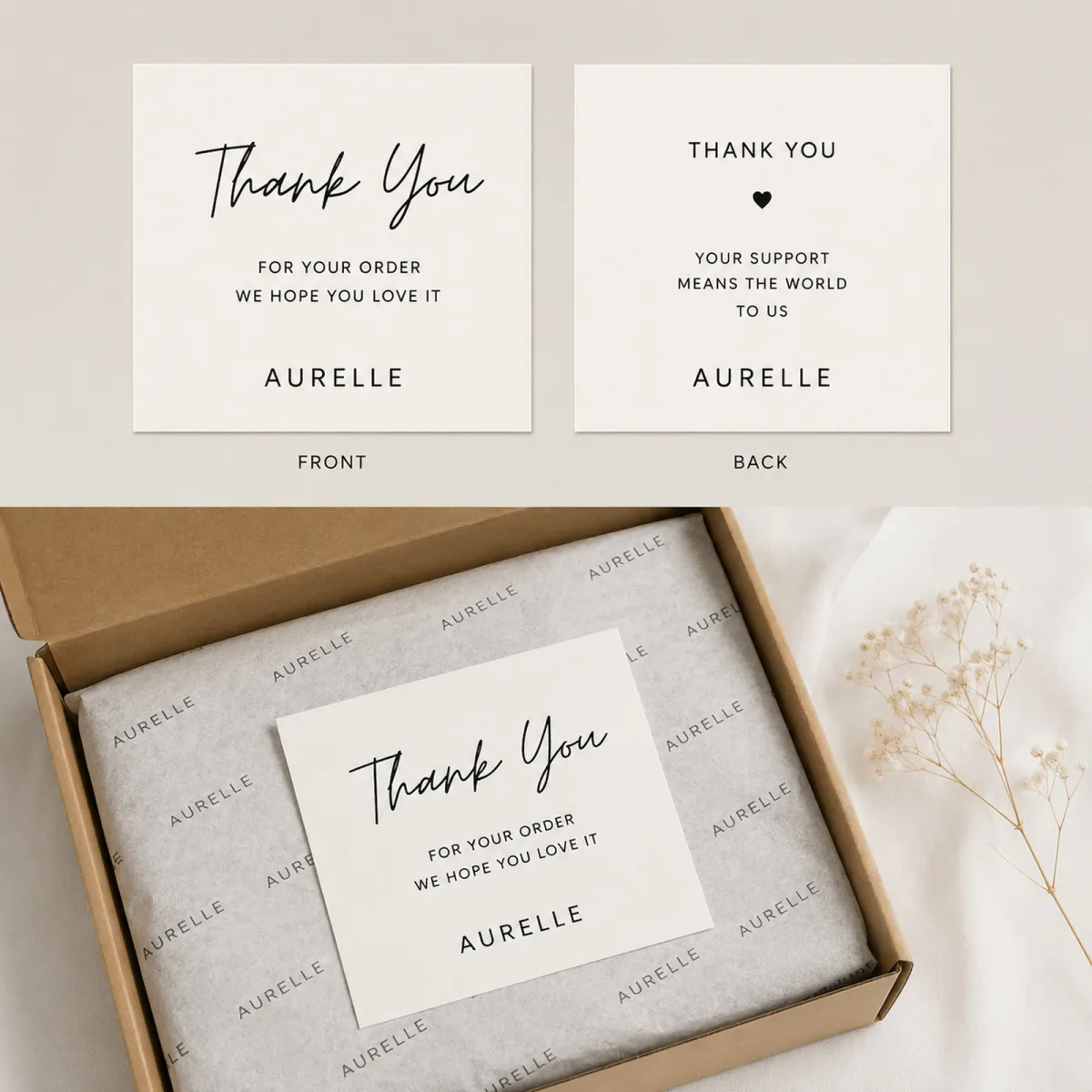
Prepare Artwork and Finishing Specifications
- Supplier cannot provide a die-line proof showing color bleed safety area: Without a defined bleed, critical artwork elements may be trimmed off, causing reprints and delays. Request a die-line proof with bleed and safety margins marked before approving the sample.
- Supplier offers foil lamination but cannot confirm spot finish registration: Misaligned foil or spot finish can ruin the card’s appearance and require costly rework.
- Supplier does not specify edge requirements for foil or spot finish: Unclear edge specifications can lead to finish peeling, chipping, or misalignment during production. Request written edge specifications for the finish, including bleed, trim, and any required overlamination.
- Supplier cannot confirm variable version handling for multi-design runs: Mixing variable versions without a clear process can cause incorrect card assignments and fulfillment errors. Ask the supplier to outline their variable version workflow, including separation, proofing, and packing.
Another warning sign: the supplier proposes a finish that is not tested on the selected paper stock: Incompatible finish and stock can cause ink rejection, smudging, or finish failure during use.
Confirm foil lamination spot finish or edge requirements
Specify the exact finish type—foil, lamination, or spot UV—and the areas where it applies. Request a production-intent sample on the chosen paper stock to verify adhesion and appearance. A tape pull test on the sample confirms the finish will not flake or peel during handling, insertion, or transit.
Use packaging dieline and custom packaging specs to align the related specifications and RFQ inputs.
Approve Physical Card Samples
At this checkpoint, you must have a physical sample that matches your approved artwork and finishing specifications. Before moving to production, verify that color registration is accurate across all print areas and that trimming is clean with no rough edges. Confirm the finish—whether matte, gloss, or soft-touch—is uniform and free of defects.
Test the card’s functionality: scan a QR code or barcode if included, write on the surface with a standard pen, and handle the card to check for smudging or marking. These steps ensure the card meets your quality standards for both appearance and use.
Use the table below to document your sample approval criteria:
| Checkpoint | Requirement | Verification Method |
|---|---|---|
| Color Registration | All colors align within tolerance | Visual inspection under daylight |
| Trimming | Clean edges, no fraying | Visual and tactile check |
| Finish Uniformity | No streaks, bubbles, or uneven coating | Visual inspection under bright light |
| Functionality | Scanning, writing, handling pass | Functional test with sample |
Document any deviations and require the supplier to re-submit a corrected sample. Only approve when all criteria are met. This sample becomes the benchmark for the production run and the handoff to the next stage.
Use custom packaging solutions to align the sample and production handoff.
Build a Quote-Ready Pack-Out Specification
- What is the supplier’s standard pack-out method for this card size and quantity? Confirms the pack-out method (shrink wrap, paper band, or poly bag) matches your fulfillment line speed and insertion equipment.
- How does the supplier verify that the card finish (matte, gloss, uncoated) accepts handwritten ink without smudging? Ensures the finish is functional for handwritten notes, not just visually approved.
- What is the supplier’s documented process for verifying card stiffness and bending behavior? Confirms the card feeds reliably through automated insertion equipment without jamming. Supplier describes a bend test method and provides a written report of the result.
- Does the supplier provide a pre-production sample that includes the card, pack-out, and any add-ons (e.g., ribbon) as a single assembly? Verifies that the combined card, pack-out, and add-on assembly works together before bulk production.
Resolve these questions before approval: how does the supplier handle version control for approved files, samples, and reorder specifications? Ensures reorders match the original approved baseline without deviation. Supplier assigns a single revision number to the specification, sample, and approval record.
State bundling counting wrapping and carton needs
Define whether the card is inserted loose, attached to a product, or placed in a separate envelope. This decision affects card size, finish stiffness, and pack-out method. Ask the supplier to confirm the card’s final position and how it will be packed to match your fulfillment line speed and void-fill method. Request a sample run to verify insertion compatibility before bulk production.
Keep approved files samples and reorder version control
Assign one revision number to the approved specification, sample, quotation, and approval owner. If any proof conflicts with the approved record, hold the quote or production release until the supplier explains the deviation in writing. Carry the signed decision record into the purchase order, production handoff, and reorder review so every team works from the same baseline.
Use paper packaging quality control to align the related specifications and RFQ inputs.
Conclusion: Quote the Card and Fulfillment Pack-Out Together
The final approval for custom thank-you cards comes down to one rule: release the order only after the evidence matches the approved sample. Before you approve, check that the supplier’s pack-out method (shrink wrap, paper band, or poly bag) is itemized separately in the quote, compare the unit price, setup cost, and MOQ against the approved specification, and verify that the card’s finish, stiffness, and insertion compatibility have been confirmed through a sample run. This approach controls cost by preventing rework, reduces supplier risk by locking the approval record under one revision number, and ensures the RFQ handoff includes the exact card size, paper stock, finish type, and pack-out format so reorders use the same verified baseline. Shortlist a supplier who can provide a pre-production sample with a tape pull test and rub test on the production-intent stock before bulk production, and validate the spec by requiring written confirmation of the pack-out method and insertion compatibility.
To request a quote, visit packaging accessories products and confirm the final specification, quote assumptions, sample approval, QC evidence, approval risk, and supplier follow-up before bulk order.
Custom Thank-You Card RFQ FAQ
Which quote terms should buyers compare for custom thank-you cards?
Compare the unit price, setup cost, and MOQ across quotes, but also verify that each supplier’s pack-out method—shrink wrap, paper band, or poly bag—is itemized separately. Ask each supplier to confirm their standard pack-out format for your card size and quantity, and request a sample run to verify insertion compatibility before comparing total costs.
What should buyers verify before approving custom thank-you cards?
Verify that the card’s finished width, height, and orientation match the envelope slot or insertion machine tolerance. Confirm the paper stock’s ability to accept handwritten notes without smudging or bleeding by requesting a tape pull test and rub test on the production-intent stock. Compare the results against your approved finish swatch before approving the specification.
Which sample or QC proof should buyers request for custom thank-you cards?
The buyer should request a physical sample on the exact stock to verify writing, printing, and bending behavior before approving the specification. For automated insertion, request a sample run to confirm the card feeds without jamming. Also request a die-line proof showing the finished size before approving the sample to prevent dimensional mismatches.
Which pack-out formats are common for thank-you cards?
As an illustrative example, common pack-out formats include shrink wrap, paper band, and poly bag. The supplier can confirm their standard format for your card size and quantity. Request a sample run to verify insertion compatibility before bulk production, and ensure the pack-out method is costed together with the card specification in a single quote.
For the next step on this route, see our cards Tags: Product Selection Checklist.

Ask a Packaging Question