
The sourcing record for custom printed corrugated boxes is incomplete until it covers custom artwork, dielines, samples, finishes, and production handoff.
Board grade and print method get quoted together and fail separately. Each needs its own evidence before you award the order.
Direct answer: For custom printed corrugated boxes, buyers should plan custom artwork, dielines, samples, finishes, and production handoff.
Shortlist Signals That Separate Real Proof From Brochure Claims
Compare Shortlist Signals That Separate Real Proof From Brochure Claims for custom printed corrugated against one RFQ revision. Each row should identify the requirement, approval evidence, and buyer action before production.
| Requirement | Factory control | Evidence to verify | Order risk | RFQ follow-up |
|---|---|---|---|---|
| Finish or surface effect | Factory must match approved finish sample; check gloss, matte, or spot UV. | Compare production sample against approved finish swatch under standard lighting. | Inconsistent finish affects brand look and unboxing experience. | Request finish sample and approve before production. |
| Artwork or logo file | Factory must use final print-ready file; verify color accuracy and resolution. | Check proof against original artwork; confirm CMYK or Pantone matches. | Wrong artwork leads to reprints and delays. | Supply high-res file and approve digital proof. |
| Sample approval | Factory must produce pre-production sample matching specs; check dimensions and print. | Measure sample, inspect print quality, and test fit with product. | Unapproved sample may cause mass production errors. | Request physical sample, approve, then authorize production. |
For custom printed corrugated, use Shortlist Signals That Separate Real Proof From Brochure Claims as the decision scope. Read the rows as one approval sequence. Start with finish or surface effect; use the risk and buyer-action columns to decide whether its evidence is sufficient. Verify it with the inspection method and approval evidence recorded in the table.
For this custom printed corrugated sourcing record, keep the supplier response, marked sample, and approval owner under the same revision number. If any proof conflicts with the approved record, hold the quote, sample, or production release until the supplier explains the deviation in writing. Before closing the checkpoint, reconcile the latest drawing, sample, quotation, and approval comments, identify which record controls if they disagree, and document the resolution. Carry the signed Shortlist Signals That Separate Real Proof From Brochure Claims table into the purchase order and production handoff so the same checks support quote comparison, sample approval, shipment release, and later reorders.
Supplier proof to verify
Request documented evidence of finish capabilities, such as past production samples or test reports. Verify that the factory can consistently apply the specified surface effect across the entire order. Ask for a reference list of similar projects to confirm their experience with your finish type.
Use cases that fit
Custom printed corrugated boxes suit e-commerce shipping, retail displays, and subscription packaging. They provide structural strength and branding opportunities. Confirm the box dimensions and board grade match your product weight and distribution channel. For fragile items, consider additional inserts or higher flute grades.
RFQ and sample checks
When requesting a quote, specify the exact finish, artwork files, and sample requirements. Ask for a pre-production sample before mass production. Verify that the sample matches your approved proof and dimensions. Only after sample approval should you authorize the full order.
Questions to confirm before ordering:
- Can you provide a detailed specification sheet including board grade, flute type, and dimensions? Confirms the box meets your product's weight and stacking needs. A spec sheet with ECT or burst strength values and tolerances. Vague specs can lead to box failure during transit. Request a written spec sheet and compare to your requirements.
- What quality control checks do you perform during production? Ensures consistent print and structural quality across the run. Mention of in-line inspection and sample retention. Inconsistent quality can damage your brand and increase returns. Ask for a QC checklist or inspection report from a recent order.
- How do you verify that the printed colors match the approved proof? Color accuracy is critical for brand consistency. Use of spectrophotometer and a signed proof approval process. Color mismatch can lead to rejected shipments and rework. Request a physical sample and compare under standard lighting.
- What is your process for approving samples before bulk production? A formal approval gate prevents costly errors in mass production. A structured sample approval form with sign-off and date. Skipping sample approval can result in non-compliant boxes. Require a pre-production sample and sign-off before production.
- Can you provide references or case studies from similar custom corrugated projects? Evidence of past performance indicates reliability and capability. Specific examples with measurable outcomes or client testimonials. Lack of references may indicate inexperience or poor quality. Contact references and ask about their experience.
When a supplier claims capability, ask for concrete proof. Request a spec sheet with board grade, flute type, and ECT values. Ask for a sample that you can measure and test. Check if they have ISO 9001 certification. A real supplier will provide documents and samples without hesitation. This separates real proof from brochure claims.
Custom printed corrugated boxes suit e-commerce shipping, retail displays, and subscription boxes. They protect products during transit and reinforce brand identity. For heavy items, choose double-wall board. For retail, consider print quality and shelf appeal. Match the box design to your product's weight, fragility, and unboxing experience.
When requesting a quote, provide detailed specifications: dimensions, board grade, flute type, print colors, and quantity. Ask for a sample before bulk production. Verify the sample against your requirements. Check the MOQ and lead time. A reliable supplier will confirm these details in writing and produce a sample that matches your expectations.
Which Custom Printed Corrugated Boxes structure fits the order
| Option | Best fit | Trade-off | Risk to avoid | Verification | Follow-up |
|---|---|---|---|---|---|
| Single-wall corrugated with ECT 32 | Lightweight e-commerce shipments based on the buyer-provided product weight | Lower cost per box but less stacking strength | Compression damage in tall pallet stacks | Request ECT test data and edge crush certificate | Confirm stack height and pallet pattern with carrier |
| Double-wall corrugated with BC flute | Heavy or fragile items needing cushioning | Higher material cost and thicker walls | Oversized dimensions raise freight class | Check internal dimensions against product and void fill | Compare freight cost impact before finalizing spec |
| Custom die-cut with inserts | Multi-component kits or retail-ready display | Tooling cost and longer lead time for first order | Insert fit errors cause rework or damage | Request a physical sample with actual product fit test | Approve dieline and sample before bulk production |
| Standard RSC with printed label | Low-volume orders or fast reorders | Less brand impact than full custom print | Label adhesion failure on corrugated surface | Specify label material and test adhesion on board sample | Confirm label placement and artwork proof |
For single-wall corrugated with ect 32, a poor decision can mean compression damage in tall pallet stacks. Request ECT test data and edge crush certificate.
for this order, preserve the single-wall corrugated with ect 32 decision under one revision number: keep the supplier response, marked sample, approved specification, quotation, and approval owner together. If the evidence conflicts with the approved record, hold the quote, sample, or production release until the deviation is explained in writing. Once the buyer and designated technical authority have accepted the evidence, carry the signed Which Custom Printed Corrugated Boxes structure fits the order record into the purchase order, production handoff, shipment release, and later reorder review so every team works from the same baseline.
Define the requirement and success criteria
Start by writing down the product weight, dimensions, fragility, and shipping environment. For these boxes, the success criteria are not just visual appeal but also compression strength, stacking performance, and cost per unit. Set measurable thresholds for edge crush test (ECT), burst strength, and dimensional tolerance. This baseline turns vague expectations into a spec the factory can quote and you can verify.
Confirm execution details with the factory
Before approving a quote, confirm the flute type, board grade, print method, and finishing options with the factory. Ask how they handle die-cut registration and whether they run a proof press before bulk. For these boxes, the factory should state the MOQ for your chosen construction and the lead time for tooling and samples. Document these details in the RFQ so there is no ambiguity during production.
Approve samples and control reorder risk
Always request a physical sample and test it with your actual product. Check that the box dimensions, print color, and structural strength match the approved spec. For reorders, compare the new order against the original sample and production records. Keep a signed sample and a written approval record to prevent drift. This control point reduces the risk of receiving a batch that does not meet your quality or fit requirements.
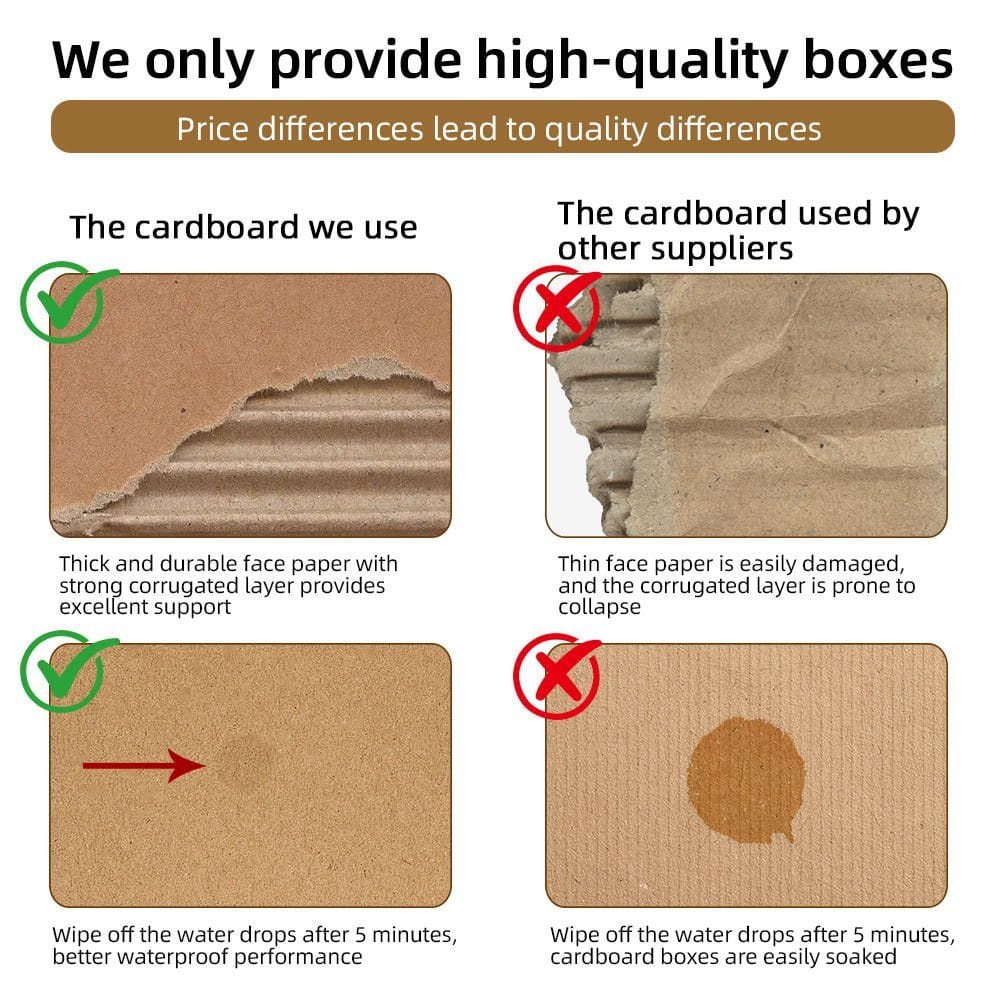
What Custom Printed Corrugated Boxes protection checks buyers should request
for this order, keep each requirement beside its supplier proof and approval owner.
- Verify dieline and specs: Approved dieline, dimensions, board grade Die-cut sample and spec sheet Mismatched dieline causes rework and delays Approve sample before production
- Confirm lead time: Order quantity and artwork final date Production schedule with ship date Late delivery disrupts launch Lock schedule in PO
- Set QC checkpoints: Inspection criteria and sampling plan QC report and photos Undetected defects reach customers Review report and adjust
- Track buyer follow-up: Feedback on sample and production Status updates and issue resolution Silence hides problems Schedule weekly check-ins
- Use verification method: Checklist and measurement tools Signed-off proof and inspection record Unverified specs cause disputes Keep records for reorder
Decision criteria to confirm
Before you approve any custom printed corrugated boxes, confirm the packaging dieline and custom packaging specs match your product's dimensions and stacking needs. A wrong dieline means wasted material and missed deadlines. Ask for a physical sample, measure it, and test fit with your product. This check prevents costly rework and ensures the box performs as intended.
Production handoff details
At production handoff, verify the supplier has your approved artwork, dieline, and sample. Confirm the production schedule and QC checkpoints. Ask for a pre-production sample if possible. This step ensures the factory runs your order correctly. Without it, you risk delays and defects. Keep records of all approvals for reference during reorders.
Lock artwork, color, and finish evidence for custom printed corrugated boxes
- Approved artwork proof with Pantone references: Color drift or logo shift after proof sign-off Brand owner or procurement lead Compare proof against approved digital file and physical sample Document sign-off date and version in the approval record
- Finish sample (lamination, coating, or spot UV): Finish mismatch affects durability and brand look Procurement lead with brand team input Check sample under retail lighting and bend test for cracking Approve finish sample or request a revised sample before bulk
- Dieline and structural dimensions: Product fit issues or shipping damage if dimensions shift Procurement lead or packaging engineer Measure internal dimensions against product and carton specs Confirm dimensions in writing and attach to the PO
- Production lead time and delivery schedule: Late delivery disrupts launch or restock Procurement lead with logistics input Confirm 15–30 working days after all approvals are locked Set a calendar reminder for the approval deadline
Reference files to approve for custom printed corrugated boxes
Before you approve anything, gather the artwork proof, dieline, and finish sample. These files become your baseline for the bulk run. A signed proof prevents last-minute changes that delay production. Keep the approved versions in one folder and share them with the factory. This way, everyone works from the same reference.
Production checks that protect the custom printed corrugated boxes result
During production, the factory should run checks on color, dimensions, and finish. Ask for a pre-production sample if the order is large. Compare it against your approved files. If something looks off, stop the line and correct it before the full run. This protects your brand and avoids costly rework.
How to move Custom Printed Corrugated Boxes checks into an RFQ
For these boxes, the first checkpoint is the supplier proof check. Before production begins, request a digital or physical proof that confirms artwork placement, color match, and structural dimensions. Verify that the board grade and flute type match your quote request-confirmed requirement. If the proof shows any deviation, ask the supplier to revise and resubmit before approving.
Supplier evidence to request
During the supplier proof check, compare the proof against your approved artwork file and the quote request specifications. Confirm that the print finish (e.g., flexo, litho, or digital) aligns with your order. If the proof includes a structural diagram, check that internal dimensions match your product’s fit requirements. Do not proceed until the proof is fully approved in writing.
Sample approval evidence
After proof approval, move to the sample approval check. Request a physical sample that matches the approved proof. Inspect the sample for print quality, color consistency, and structural integrity. Use a buyer verification question: Does the sample hold your product securely without damage? If the sample fails, request a corrected sample before approving the production run.
Reorder control records
For reorders, perform a reorder control check. Compare the new order against the previous approved sample and quote request. Verify that the same board grade, flute type, and print specifications are used. If the supplier changed any material or process, request a new proof and sample. This prevents production risk and ensures consistent quality across batches.
To summarize the key checks, use the table below as a quick reference during the quote request and sample handoff process.
- Supplier proof check: Compare proof against quote request and artwork; Does the proof match the quote request-confirmed requirements?
- Sample approval check: Inspect physical sample for quality and fit; Does the sample hold the product securely without damage?
- Reorder control check: Verify reorder matches previous approved sample; Are the board grade, flute, and print specifications unchanged?
By following these checks, you reduce production risk and ensure factory execution aligns with your expectations. Each step provides a clear decision point before moving to the next stage.
Source check: ISO 2859-1 sampling inspection standard.
In conclusion
After validating the specifications, comparing cost and MOQ across suppliers, and confirming the lead time, the final approval step is to request a pre-production sample. This sample check verifies print registration, color accuracy, and structural integrity, directly reducing production risk. Compare the sample against your approved artwork and structural requirements before giving the go-ahead.
Once the sample is approved, you can shortlist the supplier and request a quote for the full order. This handoff ensures that the production run matches your exact specifications and that all quality risks have been addressed through documented proof and inspection.
To request a quote, visit custom paper boxes and confirm the final specification, quote assumptions, sample approval, QC evidence, approval risk, and supplier follow-up before bulk order.
Custom printed corrugated boxes FAQ
What should buyers confirm before ordering Custom Printed Corrugated Boxes?
Yes, when you confirm the internal dimensions, board grade, flute type, and print finish against your product’s weight and pallet pattern. The supplier should also verify that the artwork dieline matches your approved packaging spec before any production commitment. Confirm MOQ and order quantity by color, width, artwork, and packing route. Confirm production lead time after specifications and sample approval are fixed. Separate material, setup, packing, freight, and reorder cost drivers in the quote request. Ask how QC will check the sample, color, finish, packing, and bulk order.
How should buyers compare MOQ, lead time, and quote terms?
Compare quotes by checking the project-level minimum order of 200 pcs and the standard production lead time of 15–30 working days after specifications, artwork, and sample requirements are confirmed. Ask the supplier to break down the unit cost at your target volume and clarify whether the quoted price includes printing plates, sample charges, or delivery.
What sample, quality, or supplier checks reduce risk?
Request a pre-production sample to verify print registration, color accuracy, and box fit for your product. During the run, confirm that the supplier will hold the approved sample and conduct inline checks on board grade and flute structure, and document the defect and return policy in your purchase order. Confirm minimum order and order quantity by color, width, artwork, and packing route. Confirm production lead time after specifications and sample approval are fixed. Separate material, setup, packing, freight, and reorder cost drivers in the quote request.
See paper packaging quality control for how corrugated box checks fits into the order.
quote request handoff: Send Specs for Review.
For the next step on this route, see our sticker Roll Core and Unwind Artwork Checklist.

Ask a Packaging Question