
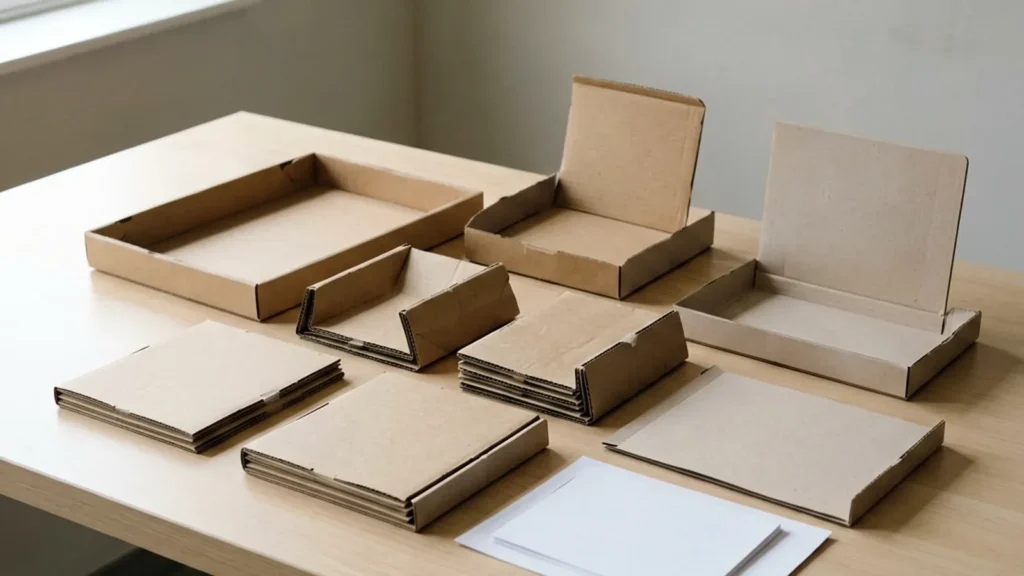
Unit price alone is a weak signal: material, structure, print, packing, and timing all change the supplier answer.
Ask specifically what material, structure, artwork, packing, and proof must be confirmed before sampling.
Use the checkpoints to compare quote assumptions, sample proof, and follow-up actions across factories.
Direct answer: Match the display to the product weight: a countertop unit in single-face corrugated or 24pt paperboard cannot carry what a double-wall BC-flute floor stand must. Demand the factory’s drop, compression, and humidity results, then load the physical sample with your heaviest SKU and check for wobble or collapse. Approve only after the spec sheet names board grade, flute, and print finish on one revision.
Copy this approval record for custom cardboard display boxes into the RFQ file. Keep every checked item on the same revision before releasing the order.
- ☐ Final specification and intended use
- ☐ Supplier feasibility and documented exceptions
- ☐ Sample or inspection evidence
- ☐ Commercial assumptions, owner, decision, and date
Move the cardboard display forward only when structure, shelf load, product fit, assembly, artwork, and mock-up evidence share one revision. Return an unresolved display exception to its owner before bulk production.
For brand owners and importers, keep custom cardboard display boxes quote-ready: specs to send, proof to request, sample checks to approve, and reorder notes to retain. The supplier review should connect those requirements to POS display stands, corrugated display stands, custom cards printing, so the quote, specification, sample proof, and QC record describe the same production target.
What buyers should confirm before choosing custom cardboard display boxes
| Option | Best fit | Trade-off | Risk to avoid | Verification | Follow-up |
|---|---|---|---|---|---|
| Current specification | Matched to product weight, shelf planogram, and retail environment | Higher material cost for double-wall corrugated and custom inserts | Collapse or fit failure if spec is not locked before sample | Cross-check dimensional drawing and material swatch against product weight and shelf footprint | Sign off on spec sheet with revision date before RFQ moves forward |
| Alternative specification | Different board grade, flute type, or print finish for cost or performance | May require new sample cycle and longer lead time | Deviation from approved baseline causes reorder inconsistency | Compare new batch against sealed reference sample; measure color, crease, and glue bond | Document deviation in writing and trigger new sample approval if needed |
| Custom option | Unique structure, size, or finish for a specific product or display | Higher tooling cost and MOQ; longer lead time for engineering review | Unverified load capacity or print registration failure at retail | Request white sample for structure, then production-style sample for print and finish | Approve production-style sample only after load test and Pantone match pass |
| Safer fallback | Standard E-flute or B-flute corrugated with minimal print | Less visual impact; may not meet retailer shelf-ready requirements | Inadequate reinforcement for heavy or bulk products | Confirm board grade and flute type match product weight and stacking height | Request load-test record and measured white sample before selecting structure |
For current specification, a poor decision can mean collapse or fit failure if spec is not locked before sample. Ask the supplier to cross-check dimensional drawing and material swatch against product weight and shelf footprint, then sign off on spec sheet with revision date before rfq moves forward.
For the current specification checkpoint in the display structure, keep the supplier response, marked sample, approved specification, quotation, and approval owner under the same revision number. When the evidence conflicts with the approved record, hold the quote, sample, or production release until the deviation is explained in writing. Archive the signed decision record into the purchase order, production handoff, shipment release, and later reorder review so every team works from the same baseline.
Which Custom Cardboard Display Boxes use case fits each packaging format
| Application | Fit condition | Risk to avoid | Specification or proof | Follow-up |
|---|---|---|---|---|
| Countertop display for lightweight cosmetics | Single-face corrugated or 24pt paperboard with a locking tab and a printed finish that matches the brand color swatch. | Wobble or tip-over under repeated customer handling; print misalignment on the front panel reduces shelf appeal. | Board grade, flute type, print finish, and exact dimensions cross-checked against product weight and shelf footprint. | Request a dimensional drawing and material swatch; sign off on the spec sheet with a revision date before RFQ. |
| Floor-standing display for heavy or bulk products | Double-wall BC-flute corrugated with reinforced corners and a glued joint; load capacity documented in a compression test report. | Collapse under stacking load or during transit; delamination at the joint if the glue bond is not tested. | Drop test, compression test, and humidity exposure check results from the factory sample run. | Verify the test report against your product weight and distribution channel; approve only after a physical sample passes your load check. |
| Shelf-ready display for gift cards or small electronics | E-flute or F-flute micro-corrugated with a tight product-fit insert and a clear plastic window if visibility is required. | Product falls out during stocking or customer handling; window adhesive fails under retail lighting or temperature variation. | Insert dimensions, window material, and adhesive type listed on the spec sheet; a retention test on the assembled sample. | Load the sample with the heaviest SKU and check for product retention; confirm the adhesive is rated for the retail environment. |
| Promotional display for seasonal or short-run campaigns | Single-wall corrugated with a litho-laminated print layer; structure designed for one-time use and easy flat-pack shipping. | Over-specifying board grade increases cost and MOQ for a short run; under-specifying leads to field failure before the campaign ends. | Board grade, flute type, and print finish matched to the campaign duration and product weight; MOQ confirmed per RFQ. | Cross-check the spec against the campaign timeline and budget; request a pre-production sample to validate fit and print before bulk order. |
Choose the display format by product weight, shelf footprint, handling frequency, and distribution route. For countertop display for lightweight cosmetics, a poor decision can mean wobble or tip-over under repeated customer handling; print misalignment on the front panel reduces shelf appeal. Request written proof and compare it with the approved sample or specification, then request a dimensional drawing and material swatch; sign off on the controlled specification before the quote request.
For a countertop display, keep the supplier response, marked sample, approved specification, quotation, and approval owner under the same revision number. Where the evidence conflicts with the approved record, hold the quote, sample, or production release until the deviation is explained in writing. Move the signed decision record into the purchase order, production handoff, shipment release, and later reorder review so every team works from the same baseline.
A floor-standing display for heavy products needs documented load evidence matched to the real product weight and distribution channel. Test the heaviest SKU in the assembled sample and check product retention.
Review custom paper boxes before freezing the display specification and sample request.
RFQ checkpoint
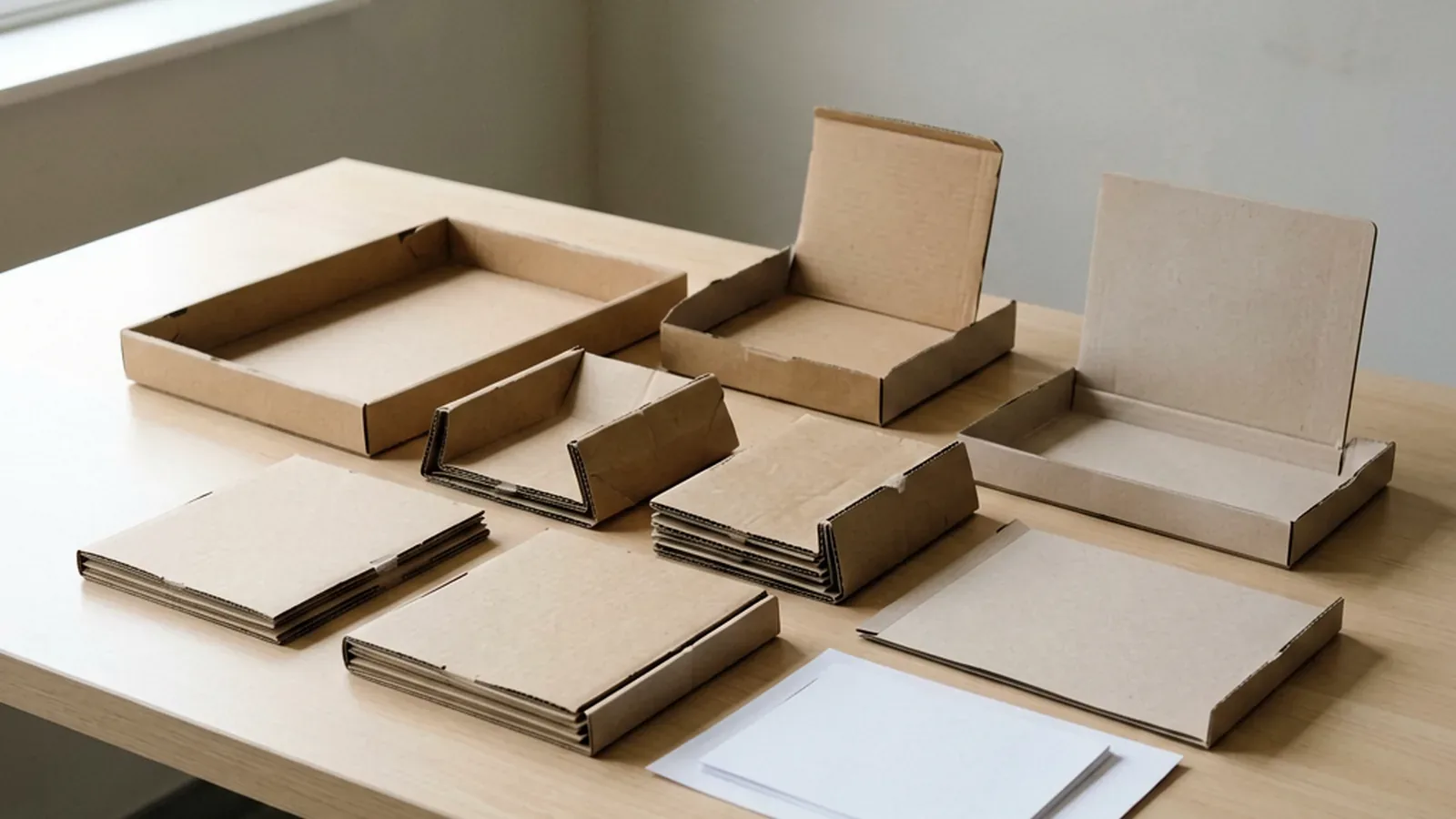
How to translate Custom Cardboard Display Boxes use cases into specs
For the display structure, this section converts how to translate the display structure use cases into specs into RFQ inputs, supplier evidence, approval risk checks, and the next sample or quote decision.
Supplier evidence to request
A documented spec sheet with board grade, flute type, print finish, and exact dimensions is the first verifiable record. Without this, sample approval is guesswork. The Zhypacking editorial team works from Zhypacking company facts and factory process references to ensure every spec ties to a measurable outcome.
Sample approval evidence
The approved physical sample becomes the benchmark. Measure against the spec sheet—weight capacity, color accuracy, and structural integrity. Any deviation triggers a reorder control check.
Reorder control records
Use the original spec and sample as the reorder baseline. Confirm the supplier can replicate the same board grade, flute, and finish. This prevents production risk and ensures cost consistency.
For RFQ and sample handoff, include the spec sheet, sample photos, and a checklist of critical dimensions. This reduces factory execution errors and speeds up approval.
Match custom cardboard display boxes structure to product, logistics, and handling conditions
When a display box collapses under product weight or fails during transit, the root cause is often a mismatch between structure and real-world conditions. To prevent this, the factory must match board grade, flute type, and joint design to the product’s weight, the distribution channel’s stacking loads, and the handling environment’s humidity or temperature extremes.
Product and channel inputs that shape custom cardboard display boxes
Specs start with product dimensions, weight, and fragility. For heavy items, use double-wall board and reinforced corners. For retail channels with high stacking, specify a stronger flute (e.g., BC or EB) and a locking tab or glue joint. Cost and MOQ increase with board grade and complexity, but a failure in the field costs more than a stronger spec upfront.
Handling risks to test for custom cardboard display boxes
Production risk includes delamination, poor crease scoring, and joint weakness. Factory execution must include a drop test, a compression test, and a humidity exposure check before sample handoff. During RFQ, request a test report and a physical sample that you can subject to your own retail environment checks.
See custom packaging solutions for how display-structure selection fits into the order.
How to move Custom Cardboard Display Boxes checks into an RFQ
At this process checkpoint, you must have a finalized specification sheet and an approved physical sample before moving to production. Without these two outputs, the next stage cannot proceed reliably.
Specification details to confirm
Confirm board grade, flute type, print finish, and exact dimensions. Verify the weight capacity required for your products. Ensure the design includes proper stacking and nesting features for retail placement.
Sample approval record
Document the approved sample with photos and measurements. Note any adjustments made during the approval cycle. This record serves as the baseline for production quality checks.
Production handoff notes
Provide the supplier with the approved spec sheet, sample record, and any special instructions for assembly or packing. Confirm the RFQ includes all agreed terms. A clear handoff reduces production risk and ensures factory execution matches your expectations.
Source check:ISO 2859-1 sampling inspection standard; Custom Cardboard Display Boxes | Printed Display Box Packaging. Record the project-specific acceptance rule, evidence owner, and approval step in the RFQ or quality file.
In conclusion
The final approval for the display structure rests on a documented spec, a measured sample, and a supplier who can prove capability. Before you shortlist a supplier, verify that the specification sheet lists board grade, flute type, print finish, and exact dimensions cross-checked against your product weight and shelf footprint. Confirm the display MOQ in the RFQ, and the standard production lead time of 15–20 working days after specifications, artwork, and sample requirements are confirmed. Separate material, setup, packing, freight, and reorder cost drivers in the RFQ, and ask how QC will check the sample, color, finish, packing, and bulk order. When supplier evidence conflicts with the approved record, hold the quote or sample until the deviation is explained in writing.
Retain the signed decision record into the purchase order, production handoff, shipment release, and later reorder review so every team works from the same baseline. Compare supplier responses against the approved sample and specification, and retain a sealed reference sample as your control against factory execution drift. Validate the spec with a physical sample measured against your retail environment, and approve a sample only after it passes your load and fit checks. For a reliable commercial handoff, request a quote from a supplier who can document the spec, sample, and cost drivers tied to the same revision record.
To request a quote, visit packaging dieline and custom packaging specs and confirm the final specification, quote assumptions, sample approval, QC evidence, approval risk, and supplier follow-up before bulk order.
Custom cardboard display boxes FAQ
What should buyers confirm before ordering custom cardboard display boxes?
Before ordering, confirm the specification sheet includes board grade, flute type, print finish, and exact dimensions cross-checked against your product weight and shelf footprint. Request a material swatch and dimensional drawing from the supplier, then sign off on the spec sheet with a revision date to lock the baseline before the RFQ moves forward. Confirm MOQ and order quantity by color, width, artwork, and packing route. Confirm production lead time after specifications and sample approval are fixed. Separate material, setup, packing, freight, and reorder cost drivers in the RFQ. Ask how QC will check the sample, color, finish, packing, and bulk order.
How should buyers compare MOQ, lead time, and quote terms?
Separate material, setup, packing, and freight cost drivers in the RFQ, and confirm the display MOQ in the signed quote. Standard production lead time is 15–20 working days after specifications, artwork, and sample requirements are confirmed, so document every variable in the signed quote to prevent cost overruns and delays. Ask the supplier to confirm factory capability and who owns follow-up.
What sample, quality, or supplier checks reduce risk?
Ask the supplier to send a pre-production sample and a measurement report, then measure the sample yourself with a caliper and load it with your heaviest product SKU to check for wobble or collapse. Use ISO 2859-1 sampling inspection to evaluate the first article for color accuracy, crease alignment, and glue bond strength, and retain a sealed reference sample as your control against factory execution drift. Confirm MOQ and order quantity by color, width, artwork, and packing route. Confirm production lead time after specifications and sample approval are fixed. Separate material, setup, packing, freight, and reorder cost drivers in the RFQ.
See Zhypacking for how display-structure checks fits into the order.
RFQ handoff: For custom cardboard display boxes, share product size, material, artwork, quantity, sample need, packing method, and deadline so the RFQ can be reviewed before sample approval. Send Specs for Review.

Ask a Packaging Question