
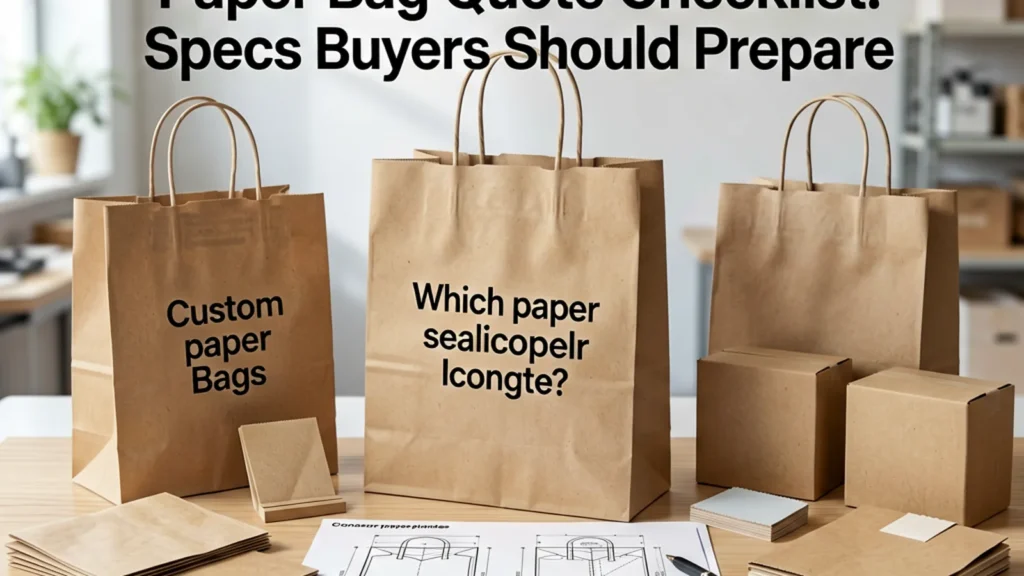
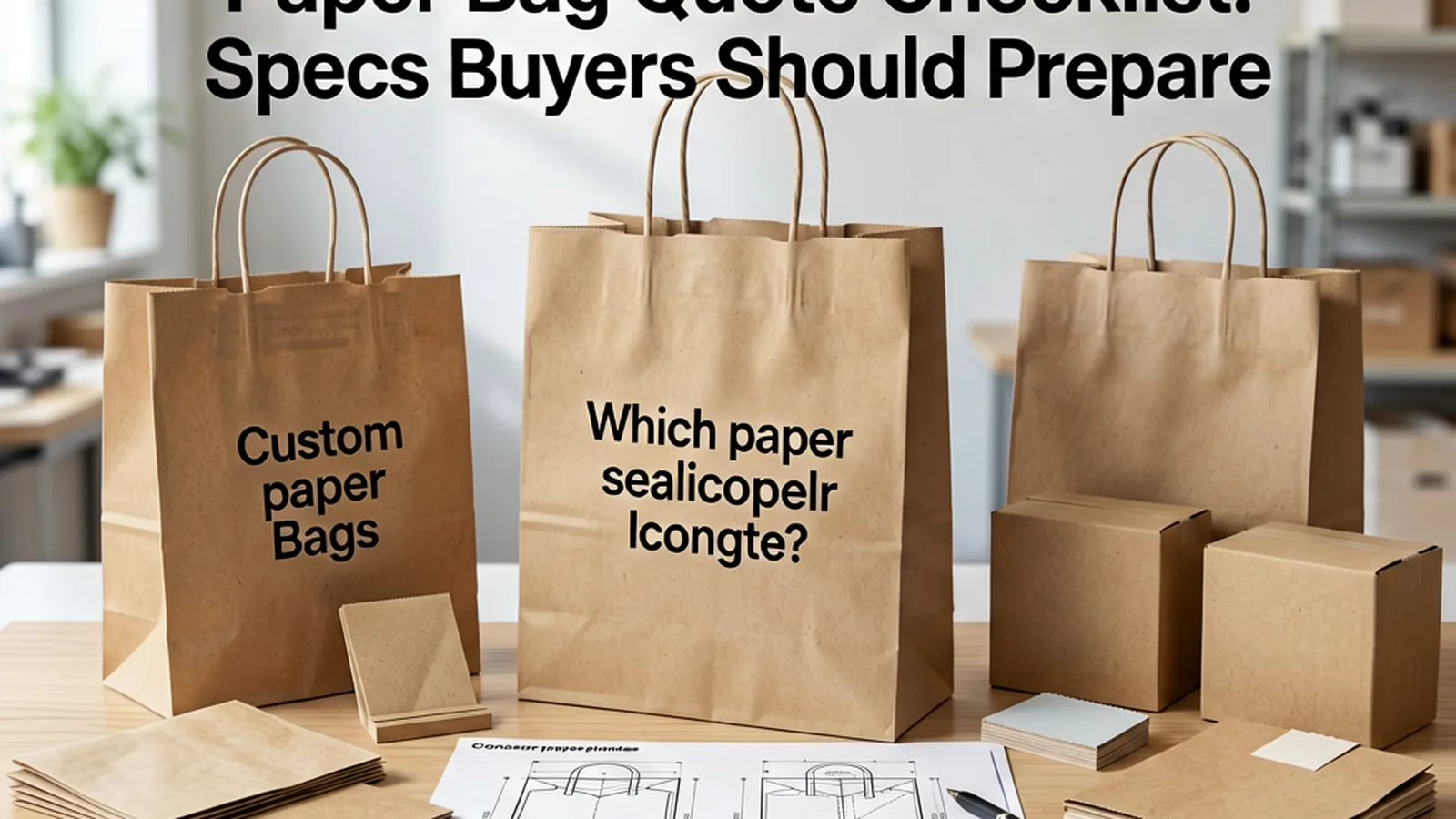
Custom paper bag needs a written specification before the buyer can prepare quote-ready specifications before contacting suppliers; otherwise suppliers may quote different product and approval assumptions.
This guide frames the topic around buyer decision risk, quote assumptions, sample approval, and confirmed Zhypacking facts instead of generic packaging definitions.
Direct answer: For custom paper bag, prepare the RFQ by locking measurable specifications, sample evidence, packing details, quantity terms, and approval checkpoints before requesting a supplier quote.
Paper bag quote inputs buyers should prepare
A comparable paper-bag quote begins with one input set covering construction, use, artwork, quantity and approval evidence. Suppliers should price the same revision and identify any field they cannot yet confirm.
Specs the quote must carry
| Requirement | Factory control | Evidence to verify | Order risk | RFQ follow-up |
|---|---|---|---|---|
| Bag width, gusset, height, paper basis and handle construction | Build from the numbered specification and dieline | Dimensioned drawing plus material and handle reference | Open dimensions or materials make offers incomparable | Return the completed specification with the quote |
| Product use, expected load and retail presentation | Match structure and reinforcement to the stated use | Application sample using the intended contents | A visual sample may fail in handling | Approve the use-case sample before bulk |
| Artwork, print and finish locations | Use the signed file revision and finish map | Numbered artwork and physical proof | Late file changes can reopen cost and schedule | Freeze the proof route before setup |
Volume and use inputs
State quantity by size, color and artwork version, plus the intended release plan. Ask the supplier to identify the MOQ basis, material-purchase assumptions, packing quantity and lead-time start gate. Where the spec carries a recycled-content or sustainability claim, verify the paperwork against the kraft paper bag sustainability checklist.
Quote-preparation checklist: send the table, use-case sample inputs, version quantities and required QC records together; assign one owner to close exclusions before ranking offers.
Handle and structure details that affect use-case fit
The supplier needs the load case and carrying experience before recommending handle and reinforcement choices. Follow the sequence so construction decisions are tested before they become pricing assumptions.
Handle choices
- Define: handle type, material, color, length, attachment and intended hand feel.
- Verify: request a labeled handle reference and pull/application sample using the intended contents.
- Control: record attachment placement and inspection method; unclear controls can cause detachment or inconsistent presentation.
Structure and reinforcement
- Describe the use: product dimensions, load, contact surfaces and retail handling.
- Ask for capability proof: a sample or production record using the proposed paper, bottom construction and reinforcement route.
- Confirm the schedule: state which material, tooling, sampling and QC gates are included in lead time.
- Release: approve the loaded sample and signed construction record before the quote becomes the bulk basis.
A cheaper handle or lighter structure is not equivalent if it changes application performance, inspection scope or sample timing. The order risk is detachment, deformation or a schedule that excludes correction work. Return any substitution as a written option with its cost driver and reapproval requirement.
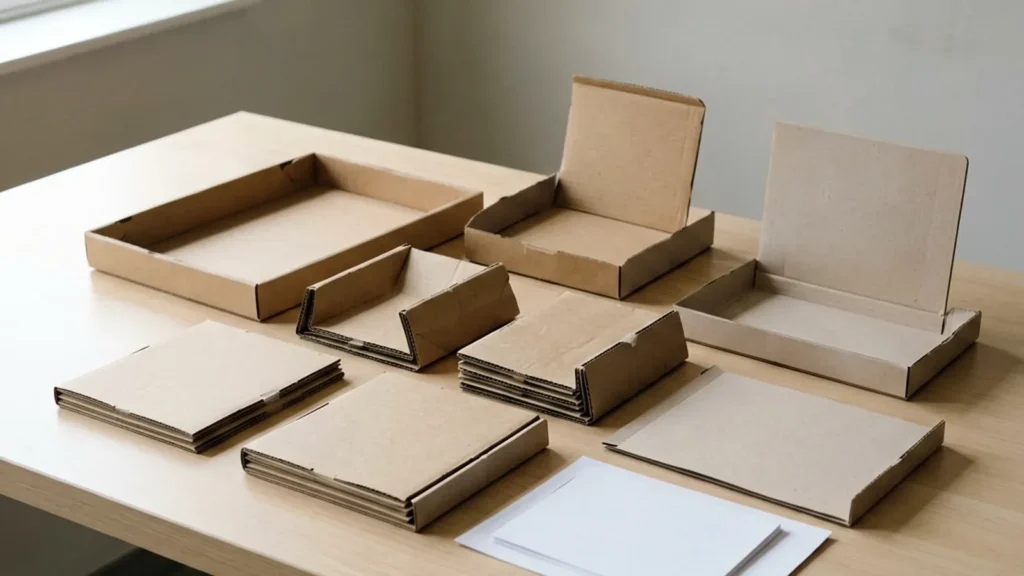
Printing and finishing inputs for custom paper bags
Print and finish approval must be tied to the intended paper and bag geometry. A digital artwork sign-off alone cannot verify color appearance, registration across folds or finish placement on the assembled bag.
Print inputs
| Requirement | Factory control | Evidence to verify | Order risk | RFQ follow-up |
|---|---|---|---|---|
| Artwork revision, print method, ink references and repeat orientation | Output only from the signed production file | Scaled layout plus print proof on the intended paper | Wrong version or color can invalidate the order | Approve file and physical proof together |
| Logo position relative to gussets, folds and handle | Register print to the approved dieline | Assembled sample with measured placement | Artwork can move into a crease or attachment zone | Record the accepted placement on the sample |
| Finish type and exact coverage area | Apply from the numbered finish map | Physical finish reference and handling check | Finish can crack, scuff or alter fold behavior | Reopen the proof if paper or finish changes |
Finish inputs
State whether the finish is decorative, protective or both, and ask the supplier to show the quality-control point used before bag forming. Keep the accepted result with the packaging customization and dieline specs record.
If an alternative process is proposed, compare its proof route, setup, MOQ and bulk inspection before accepting the commercial change.
MOQ, lead time, and packing assumptions for paper bags
MOQ and lead time are valid only for the quoted size, paper, handle, artwork versions and packout. Ask each supplier to separate fixed setup from quantity-dependent production inputs.
MOQ and setup assumptions
| Requirement | Factory control | Evidence to verify | Order risk | RFQ follow-up |
|---|---|---|---|---|
| Quantity by size, paper, handle color and artwork version | Calculate setup and material purchase by compatible group | Line-by-line MOQ and setup basis | A blended total can hide version minimums | Request a revised assortment option |
| Approval-based schedule | Book material and production after the named approval gate | Milestones for proof, sample, bulk, QC and packing | An early clock start understates delivery risk | Confirm dates after approvals are frozen |
| Packout and shipping preparation | Pack to the signed quantity, protection and carton-mark plan | Packout sample and carton layout | Wrong packing can deform bags or mix versions | Approve packing before bulk release |
Lead time and packing assumptions
Identify long-lead materials, versioned artwork and sample corrections separately. The buyer should treat any open input as a schedule condition, not a confirmed date.
Use the custom retail packaging route to keep retail presentation and packing assumptions connected to the quotation.
Buyer questions for a custom paper bag RFQ
Send identical proof questions with the controlled input set so supplier replies can be compared and unsupported capability claims remain visible.
- Claim or requirement: the proposed paper, handle and reinforcement can support the intended load and presentation. Proof to request: production-intent loaded sample and material references. Who provides it: sample room and quality team. Order risk: detachment or deformation in use. Release action: approve the application sample before bulk.
- Claim or requirement: the quoted print and finish route can reproduce the signed artwork. Proof to request: numbered file, physical proof and placement record. Who provides it: prepress and production teams. Order risk: wrong color, version or finish location. Release action: freeze file and proof together.
- Claim or requirement: stated minimum order and schedule apply to the exact version mix. Proof to request: line-by-line quantity basis and approval milestones. Who provides it: commercial and production planning teams. Order risk: repricing or delayed booking. Release action: close exceptions before ranking.
- Claim or requirement: inspection and packout can be traced to the approved sample. Proof to request: QC checklist, retained-sample identifier and packing map. Who provides it: quality and packing teams. Order risk: mixed versions or untraceable deviations. Release action: approve records before shipment release.
File the responses with the paper packaging quality control supplier record. Do not accept a general assurance where the named factory team and evidence are missing.
Send the paper bag quote brief
The final brief should let a supplier reproduce the buyer’s use case and return a traceable offer without guessing. Use one document index for technical, commercial and approval records.
What the brief must contain
| Requirement | Factory control | Evidence to verify | Order risk | RFQ follow-up |
|---|---|---|---|---|
| Use case, dimensions, paper, handle and reinforcement | Review feasibility against one specification revision | Completed requirement sheet and capability note | Guessed construction creates inaccurate offers | Return exceptions before sampling |
| Artwork, print, finish and approval method | Control files and proofs by revision | Artwork index and proposed proof sequence | Uncontrolled files cause rework | Name the approval owner |
| Quantity, MOQ basis, schedule and packout | Plan compatible versions and milestones | Commercial assumptions and packout layout | Open assumptions cause repricing or delay | Close exclusions before ranking |
What to file with the replies
Keep the completed specification, supplier exceptions, quotation, proof plan, sample record and responsible owners together. Mark superseded replies so later teams cannot release the wrong version.
Quote-preparation checklist: verify that every supplier has returned the same requirement fields, evidence list and commercial assumptions before comparison.
Source check: ISO/TC 122 packaging standards; What Retail Buyers Should Define Before Requesting Branded Pape…; Custom Paper Bags Guide: Shopping, Gift & Luxury Bags | Omet Pa….
For the order-planning side of the same quote, see paper bag MOQ planning for custom orders and the gusseted paper bag cost-driver checklist.
Two paper bag quotes are comparable only when the same handle type, paper weight, size, print coverage, and packing method are priced. Handle choice such as twisted paper, flat paper, or rope changes both unit cost and the bag’s load assumption, so record the handle and weight in writing before asking suppliers to quote. The same rule applies to printing: a one-color print and a full-color print are different jobs even at the same size.
The cheapest quote error is a missing tolerance. If the brief does not say how far a size can move, the factory picks its own default — and the bags still pass inspection because there was no agreed number to fail. Put a tolerance next to every dimension in the RFQ: height, width, gusset, handle position. One line per dimension is enough to turn a vague complaint into a pass/fail check, and the size and bottom checklist lists which dimensions buyers most often leave blank.
In conclusion
A paper-bag quotation is ready for comparison when construction, use, artwork, quantity, schedule and evidence all cite one revision. Open assumptions expose the buyer to repricing, unsuitable samples, missed approvals or mixed-version packing.
- Matching route: kraft paper bags.
- Why this route: it connects the controlled quote request to the relevant paper-bag construction and sample discussion.
- Supplier proof: completed specification, capability exceptions, proof plan, QC record and packout evidence.
- Release action: send the complete brief for feasibility and quote review, then close exceptions before supplier ranking.
For this custom paper bag quote checklist, Zhypacking’s project-level minimum is 200 pcs unless a product-specific exception is confirmed. Standard production is recorded as 15-30 working days after specifications, artwork, and sample requirements are confirmed; the supplier should reissue timing when the approved paper-bag scope changes.
Custom paper bag quote checklist FAQ
Which paper bag specs should buyers prepare before asking for a quote?
Prepare the bag dimensions, paper basis, handle and reinforcement, product use and load, artwork versions, print and finish, quantity by variant, packout and required sample or QC evidence. Ask the supplier to return exceptions rather than filling gaps with assumptions.
How do handle type, paper weight, print, finish, and quantity affect custom paper bag cost?
They change material purchase, forming, attachment, print setup, finishing operations, inspection and version compatibility. Compare cost only after the minimum order basis and production route are tied to one specification revision.
What sample checks matter before approving custom paper bags?
Check dimensions and product fit, loaded carrying behavior, handle attachment, bottom and seam assembly, artwork version, color and placement, finish condition and packout. Retain a labeled sample and reopen affected checks whenever material, structure or artwork changes.
quote request handoff: Send Specs for Review.

Ask a Packaging Question