

Direct answer: A packaging purchase order should identify the product and SKU, structure, finished and internal dimensions, material build, artwork revision, colors, finishes, quantity, unit and tooling charges, approved sample, inspection plan, packing, delivery term, destination, schedule basis, change-control rule, and approval owners. Unresolved fields should be written as open conditions, not silently assumed.
- Make the PO, quote, specification, artwork, and sample cite one revision.
- Separate technical acceptance from commercial and delivery terms.
- Name inspection evidence, packing, deviation, and approval owners.
- Require written review before any controlled field changes.
Method and limits: ISO 9001:2015 supports documented requirements and controlled changes; the ICC Incoterms rules define delivery responsibilities when an Incoterms rule is incorporated into the contract. Neither supplies missing product specifications, quality limits, legal terms, or supplier commitments. The buyer, supplier, and qualified advisers must confirm the actual PO and contract. Reviewed 24 August 2026.
A Packaging Purchase Order Spec Sheet What to Lock Before Production needs a written RFQ path before price comparison, because material, structure, print, packing, and timing all change the supplier answer.
For Packaging Purchase Order Spec Sheet What to Lock Before Production, the useful factory reply is specific: what material, structure, artwork, packing, MOQ, and proof must be confirmed before sampling.
Use the sections below to make the quote, sample, and supplier follow-up easier to compare.
For brand owners and importers, keep Packaging Purchase Order Spec Sheet What to Lock Before Production quote-ready: specs to send, proof to request, sample checks to approve, and reorder notes to retain.
Lock the packaging structure and material
For Packaging Purchase Order Spec Sheet What to Lock Before Production, use this table to turn Lock the packaging structure and material into specific RFQ lines, sample checks, approval risks, and supplier follow-up questions.
| Specification | Quality control | Verification method | Risk to avoid | Buyer action |
|---|---|---|---|---|
| Material / substrate | Confirm material grade, thickness, and supplier material data sheet | Request material data sheet and compare to spec | Wrong material leads to structural failure or cost overrun | Request RFQ with material specs |
| Width or size tolerance | Verify dimensions within the buyer-approved tolerance | Use caliper or die-line check on first article | Misfit causes product damage or assembly issues | Approve die-line before production |
| Finish or surface effect | Match approved finish sample (e.g., matte lamination, spot UV) | Compare production run to sealed sample under lighting | Inconsistent finish affects brand perception | Request finish sample and approve |
The RFQ should also cover artwork or logo file: Submit final CMYK file with bleed; Sample approval: Sign off sample or request revision.
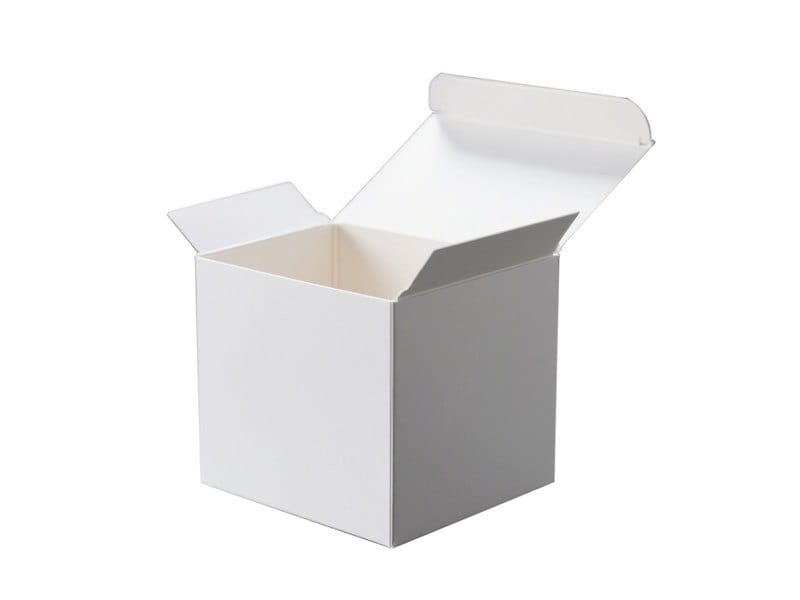
Size, dieline, and product fit
Check the physical Packaging Purchase Order Spec Sheet What to Lock Before Production sample against the material, structure, print, finish, and packing requirements. Keep the accepted sample reference so production and QC use the same standard.
Paperboard, corrugated, insert, or bag material
For a packaging purchase order spec sheet, tie product clearance, dieline version, material thickness, and carton-packing assumptions to one size record.
Quantity, MOQ, and reorder assumptions
Put the stock or custom MOQ path, sample timing, bulk production range, tooling effect, and payment terms in the written quote.
Questions to confirm before ordering:
- Lock size, dieline, and product fit specifications Provide product dimensions, dieline CAD, and fit tolerance Return approved dieline with fit-check sign-off Avoid dimensional mismatch causing assembly rejects Verify dieline against physical sample before production
- Select paperboard, corrugated, insert, or bag material grade Specify material type, GSM, and structural requirements Issue material data sheet and supplier data sheet Prevent using wrong material causing structural failure Confirm material matches spec by RFQ or sample test
- Define quantity, MOQ, and reorder trigger assumptions State order quantity, reorder point, and MOQ 200 pcs Confirm MOQ rules and lead time 15–30 working days after specifications, artwork, and sample requirements are confirmed Avoid stock-out due to unaligned reorder assumptions Agree reorder terms in PO and lock scheduling window
- Document complete specification details including finish and tolerance Provide finished dimensions, tolerance, coating, and joinery Return detailed spec sheet with approval stamp Prevent miscommunication on critical quality parameters Cross-check spec against production sample before sign-off
Keep these checks in the same approval record: establish quality control checkpoints at incoming and production Define QC pass criteria, sampling plan, and defect limits Provide QC report with inspection results and photos Catch defects before shipment to reduce reject cost Review QC reports and approve or request rework; Set verification method for dimensional and material compliance Specify measurement tools, test methods, and acceptable deviation Attest to verification procedure and provide measurement records Ensure consistent verification to prevent substandard delivery Audit verification method during sample or first article inspection.
Tie the Packaging Purchase Order Spec Sheet What to Lock Before Production sample decision to written evidence, an approval owner, and the supplier’s production follow-up.
Lock artwork, print, and finish details
- Final artwork files and barcode verification Incorrect barcode or missing file leads to reprint delay and MOQ waste Artwork manager or brand owner Compare final PDF against die line and scan barcode for barcode readability Confirm file format and barcode accuracy before releasing to pre-press
- Color target, print method, and surface finish Mismatch between approved proof and production causes rejection and reorder Production manager or QC lead Validate color target against Pantone reference; confirm print method (offset, digital, flexo) and finish lamination or coating Sign off this specification as part of the spec sheet before sample cutting
- Sample proof and designated approval owner No single owner for proof sign-off delays production start Named approval owner (e.g., procurement lead) Ensure all stakeholders have seen the physical or digital proof; document owner name and date Collect signed approval form or email confirmation from owner
- Quality control plan for production run Missing QC checkpoints allow defects to ship, incurring returns Quality manager or factory QC lead Review QC checklist: visual inspection, dimension tolerances, color consistency, and peel/strength tests Confirm QC frequency (first article, in-line, final random) and assign responsible inspector
Keep these checks in the same approval record: production lead time and shipping schedule Underestimated lead time delays launch and incurs expedite fees Production scheduler or project manager Confirm lead time of 15–30 working days after specifications, artwork, and sample requirements are confirmed Align ship date with inventory requirement; confirm any MOQ exceptions per project rules; Approval risk assessment and change control Last-minute changes without risk review cause cost overruns and missed deadlines Procurement manager or change control board Assess impact of each change on MOQ, lead time, and cost; document risk level (low/medium/high) For high-risk changes, escalate to senior management before proceeding.
The written approval record should cover final artwork files in vector format (AI/EPS/PDF) and verify barcode readability. Artwork errors cause plate rework and scrap; barcode failures block retail shelf entry. Specify PMS or CMYK color target, print method (offset/flexo/digital), and finish (matte lamination/gloss/UV spot). Identify the single approval owner (name and title) for sample proof sign-off. Multiple approval owners create delays and conflicting revisions.
Final artwork files and barcode checks
Add final artwork files and barcode checks to the RFQ with the artwork file, finish target, board choice, and packing notes so the sample is judged against one buyer-approved record.
Color target, print method, and finish
Before approving the Packaging Purchase Order Spec Sheet What to Lock Before Production sample, record the print reference, structural dieline, packing method, and owner of any artwork change so the production handoff is not handled by email memory.
Review custom paper packaging before sending the RFQ.
RFQ checkpoint
Align artwork, dieline, sampling, production, and quote handoff details before sending Packaging Purchase Order Spec Sheet What to Lock Before Production for review.
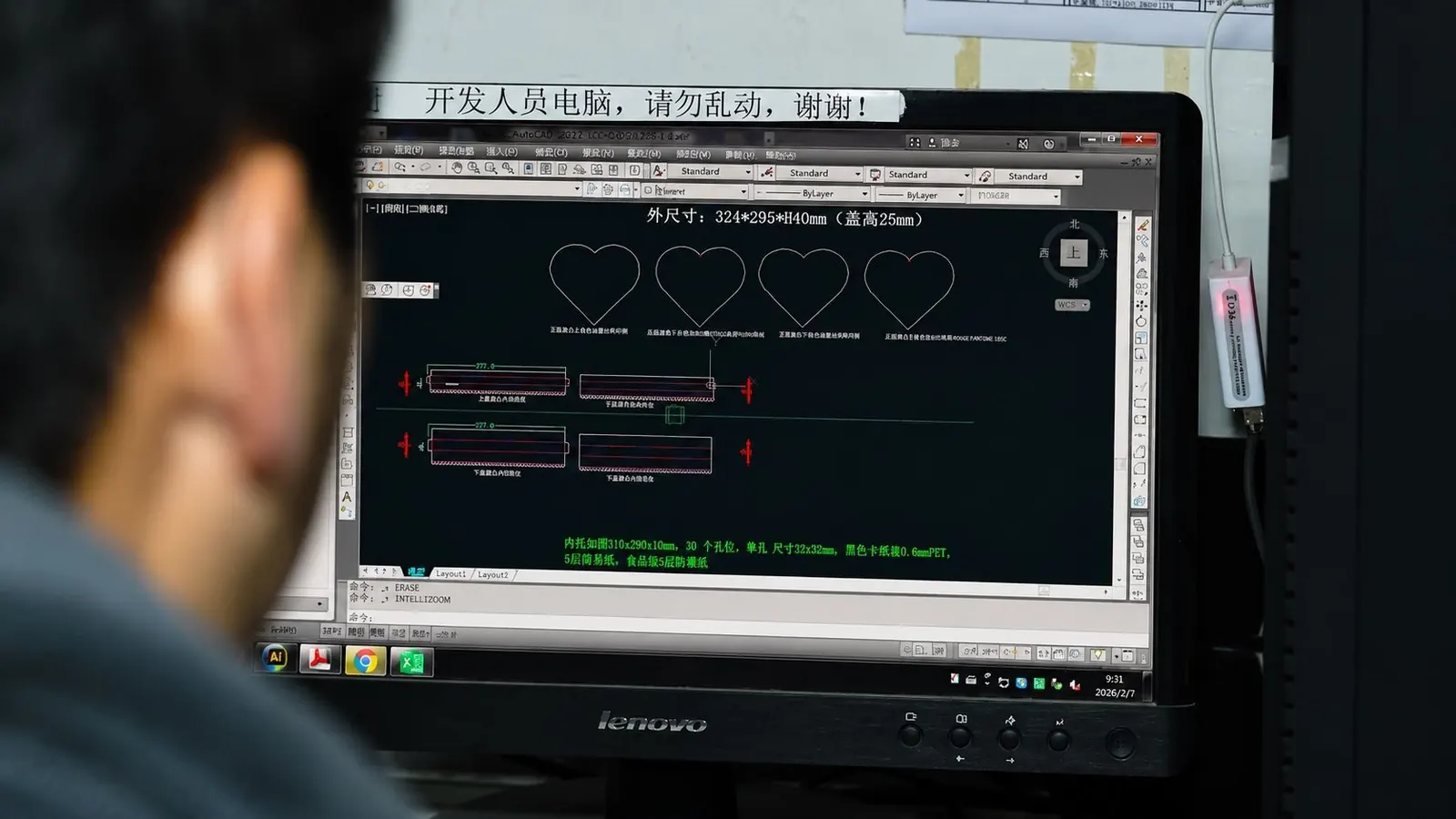
Lock packing, QC, and production handoff
- Confirm inner pack quantity, carton dimensions, and pallet load pattern per product. Improper packing leads to damaged goods or non-compliant export shipping. Specify the agreed pieces per inner pack, the agreed number of inners per export carton, the agreed pallet pattern.
- Define AQL levels, critical defects list, and retained sample quantity per batch. QC criteria prevent shipment of non-conforming goods without a reference sample. the agreed sampling plan for major defects; retain the agreed retained sample quantity before container loading.
- Ask about raw material availability, capacity for your order window, and sub-supplier dependencies. Unasked questions cause delays: material shortages, rescheduling, or incomplete orders. Confirm board, ink, lamination, and any outsourced finish availability before PO release.
- Lock material grade, dimensions, print method, finish type, and applicable test methods. Vague specs force supplier assumptions; resulting product may fail your end-use. buyer-approved paperboard, CMYK offset print, matte lamination, sealed per the agreed transit test method.
The written approval record should cover MOQ: project-level MOQ is 200 pcs unless exception approved. Under-ordering incurs setup waste; over-ordering locks working capital in slow movers. Custom paper boxes MOQ 200 pcs; confirm whether each color or artwork version is counted separately. Standard production lead time is 15–30 working days after specifications, artwork, and sample requirements are confirmed. Unrealistic lead time assumptions cause missed launch dates and costly air freight.
Move the approved Packaging Purchase Order Spec Sheet What to Lock Before Production sample into a production handoff that lists the final lock packing, QC, and production handoff files, material, structure, print, finish, packing, QC checkpoints, and schedule basis.
Review packaging dieline and custom packaging specs before sending the RFQ.
Where this fits: Beyond the product specs above, see custom packaging solutions to match the right packaging program, confirm supplier capability, and line up the RFQ inputs before requesting samples or comparing quotes.
In conclusion
Locking every dimension, material grade, print tolerance, and finish method on your packaging spec sheet before production is an effective way to prevent costly rework, missed lead times, and quality disputes. At Zhypacking, the project-level MOQ is 200 pcs unless a product-specific exception is confirmed, and standard production lead time is 15–30 working days after specifications, artwork, and sample requirements are confirmed. A complete, supplier-proofed spec sheet also gives your factory the clarity needed to deliver consistent results, and it forms the foundation for a reliable sample approval process. To move forward with confidence, request a quote that includes a detailed spec review and sample timeline tailored to your project.
To request a quote, visit packaging dieline and custom packaging specs and confirm the final specification, quote assumptions, sample approval, QC evidence, approval risk, and supplier follow-up before bulk order.
Packaging purchase order spec sheet FAQ
What should a packaging spec sheet include?
Include the approved size, dieline, material, print method, finish, artwork version, packing method, sample status, MOQ, production window, and QC checks. The goal is to give the factory one locked reference instead of scattered email notes.
What must be locked before production starts?
Lock the final artwork, sample approval, color target, material choice, carton packing, and the person who can approve changes. Production should not start while these items are still open.
Which missing details delay production?
Missing dielines, unclear color references, unconfirmed finish, vague packing instructions, and no named approval owner often create extra proof rounds. Put these details in the purchase order before asking the supplier to reserve production time.
How should buyers confirm MOQ and timing?
Ask the supplier to confirm the MOQ, any item-level exceptions, and the 15–30 working day production window after specs, artwork, and sample requirements are confirmed. If timing is critical, ask which approval step controls the schedule.

Ask a Packaging Question