
Direct answer: Size a shipping box from the complete loaded pack: product envelope, quantity and orientation, cushion or insert, closure, board and flute, handling route, stack, pallet, and carrier constraints. Label inside, outside, and packed shipment dimensions separately. Compare quotations only after the supplier drawing, sample, pack-out, test route, and delivery assumptions match.
- Measure the loaded product system, not an empty outer box.
- Separate buyer clearance from converter construction allowances.
- Confirm packed dimensions against current carrier and pallet constraints.
- Verify the finished loaded box on the intended distribution route.
Method and limits: ISO 3034:2011 covers corrugated-fibreboard thickness, ISTA lists distribution procedures, and UPS publishes a carrier-specific size and weight guide. None provides a universal clearance, box strength, MOQ, lead time, or billing rule. Confirm the actual route and current written quotations. Reviewed 24 August 2026.
Shipping box size is a system decision: the product envelope, cushioning, board build, packing count, and delivery method all change the result.
Compare suppliers with the same internal dimensions, protection assumptions, and transit requirements so one quote is not based on a weaker box.
The following checks help lock the drawing, sample, carton mark, and packing basis before an order is released.
For brand owners and importers, keep shipping box sizing quote-ready: specs to send, proof to request, sample checks to approve, and reorder notes to retain.
Quote basis before size approval
| Cost driver | What changes it | Quote signal | Risk to avoid | Buyer action |
|---|---|---|---|---|
| Production lead time | Artwork and sample approval completion, material availability | Quoted lead time is missing a written basis or trigger | Unreliable delivery schedule and missed required-date buffer | Confirm start trigger excludes sample review and shipping |
| Post-quote clarification and verification | Number of assumptions not confirmed in writing | Quote includes bundled charges without line-item breakdown | Hidden tooling, setup, or packing costs change total cost on repeat orders | Request itemized cost breakdown by tooling, setup, material, packing, and unit |
| Quality control and inspection scope | QC criteria defined versus supplier standard; sample approval status | Quote does not mention QC method or inspection point | Non-conforming production passed without documented checks | Define QC criteria (dimensional tolerance, glue adhesion, color accuracy) before order |
Use this cost breakdown table as an approval sequence. For production lead time, a poor decision can mean unreliable delivery schedule and missed required-date buffer. Ask the supplier to provide written proof and compare it with the approved sample or specification, then confirm start trigger excludes sample review and shipping. For post-quote clarification and verification, a poor decision can mean hidden tooling, setup, or packing costs change total cost on repeat orders. Ask the supplier to provide written proof and compare it with the approved sample or specification, then request itemized cost breakdown by tooling, setup, material, packing, and unit. For quality control and inspection scope, a poor decision can mean non-conforming production passed without documented checks. Ask the supplier to provide written proof and compare it with the approved sample or specification, then define QC criteria (dimensional tolerance, glue adhesion, color accuracy) before order.
Keep the supplier response, marked sample, quotation, and approval owner under the same revision number. If the evidence conflicts with the approved record, hold the quote, sample, or production release until the deviation is explained in writing. Carry the signed decision record into the purchase order, production handoff, shipment release, and later reorder review so every team works from the same baseline.
- Confirm production lead time trigger: start after specifications, artwork, and sample requirements are confirmed. Separates production from sample review and shipping to enable reliable required-date buffer. The supplier must state the current duration, trigger, and whether MOQ or tooling affects the schedule. Lead time clock may start prematurely, causing missed delivery deadlines. Record confirmed start trigger and lead time on quote; exclude sample review from production range.
- Verify supplier follow-up plan for approved specification, retained proof, approval owner, and production handoff. Ensures production uses same material, finish, color, and packing reference as approved sample. Supplier to provide written record of approved sample revision, artwork version, material reference, accepted deviation, inspection method. Production may deviate from approved specs, causing rejections and rework. Approve handoff document before order release; schedule QC check against that record.
- Document complete specification: internal dimensions, board grade, flute profile, print type, finish, packing configuration. Vague specs lead to different supplier interpretations and uncomparable quotes. E.g., box inside dimensions 400x300x200mm, B-flute, 150gsm kraft, flexo print, matte lamination, packed 50 per bundle. Supplier quotes may vary in material, construction, and cost; re-quoting becomes necessary. Use a spec sheet template; share with all bidders to ensure apples-to-apples quotes.
FSC chain of custody certification tracks forest-based materials through the supply chain. If a fiber-origin claim is part of the RFQ, verify its scope against FSC chain-of-custody guidance. ISO 2859-1 provides sampling procedures for lot-by-lot inspection by attributes. Set the finished-carton inspection plan separately using ISO 2859-1 sampling procedures.
Key Cost Factors
Shipping-box cost begins with the packed system: product, retail pack, protective material, void-fill rule, closure, and master-carton arrangement. A box selected from product dimensions alone can look economical on a quotation yet create extra material, unused freight volume, damage, or slow packing. Give every supplier the same pack-out assumptions so structure and price can be compared on equal terms.
| Option | Best fit | approval risk | Verification check | buyer follow-up |
|---|---|---|---|---|
| Tight-fit shipper | Stable products with a defined retail pack and limited need for cushioning | Insufficient clearance can crush corners, concentrate impact, or make packing inconsistent | Run a complete pack-out using production-representative products and the intended closure | Approve internal dimensions only after the packed sample can be loaded and closed consistently |
| Protected shipper with insert or cushioning | Fragile, irregular, or presentation-sensitive items | Excess protection raises material and volume, while too little protection leaves the product exposed | Review the protection layout and conduct handling or transit checks appropriate to the buyer’s distribution route | Freeze the insert, cushioning, orientation, and replacement criteria before quote comparison |
| Multi-item or variable pack | Orders with several SKUs, bundle combinations, or changing quantities per carton | One box may create excessive void space for some combinations and poor fit for others | Test the smallest, largest, heaviest, and most awkward approved pack configurations | Decide whether a size family or adjustable insert is more economical than one universal carton |
| Display-ready or branded shipper | Boxes that also support unboxing, retail display, or brand presentation | Print, finish, opening features, and additional handling can change setup cost and production controls | Approve artwork, opening sequence, structural sample, and scuff-sensitive surfaces together | Ask the supplier to separate structural, printing, finishing, and packing assumptions in the quote |
| Reorder-controlled carton | Programs that need repeatable fit across suppliers or production batches | Unrecorded material or dimensional changes can alter protection and freight efficiency | Retain the signed dieline, material specification, packed sample record, and approval revision | Require written deviation approval before any reorder substitution |
The RFQ should include packed product dimensions and weight, item count, orientation, retail-pack condition, protection requirements, allowed void-fill method, closure, label area, shipping route, pallet or container constraints, artwork, order mix, and inspection expectations. Ask how the supplier determines the internal size from the finished structure and how material thickness or score allowances are handled. These are quote inputs, not values the supplier should guess.
Request one complete sample handoff: dieline revision, material description, packed photographs, closure method, and the buyer’s pass-fail notes. The QC plan should verify finished dimensions, board and flute or grade identity, score and slot quality, glue or joint integrity, print and label placement, and loaded-carton condition. If any assumption changes, require a new fit review before bulk release. ZHY Packing’s custom packaging specification page can receive the final pack-out data for quotation.
For related specifications, sample inputs, and RFQ details, review Xiamen ZHY Packing Co.,Ltd.
RFQ checkpoint
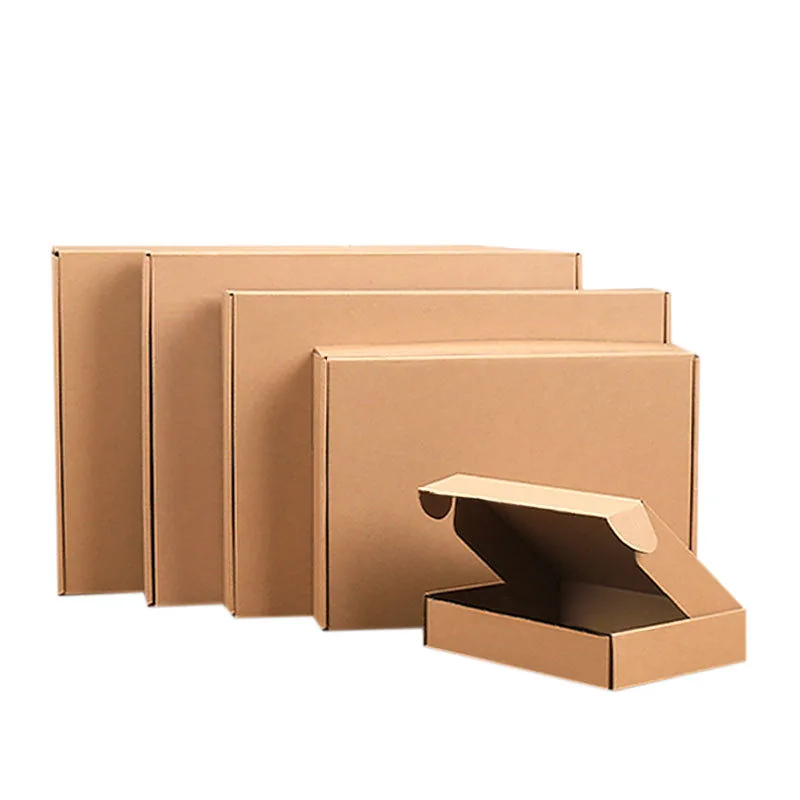
Check the product range for sizes, structures, materials, finishes, and RFQ details before sampling shipping boxes.
MOQ and Volume Pricing
- Supplier does not provide a packed-unit dimensional tolerance sign-off before bulk production. Assumptions on packed unit size can cause box failure, returns, or custom insert fit issues. Require supplier to compare internal box dimensions against product plus packing material actuals on a production sample. Signed packed-unit dimensional tolerance form from supplier, with approved sample revision. Hold production until tolerance sign-off is documented and attached to the purchase order.
- Supplier applies a project-level MOQ without specifying per-variant or per-SKU minimums. If a multi-item pack has mixed SKUs, a single MOQ can hide that some variants require separate setup runs, causing cost surprises. Ask supplier to state MOQ per variant, including artwork, structure, finish, or packing-specific minimums. Written MOQ breakdown by variant from supplier, referencing the current project-level MOQ where applicable. Confirm that each variant’s MOQ can be met within the project-level quantity; if not, adjust order quantity or consolidate variants.
- Supplier uses generic volume pricing assumptions without verifying actual packed unit dimensions. Volume pricing based on assumed box size may not reflect true material cost if actual dimensions differ, causing price changes after sample approval. Request itemized cost breakdown by tooling, setup, material, packing, and unit, based on actual production sample measurements. Itemized quote referencing the specific box dimensions from the approved sample, not generic assumptions. Lock pricing to the approved sample dimensions; include a clause that any dimensional change triggers a new quote.
For related specifications, sample inputs, and RFQ details, review custom packaging solutions.
Hidden Costs to Check
- Internal box dimensions with packed product and packing material: Ensures carton fits all SKUs without damage during transit or storage Measure length, width, height against loaded sample; document signed-off tolerance Approved box size without loaded sample causes reorder rejection or product damage Request fitted sample with all SKUs; retain approved sample for production matching
- Itemized cost breakdown by tooling, setup, material, packing, and unit: Reveals hidden setup and packing costs that inflate total cost on repeat orders Compare breakdown to approved sample; shortlist only suppliers providing itemized breakdown Hidden tooling or packing costs change total cost unpredictably on future orders Reject lump-sum quotes; request itemized cost breakdown before shortlisting
- Quantity and MOQ per variant: Sets minimum order commitment and affects unit cost; below MOQ may incur setup fees Confirm the current MOQ per variant in writing Order below MOQ may be rejected or incur additional setup fees, raising unit price Verify MOQ per variant in RFQ; request written confirmation of minimums from each supplier
- Lead time start trigger excluding sample review and shipping: Prevents clock from starting before all approvals, ensuring reliable delivery schedule Confirm lead time starts after artwork, specification, and sample approval; supplier-confirmed duration Unplanned lead time delays product launch or increases storage costs due to late arrival Request supplier to state lead time start trigger in writing; confirm excludes sample review and shipping
Additional RFQ items include artwork and sample approval with QC criteria (crush resistance, glue adhesion, closure integrity): Ensures production matches approved sample; QC criteria prevent inconsistent quality and returns Define dimensional tolerance, glue adhesion, color accuracy; request supplier sign-off on QC criteria Non-conforming production passed without documented checks leads to inconsistent quality and returns Add QC checklist to RFQ handoff; retain approved sample for production comparison.
For related specifications, sample inputs, and RFQ details, review packaging dieline and custom packaging specs.
How to Get an Accurate Quote
At the RFQ checkpoint, ensure your shipping box requirements are fully defined. The required output is a documented specification sheet with dimensions, material, and performance criteria.
Define the requirement and success criteria
Start by listing all packing assumptions: box size, flute type, print count, and compression strength. Success criteria include cost target and minimum order quantity (MOQ) acceptable for your volume. An ordered list helps prioritize these criteria.
- Box internal dimensions and tolerance
- Required edge crush test (ECT) or burst strength
- Print specifications and color codes
Confirm execution details with the factory
After defining specs, confirm factory capabilities: available die sizes, caliper limits, and lead times for custom orders. Use a cost breakdown table to approve each line item.
| Line Item | Check |
|---|---|
| Material cost | Board grade and GSM |
| Tooling | Die board fee or included |
| Setup charge per color |
Use this cost breakdown table as an approval sequence. For production lead time, a poor decision on MOQ can delay sampling.
Approve samples and control reorder risk
Before production, approve physical samples. Verify dimensions, folding, and strength. Control reorder risk by documenting tolerances and testing procedures in your RFQ handoff.
In conclusion — Shipping box size packing assumptions RFQ checks
Final approval depends on converting every packing assumption into a verifiable specification. Before shortlisting a supplier, verify the internal dimensions against the packed product and packing material on an approved physical sample, confirm the schedule trigger, and request itemized tooling, setup, material, packing, and unit pricing. Keep the sample revision, agreed dimensional method, and applicable QC criteria together so production and reorders use the same baseline.
Carry this signed decision record into the purchase order, production handoff, and shipment release. If any supplier response or sample conflicts with the approved record, hold the quote or production until the deviation is explained in writing. Your final approval is the documented set of checks—specification, cost and MOQ per variant, supplier-confirmed lead time, quality risk, and sample handoff—that every supplier must meet before you shortlist or proceed to bulk order.
To shortlist a supplier, visit paper box size options and confirm the final specification, quote assumptions, sample approval, QC evidence, approval risk, and supplier follow-up before bulk order.
For the next step on this route, see our primary, Secondary & Shipping Packaging: RFQ Layer Matrix.
Frequently Asked Questions — Shipping box size packing assumptions RFQ checks
What should buyers confirm before ordering shipping box size packing assumptions RFQ checks?
Proceed only after the buyer has confirmed the internal box dimensions against the packed product, verified the supplier’s current written lead-time basis, and documented the approved sample revision. The buyer should request the supplier to sign off on packed-unit dimensional tolerance, state the current MOQ per variant, and add a dimensional check to the QC criteria before bulk production.
How should buyers compare MOQ, lead time, and quote terms for Shipping box size packing assumptions RFQ checks?
Proceed only after the buyer compares the MOQ per variant, the production lead time start trigger, and the itemized cost breakdown across suppliers. The buyer should request each supplier to state the MOQ for each box variant, confirm that the lead time clock starts after artwork and sample approval, and separate tooling, setup, and packing costs from the unit price before comparing total landed cost.
What sample, quality, or supplier checks reduce risk for Shipping box size packing assumptions RFQ checks?
Proceed only after the buyer approves a fitted physical sample and defines the applicable QC criteria. Use the intended SKU and pack-out to check dimensions, closure, adhesive, and the selected distribution performance; retain the approved sample for production matching and confirm the current MOQ and schedule in the approval handoff.
RFQ handoff: For shipping box size packing assumptions RFQ checks, share product size, material, artwork, quantity, sample need, packing method, and deadline so the RFQ can be reviewed before sample approval. Send Specs for Review.


Ask a Packaging Question