
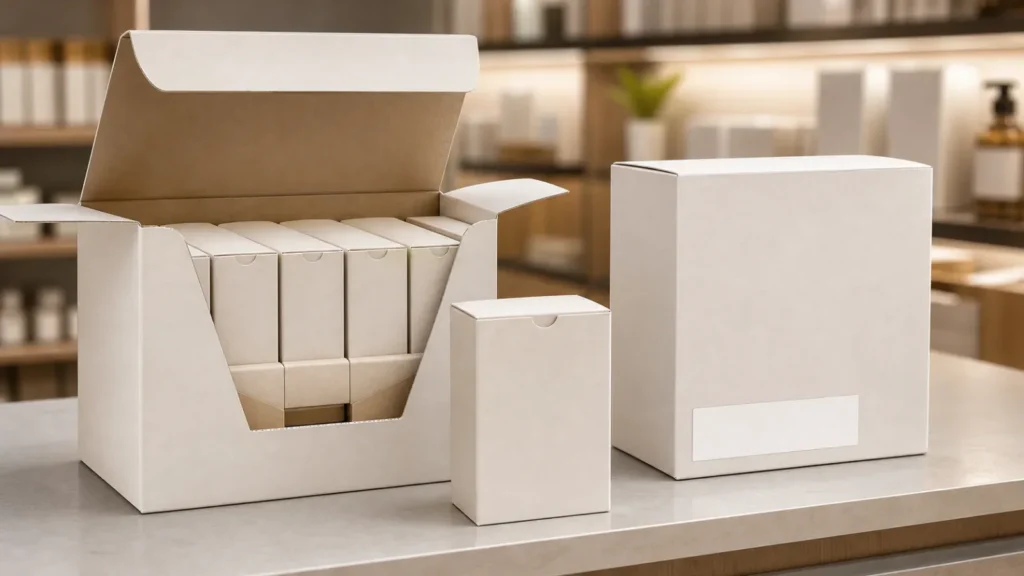
The sourcing record for cosmetics and beauty packaging is incomplete until it translates the use case into packaging specs, risks, and RFQ questions.
Use-case fit is decided before format. What the product is, how it ships, and what the retailer will accept settle most cosmetics packaging choices between them.
Direct answer: For cosmetics and beauty packaging, buyers should translate the use case into packaging specs, risks, and RFQ questions.
Define the Buyer Requirement
| Application | Fit condition | Risk to avoid | Specification or proof | Follow-up |
|---|---|---|---|---|
| Serum carton with inner tray | Rigid or folding carton with die-cut insert that holds bottle securely | Loose fit during transit causes breakage and customer complaints | Sample with bottle in place; check insert tolerance and drop test | Request a pre-production sample with your exact bottle dimensions |
| E-commerce cosmetic mailer box | Corrugated mailer with crush-resistant walls and tamper-evident seal | Box collapses under stacking, damaging product and causing returns | Edge crush test (ECT) rating and drop test at 1 meter | Confirm ECT value and request a drop-test video |
| Refillable compact case | Hinged case with metal pin and snap closure, refillable pan | Hinge breaks after repeated use, leading to product failure | Hinge cycle test (e.g., 10,000 opens) and pan fit tolerance | Ask for hinge cycle test report and pan fit sample |
For cosmetics beauty packaging, preserve the serum carton with inner tray decision under one revision number: keep the supplier response, marked sample, approved specification, quotation, and approval owner together. If the evidence conflicts with the approved record, hold the quote, sample, or production release until the deviation is explained in writing. Once the buyer and designated technical authority have accepted the evidence, carry the signed record into the purchase order, production handoff, shipment release, and later reorder review so every team works from the same baseline.
- Exact material and finish specifications for cosmetic packaging: Material data sheet and finish sample swatch Supplier Mismatch between sample and bulk production Approve material and finish samples before bulk order
- Dimensional tolerance and print color accuracy: Inspection report with caliper and color density readings Supplier QC Inconsistent box dimensions or off-brand colors Review inspection report and approve or request rework
- MOQ and lead time alignment with launch schedule: Written quote with MOQ and production lead time Supplier sales team Order delays or minimums that exceed budget Confirm MOQ and lead time in quote request before committing
- Supplier capability for custom die-cut and finishing: Portfolio of similar cosmetic packaging projects Supplier Inability to execute complex designs Request and review relevant case studies or samples
Compare the Available Routes
Before you commit to a supplier, verify the route with a physical sample or a documented factory process record. A sample that matches your spec sheet is the only proof that the route can deliver what you need. Use the checklist below to compare options without relying on marketing claims.
- Specs: Confirm material grade, wall thickness, closure type, and decoration method against your product formula and filling line.
- Production risk: Identify steps that can cause defects—molding, printing, assembly—and ask how the factory controls them.
- Factory execution: Request a process flow chart and quality checkpoints. Verify they can handle your order size without compromising lead time.
- quote request/sample handoff: Send a clear quote request with your spec sheet, then request a pre-production sample. Use the sample to validate fit, finish, and function before mass production.
For a deeper look at how to align packaging with your brand and budget, see our packaging dieline and custom packaging specs.
quote request checkpoint
Review the Required Proof
Use a release rule: approve only when the supplier evidence matches the written requirement.
- Cosmetics beauty packaging requires exact print and material specs to protect brand image. Verify substrate, coating, and finish against your artwork and functional needs. Mismatched specs cause color shift or poor durability, hurting shelf appeal. Send a detailed spec sheet with your quote request and request a pre-production sample.
- Cosmetics beauty packaging demands consistent quality across every production run. Check that the supplier's QC plan covers print registration, color, and structural integrity. Without documented QC, defects slip through, leading to returns and brand damage. Ask for the QC checklist and a sample from the actual production line before approval.
- Cosmetics beauty packaging often has low-volume launches, so MOQ flexibility is key. Confirm the minimum order quantity (minimum order) and whether it applies per SKU or per project. Hidden minimum order rules can force over-ordering, tying up cash and creating excess inventory. Clarify minimum order in writing and test with a pilot run if your launch volume is below the standard.
- Cosmetics beauty packaging requires clear follow-up after sample approval to avoid delays. Document the approval date, any changes, and the production lead time in your purchase order. Missing follow-up causes miscommunication, missed deadlines, and rework costs. Set a follow-up schedule and require a production status update before the ship date.
- Cosmetics beauty packaging approval risk is high when specs are not locked before mass production. Ensure the final artwork, material, and dimensions are signed off by all stakeholders. Unapproved changes lead to costly reprints or unusable packaging, hurting launch timing. Create a formal approval form and get written sign-off from your team and the supplier.
Build the Decision Asset
Before you commit to a supplier, the ambiguity is whether the factory can actually execute your specification at the volume you need. The control that prevents this is a decision asset: a documented package of supplier proof, approved samples, and reorder controls that turns a vague promise into a verifiable baseline.
Supplier evidence to request
Ask for process references that show how the factory handles similar cosmetics custom paper packaging projects. Verify that the factory can produce the specific material, decoration, and assembly steps your design requires. A written process record—covering tooling setup, printing registration, and quality checkpoints—is stronger than a verbal claim. Confirm the factory’s cost structure and minimum order in writing, and flag any production risk such as single-source materials or complex assembly that could delay your launch.
Sample approval evidence
Use a physical sample as the release rule. Approve only when the sample matches your written requirement for dimensions, finish, and function. Document the approval with a sign-off that includes photos and measurements. This sample becomes your reference for production, so store it and share it with the factory before mass production begins.
Reorder control records
For repeat orders, define how the factory will maintain consistency. Specify the reorder process: which specs are re-verified, how color and finish are matched, and what documentation is required. This prevents drift between batches and protects your brand’s quality over time.
Use this checklist as your quote request and sample handoff template. It ensures every stakeholder—from procurement to quality—works from the same evidence, reducing miscommunication and costly revisions.
Prepare Comparable RFQ Inputs
Before you send inquiries, prepare a single, comparable specification sheet. Without it, supplier quotes will vary in scope, and you will be comparing unlike offers.
Start by listing the critical-to-quality attributes for your cosmetics beauty packaging: material grade, finish, decoration method, closure torque, and any filling or assembly steps. For each attribute, state a measurable requirement or a verification question. For example, instead of writing “good glass,” specify “borosilicate glass, clear, with a spray finish” or ask “what glass type and finish do you recommend for a water-based serum?”
Then, define your cost and minimum order boundaries. State whether you are evaluating total landed cost or unit price, and ask the factory to break down tooling, decoration, and packaging costs separately. For minimum order, ask for the minimum order per SKU and per color, and whether a trial run is possible before a full order.
Use this ordered list to structure your quote request package:
- Product drawings or 3D files with dimensions and tolerances.
- A written specification sheet covering material, finish, decoration, and assembly.
- Packaging and labeling requirements for retail and shipping.
- Quality acceptance criteria, including sampling plan and defect limits.
- Requested lead time and payment terms, but leave room for the factory to propose alternatives.
Before sending, verify that each requirement is testable. If you cannot measure it, you cannot confirm it. For production risk, ask the factory to describe their process control points and how they handle defects. For factory execution, request a process flow chart or a video of the actual line, not a generic presentation.
Finally, define the quote request and sample handoff. Specify how many samples you need, what tests you will run, and the deadline for the factory to respond. A clear handoff prevents misunderstandings and speeds up the decision.
Source check: ISO 2859-1 sampling inspection standard; Packaging quote request Checklist for Beauty Brands | Ecoicolor.
In conclusion
The final approval for cosmetics beauty packaging comes down to a disciplined comparison of your documented use case against the supplier’s demonstrated capabilities. Before you shortlist a supplier, verify that the physical requirements—container geometry, insert fit, material grade, and finish—are locked in writing, and that the minimum order aligns with your launch volume. Confirm the production lead time of 15–30 working days after specifications, artwork, and sample requirements are confirmed, and request documented proof of material compliance and a quality control plan referencing a sampling standard. Only when these checks are satisfied should you approve a sample and move to the quote request and sample handoff, ensuring every critical-to-quality attribute is captured in the final agreement.
To request a quote for cosmetics beauty packaging, use cosmetics beauty packaging solutions to confirm the final specification, quote assumptions, sample approval, QC evidence, approval risk, and supplier follow-up before bulk order.
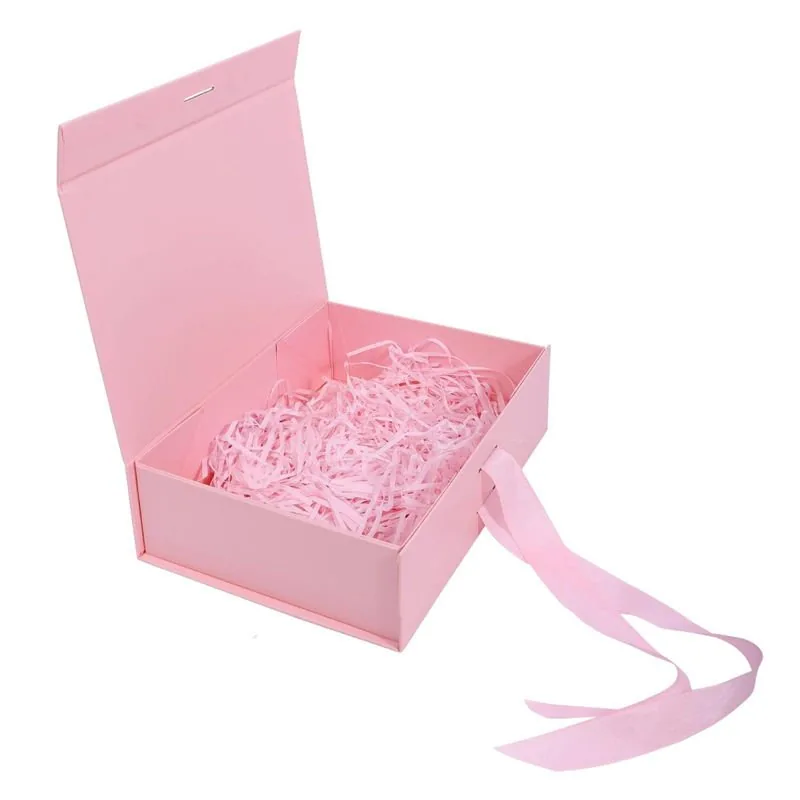
If this stage leads into that check, compare it against our custom Magnetic Boxes: Buyer Use-Case Fit Checklist.
Frequently Asked Questions
How should a b2b buyer match industry use case?
Match your use case by defining the product’s physical requirements first: container type, material, closure, filling method, and surface finish. Then compare those specs against the supplier’s documented capabilities and request a sample that mimics your exact filling and handling conditions.
Confirm the minimum order aligns with your launch volume—Zhypacking’s project-level minimum order is 200 pcs unless a product-specific exception applies—and verify the production lead time of 15–30 working days after specifications, artwork, and sample requirements are confirmed. Shortlist only suppliers who can demonstrate prior work in your segment, such as skincare, haircare, or color cosmetics. Approving the wrong structure or supplier proof can create quality, cost, or delivery problems.
Which supplier proof should buyers request for cosmetics beauty packaging?
Request documented proof of material compliance, including any certificates the supplier holds within their certified scope, and ask for a physical sample that matches your exact specification. Verify the sample’s dimensions, wall thickness, and finish against your drawing, and test it with your actual product formulation to check compatibility.
Also ask for a quality control plan that references a sampling standard like ISO 2859-1, and confirm how defects are handled during production. For any claim about direct contact, recycled content, or compostability, require the supporting document before you approve; do not rely on verbal assurances.
What should buyers lock before approving buyer use-case fit checklist?
Lock the critical-to-quality attributes in writing before approval: material grade, dimensions, tolerance, color match, surface finish, and any functional tests like drop or leak resistance. Define your cost boundaries and minimum order—confirm the exact minimum order for your product in the quote request, as Zhypacking’s default is 200 pcs but exceptions may apply.
Also lock the sample approval process: specify how many samples you need, the deadline for receiving them, and the criteria for pass/fail. Document the production lead time of 15–30 working days after specifications, artwork, and sample requirements are confirmed, and the inspection point before shipment, so both parties agree on the release rule before mass production starts. Ask the supplier to confirm factory capability and who owns follow-up. Approving the wrong structure or supplier proof can create quality, cost, or delivery problems.
quote request handoff: Send Specs for Review.
Ask a Packaging Question