

Quick buyer answer: A paper bag RFQ is ready when the supplier can identify the size order, product load, gusset function, handle area, artwork file, finish layers, sample requirement, and packing method without guessing. Send width, height, gusset, product size, product weight, handle type, paper preference, artwork, print colors, finish, quantity, and proof requirement in one packet.
Paper bag RFQs become risky when the buyer sends a logo and quantity but leaves size, gusset, handle, paper, fold, and artwork assumptions open. The supplier can still quote, but the quote may not describe the bag the buyer actually needs. Those hidden assumptions usually appear later as proof revisions, sample delays, handle changes, or carton packing issues.
This guide is for buyers preparing custom paper bags for retail, gift, cosmetics, apparel, and event packaging. It gives a practical way to prepare dimensions, gusset notes, artwork files, dieline checks, and sample approval records before asking for final pricing.
How this guide was prepared: The article follows the handoff from labelled product dimensions to supplier assumptions, dieline review, artwork proof and loaded sample. ISO 536:2019 is used only to distinguish standardized grammage measurement from finished-bag performance, while Pantone’s print and packaging color guidance supports naming the intended color-reference system. Exact bleed, safe area, paper, load and tolerance values remain supplier- and project-specific. Reviewed 24 August 2026.
Lock the size order before comparing prices
Buyer decision rule: The RFQ should describe one clear physical bag before pricing: width, height, gusset, handle, load, paper, artwork zones, finish layers and packing method. If any of these are missing, the price comparison is also comparing supplier guesses.
Use one dimension language
Paper bag dimensions are easy to misread. Write the size order clearly, such as width x height x gusset, and use that same order in the RFQ, quote, dieline, artwork note, sample record, and reorder file. Never send “300 x 200 x 100 mm” without labels.
If the buyer does not know the size yet, send product dimensions, product weight, number of items per bag, and retail use. Ask the supplier to recommend the bag size and explain the reason. The answer should connect to product fit, standing stability, front-panel proportion, handle comfort, and carton packing.
Understand what the gusset must do
The gusset controls side and bottom depth. A narrow gusset can look slim but may make the bag unstable. A deep gusset can improve product fit but may change the front panel proportion and logo placement. The right gusset depends on whether the product is boxed or loose, whether the bag must stand upright, and how the customer carries it.
Do not approve the gusset from the flat dieline alone. Load the sample with the real product and check whether the bottom opens cleanly, side panels sit correctly, the front panel still looks balanced, and the handle position remains comfortable.
Match handle choice to usable height
Handle type changes the top fold and usable print area. Twisted paper handles, flat paper handles, ribbon handles, folded handles, and die-cut handles each affect the top area differently. If the handle is decided after artwork, the logo may need to move.
Before artwork approval, ask the supplier to mark handle holes, reinforcement, top fold, bottom fold, glue areas, safe areas, and no-print zones on the dieline.
Worked RFQ example
Use this example as a method, not a universal size rule. Final size must follow the supplier dieline and sample result.
| Buyer situation | Supplier check needed |
|---|---|
| Product is a boxed skincare set plus a small sample card. | Confirm whether both items sit side by side or stacked. |
| Buyer wants the bag to stand on a retail counter. | Recommend gusset depth and bottom structure based on the loaded product. |
| Logo should appear centered on the front panel. | Mark side gusset, top fold, handle holes, and no-print areas before proof. |
| Buyer wants ribbon handle and foil logo. | Confirm handle attachment, foil layer, sample scope, and extra approval photos. |
| Buyer ships bags flat to a 3PL. | Return units per carton, carton marks, and packing method. |
This prevents the supplier from guessing whether the bag is mainly for display, load carrying, gifting, or warehouse packing.
Require a dimensioned supplier assumption sheet
| Buyer sends | Supplier should return |
|---|---|
| Product dimensions and weight | Recommended width, height, gusset, paper, handle, and reinforcement logic. |
| Size order | Confirmed dimension order on quote, dieline, and sample approval record. |
| Handle preference | Handle hole, top fold, reinforcement, no-print area, and usable height notes. |
| Artwork file | Dieline with panels, folds, bleed, safe area, no-print zones, and finish layers. |
| Print and finish | Print method, color target, lamination/foil/emboss/spot UV feasibility, and proof type. |
| Packing method | Units per inner pack, carton count, carton marks, and pallet need if relevant. |
Without this return, two suppliers may quote different bag structures under the same title. That is why the supplier assumption record should come before final price approval.
Dieline marks the buyer should check
| Dieline area | Why it matters |
|---|---|
| Front and back panels | Controls logo scale, center line, and visible brand area. |
| Side gussets | Patterns or logos may shift when the bag opens. Review assembled photos. |
| Top fold and handle zones | Handle holes, ribbons, or reinforcement can limit usable print height. |
| Bottom fold | Critical text or patterns may disappear under the bag. |
| Glue and assembly areas | Print can be hidden, distorted, or affected by assembly. |
| Finish layers | Foil, embossing, debossing, spot UV, and varnish need separate layer control. |
The final supplier template controls exact bleed and safe-area values. Do not copy measurements from another printer’s guide unless the actual supplier confirms them for this bag structure.
Artwork file checks before sampling
This check connects the artwork file with the folded sample, because print approval can fail even when a flat PDF looks correct.
Send production-ready files
Send vector artwork or a print-ready PDF, outlined or packaged fonts, color references, logo placement, and separate finish layers if the design uses foil, embossing, debossing, spot UV, varnish, or lamination. A mockup is useful for communication, but it should not become the only production file.
If the logo uses small text, thin lines, gradients, or light ink on kraft paper, ask the supplier to flag print risk before the sample. The buyer should approve the risk in writing or simplify the artwork.
Review the assembled bag
Flat artwork and assembled paper bags read differently. A logo can look centered on a PDF but shift visually when the side gusset opens. Artwork near the top fold may compete with the handle. Print near the bottom fold can become hidden or distorted.
Approve assembled sample photos or a physical sample before bulk production. Save front, back, side gusset, bottom, handle, inside, and loaded-product photos for the reorder record.
Supplier assumption return template
Ask the supplier to return these fields before final pricing:
| Assumption field | Supplier should state |
|---|---|
| Size basis | Width, height, gusset, and whether values refer to finished bag dimensions. |
| Product fit | Product arrangement, standing behavior, and load assumption. |
| Structure | Paper, handle, reinforcement, top fold, bottom fold, and glue areas. |
| Artwork | Logo panel, color target, safe areas, no-print zones, and finish layers. |
| Proof | Whether the sample proves structure, print, finish, handle, or full production look. |
| Open items | Any missing file, color, finish, packing, or delivery detail that could change price. |
Do not approve the RFQ if
- The quote does not say which value is width, height, or gusset.
- The supplier has not returned a dieline before artwork proofing.
- The artwork file is only a JPEG mockup.
- Handle holes, fold lines, glue areas, and no-print zones are not marked.
- The sample does not use the selected handle, paper, or finish.
- The buyer approves a flat proof even though artwork crosses gusset, fold, handle, or bottom areas.
Send the product size, bag orientation, gusset depth, handle type, logo file, print coverage, finish, and carton packing target. Zhypacking can check whether the RFQ is ready for sampling.
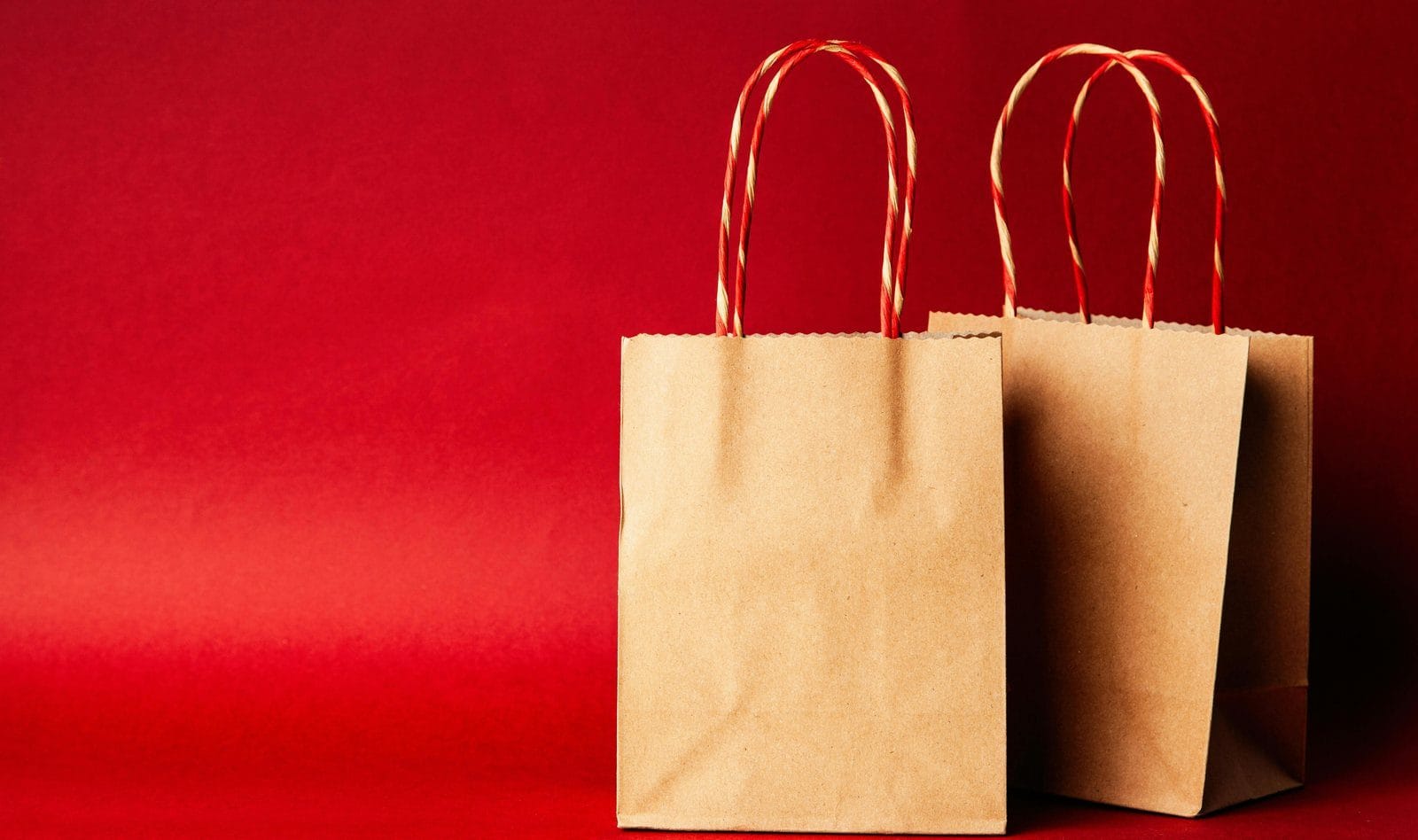
Freeze the size order, gusset, dieline, and artwork before sampling
Do not push size, gusset, handle, and artwork questions into the sample stage. Prepare one RFQ packet, label the dimension order, ask the supplier to return a dieline and assumption record, and review the assembled sample with the real product inside.
For store programs, connect the final spec to retail packaging so the bag works for product fit, customer handling, logo visibility, and repeat orders.
If this stage leads into that check, compare it against our sticker Roll Core and Unwind Artwork Checklist.
FAQ — Paper bag size gusset artwork file checks
Use these FAQ answers to make the size, gusset, dieline, and artwork packet quote-ready.
What dimensions should I send for a paper bag RFQ?
Send width, height, gusset, product dimensions, product weight, handle type, paper preference, print colors, finish, quantity, packing method, and use case. Label the size order clearly.
Why does gusset size matter?
The gusset affects product fit, standing behavior, front-panel proportion, logo placement, handle comfort, and carton packing. It should be tested with the real product.
Should artwork be approved before or after sample?
Approve artwork direction before sampling, then approve the assembled sample before bulk production. The flat file can look different after folding, handle attachment, and gusset opening.
What should the supplier mark on the dieline?
Ask for width, height, gusset, front/back panels, side gussets, handle holes, top fold, bottom fold, glue areas, bleed, safe area, no-print zones, logo panel, and finish layers.
What makes the RFQ quote-ready?
A quote-ready RFQ includes size order, product load, gusset, paper, handle, artwork file, print colors, finish, quantity, packing request, sample need, and delivery target.

Ask a Packaging Question