

Box quotes go wrong when buyers send outer photos or “about this size” notes. Factories price inner clearances, board thickness, and packing — not a phone photo of an empty box.
Freeze which edges to measure, how to measure them, and what clearances the product needs before anyone prices tooling or board.
Direct answer: Use the finished inside length, width, and depth as the product-fit baseline, then state the product size and clearance, board or flute, dieline revision, and packing orientation in the same RFQ. Compare quotes only after the supplier labels inside versus outside size on the drawing and the physical sample is measured against that revision.
- Label every dimension as product, inside, outside, flat, or packed size.
- Name measurement points, orientation, board build, and revision.
- Keep supplier construction allowance separate from buyer clearance.
- Measure the finished production-intent sample before bulk release.
Method and limits: ISO 534:2011 covers paper and board thickness measurement, and ISO 3034:2011 covers single-sheet corrugated-fibreboard thickness. Neither defines the finished inside-size convention, product clearance, crease allowance, or manufacturing tolerance for this box. Put those definitions on the supplier drawing and verify the physical sample using the agreed method. Reviewed 24 August 2026.
Why Box Dimensions Must Be Frozen Before the Quote
Dimensions are the first shared truth between product, packaging, and freight. If they stay soft, every later decision — insert, board, DIM weight, print panels — drifts.
- Good freeze moment Before first firm quote and before dieline work.
- Weak freeze After artwork is approved on a wrong-size white sample.
- Trade-off A day of measuring now versus weeks of sample restarts.
If product size is still changing weekly, mark packaging dimensions as provisional and do not treat the first quote as production-ready.
Which Dimensions to Put in the RFQ
Factories price structure from numbers they can build a dieline against, not from photos. Every field below becomes a cutting decision at sample stage, so an RFQ that leaves one soft will push the uncertainty into the sample loop — where it costs a restart instead of a clarification email.
| Dimension field | Spec to confirm and acceptable range | approval risk if vague | Verification check | buyer follow-up |
|---|---|---|---|---|
| Inner L×W×H | Finished inside space for product plus insert; acceptable range agreed per critical edge, tighter on fit edges than on non-critical panels | Wrong die cuts and refit delay; insert stops fitting after first sample | Measure packed product with calipers or ruler photo on critical edges | Include both inner numbers and the acceptable range in the RFQ |
| Outer dims when needed | Shipper or retail shelf limits, labeled separately from inner; acceptable range set by the freight or shelf rule | Inner/outer mix-up skews DIM weight and the freight quote | Confirm which rule applies and ask the factory to show the conversion | Request the factory conversion before approving the quote |
| Board allowance | Flute thickness take-up assumed for the chosen board grade | Fit tightens silently after a board change, causing rejects at pack-out | Ask which board grade the quote assumes; inspect a cut sample | Approve board grade in writing before sample cut |
| Clearances | Rattle versus press-fit per product weight and surface risk; acceptable range stated per SKU family | Movement damage in transit or slow pack-out on the line | Run a pack-out sample check with the real product | Confirm clearance rules per SKU before bulk approval |
| Orientation | Which face is top; grain or load direction for stacked cartons | Top-load crush when the box ships on the wrong face | Inspect a packed sample under stack load | Approve orientation marking on the carton |
| Units | One system only, mm or in, across every field in the document | Mixed units in one RFQ produce scrap dies and quote disputes | Verify the unit system in the drawing and the quote match | Confirm units in writing and quote on that basis |
Label every number as inner or outer and keep one unit system across the whole document. Unlabeled “120×80×40” is how wrong dies get cut. If the product is still resizing, send the fields as provisional and ask the factory to quote the size family rather than a single size.
Use the solutions hub to align the related specifications and RFQ inputs.
RFQ checkpoint
Check the product route for sizes, structures, materials, finishes, and RFQ details before sampling box dimensions.
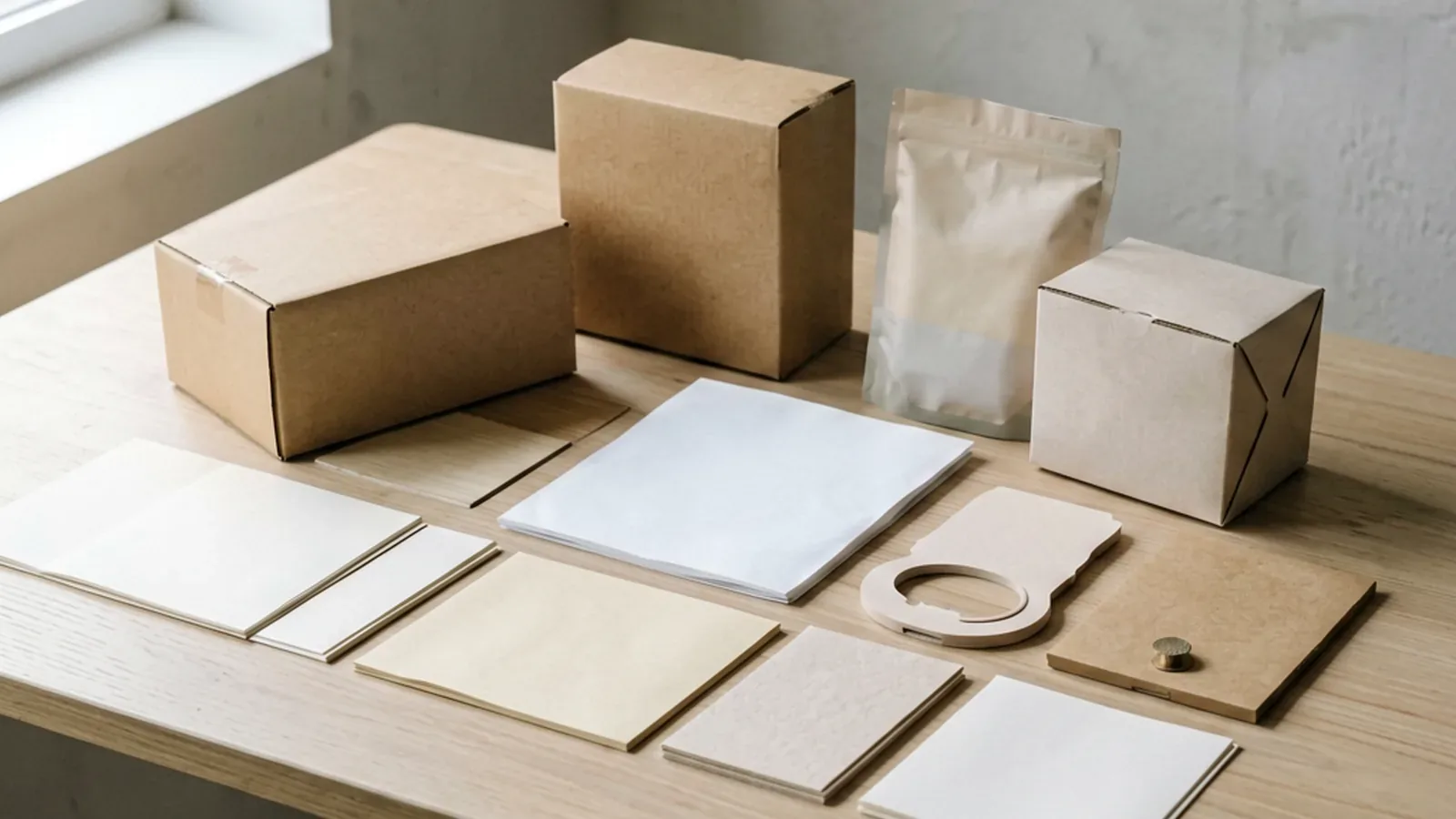
Measurement Mistakes That Change the Price
- Measuring the product only without insert, tissue, or wrap thickness.
- Using retail box outer as the new mailer inner without conversion.
- Phone photo scale without a ruler in frame.
- Rounding inconsistently across SKUs in one family.
- Changing product packaging after dieline lock without a revision ID.
Each mistake can look small in email and large in unit price or damage rate.
See the product range for how measurement checks fits into the order.
Photos and Samples That Prevent Dimension Drift
Send evidence with the RFQ:
- Product photo with ruler on critical edges.
- Packed or intended insert photo if known.
- Current shipper sample dims if you are replacing it.
- CAD or dieline only when revision-controlled.
On the factory side, photos without scale land in a re-measure loop: the sample room cuts a first article, QC checks it against the dieline, and a wrong size assumption surfaces only at inspection. Ruler shots and packed photos up front remove that restart risk and keep sampling on the first timeline.
A physical retain of the approved size sample beats another round of “it looked smaller on my screen.”
Use packaging dieline and custom packaging specs to align the sample and production handoff.
Move Dimensions Into a Supplier-Ready RFQ
- Units and system mm or in, one system across every field.
- Labeled dims inner L×W×H, plus outer only when freight or shelf rules need it.
- Clearances and orientation rattle vs press-fit per product; which face is top.
- Insert plan and board notes so the factory prices structure, not guesses.
- Photo evidence with revision date ruler shots on critical edges.
Keep dimension changes under the same custom packaging revision path as artwork so structure and print stay paired.
Conclusion: When Dimensions Are Ready for Sampling
Sample when dimensions are labeled, evidenced, and stable enough that a dieline can become the bulk baseline.
Request a packaging review with product photos and ruler shots.
If product size is still floating, keep quotes exploratory.
Box Dimensions FAQ
Inner or outer — which does the factory need first?
Almost always finished inner with product and insert plan. Outer follows structure and board choice.
Can I quote from Amazon package dims?
Only as a starting point. Carrier dims are not a packaging dieline; remeasure product and pack method.
How tight should clearances be?
Tight enough to control rattle, loose enough for pack-out speed and board spring. Set per product weight and surface risk.
What if SKUs share one box size?
Document the size family and which SKUs are worst-case for fit and weight — not an average of all SKUs.
See paper packaging quality control for how dimension checks fits into the order.
Source check: ISO 2859-1 sampling inspection standard; Rigid Gift Boxes: Sampling Checklist Buyers Should Confirm Before an RFQ. Record the project-specific acceptance rule, evidence owner, and approval step in the RFQ or quality file.

Ask a Packaging Question