

Choosing a custom paper packaging supplier in China needs a written specification before the buyer can shortlist suppliers using proof, capability, quality, MOQ, and delivery criteria; otherwise suppliers may quote different product and approval assumptions.
This guide frames the topic around buyer decision risk, quote assumptions, sample approval, and confirmed Zhypacking facts instead of generic packaging definitions.
Direct answer: To choose a custom paper packaging supplier, compare matched samples, documented production capability, quality records, quantity rules, and delivery assumptions on the same basis.
How buyers should shortlist China paper packaging suppliers
| Requirement | Factory control | Evidence to verify | Order risk | RFQ follow-up |
|---|---|---|---|---|
| Sample approval | Supplier holds pre-production, production, and shipping samples against approved artwork and substrate. | Compare production sample to signed-off master sample under buyer-approved viewing conditions; measure dimensions with calipers. | Approved sample may deviate from bulk run if process controls are undocumented. | Request a pre-production sample and sign off in writing before mass production begins. |
| MOQ and order quantity | Factory sets MOQ per product family; confirmed in quote before sample approval. | Check quote line for MOQ per SKU; ask if split orders or trial runs are allowed. | Ordering below MOQ triggers price renegotiation or order rejection after sample approval. | Confirm MOQ in RFQ; request a tiered price break for volumes above the minimum. |
| Material / substrate | Supplier sources substrate from approved mills; grammage and composition are documented in spec sheet. | Request material data sheet and inbound mill certificate; weigh a cut sample on a grammage scale. | Substrate substitution without notice can alter box stiffness, print quality, or shipping durability. | Specify substrate grade and grammage in RFQ; ask for mill certificate with each shipment. |
| Width or size tolerance | Factory uses calibrated dies and digital measurement; tolerance is stated in the spec sheet. | Measure five random samples from the production run with a calibrated ruler or caliper. | Out-of-tolerance boxes cause filling line jams or poor fit with product inserts. | Define acceptable tolerance in RFQ; approve a dimensional report before bulk production. |
| Finish or color control | Supplier uses spectrophotometer and maintains a color standard library for each job. | Measure buyer-approved color tolerance under buyer-approved viewing conditions against approved color chip; check gloss with a gloss meter. | Color drift across print runs leads to brand inconsistency and customer returns. | Supply a physical color standard; request a color report with the pre-production sample. |
Approval of a sample without documented factory controls exposes the buyer to bulk-run deviations that may not be visible until the shipment arrives. The supplier's process for holding pre-production, production, and shipping samples against approved artwork and substrate must be verified before mass production begins. This step prevents costly rework and ensures the delivered goods match the signed-off master sample under standard lighting conditions.
After sample approval, the buyer must confirm commercial terms in the written RFQ, including MOQ, material specifications, size tolerances, and finish controls. Relying on verbal agreements or incomplete documentation can lead to order rejection, price renegotiation, or non-compliant goods. The buyer follow-up is to issue a formal RFQ that captures all approved parameters and request a tiered price break for volumes above the minimum order quantity.
Questions to confirm before ordering:
- Can you confirm the exact paper weight, coating, and print finish for each box style? Specs drive cost, durability, and print quality; vague answers lead to rework. Supplier lists GSM, coating type, and finish options per product family. Mismatched specs cause packaging failures or unexpected price hikes. Document specs in RFQ and request a pre-production sample for approval.
- What in-process QC checks do you run on paper cutting and printing? QC prevents defects like misaligned prints or weak creases before bulk. Supplier names specific checks, e.g., caliper testing, color density, and fold endurance. Poor QC leads to high rejection rates and delayed shipments. Ask for QC records from a recent order and include inspection clauses.
- Can you provide a factory audit report or third-party certification? Verification confirms real production capability, not just a trading desk. Supplier shares ISO 9001 or BSCI certificate with a valid scope. Unverified suppliers may outsource work, risking quality and lead time. Request a live video walkthrough of the production floor.
- How do you handle sample approval before bulk production? Sample sign-off is the gate that locks specs and prevents mass errors. Supplier requires written approval and keeps a signed sample on file. Skipping approval can result in bulk runs that don't match your intent. Set a clear approval deadline and test the sample against your checklist.
- What is your minimum order quantity and lead time for custom paper packaging? MOQ and lead time affect your inventory planning and cash flow. Supplier states a clear MOQ (e.g., 200 pcs) and production time (15–30 working days). Hidden minimum order or long lead times can stall your launch or force overstock. Confirm minimum order and lead time in writing before issuing a purchase order.
Use the evidence for how buyers should shortlist china paper packaging suppliers to compare the supplier record with ISO 9001 quality management standard before accepting the requirement.
Compare suppliers on the same order assumptions
| Option | Best fit | Trade-off | Risk to avoid | Verification | Follow-up |
|---|---|---|---|---|---|
| Standard 250 GSM kraft box with offset print | E-commerce orders needing durable outer packaging at controlled unit cost | Higher GSM adds shipping weight; offset plate cost is justified only above the quoted quantity | Accepting a lighter board to save weight may cause crush damage in transit | Request a board sample and measure GSM with a micrometer; confirm the supplier stocks this grade | Compare the quoted grammage against your product weight and stacking load |
| Eco-friendly 200 GSM recycled board with water-based ink | Brands targeting retail shelf presence with a sustainability claim | Recycled fiber may show visible flecks; water-based ink color gamut is narrower than solvent | The recycled board may lack consistent whiteness, causing print color shift across batches | Ask for a printed proof on the exact recycled stock; approve a delta-E tolerance of ≤ 2.0 | Document the approved color standard and sign off on the proof before bulk production |
| Rigid box with foil stamping and embossing | Premium gift or luxury product lines where unboxing experience drives repeat purchase | Rigid construction increases material cost over folding cartons; foil stamping can add production time | Foil alignment errors are visible on dark boards; embossing depth must match your artwork spec | Inspect a hand-made sample for foil registration and emboss depth; measure against your die line | Approve the sample in writing and confirm the custom packaging customization details with the production team |
For standard 250 gsm kraft box with offset print, a poor decision can mean accepting a lighter board to save weight may cause crush damage in transit. Request a board sample and measure GSM with a micrometer; confirm the supplier stocks this grade. Use the result to decide whether this checkpoint can proceed or must stay on hold.
Preserve the standard 250 gsm kraft box with offset print decision under one revision number: keep the supplier response, marked sample, approved specification, quotation, and approval owner together. If the evidence conflicts with the approved record, hold the quote, sample, or production release until the deviation is explained in writing. Once the buyer and designated technical authority have accepted the evidence, carry the signed approval record into the purchase order, production handoff, shipment release, and later reorder review so every team works from the same baseline.
Use the evidence for compare suppliers on the same order assumptions to compare the supplier record with Sustainable Paper-Based Packaging: A Consumer's Perspective before accepting the requirement.
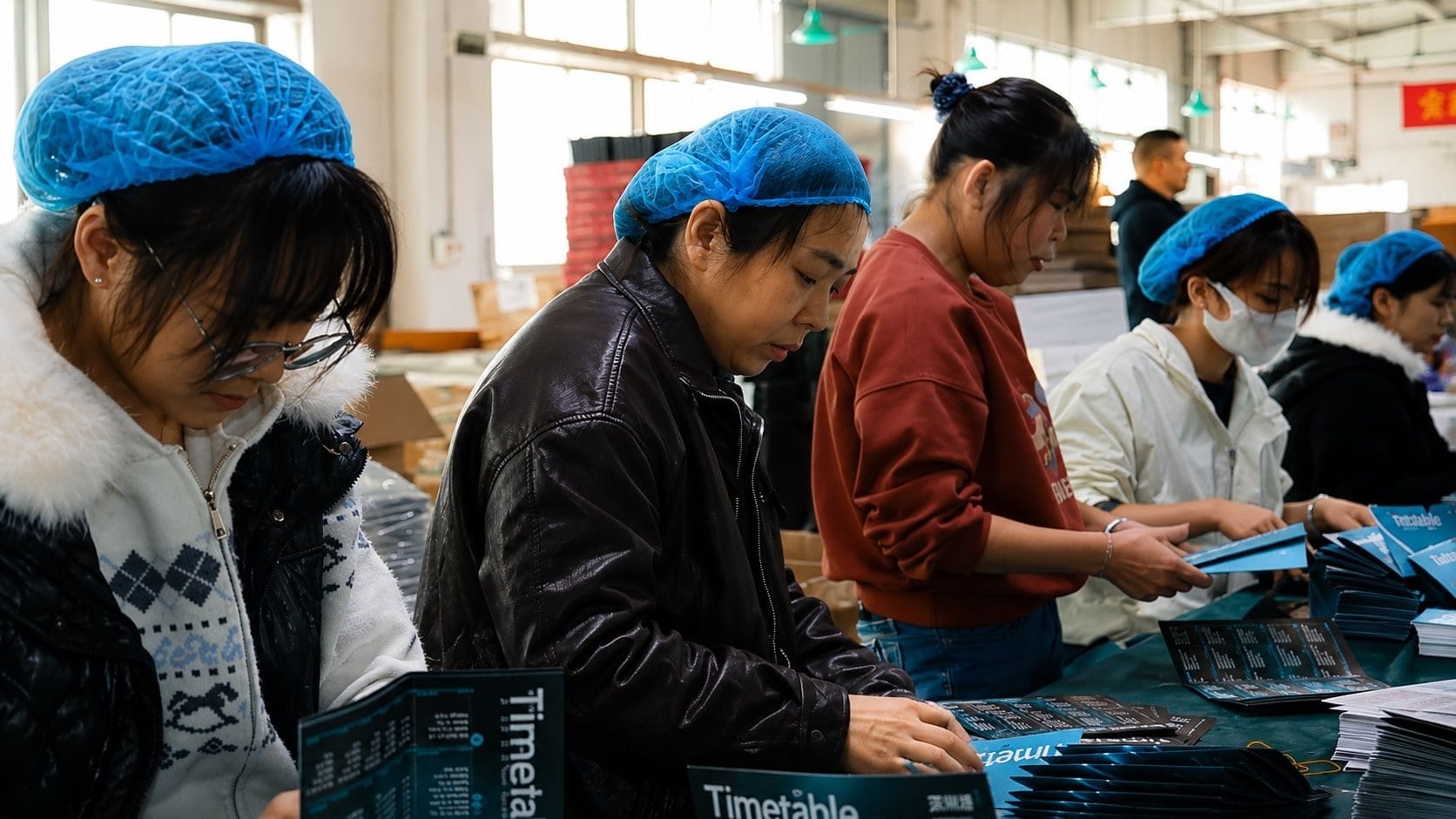
Supplier scorecard for custom paper packaging projects
- Supplier capability: Does the supplier run its own die-cutting and printing lines for custom paper packaging? In-house production of paper boxes and bags with documented equipment list. Supplier brokers orders to third-party workshops without quality control over the final run. Request a factory video showing the production line that will handle your order.
- minimum order or order quantity: Confirm the minimum order quantity per product type, not a single blanket number. Supplier states a project-level minimum order of 200 pcs for paper boxes and bags with no hidden split-fee. minimum order doubles when you request a specific paper thickness or custom size. Get the minimum order in writing for each product variant before requesting a quote.
- Quality control: What inline and final inspection steps are performed during production of custom paper packaging? Supplier runs a documented QC gate after printing, die-cutting, and gluing with a pass/fail record. Supplier only inspects finished goods at loading, skipping in-process checks that catch misprints early. Ask for the last three QC reports from a comparable paper box order.
- Verification method: How does the supplier prove that the sample matches the bulk production run? Supplier keeps a signed sample approval card with date, spec, and color target for every job. Supplier ships bulk without a production sample sign-off, relying only on the initial prototype. Require a production sample from the actual run before shipment release.
- Deviation risk: What happens if the approved sample differs from the delivered goods in color or dimensions? Supplier has a written rework policy that covers material and labor for deviations beyond tolerance. Supplier blames paper stock variation and offers a discount instead of reworking the order. Define acceptable color delta and dimension tolerance in the purchase order.
- Supplier cannot show a dedicated paper box or bag production line. Without dedicated equipment, quality and lead time are unreliable for repeat orders. Ask for a video walkthrough of the factory floor showing die-cut, folding, and gluing stations. Factory layout diagram or production line photos with machine model numbers. Shortlist only suppliers that demonstrate in-house paper packaging capability.
- Minimum order quantity is quoted without confirming product dimensions or material. The minimum order may change after specification sign-off, causing budget overruns. Request a written minimum order that applies to your exact box size, paper type, and print finish. Signed minimum order confirmation on supplier letterhead referencing your quote request line items. Verify the minimum order against the project-level 200 pcs baseline before sample approval.
- Supplier offers no in-process quality check during production. Defects may only be caught at final inspection, risking shipment delays. Ask which QC checkpoints are performed: incoming material, print registration, and fold tolerance. QC checklist or in-line inspection report from the last three orders. Require a mid-production photo report for your custom paper packaging order.
- Supplier cannot provide a third-party test report for paperboard grammage or burst strength. Material substitution can weaken packaging and cause product damage in transit. Request a test certificate from a recognized lab (e.g., SGS, TÜV) for the specified GSM. Lab report showing measured grammage and burst strength matching your spec. Approve the sample only after the test report matches the agreed material grade.
- Supplier avoids discussing reorder lead time or capacity for repeat runs. Future orders may face unannounced delays or minimum quantity increases. Ask for a written reorder lead time and whether the same minimum order applies to repeat orders. Email or contract clause stating reorder lead time and minimum order terms. Document the reorder terms in the purchase agreement before first production.
Red flags before sending artwork or paying a deposit
At this stage, the buyer must have a verified supplier shortlist and a clear quote request document before proceeding to artwork or deposit. The record needed before the next stage is a signed sample approval form and a confirmed spec sheet.
Unsupported certification or compliance claims
If a supplier claims compliance with Chinese national custom packaging solutions standards or application-grade regulations but cannot provide a copy of the test report or certification number, treat this as a major risk. Ask: “Can you share the specific standard number and a recent third-party test report for the material you propose?” Without documented proof, the claim is unverifiable and may lead to rejected shipments or regulatory fines.
Vague answers on samples, specs, and QC
A reliable supplier should describe their sample process, including turnaround time, cost, and revision policy. If they avoid specifying how many rounds of revisions are included or what QC checks are performed at each stage, request a written QC checklist. For example, ask: “What are the critical dimensions you measure on the first article sample?” Vague responses often hide inconsistent production or lack of process control.
Before sending artwork, confirm the following with the supplier:
- Spec sheet with material, dimensions, and finishing details
- Sample approval form with sign-off criteria
- QC inspection points and acceptable quality limits
- Deposit refund or revision policy if artwork is rejected
The Xiamen ZHY Packing Co.,Ltd paper packaging team recommends verifying that the supplier has experience with your product type and can provide reference samples. Use the quote request to lock in these details before any payment.
Questions to ask before moving to sampling
Before you invest in samples, verify that the supplier can match your order requirements. Start by asking for proof of recent similar work: request photos of a production run for a box with your target dimensions and material. This confirms the factory has the right equipment and experience.
What buyers should ask about proof and approvals
Ask the supplier to share a sample approval process document. Key questions include:
- What is the standard proof format (digital mockup, physical prototype, or both)?
- How many revision rounds are included in the sample fee?
- Who signs off on color, dimensions, and material before production?
What to send so suppliers can quote accurately
To get a precise quote, send a complete quote request package. Include:
- Exact dimensions (length, width, depth) and tolerance requirements
- Material type and grammage (e.g., 350gsm CCNB)
- Printing method (offset, digital, flexo) and number of colors
- Finishing details (lamination, embossing, foil stamping)
- Quantity per order and annual volume estimate
Without these details, suppliers may quote based on assumptions, leading to cost surprises later.
Use this practical checklist before moving to sampling:
| Checklist Item | Buyer Verification Question |
|---|---|
| Proof format | Do you provide a digital mockup before physical sampling? |
| Revision policy | How many revisions are included in the sample fee? |
| Material spec | Can you confirm the exact material and grammage for my order? |
| Printing method | What printing method do you recommend for my design complexity? |
| MOQ confirmation | Is the MOQ 200 pcs for my box size and material? |
Confirming these points upfront reduces production risk and ensures the sample matches your final order. For more on evaluating suppliers, see our Zhypacking guide.
Connect supplier evaluation to Zhypacking company proof
At this stage, the buyer must have a verified supplier shortlist and a clear quote request document before proceeding to sample handoff. The record needed before the next stage is a confirmed match between your order requirements and the supplier’s documented capabilities.
Which trust page to review
Review the supplier’s customer reviews page—specifically the wholesale and factory sections—to see how they handle artwork review and order adjustments. Ask the supplier: ‘Can you share a recent quote request where you adjusted specs based on buyer input?’ This verifies their flexibility.
When to move from shortlist to RFQ
Move to quote request only after you have confirmed the supplier can meet your minimum order quantity and has a sample approval process. Use this checklist to evaluate:
| Checkpoint | Verification Question |
|---|---|
| Specs match | Does the supplier’s spec sheet align with your RFQ dimensions and material? |
| Cost assumptions | What is the cost per unit at your target volume, and what assumptions are built in? |
| Production risk | How does the supplier handle a quantity overrun or underrun? |
| Factory execution | Can they provide a sample approval timeline with QC checkpoints? |
Once these questions are answered, you can confidently issue the quote request and proceed to sample handoff.
In conclusion
The sourcing choice narrows to suppliers who can document their production capability against your specific paper grade, print finish, and structural requirements. Compare shortlisted factories by verifying that their minimum order of 200 pcs aligns with your order volume and that their standard 15–30 working day lead time fits your launch schedule. Check each candidate’s sample approval process and quality control documentation, then request a quote that itemizes tooling, material, and finishing costs. This final verification step ensures you hand off a validated spec to a supplier ready to deliver consistent, brand-aligned packaging.
To request a quote, use Xiamen ZHY Packing Co.,Ltd to confirm the final specification, quote assumptions, sample approval, QC evidence, approval risk, and supplier follow-up before bulk order.
How to choose a paper packaging FAQ
Are You a Manufacturer or a Trading Company?
It depends on the supplier’s registration and production capability. Check the business license scope and request a factory tour via video call to confirm on-site paper converting lines, printing presses, and finishing equipment. Compare the quoted cost and minimum order against the supplier’s stated capacity to spot mismatches that indicate a trading company.
How to Find Custom Paper Packaging Manufacturers in China?
Search B2B platforms and industry directories using product-specific terms like “custom paper box manufacturer” or “folding carton factory.” Shortlist suppliers that list their own production equipment, material specifications, and quality certifications. Verify each candidate by requesting a detailed quote request that includes your exact dimensions, paper grade, printing colors, and finishing requirements, then compare the lead time and sample policy.
How do I verify a packaging factory in China?
Request a live video walkthrough of the production floor to see the paper cutting, printing, die-cutting, and assembly lines in operation. Ask for scanned copies of ISO 9001, FSC, or other relevant certifications, and cross-check the certificate number with the issuing body. Approve a pre-production sample that matches your approved artwork and specification sheet before issuing the full order, and document the sample approval in writing.
quote request handoff: Send Specs for Review.

Ask a Packaging Question