

A gift box project needs a written specification before the buyer can decide whether a magnetic closure box or a lid-base box fits the use case, specs, MOQ, sample approval path, and supplier quote process; otherwise suppliers may quote different product and approval assumptions.
Magnetic and lid-base boxes quote close together and diverge after approval. The gap opens up in tooling, assembly labour, and schedule.
Direct answer: Choose between a magnetic closure box and a lid-base box only after the specification, application fit, sample route, quantity rule, and supplier exceptions have been confirmed in writing.
How buyers should compare magnetic closure box vs lid base options
| Criteria | Baseline option | Confirmed option | Buyer meaning | Risk to avoid | Follow-up |
|---|---|---|---|---|---|
| Artwork and structural specification approval detail | Check magnet position, flap clearance, board thickness, and wrap paper. | Check lid depth, base clearance, board thickness, and cover paper. | Both need a signed dieline before quote and sample approval. | Loose specifications cause misfit lids, weak closure, or artwork shift. | Attach dieline, artwork files, and closure notes to the RFQ. |
| Main production cost driver to compare | Magnets, flap construction, and hand wrapping usually drive extra cost. | Separate lid and base wrapping mainly drives board and labor cost. | Quote comparison should isolate structure cost before finishing upgrades. | Unsplit quotes hide whether price changes come from structure or finish. | Ask for structure-only pricing and separate finish adders by RFQ. |
| Bulk quality control check before shipment | Inspect magnet polarity, closure pull, hinge crease, and flap alignment. | Inspect lid-to-base fit, corner squareness, scuffing, and wrap seams. | AQL-style sampling gives a clearer release rule than visual approval. | Unchecked variation creates uneven opening feel and visible shelf inconsistency. | Approve defect limits and sampling method before bulk production starts. |
| Sample approval risk for premium presentation | Opening feel depends on magnet strength, hinge memory, and flap layflat. | Unboxing feel depends on lid lift, friction, and base presentation. | Handle samples with the real product weight before final sign-off. | Empty sample approval may miss rubbing, collapse, or difficult opening. | Test packed samples, then freeze dimensions and materials in writing. |
| Order quantity and reorder control point | Use project MOQ 200 pcs unless exception is confirmed. | Use same project MOQ 200 pcs unless exception is confirmed. | Small test orders can compare both structures within documented project limits. | Unconfirmed split quantities may change price, setup, or carton planning. | State quantities by structure and confirm MOQ in the RFQ. |
For artwork and structural specification approval detail, a poor decision can mean loose specifications cause misfit lids, weak closure, or artwork shift. Request written proof and compare it with the approved sample or specification.
Preserve the artwork and structural specification approval detail decision under one revision number: keep the supplier response, marked sample, approved specification, quotation, and approval owner together. If the evidence conflicts with the approved record, hold the quote, sample, or production release until the deviation is explained in writing. Once the buyer and designated technical authority have accepted the evidence, carry the signed approval record into the purchase order, production handoff, shipment release, and later reorder review so every team works from the same baseline.
Supplier proof and communication
The comparison works best when every quote uses the same written pack: dieline, artwork version, board callout, wrapping paper, closure notes, product weight, and sample requirement. Keep questions in one email thread or RFQ sheet so later sample changes are visible. That record helps purchasing compare magnetic and lid-base pricing without guessing what changed.
Sample and MOQ
For a small launch, use the project MOQ of 200 pcs as the planning baseline unless a product-specific exception is confirmed. If both structures are sampled, keep materials and finish choices aligned where possible. Then the buyer can judge opening feel, fit, and packed weight without turning the sample round into two unrelated projects.
QC signals
QC should leave a trail the buyer can read: approved sample, inspection photos, defect notes, and a sampling rule such as ISO 2859-1 when agreed for the order. For these gift boxes, the useful signals are stable fit, clean wrap edges, consistent closure behavior, and cartons that protect corners during storage and loading.
Which magnetic closure box vs lid base cost assumptions buyers should confirm
The buyer needs to decide how MOQ, lead time, sampling, and reorder controls affect the gift box buying plan: what to confirm, what supplier proof to request, and which RFQ, sample, or approval step comes next.
| Requirement | Factory control | Evidence to verify | Order risk | RFQ follow-up |
|---|---|---|---|---|
| Sample approval | Factory keeps signed sample, dieline, artwork, and closure notes aligned | Sample-approve opening force, hinge behavior, wrap alignment, and magnet placement | Unapproved structure can change feel, cost, and retail presentation | Ask for sample before shortlisting magnetic or lid-base structure |
| Lead time after approval | Standard production assumes 15–30 working days after confirmed approval package | Check approved schedule against order date and factory production plan | Late approvals compress launch window and increase freight pressure | Request RFQ showing production calendar after final approval |
| Material / substrate | Board grade, wrap paper, liner, and insert material are documented | Inspect material swatches and compare caliper, stiffness, and surface texture | Substrate substitution can affect box weight, edges, and perceived value | Request RFQ with named substrates for custom magnetic boxes products |
| Width or size tolerance | Cutting, wrapping, and assembly checks control fit across production batches | Measure assembled samples, lid fit, and insert clearance with calipers | Tight tolerance misses cause rubbing, loose lids, or uneven stacking | Approve written tolerance limits before bulk production release |
| Finish or color control | Color standards, lamination, foil, embossing, and spot effects are recorded | Inspect drawdowns, preproduction sample, and batch photos under consistent light | Finish drift weakens shelf consistency and complicates repeat orders | Request RFQ listing finish process and approval sample requirements |
Specs and finishes
Use the structure only after the decorative surface, hinge feel, and opening experience match the sales channel. A magnetic format may justify extra process control when the box is part of the product story, while a lid-base format can suit cleaner separation. Confirm commercial numbers in the written RFQ before approving the finish route.
Quantities and packing details
Compare the structure with the actual shipment plan, not only the unit price. Nested packing, carton loading, insert choice, and outer protection can change landed cost and damage exposure. Buyers should ask the factory to quote the same packing assumption for both options, then verify whether the selected box supports storage, display, and fulfillment needs.
Approval assumptions
Approval should lock the decision basis before purchasing moves forward. The buyer needs one written record covering artwork status, sample scope, production trigger, inspection expectations, and what happens if a change is requested. This prevents a premium-looking concept from entering production with unresolved cost, timing, or quality responsibilities.

Which magnetic closure box vs lid base quote assumptions must match
A price gap means little if the board, print, finish, packing, and inspection basis don’t match. For a fair magnetic closure box vs lid base box comparison, make both suppliers quote the same written specification and mark any exception before sample approval.
Board grade and print method
Start with the rigid board and wrapped paper. Zhypacking’s confirmed material range includes greyboard for rigid gift boxes, coated/art paper, white card, kraft paper, and corrugated board. Print assumptions should state CMYK offset or Pantone/PMS spot color, because artwork color and plate setup can change both sample outcome and quotation basis.
| Quote item | Why it changes comparison | Proof to check |
|---|---|---|
| Board and wrapping paper | Structure feel and box stiffness may differ. | Buyer-approved material callout and sample. |
| Print route | Color control and setup cost may differ. | Artwork file, color reference, and proof. |
| Finish and packing | Surface process and carton protection affect landed risk. | Finished sample and pack-out photo. |
| Inspection basis | Disputes rise when pass rules stay vague. | Agreed checkpoints and inspection record. |
Use the table as a price-normalization gate. If one line stays open, compare that quote as provisional, not final.
Finish and packing
Finish choices such as matte lamination, gloss lamination, soft-touch lamination, spot UV, foil stamping, embossing, debossing, window patching, and die-cutting are confirmed capabilities, but availability still depends on the product family and written quote. For gift and PR packaging, connect the box route to gift pr packaging solutions only after packing style and surface handling match the sales use.
Inspection terms
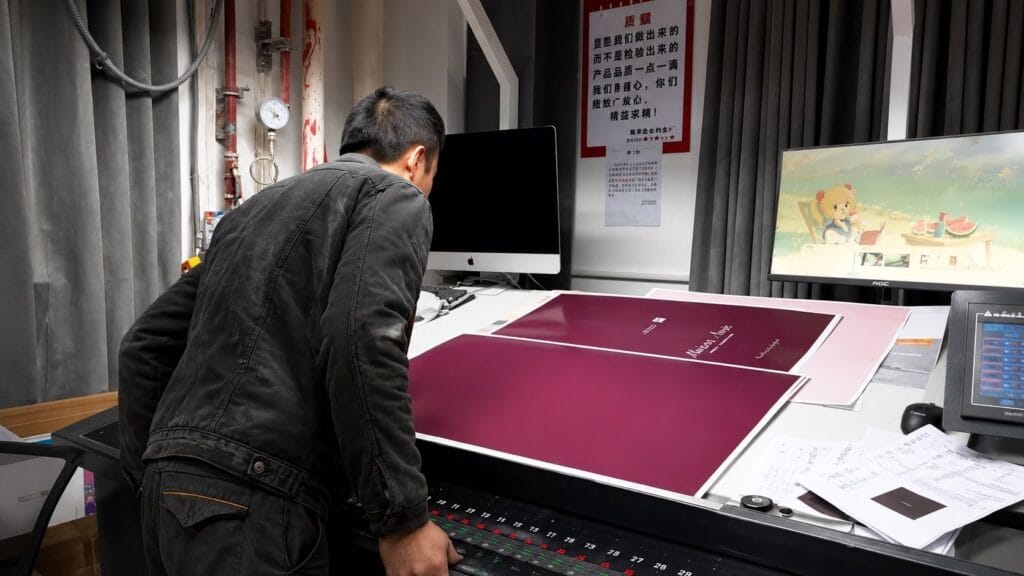
We would check a production-intent sample at the QC bench for lid fit, closure behavior, wrap edge, print position, and carton protection. The buyer should approve the sample, written exception list, and inspection points together before releasing the order scope.
Which magnetic closure box vs lid base costs appear after the quote
A comparable quote needs the same tooling, plate, proof, overrun, and freight assumptions in writing. If those records sit outside the unit price, the cheaper structure may only look cheaper until sampling, setup, or packing changes start.
Tooling and plate
Magnetic boxes usually bring more setup questions because the hinge, magnet position, wrapped board, and print surface have to work together. Lid-base boxes look simpler, but the lid and base still need die-cut tooling and print plates when artwork or size changes. Zhypacking’s confirmed one-off tooling references start from about USD 50 for cutting die or dieline, foil plate, emboss or deboss mold, and printing plate; the buyer should check which of these are included, waived, or charged again on reorder.
At the sample room, we would compare the proof file with the marked dieline before release. Keep the approved artwork route under packaging customization and dieline specs so purchasing can see whether a later change creates a new setup charge.
Proof and overrun
Proof cost depends on structure and finish, not only box name. Zhypacking’s confirmed sample fee range is USD 4-20 per sample depending on structure and finish, and the standard production lead time is 15–30 working days after specifications, artwork, and sample requirements are confirmed. A revised proof can reset that clock if the buyer changes artwork, finish, or closure details after approval.
- Check whether the quote allows production overrun or underrun, and require the quantity rule in the quote request.
- Verify whether freight uses packed carton volume from the approved sample, because rigid magnetic formats may ship less compactly than simpler structures.
- Approve the sample, setup-charge list, and delivery basis together before shortlisting the final structure.
Whether the magnetic closure box vs lid base supplier can hold the schedule
Cost changes when a supplier quotes the box but leaves press load, season timing, and reorder rules vague. Shortlist the factory only when it can tie your magnetic or lid-base route to a dated production window, current load record, and written approval trigger.
Press capacity and peak-season load
Zhypacking’s confirmed production reference is about 10-20 high-cube containers per month depending on product mix and season. That range helps planning, but it doesn’t replace an order-specific capacity check. A magnetic box may use more assembly control than a simple lid-base box, so the buyer should compare the proposed structure against the factory’s current press, wrapping, die-cut, and handwork queue before approval.
- Check the open production slot against the buyer-approved specification and agreed quantity.
- Verify who signs off the production sample before the schedule starts.
- Use paper packaging quality control context as a supplier-side proof check, not as a blanket capacity promise.
Reorder turnaround
For Zhypacking, standard production lead time is 15–30 working days after specifications, artwork, and sample requirements are confirmed. Reorders move cleanly only when the previous dieline, artwork version, material callout, packing method, and inspection notes stay unchanged. If any item changes, treat it as a new approval gate.
Use 200 pcs as the project-level MOQ for gift boxes unless a product-specific exception is confirmed. Before issuing the quote request, document the approved route, reorder quantity rule, retained sample reference, and any peak-season lock date the supplier can support in writing.
References: ISO 2859-1 sampling inspection standard; Magnetic Gift Box vs Rigid Lid & Base Box: Which Is Right .; Buy Custom Lid & Base Gift Box (heaven & Earth Box) | Premium P….
In conclusion
The final approval should come from the product, channel, and purchasing file rather than from appearance alone. Choose a magnetic closure box when the gift needs a hinged presentation, controlled opening feel, and enough budget to manage magnet placement, hinge durability, and alignment checks. Choose a lid-base box when stacking efficiency, simpler assembly, flexible sizing, or a cleaner cost structure matters more. In both cases, validate the spec with the same internal size, board grade, wrap paper, finish, insert, packing method, and inspection points so that quote comparisons are based on equal requirements.
Before handoff to quote request or sampling, compare options against minimum order, lead time, and proof of production control. For gift box projects, use 200 pcs as the project-level minimum order unless a product-specific exception is confirmed, and plan around 15–30 working days of standard production after specifications, artwork, and sample requirements are confirmed. Shortlist a supplier that can document the structure, confirm the sample route, and explain how closure fit, corner finish, wrap adhesion, color consistency, and packing protection will be checked before shipment.
To request a quote for a magnetic or lid-base gift box, use paper box size options to confirm the final specification, quote assumptions, sample approval, QC evidence, approval risk, and supplier follow-up before bulk order.
Magnetic closure box vs lid base FAQ
What should buyers verify before approving magnetic closure box vs lid base?
Approve the structure only after checking size, board grade, wrap paper, hinge or lid fit, insert, artwork, finish, and export packing. Zhypacking’s project-level minimum order for gift boxes is 200 pcs, with standard production at 15–30 working days after specifications, artwork, and sample requirements are confirmed. Main risks are weak closure, loose lid tolerance, scuffed finish, or product movement; verify them on a physical sample and restate every approved detail in the quote request.
Which sample or QC proof should buyers request?
Request a structural mockup first, then a printed or finished sample if color, foil, lamination, magnet placement, or insert fit affects approval. The sample should show opening feel, lid alignment, edge wrapping, glue control, carton packing, and product seating. Cost and sample timing should be confirmed in the quote request or sample approval because they depend on finish and tooling. The risk is approving decoration while missing closure function, so verify both before releasing bulk production.
Which quote terms should buyers compare before RFQ?
Compare quotes only when both suppliers price the same internal size, board, wrap material, insert, print method, surface finish, magnet or lid-base structure, packing method, and inspection standard. Use 200 pcs as the project-level minimum order for gift boxes unless a product-specific exception is confirmed, and confirm any unit cost in the quote request. The risk is a low quote hiding tooling, proofing, packing, or finish differences; verify the written specification against the sample before approval.
Magnetic closure box vs lid base
No, one structure is not automatically better unless the product weight, display style, opening experience, and retail handling match it. Magnetic closure boxes suit a hinged premium reveal, while lid-base boxes suit a simple lift-off presentation and easier separation of lid and tray. Confirm minimum order at 200 pcs and production lead time at 15–30 working days after final files and sample requirements. The main risk is choosing by appearance only; verify fit, closure, and packing with a sample before quote request confirmation.
How many magnets will the closure use?
The magnet quantity and position should be specified by the supplier based on box size, flap depth, board thickness, wrap material, and expected opening feel, not assumed from the box name. Confirm the exact number in the quote request or sample approval because it affects cost, assembly control, and closure reliability. The risk is misalignment, weak snap, or visible marks through the wrap; verify magnet placement, polarity, and closing consistency on the approved sample.
quote request handoff: Send Specs for Review.
For the next step on this route, see our magnetic Closure Rigid Boxes: Wholesale Specs That Hold. If this stage leads into that check, compare it against our custom Magnetic Boxes: Product Selection Checklist. For the next step on this route, see our custom Paper Tubes Wholesale: Structure, Print and Closure Specs.

Ask a Packaging Question