
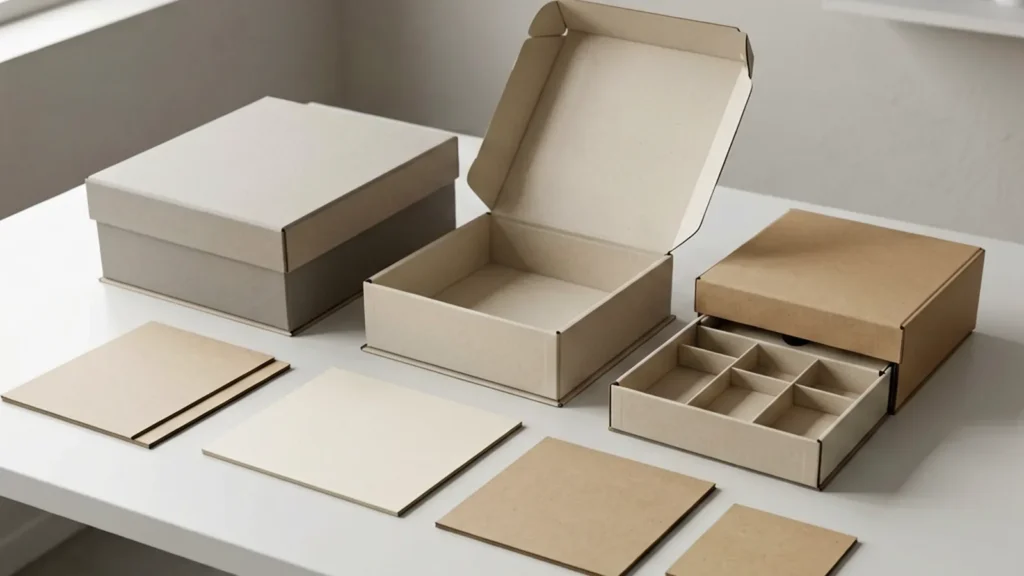
Planning a custom magnetic box program starts with the product dimensions and distribution route, because both affect board, structure, print, insert clearance, packing, and the sample used to release production.
This packaging guide turns those choices into a dieline brief, sample sign-off record, and quote checklist for comparing suppliers on the same specification.
Direct answer: For a custom magnetic box program, align artwork files, dimensions, material and finish targets, a signed-off sample, packing instructions, and the bulk-production handoff in one controlled specification.
Define the Buyer Requirement
| Requirement | Factory control | Evidence to verify | Order risk | RFQ follow-up |
|---|---|---|---|---|
| Finish or surface effect | Factory maintains a finish swatch library and applies a gloss meter daily. | Compare production-run sheet against approved finish standard under buyer-approved viewing conditions. | Unmatched finish causes brand inconsistency and returns from retail buyers. | Request a finish strike-off on your specified board before production approval. |
| Artwork or logo file | Factory runs preflight check for resolution, bleed, and color space compliance. | Submit a signed PDF proof and verify against the original vector file. | Misaligned or low-resolution artwork leads to scrap and reprint costs. | Send print-ready CMYK files and request a hard-copy proof for sign-off. |
| Sample approval | Factory holds a pre-production sample for dimensional, magnet, and finish check. | Measure box dimensions, magnet pull, and closure alignment against spec sheet. | Approving an unchecked sample may lock in defects across the full order. | Sign the sample approval form and confirm the production timeline in the RFQ. |
Approving a custom magnetic box program without a defined buyer requirement introduces dimensional, finish, and magnet alignment risks that compound during production. The buyer must document every specification before the factory begins tooling or material procurement. This step prevents costly rework and ensures the final box matches the intended brand presentation exactly.
After defining the requirement, the buyer should confirm all commercial numbers—including unit price, MOQ, and lead time—directly in the written RFQ. Do not rely on verbal agreements or generic quotes. Request a formal quotation that ties each specification to a firm price and delivery window. This action locks the terms before sample production begins.
Compare the Available Routes
| Option | Best fit | Trade-off | Risk to avoid | Verification | Follow-up |
|---|---|---|---|---|---|
| Current specification | When the approved spec is locked and production-ready for repeat orders. | No flexibility for design changes; any deviation requires a new approval cycle. | Stale spec may not reflect latest material or magnet tolerances from the factory. | Compare current spec against the last approved sample and production run report. | Document any drift and request a spec review before the next bulk order. |
| Alternative specification | When exploring cost reduction or material substitution without changing box function. | May require new sample approval and could shift lead time. | Alternative board or magnet grade might fail closure test or durability check. | Request a physical alternative sample and run the same pull-strength and drop test. | Compare cost-per-unit and MOQ impact before approving the alternative route. |
| Custom option | When the program needs unique dimensions, finish, or magnet placement not in standard catalog. | Longer development cycle; tooling or die-cut changes may raise minimum order quantity. | Custom specs may not be repeatable across batches if tolerances are not documented. | Lock every custom dimension and magnet position in a signed spec sheet before sample. | Request a pre-production sample and verify against the custom spec sheet. |
| Safer fallback | When time is short or the buyer needs a proven construction with minimal approval risk. | Limited differentiation; may not match premium brand positioning for custom paper boxes. | Fallback design may not fit the intended product dimensions or weight distribution. | Check that the fallback box dimensions and magnet strength match the product load. | Run a fit test with the actual product and confirm the closure holds during transit. |
quote request checkpoint
Review the Required Proof
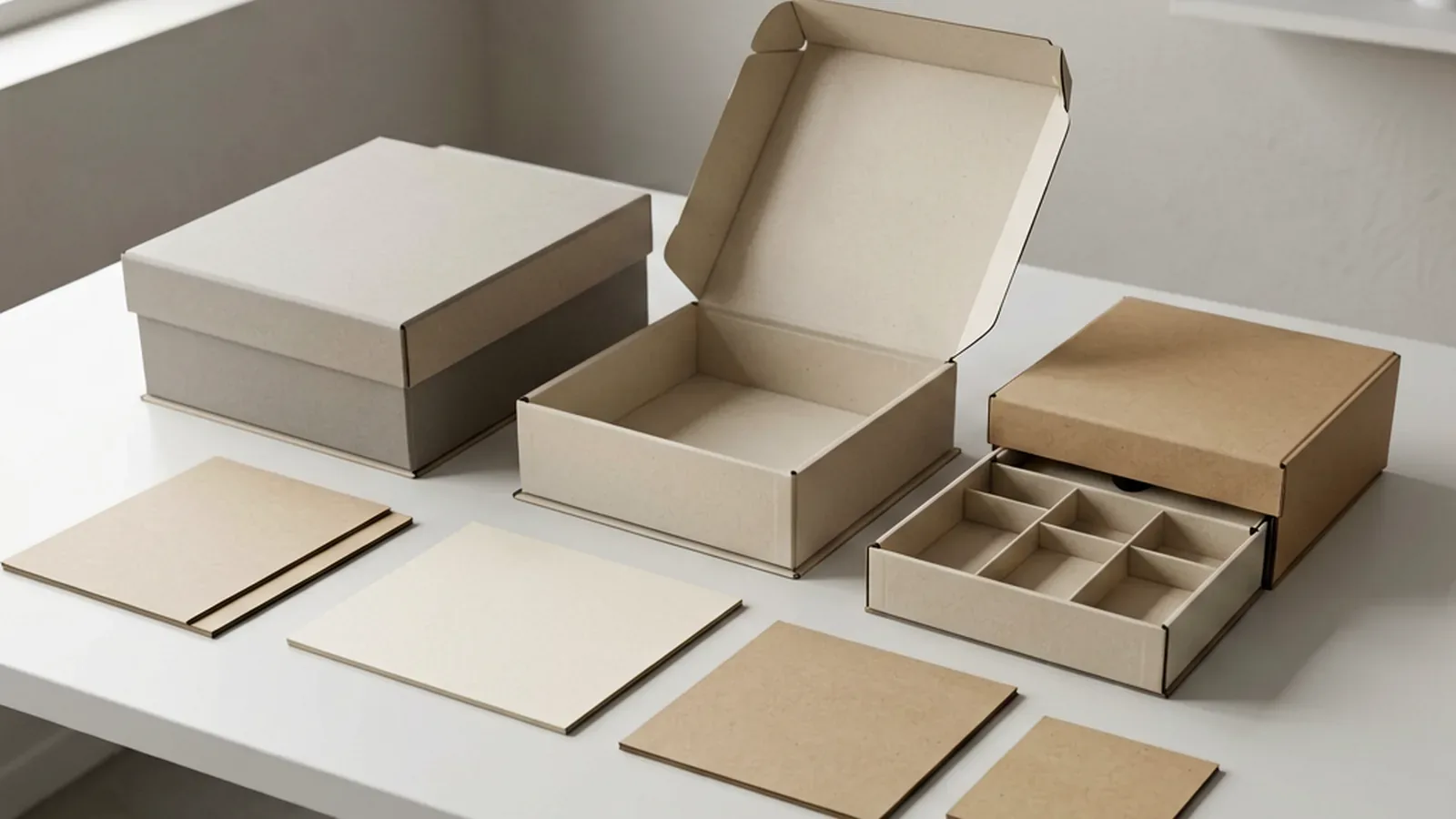
Before approving a custom magnetic box program, verify the physical proof against your spec sheet. A factory that skips this step often introduces dimensional errors, misaligned magnets, or color mismatch. Use this checklist to confirm the proof is production-ready:
- Specs & Cost: Measure box dimensions, board thickness, and magnet pull force. Compare to your approved artwork and cost breakdown.
- MOQ & Production Risk: Confirm the proof matches the quoted MOQ structure. Check for warping, uneven lamination, or weak magnet pockets that could cause rejects.
- Factory Execution: Inspect fold lines, glue seams, and magnet alignment. A clean proof signals the factory can replicate at scale.
- quote request/Sample Handoff: Ensure the proof includes your PO number, date, and any revision notes. Sign off only after all items pass.
Once the proof is approved, the factory locks tooling and begins production. A thorough review now prevents costly rework later.
Build the Decision Asset
At the supplier proof check stage, the buyer must have a verified factory audit report and a signed quality agreement. Without these, the program cannot move to sample approval. The tool here is a documented checklist that confirms the supplier meets your spec, cost, and risk thresholds.
Supplier Proof Check
Verify the factory’s capability to produce magnetic boxes with consistent magnet alignment and board thickness. Request a process flow diagram and defect rate data from the last three production runs. If the supplier cannot provide these, flag as high risk.
Sample Approval Check
Before approving samples, compare the physical sample against your spec sheet for dimensions, magnet strength, and closure force. Use a pass/fail matrix for each attribute. Only approve if all critical specs are met within tolerance.
Reorder Control Check
Establish a reorder trigger based on inventory levels and lead time. Define a maximum deviation in color or magnet placement between reorder batches. Require a first-article inspection for every reorder to maintain consistency.
Prepare Comparable RFQ Inputs
- Does the supplier have documented experience with rigid magnetic box assembly and magnet embedding? Magnet placement and greyboard wrapping require specific jig setups and trained operators; a general box maker may produce misaligned closures or loose magnets. Supplier provides a process flow showing magnet insertion, glue dwell time, and compression station checks for each production batch. Without verified capability, you may receive boxes with weak or misaligned magnets, leading to field failures and returns. Request a capability statement or video walkthrough of the magnet assembly line before sample approval.
- Does the supplier have a documented process for checking magnet pull strength and closure consistency? Magnet strength varies with board thickness and glue bond; inconsistent closure force affects the perceived quality and reusability of the box. Supplier uses a pull-force gauge on a sample from each production batch and records results against a defined acceptable range. Weak magnets cause lids to open during shipping; overly strong magnets can damage the box structure over repeated use. Request the pull-force test protocol and ask for batch test records from the most recent custom magnetic box order.
- What is the supplier’s process for approving the first article before bulk production begins? The first article confirms that tooling, magnet placement, and paper wrapping match your approved sample; skipping this step risks a full batch of non-conforming boxes. Supplier holds the first article for buyer sign-off against a signed spec sheet, with photos of all six sides and internal magnet positions. Without a formal first-article hold point, the factory may start bulk production with uncorrected setup errors, wasting time and material. Include a first-article approval clause in your purchase order and require digital photo evidence before release to production.
In conclusion
The final approval for your custom magnetic box program comes down to verifying that every checklist item—from board thickness and magnet pull strength to factory audit status and lead time alignment—has been documented and cross-checked against your original spec sheet. Compare the physical pre-production sample against your approved artwork, confirm the project-level minimum order of 200 pcs unless a product-specific exception is confirmed and the 15–20 working day production window after specifications, artwork, and sample requirements are confirmed, and ensure the supplier’s quality control process includes a reorder trigger based on your inventory levels. Once you have validated the spec, shortlist the supplier that meets all criteria, then request a quote to lock in pricing and initiate the sample handoff. This structured approach minimizes approval risk by replacing guesswork with verifiable factory signals and documented approvals.
Frequently Asked Questions
How should a b2b buyer plan custom order?
Start by documenting the exact box dimensions, board thickness, magnet type and placement, and any foil stamping or embossing details. Then confirm the project-level minimum order of 200 pcs unless a product-specific exception is confirmed and standard production lead time of 15–20 working days after specifications, artwork, and sample requirements are confirmed with the supplier. Before committing, compare at least two supplier quotes for the same spec to identify cost or minimum order variations, and request a physical sample to verify magnet strength and closure alignment.
Which supplier proof should buyers request for custom magnetic boxes?
Request a physical pre-production sample that matches your approved artwork and spec sheet, not just a digital mockup. Check that the magnets are fully hidden, the closure holds securely without gap, and the board thickness meets your requirement. Also ask for a factory audit report or third-party inspection certificate to verify production consistency and risk of magnet misalignment during bulk runs.
What should buyers lock before approving custom program planning checklist?
Lock the final specification sheet including magnet pull strength, board grammage, wrapping paper type, and any foil stamping or embossing details. Confirm the project-level minimum order of 200 pcs unless a product-specific exception is confirmed and lead time of 15–20 working days after specifications, artwork, and sample requirements are confirmed in writing, and approve the physical sample before production starts. Document a reorder trigger based on your inventory levels and the supplier’s lead time to avoid stockouts.
quote request handoff: Send Specs for Review.

Ask a Packaging Question