
An artwork file can look approved on screen while the physical sample still fails structure, color, finish, folding, or packing checks.
At this checkpoint, the factory-side check is whether artwork, board choice, finish, folding marks, and packing can be approved from one sample record.
The sections below connect design approval with physical proof, RFQ inputs, and production handoff records.
Direct answer: The buyer’s real check is whether the artwork file, board specification, supplier evidence, sample result, quote assumptions, and named approval owner all describe the same order.
Copy this approval record into the RFQ file. Keep every checked item on the same revision before releasing the order.
- ☐ Final specification and intended use
- ☐ Supplier feasibility and documented exceptions
- ☐ Sample or inspection evidence
- ☐ Commercial assumptions, owner, decision, and date
Move the order forward only when each gate leaves written evidence for the next. Return an unresolved specification, sample, or quote exception to its owner before bulk production.
Use a written sourcing sequence that covers the project-level MOQ of 200 pcs unless a product-specific exception is confirmed; keep each checkpoint tied to the quote revision, sample evidence, approval owner, and bulk-production handoff.
Folding carton specs buyers should lock before sampling
Compare the spec rows below before sampling against one RFQ revision. Each row should identify the requirement, approval evidence, and buyer action before production.
| Specification | Quality control | Verification method | Risk to avoid | Buyer action |
|---|---|---|---|---|
| Finish or surface effect | Confirm lamination, coating, foil, embossing, or spot UV on the approved paperboard grade. | Request a physical finish sample on the actual board; check glue and fold areas for no-finish zones. | Finish applied over glue or fold lines causes delamination, cracking, or failed assembly in production. | Approve the finish sample and mark no-finish zones on the dieline before RFQ. |
| Artwork or logo file | Verify bleed, safe zones, fold marks, cut lines, font handling, image resolution, and spot color notes. | Run a preflight check on the native file; compare against the dieline structure and barcode placement. | Missing bleed or misaligned fold marks causes print rejection and rework, delaying the production schedule. | Submit the final artwork file with the dieline overlay and request a pre-production proof. |
| Sample approval | Check the physical sample against the approved dieline, material, finish, and product-fit requirement. | Measure inside dimensions, fold alignment, glue integrity, and color registration against the approved proof. | Approving a sample without documented tolerances allows the supplier to ship non-conforming bulk cartons. | Record the acceptance rule, sign the sample, and hold the same control in bulk production. |
Use the locked spec rows as the decision scope as the decision scope. Read the rows as one approval sequence. Start with finish or surface effect because finish applied over glue or fold lines causes delamination, cracking, or failed assembly in production. Verify it by asking the supplier to request a physical finish sample on the actual board; check glue and fold areas for no-finish zones. Then resolve artwork or logo file; missing bleed or misaligned fold marks causes print rejection and rework, delaying the production schedule, so submit the final artwork file with the dieline overlay and request a pre-production proof. Finish with sample approval, confirm that the supplier can measure inside dimensions, fold alignment, glue integrity, and color registration against the approved proof, and record the acceptance rule, sign the sample, and hold the same control in bulk production.
Keep the supplier response, marked sample, and approval owner under the same revision number. If any proof conflicts with the approved record, hold the quote, sample, or production release until the supplier explains the deviation in writing. Before closing the checkpoint, reconcile the latest drawing, sample, quotation, and approval comments, identify which record controls if they disagree, and document the resolution. Carry the signed Folding carton specs buyers should lock before sampling table into the purchase order and production handoff so the same checks support quote comparison, sample approval, shipment release, and later reorders.
Artwork and dieline details for folding cartons
Start the artwork and dieline review with the evidence below:
- Physical sample compared to artwork and dieline: Mismatch leads to rework and production delay Buyer's QC manager Check dimensions, fold alignment, color, finish against proof Record tolerance, sign sample, and hold if deviation exceeds limit
- Revised artwork or dieline after initial approval: Rework may extend lead time beyond 15-30 working days Procurement lead Confirm revised file matches latest dieline and no-finish zones Update PO with new lead time and reissue approval before production
- Finish application on glue and fold areas: Delamination or cracking in bulk assembly Supplier production engineer Test finish on actual board; mark no-finish zones Require supplier include finish mask in production file
- Approved sample sign-off and handoff to production: Missing approval record causes reorder inconsistency Buyer's authorized approver Ensure sample, artwork, and spec share same revision number Carry signed approval into PO and ask supplier to acknowledge version
See packaging dieline and custom packaging specs for how artwork and dieline details fits into the order. The file mistakes that stall that step are mapped in packaging errors that delay dieline handoff.
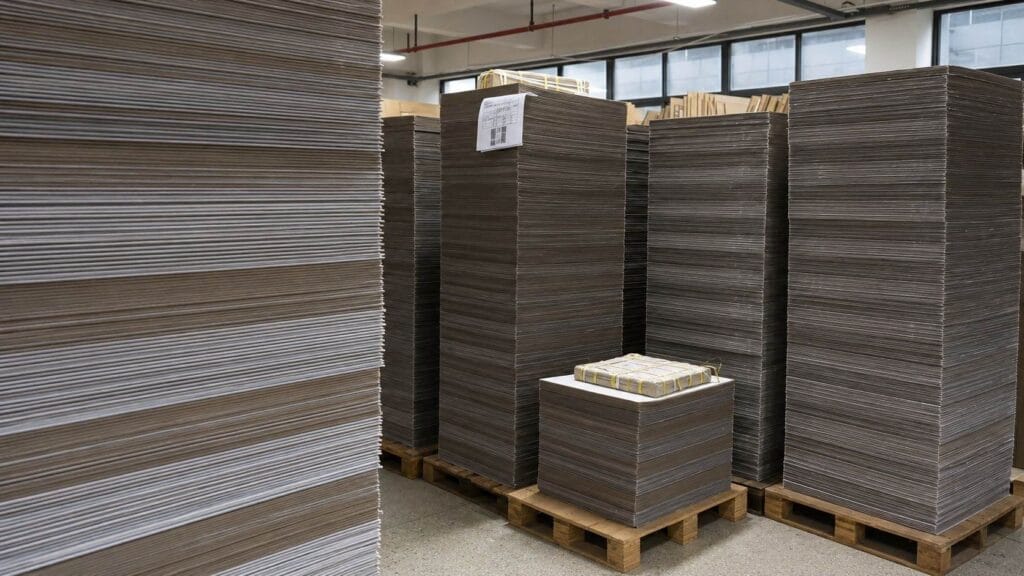
Paperboard and structure decisions that affect quote and sample
Before moving to sampling, confirm the paperboard grade, caliper, and structural dimensions with your supplier. These choices directly impact cost, production risk, and final box performance. Use this checklist to lock down specs during RFQ:
- Board grade and finish – Specify solid bleached sulfate (SBS), coated recycled board (CRB), or uncoated kraft. Confirm if a matte, gloss, or aqueous coating is required. Ask: “What caliper range does your standard stock offer for this grade?”
- Inside dimensions and dieline tolerance – Provide exact length, width, and depth. Verify the supplier’s dieline tolerance to avoid fit issues. Request a dieline proof before sampling.
- Fold and glue structure – Choose a straight tuck, reverse tuck, or lock-bottom style. Confirm glue type (hot melt vs. cold) and whether a crash-lock bottom is feasible for your product weight.
- Print and coating compatibility – Share the number of ink colors and any spot UV or foil stamping. Ask: “Does your factory require a separate coating pass for metallic inks?”
Additional RFQ items include sample handoff requirement – Before production, approve a physical sample that matches the dieline, board caliper, and finish. Keep a signed approval record with the proof file.
Locking these decisions during RFQ reduces rework and ensures the quote reflects your actual needs. A table summarizing common board options can help:
| Board Type | Typical Caliper (pt) | Common Use |
|---|---|---|
| SBS | 14–24 | Premium cosmetics, food |
| CRB | 12–20 | Retail, dry goods |
| Kraft | 12–18 | Eco-friendly, industrial |
For custom folding cartons, Xiamen ZHY Packing Co., Ltd. paper packaging team can guide you through these choices. Confirm your RFQ with these specs to move to sampling with confidence.
Use paper bags format and sample approval to align the sample and production handoff.
Printing and finishing checks before approval
Treat the printing and finishing checks as a release rule: approve only when the supplier evidence matches the written requirement.
- Specification details: Confirm paperboard grade, caliper, coating, and inside dimensions against the product's weight and retail fit. Supplier provides a spec sheet listing board grade, caliper, coating type, and structural dimensions.
- Lead time: Verify that the supplier's production lead time is based on confirmed specifications, artwork, and sample approval. Supplier states a standard lead time of 15-30 working days after final spec and sample sign-off.
- Quality control: Request a QC plan that references the approved sample revision and includes checks for color, finish, and structural integrity. Supplier provides a QC checklist with checkpoints for print registration, finish adhesion, and fold/glue integrity.
- Record the approval owner, sign the sample, and hold the same control in bulk production. Supplier acknowledges the signed sample and confirms that the same QC checks will apply to the full order.
Additional RFQ items include verification method: Request a physical finish sample on the actual board; check glue and fold areas for no-finish zones. Supplier provides a printed sample with finish applied, showing no-finish zones around glue and fold lines.
Color, coating, foil, embossing, and lamination fit
Verify that the finish is applied only to intended areas, not over glue flaps or fold lines, to prevent delamination or cracking. Request a physical finish sample on the actual paperboard grade, and check for scuff resistance and color consistency under retail lighting. Mark no-finish zones clearly on the dieline before approving the sample.
What to confirm by product family
For folding cartons, confirm that the finish matches the board grade and that no-finish zones are marked on the dieline. For rigid boxes, check that foil or embossing aligns with the structure and does not interfere with assembly. For paper bags, verify that lamination does not weaken handle attachment points. Each product family requires a tailored finish check. For a beauty or personal care carton, folding cartons for beauty and personal care sets out the finish stack and launch quantities that shape the artwork brief.
See custom packaging solutions for how printing and finishing checks fits into the order.
Folding carton sample approval checklist
At the sample approval checkpoint, the physical sample must match the approved artwork and board specifications before production begins. This step prevents costly rework and ensures the final carton meets structural and printing requirements.
What buyers should inspect
- Verify the paperboard grade and caliper against the RFQ-confirmed spec sheet. Use a micrometer to measure thickness at multiple points; reject if variation exceeds the supplier's stated tolerance.
- Check the dieline dimensions: length, width, and depth must align with the approved CAD file. Confirm that the fold and glue allowances are correct for your product's fit.
- Inspect print registration and color accuracy. Compare the sample to the signed-off proof under standard lighting. Look for misalignment, hickeys, or ghosting.
- Examine coating and finish: gloss, matte, or spot UV should be even and free of scratches or bubbles. Confirm the coating type matches the spec.
Additional RFQ items include test the carton's structural integrity by folding and erecting it. Ensure the glue joint holds firmly and the carton opens without tearing.
When to revise before production
If any of the above checks fail, request a revised sample before approving. Common reasons for revision include: board caliper outside the agreed range, dieline dimensions off by more than the supplier’s stated tolerance, or print defects that affect brand appearance. Do not proceed to production until the sample passes all checks and the supplier provides a signed-off sample record.
For a complete handoff, transfer the approved sample record along with the final artwork files and board spec sheet to your production team. This ensures the factory executes exactly what was approved.
Use paper packaging quality control to align the sample and production handoff.
Gluing and Assembly Checks for Folding Cartons
Gluing is where a carton that proofs well either holds together on the filling line or fails in transit. Lock the glue style and the acceptance checks in the specification before sampling, so the sample can be judged against them rather than against appearance alone.
| Check | What to verify | Why it matters |
|---|---|---|
| Glue style | Straight-line, hook-bottom, or lock-bottom as the dieline requires | The style decides assembly speed and compatibility with automatic packing |
| Glue-line placement | Adhesive sits on board areas, not over finish, coating, or print | Glue over finish causes delamination and cracked folds |
| Bond strength | Pull test on samples: the board should tear before the glue line lets go | A weak bond opens in transit or on the filling line |
| Squeeze-out | No adhesive visible on printed faces after folding | Squeeze-out scuffs the print and can jam automatic feeders |
| Fold alignment | Scores aligned and folds square before gluing, no drift | Misaligned folds produce skewed cartons that jam automation |
For the carton structures behind these assembly checks, see the folding cartons range and confirm the glue style together with the board grade before the sample is booked.
Move from spec checklist to folding carton RFQ
Transitioning from a static spec list to an actionable RFQ reduces quote assumptions and production risk. Buyers who verify requirements before sending the RFQ avoid costly rework.
What to send to the supplier
- Board grade and coating requirement – the chosen grade must be confirmed available before the RFQ and meets your barrier or print needs.
- Inside dimensions and structural tolerance – the supplier’s die‑cut capability must be verified against your critical dimensions.
- Finishing details (e.g., lamination, foil stamping, embossing) – get a written confirmation that the supplier supports these processes.
- Fold and glue joint specification – clarify whether the carton is straight‑line or crash‑lock bottom, and confirm the glue type required.
Additional RFQ items include sample approval timeline – agree on a date for the first physical sample based on the complexity of the spec.
| Spec Element | Verification Method | Impact on Production |
|---|---|---|
| Board caliper | Measure sample against spec | Affects folding and glue joint integrity |
| Inside dimensions | Use go/no‑go gauge | Determines product fit and carton function |
| Print registration | Compare proof to production run | Prevents colour mismatch and waste |
By confirming these points during the RFQ stage, the buyer shifts the risk from the supplier to a shared verification step. Sample approval then becomes a formality rather than a troubleshooting session.
Which product page should support the buyer
The supplier’s product page for folding cartons should clearly list the typical spec categories they need to quote: board types, caliper range, finishing options, and minimum order quantities. This page acts as a pre‑checklist for the buyer, ensuring nothing is missed before the RFQ is sent. With the checklist and the supplier’s product page aligned, the RFQ handoff is accurate and the sample approval cycle is shortened.
Source check: ISO/TC 122 packaging standards; Folded Box Printing: RFQ Details Buyers Should Confirm Before Sampling. Record the project-specific acceptance rule, evidence owner, and approval step in the RFQ or quality file.
In conclusion
The sourcing choice for a folding carton comes down to verifying that every requirement, from board grade and caliper to finish zones and dieline dimensions, is documented and matched against supplier proof before sampling. By comparing the approved specification, physical sample, and quotation on the same revision, buyers can shortlist suppliers who demonstrate consistent evidence of quality control and cost transparency. This structured handoff from RFQ to sample approval reduces production risk and ensures that MOQ, lead time, and reorder assumptions are locked in place.
To request a quote, visit rigid boxes and confirm the final specification, quote assumptions, sample approval, QC evidence, approval risk, and supplier follow-up before bulk order.
Folding carton artwork FAQ
Which artwork files and logo details should buyers include in the RFQ?
Confirm the paperboard grade, caliper, and structural dimensions with your supplier before sampling, as these choices directly impact cost, production risk, and final box performance. For folding cartons, verify that the finish is applied only to intended areas, not over glue flaps or fold lines, to prevent delamination or cracking, and request a physical finish sample on the actual paperboard grade to check scuff resistance and color consistency under retail lighting. Confirm MOQ and order quantity by color, width, artwork, and packing route. Confirm production lead time after specifications and sample approval are fixed.
How should buyers compare MOQ, lead time, and quote terms?
Compare MOQ and lead time by confirming the exact structure, finish, and quantity with your supplier; for folding cartons, the standard production lead time is confirmed after final specifications and artwork are approved. Request a quote that itemizes tooling, plate costs, and any separate test fees, and document whether the pull test or sample approval is included in the quoted price or billed separately to avoid cost surprises.
What sample, quality, or supplier checks reduce risk?
Reduce risk by verifying that the physical sample matches the approved artwork and board specifications before production begins, checking inside dimensions, fold alignment, glue integrity, and color registration against the approved proof. If any check fails, request a revised sample before approving, and do not proceed to production until the supplier provides a signed-off sample record that references the same spec and sample revision. Confirm MOQ and order quantity by color, width, artwork, and packing route. Confirm production lead time after specifications and sample approval are fixed. Separate material, setup, packing, freight, and reorder cost drivers in the RFQ.
RFQ handoff: Send artwork files, logo placement, material, finish target, quantity, and sample timing so print and structure can be reviewed together. Send Specs for Review.

Ask a Packaging Question