
Folding-carton quotes become non-comparable when suppliers are left to infer the size convention, board, print route, color reference, finishes, tooling, packing, and approval scope.
This guide turns those inputs into one quote-ready specification and highlights the fields most likely to change tooling, sample scope, price, or lead time.
Direct answer: Before requesting a folding-carton quote, state the internal or external finished size, product fit, carton style and dieline status, named board and caliper or basis weight, grain direction where relevant, print method, color references, finishes, quantity tiers, packing, destination, and required sample evidence.
What a folding carton quote actually prices
Use the specification table to check what each supplier priced, which assumptions remain open, what evidence is required, and which difference needs a revised quote or sample before shortlist approval.
| Requirement | Factory control | Evidence to verify | Order risk | RFQ follow-up |
|---|---|---|---|---|
| Sample approval | Hold production until signed-off sample matches approved artwork and dimensions. | Compare production sample to signed approval sheet; measure critical dimensions with calipers. | Delays or rejects if sample not approved before production starts. | Request physical or digital sample; approve in writing before production release. |
| MOQ and order quantity | Confirm order quantity meets the project-level 200 pcs minimum unless a product-specific exception is confirmed. | Check PO line items against confirmed MOQ; verify quantity on packing list. | Quantity below MOQ must be reconfirmed with the supplier before ordering. | Verify MOQ in RFQ; confirm final quantity before order placement. |
| Lead time after approval | Standard production runs 15–30 working days after specifications, artwork, and sample requirements are confirmed. | Track approval date and compare to promised ship date; request weekly status updates. | Late delivery if approval is delayed or lead time not documented. | Document approval date; request lead time commitment in RFQ follow-up. |
What a supplier assumes when you leave a field blank
Missing dimensions default to the supplier's standard blank size, which may increase waste and cost. Unspecified board grade may default to the cheapest available, risking structural weakness. No finishing detail means no coating or lamination, reducing durability. Suppliers must guess your intent, so they add a risk buffer to the price. Fill every spec field to get a firm, competitive quote.
Questions to confirm before ordering:
Build the RFQ around the items below. Match every listed buyer input to written supplier confirmation, approval evidence, and the risk that would hold the quote.
- Printing process and color count: Offset vs digital vs flexo changes plate cost, run speed, and per-unit price; each extra color adds a make-ready charge. Specify 4-color CMYK offset plus one PMS spot; confirm whether the quote includes plate costs or charges them separately. Supplier quotes digital for a long run; you pay premium per unit or get inconsistent color across the batch. Document the printing process and color count in the quote request; request a plate cost breakdown.
- Finishing and coating requirements: Matte lamination, gloss UV, foil stamping, or embossing each add a separate production pass and material cost. Specify matte lamination on the outside and gloss spot UV on the logo; confirm if the supplier applies coating inline or offline. Supplier quotes a plain carton; you approve a sample that lacks the tactile finish your brand requires. List all finishing steps in the quote request; ask for a sample of each finish before production.
- Lead time and sample approval gate: Standard production lead time is 15–30 working days after specifications, artwork, and sample requirements are confirmed. Specify that a digital proof is required before plate-making and a physical sample before bulk production. Supplier starts production without sample approval; you receive cartons that do not match your artwork or fit. Document the sample approval gate in the purchase order; confirm the lead time starts only after sample sign-off.
Board grade and GSM set the base material cost. Printing process and color count add make-ready time and plate fees. Finishing steps like lamination or foil stamping require extra passes and curing. Box dimensions determine board waste percentage, and order quantity spreads die and setup costs. Each input must be locked before the supplier calculates a firm price.
When a buyer omits a specification—such as coating type or box dimensions—the supplier must make an assumption to produce a quote. That assumption is often the cheapest or fastest option: no coating, standard board, single-color print. The result is a low initial price that changes once you add the missing details. To avoid re-quoting delays and budget surprises, fill every field on the quote request. If you are unsure, mark it "to be confirmed" and ask the supplier to quote both options with a clear price delta.
Carton dimensions: internal or external, and why it decides the board
- Specify internal or external dimensions: State whether dimensions are internal (product fit) or external (shipping case). Confirms which standard applies and provides a dieline based on your choice. Mixing internal and external specs can cause a board thickness mismatch and a failed fit. Document the dimension type on the quote request and share with the supplier before quoting.
- Confirm board grade and GSM after dimensions: Provide the finished box size and the product weight it must hold. Recommends a board grade and GSM that matches the dimension type and load. Wrong board choice can lead to carton collapse or excess material cost. Review the supplier's board suggestion and request a sample before production.
- Verify dieline accuracy before sample run: Check that the dieline matches your internal or external dimension specification. Sends a CAD dieline with fold lines, glue flaps, and cut marks for approval. An unapproved dieline can cause misaligned printing or assembly issues. Approve the dieline in writing and keep a copy for the production file.
- Set lead time after dimension and dieline approval: Confirm that all dimension specs and dieline are finalized. Provides a production lead time of 15–30 working days after specifications, artwork, and sample requirements are confirmed. Starting the clock before specs are locked can push delivery past your deadline. Record the agreed lead time in the purchase order and schedule a follow-up.
How to state the three dimensions so nobody guesses
Write length, width, and depth in that order and label them as internal or external. Internal dimensions define the product cavity; external dimensions determine the outer box size and shipping case fit. A missing label forces the supplier to assume, which can lead to a board thickness error and a costly redo. Always include the unit of measure.
When the dieline has to come before the quote
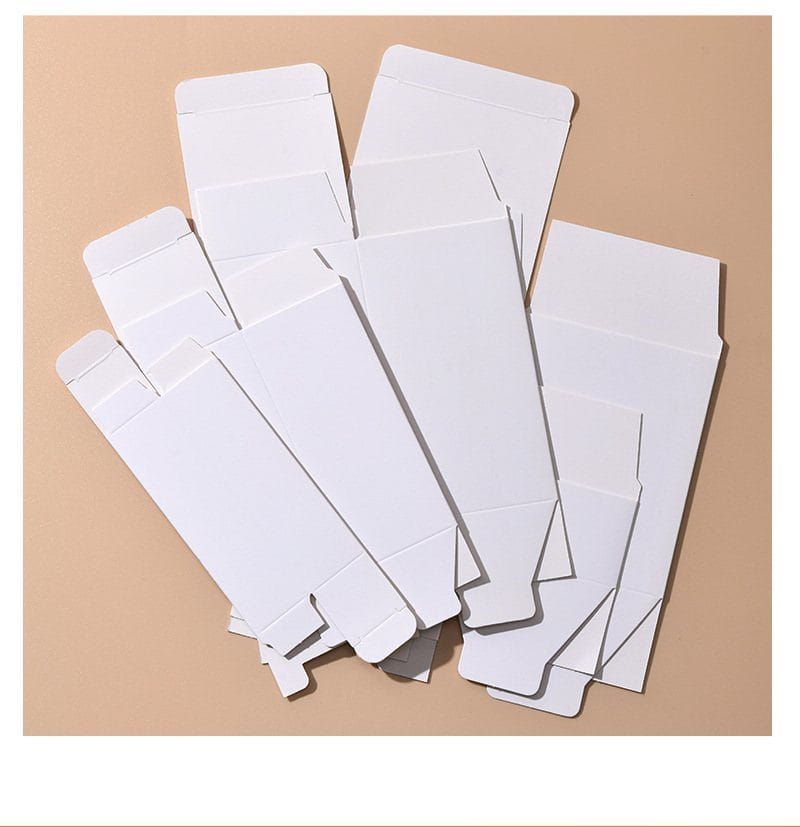
For custom printed folding cartons, the dieline is the blueprint that maps folds, glue flaps, and print area. Without it, the supplier estimates board size, which may shift cost or fit. Ask for a dieline PDF before the formal quote.
quote request checkpoint
Send carton dimensions, board grade and caliper, print method, Pantone or CMYK targets, finishing, and annual quantity so the quote can be issued without a second round of questions.
Board grade and caliper for your end use
- What board grade and caliper does your supplier stock for folding cartons? Board grade and caliper set the base material cost and structural integrity. A supplier with limited stock may substitute a different grade, altering your carton's stiffness and print surface. Supplier lists C1S, kraft, recycled, and specialty boards with caliper ranges in points or microns, and recommends based on your end use. Wrong grade or caliper leads to carton collapse, poor print adhesion, or higher per-unit cost from downgauge issues. Request a board sample with your specified caliper and grade before approving the quote.
- How does the supplier verify caliper consistency across the production run? Caliper variation causes die-cut misalignment, inconsistent folding, and rejected cartons. A documented check method reduces approval risk. Supplier uses a micrometer or automated caliper gauge at reel change and records readings per batch. Unchecked caliper drift can produce cartons that fail to close or jam on your packaging line. Ask for the caliper tolerance range and a copy of the last batch's measurement log.
- What is the supplier's process for approving board grade changes during the run? Grade changes mid-run affect print quality, strength, and cost. Without a formal approval gate, you may receive a different board than quoted. Supplier requires written buyer approval for any grade or caliper substitution, with a sample sent for sign-off. Unauthorized substitution can void your approved packaging specs, causing fit or finish failures. Include a clause in your purchase order that any board change requires your written approval before production.
- Does the supplier offer a caliper recommendation based on your product's weight and fill? A carton that holds heavy product needs thicker board to prevent bulging or tearing. Generic recommendations may not suit your end use. Supplier asks for product weight, fill type, and stacking load, then suggests a caliper range with a rationale. Under-specified caliper leads to carton failure in transit or on the retail shelf, increasing returns. Provide your product's weight and stacking height, and ask for a written caliper recommendation before ordering.
Retail shelf, e-commerce transit, and secondary packaging
For retail shelf display, a smooth C1S board with 18-24 point caliper typically holds print and structure. E-commerce transit requires a stronger board, often 24-28 point, to resist crushing. Secondary packaging like shippers may use recycled board at 20-24 point. Confirm your end-use environment so the supplier selects the right grade and caliper for each layer.
What changes when the carton holds weight
When your product is heavy, the carton's caliper usually needs to increase to prevent bulging and tearing. A 24-point board may work for lightweight items, but heavier loads may need 28-32 point or a double-wall construction. Ask the supplier to calculate the required caliper based on your product's weight and stacking load during storage and transit.
Print method: offset, digital, or flexo for your run length
When you send an unclear print method to suppliers, quotes can vary widely because each technology has different setup costs and per-unit economics. For short runs, digital printing avoids plate fees and allows variable data, but the per-unit cost stays flat. Offset printing becomes cost-effective once the quantity covers the plate and makeready investment—typically above a few thousand units. Flexo, common for long runs and consistent designs, offers lower per-unit costs but higher initial plate charges. Without specifying the method, you risk paying for unused capacity or missing the most economical option for your volume.
The quantity where offset overtakes digital
Ask your supplier: “At what quantity does offset become cheaper than digital for my carton size and ink coverage?” This question forces the factory to reveal their break-even point based on their actual plate cost and press speed. For a typical 4-color folding carton, the crossover varies with quantity, board thickness, and complexity. Use this number to decide which method to quote.
Setup and plate costs that only appear on the first order
Request a line-item breakdown of setup fees, plate charges, and any first-order tooling. These costs can significantly raise the initial invoice if hidden in the unit price. Confirm whether plates are reusable for reorders and if storage is included. A clear quote request field for “setup and plate cost” prevents surprises and lets you compare apples to apples across suppliers.
The print method also decides what you can inspect before bulk runs, so agree the quality control basis in the same quote request line. Digital gives you a printed sample off the production device, which represents the run closely but leaves batch-to-batch consistency dependent on how often the press is calibrated. Offset can give you a press proof pulled on the actual machine and stock, and that signed proof is the strongest thing to name as the acceptance reference for colour. Flexo proofs cost more to produce, so buyers usually approve a contract proof first and then a first-off sample from the live run. Write into the quote request which of these you require, whether the approved sample becomes the acceptance standard for the whole order, and how colour will be judged at incoming inspection — under what light and against which reference. Suppliers who quote without knowing the acceptance basis are quoting a different job from the one you will actually receive.
For more on building quote-ready specifications, see our custom packaging solutions.
Color targets and how to state them
State your color target as a specific Pantone number (e.g., PMS 185 C) or a CMYK build with tolerance (e.g., C0 M100 Y100 K0 with an agreed tolerance). Avoid vague terms like ‘bright red’ or ‘match the logo’—suppliers interpret these differently, leading to non-comparable quotes and costly reprints. A printed proof (digital or wet) at quote request stage costs a fraction of a full reprint and confirms the supplier can hold your target on their press. For execution, send a Pantone reference and request a digital proof before committing to production.
Pantone, CMYK build, and what a supplier can actually hold
Pantone solid colors are the most repeatable across runs. CMYK builds vary by press and substrate; specify a tolerance (e.g., buyer-approved color tolerance) to set expectations. Suppliers can hold tighter tolerances on coated boards than on uncoated kraft.
Why a printed proof is cheaper than a reprint
A printed proof at quote request stage catches color mismatch before plates are made. Reprint costs include new plates, press time, and material waste. Always request a proof with your spec sheet.
Finishing and structural options that change tooling
Folding carton quotes often come back non-comparable when the buyer specifies a finishing or structural option without linking it to tooling. For example, spot UV needs its own registration, while embossing needs matched male/female tooling that adds tooling lead time. Lamination (gloss or matte) does not change tooling but affects glue adhesion; polypropylene lamination requires a different gluing style than aqueous coating, which can cause window-patching failure if not specified. Window patching itself adds a separate die station and per-unit cost. To avoid production risk, state on your quote request: internal dimensions (length × width × depth) for product fit, external dimensions for carton outer size, and whether the finish is applied before or after die-cutting. During sample handoff, provide a physical mock-up of any foil or emboss area to verify tooling alignment.
Lamination, foil, spot UV, and embossing
Each finish alters tooling requirements. Foil stamping uses a heated die that must match the artwork registration; misalignment causes scrap. Spot UV requires a screen or flexo plate applied after printing, adding a separate makeready step. Embossing needs a matched male/female die set; tooling cost is quoted per design. Specify the exact area (e.g., PMS 877 C foil on logo only) to avoid ambiguous quotes.
Window patching, gluing style, and die charges
Window patching uses a film applied over a die-cut opening; the die must include a relief for the film thickness. Gluing style—straight-line, lock-bottom, or 4-corner—changes the die complexity. A lock-bottom carton requires a multi-station die that costs more than a straight-line die. Include die charge as a separate line item in your quote request to compare quotes accurately.
Quantity, MOQ, and the lead time your quote assumes
Before you send the quote request, confirm a clear distinction between per-design quantity and total-order quantity, plus the trigger event from which the lead time starts counting. Without this, suppliers cannot price consistently, and your quotes will be non-comparable.
Per-design versus total-order quantity
Specify whether the quantity you list applies to each unique print design or to the entire order. For example, if you need three different carton designs, state the quantity per design or the total quantity. This avoids ambiguity that leads to pricing errors or production delays.
What the stated lead time starts counting from
Define the starting point explicitly. Common triggers include:
- Receipt of a signed proof approval
- Confirmation of a sample handoff
- Deposit payment clearance
Without this, suppliers may count from different events, making lead time comparisons meaningless.
To standardize your quote request, include a buyer verification question: “Is the lead time based on proof approval or deposit?” This aligns expectations and reduces risk.
Confirm internal vs. external dimensions and the lead time start event before requesting quotes.
The spec sheet to send with your RFQ
Most folding carton quotes come back non-comparable because the buyer specified a finished box size without stating internal vs. external dimensions. This ambiguity forces each supplier to guess your clearance needs, leading to structural failures on the line. The fix is a spec sheet that removes every guess.
Copy-ready field list
- Dimensions – Write length, width, and depth in that order and label them as internal or external. Internal dimensions define the product cavity; external dimensions affect shipping and shelf fit.
- Board & caliper – Specify substrate (e.g., C1S SBS, recycled board) and caliper range (e.g., 18–24 pt). Avoid vague terms like “standard board.”
- Print method & colors – State a specific Pantone number (e.g., PMS 185 C) or a CMYK build with tolerance (e.g., C0 M100 Y100 K0 with an agreed tolerance).
- Finishing – Name the exact coating or lamination (e.g., gloss aqueous, soft-touch matte).
- Quantity & pack format – Confirm the MOQ in the quote request and how cartons are packed (flat, glued, or erected).
Questions to ask each supplier back
After sending your spec sheet, ask every supplier these three questions to expose production risk and factory execution gaps:
- Do you require a die-line approval before production, and what is your revision tolerance?
- What is your standard color-delta tolerance (e.g., dE ≤ 2.0) and how do you measure it?
- What is your process for handling a sample handoff—do you match a physical reference or a digital file?
These questions force suppliers to reveal their quality controls before you commit.
Source check: ISO 12647-2:2013 covers process control for offset lithographic printing, while Pantone’s print and packaging guide explains how substrate and process affect the physical color reference. These sources do not replace the converter’s actual press, board, proof, and acceptance agreement.
In conclusion
A reliable order starts when you document every variable that affects cost, lead time, and quality. Before you shortlist a supplier, verify that your spec sheet includes internal dimensions, a specific Pantone or CMYK target, and the exact board grade. Compare options only after every supplier has answered the same three questions about material sourcing, die-cut tolerance, and proof approval. Finally, approve a sample that matches the approved artwork and dimensional report — this step prevents many production disputes and ensures your custom printed folding cartons arrive ready for the line.
To request a quote for custom printed folding cartons, use the folding cartons page to confirm the final specification, quote assumptions, sample approval, QC evidence, approval risk, and supplier follow-up before bulk order.
FAQ
Should folding carton dimensions be given as internal or external measurements?
Provide internal dimensions (the space your product will occupy) because that is what determines fit and is the standard for folding carton specification. External dimensions can vary based on board thickness and style, so always confirm with your supplier that the quoted size is internal, and request a sample to verify product insertion before approving the final spec.
When does offset printing beat digital for a folding carton run?
It depends on quantity, ink coverage, and plate cost. Ask each supplier for its offset-versus-digital break-even quantity for your carton size, then turn the answer into a written quote request note: intended use, the governing dimensions, material, finish, packing method, and approval owner. Ask the supplier what sample proof or QC record will confirm the same result in production. A vague answer can turn into quote mismatch, sample delay, packing damage, or repeat-order drift.
What should buyers verify before approving custom printed folding cartons specification quotes?
Before approving any quote, verify that the supplier has documented the exact board grade, caliper, and finish (e.g., gloss aqueous coating) you specified, and confirm the lead time starts only after artwork and sample approval. Request a pre-production sample to check print registration, color accuracy, and structural integrity, and ask the supplier to state their minimum order in writing for your chosen size and design.
Which artwork file format lets a supplier quote without asking for a redraw?
A vector-based PDF with embedded fonts and outlined artwork is the most reliable format because it preserves die-cut lines, bleeds, and color separations without requiring redraw. Provide a print-ready PDF along with the native source file to speed up quoting and reduce the risk of misinterpretation.
How should buyers compare folding carton quotes?
Compare folding carton quotes only after the specification, quantity, artwork, packing method, sample need, and delivery timing are written down. minimum order, setup cost, and production lead time should be confirmed in the quote request rather than treated as fixed public numbers. The risk is choosing the lowest unit price while missing a setup charge, approval delay, or packing assumption.
quote request handoff: Send carton dimensions, board grade and caliper, print method, Pantone or CMYK targets, finishing, and annual quantity so the quote can be issued without a second round of questions. Send Specs for Review.
Confirm the carton structure in the custom paper box range before locking print coverage and finish assumptions for the quote.

Ask a Packaging Question