

Custom packaging suppliers order fulfillment services need a written specification before the buyer can shortlist Custom Packaging Suppliers Order Fulfillment Services suppliers using proof, capability, quality, MOQ, and delivery criteria; otherwise suppliers may quote different product and approval assumptions.
This guide connects custom packaging suppliers order fulfillment services to parameters, cost impact, supplier risk, factory process, and procurement advice.
Direct answer: For custom packaging suppliers order fulfillment services, compare matched samples, documented production capability, quality records, quantity rules, and delivery assumptions on the same basis.
What buyers confirm before choosing Custom Packaging Suppliers Order Fulfillment Services
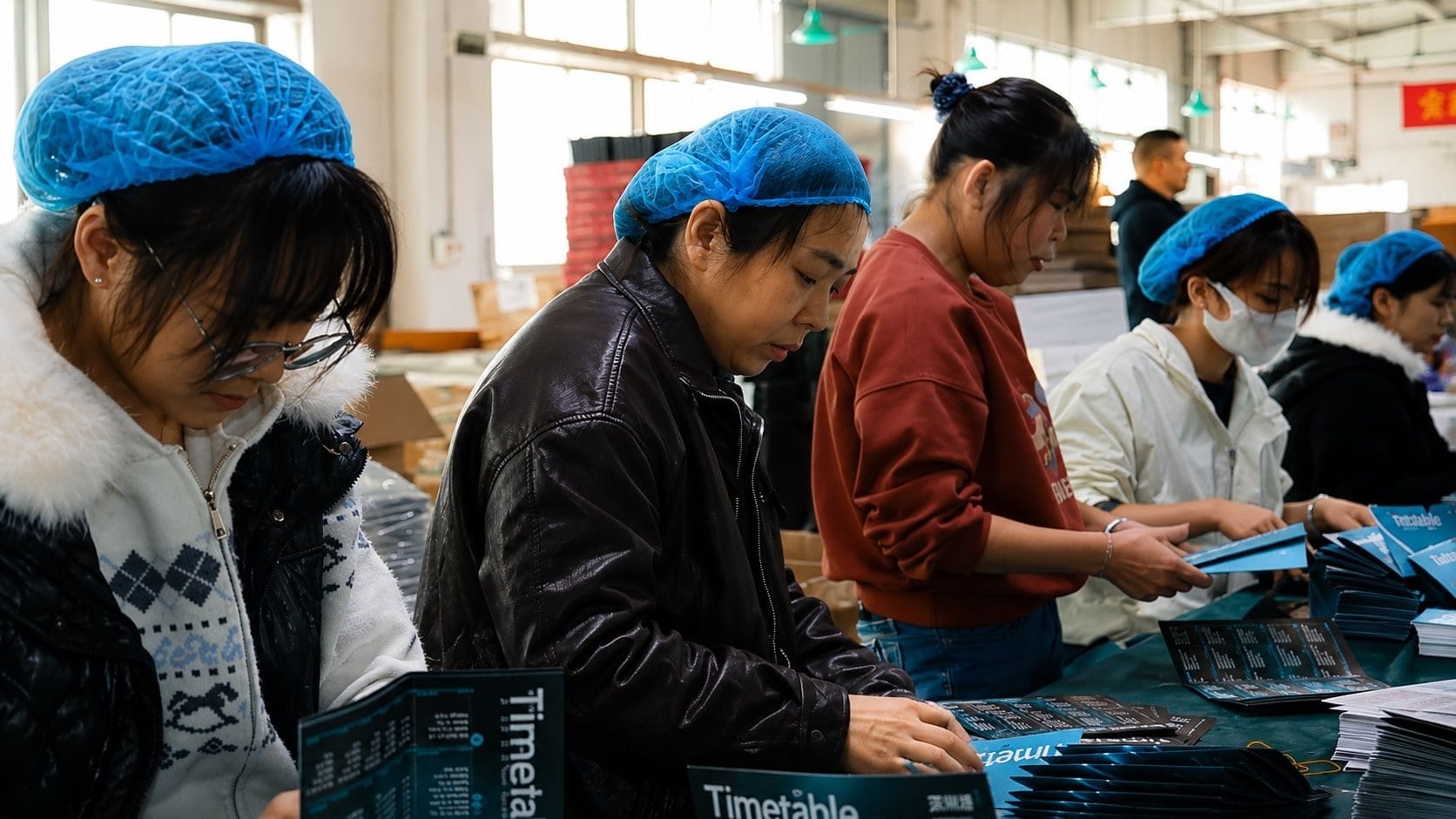
Evaluate packaging production and fulfillment as one operating chain. A supplier can make an acceptable box and still fail the program through weak inventory records, inaccurate pick-and-pack, poor change control, or an unclear handoff between factory and warehouse. Score only evidence tied to the site, systems, and service scope in the quotation.
- Manufacturing capability: verify the quoted site can run the required structure, material, printing, finish, insert, and pack-out. Request comparable work, process evidence, and the quality owner responsible for the order. Risk signal: the sales team cannot identify where a critical process occurs. buyer follow-up: keep the supplier conditional until the process map is confirmed.
- MOQ and inventory model: ask whether the minimum applies per SKU, artwork, size, structure, or total order, and how goods are released to storage. Request quantity tiers, split-shipment rules, stock ownership, receiving method, and reorder trigger. Risk signal: production minimums and warehouse release quantities are quoted separately without reconciliation.
- Inbound and stock accuracy: require receiving checks, SKU identification, location control, cycle-count method, discrepancy handling, and access to inventory reports. Proof: a sample receiving record and stock adjustment workflow. buyer follow-up: test the process with the planned SKU and carton labels.
- Order execution: define order cut-off, pick logic, packing instructions, inserts, labels, carrier handoff, exception handling, and proof of dispatch. Verification gap: a speed claim remains unverified when the supplier cannot show a controlled work instruction or error record.
- Quality and returns: map damage, mis-pick, short shipment, print defect, and packaging failure to inspection, evidence, ownership, and corrective action. Request the escalation route and the record used to close a complaint.
- System and communication control: confirm data exchange, status reporting, change approval, named owners, backup contacts, and the schedule for operational reviews. A chat message should not be the only record of a SKU, artwork, or packing change.
Ask each finalist the same questions and score confirmed evidence separately from promises. If the supplier cites a quality-management certificate, use ISO’s official ISO 9001 overview as the reference point, then verify the certificate number, issuer, scope, covered facility, and current status.
How to normalize quotes for Custom Packaging Suppliers Order Fulfillment Services
Quotes are comparable only when every bidder uses the same production specification, SKU profile, order volume, service events, storage assumptions, packing rules, carrier boundary, and reporting scope. Require a line-item response and treat every blank as an open assumption.
- Red flag: one blended price. It hides whether tooling, setup, unit production, receiving, storage, pick-and-pack, inserts, labels, returns, reporting, and freight are included. Verification: request a service-by-service breakdown. Risk if ignored: routine activities become change charges after launch.
- Red flag: different volume bases. One supplier may price production quantity while another prices monthly shipped orders. Verification: give identical SKU count, production tiers, average inventory, order profile, units per order, and seasonality. buyer follow-up: compare a shared baseline plus defined overage rates.
- Red flag: undefined responsibility boundary. Ask who owns packaging materials, finished stock, warehouse loss, carrier claims, returns, relabeling, and obsolete inventory. Risk: gaps surface only when an exception occurs.
- Red flag: lead time without a start event. Separate artwork and sample approval, material readiness, production, receiving, and order-processing time. Verification: require the trigger, dependency, and service response for each stage.
- Red flag: unpriced change path. Confirm the cost and schedule effect of a new SKU, artwork revision, insert change, kitting rule, rush order, split shipment, or additional report. buyer follow-up: attach the change matrix to the quotation.
total cost changes with material and finish, SKU count, setup frequency, inventory duration, order profile, packing touches, exception rate, reporting, and delivery boundary. Normalize these inputs before ranking the bidders. For controlled specification support, review custom packaging customization and send every supplier the same RFQ revision.
Use the evidence for how to normalize quotes for custom packaging suppliers order fulfillment services to compare the supplier record with Custom packaging supplier Checklist Before RFQ before accepting the requirement.
RFQ checkpoint
Send product specs, quantity, artwork, target market, sample needs, and supplier-evaluation questions through the contact page.
How to score supplier risk for Custom Packaging Suppliers Order Fulfillment Services
Score each operating model on its fit for the actual SKU profile and service scope, then test the evidence behind the score. The table below keeps specifications, lead-time triggers, cost drivers, and quality controls visible in the same decision.
| Option | Use case | Tradeoff | approval risk | Verification check |
|---|---|---|---|---|
| Integrated factory and warehouse | Programs that benefit from one production-to-stock handoff and shared change control | Fewer handoffs, but the buyer depends on one provider’s manufacturing and operations depth | A strong factory may have immature inventory or order controls | Audit both production and warehouse workflows; run a sample receiving and dispatch transaction |
| Factory plus specialist fulfillment partner | Programs needing broader carrier, system, or multi-channel capabilities | More specialized operations, but an extra handoff and separate ownership boundary | SKU, quantity, damage, or timing discrepancies arise between providers | Review the transfer specification, receiving tolerance, data exchange, claims route, and named owners |
| Buyer-controlled warehouse | Teams with established internal inventory and order processes | Maximum control, but the buyer carries warehouse labor, systems, and operational risk | Packaging specifications and production changes may not reach the warehouse accurately | Test the purchase-order, receiving, work-instruction, and change-notice flow end to end |
| Phased pilot before full rollout | New SKUs, uncertain order profiles, or suppliers without proven joint operations | Slower scale-up, but operational evidence is collected before larger commitments | A pilot that does not mirror the real pack-out or data flow creates false confidence | Define pilot SKUs, order mix, acceptance criteria, reports, exception cases, and scale gate |
Score the operating fit
Weight the criteria around the buyer’s actual failure cost: stock inaccuracy, damage, mis-pick, late dispatch, uncontrolled artwork, or delayed production. Avoid a single total that hides a critical red flag.
Verify the lead-time chain
Map approval, material readiness, production, receiving, storage, order cut-off, dispatch, and exception response. Ask for the start event and evidence at each stage rather than one blended promise.
Test the commercial exposure
Model the planned SKU and order profile using the normalized rates, then test rush work, returns, relabeling, stock adjustments, and obsolete materials. For route options after the score is complete, review custom packaging solutions.
Red-flag questions before approving Custom Packaging Suppliers Order Fulfillment Services
Use red-flag questions to expose handoff failures before the buyer commits inventory, customer orders, or launch timing. A weak answer is not automatically disqualifying, but it should create a hold point and a named verification action.
Supplier evidence to request
- Where does each manufacturing, finishing, receiving, storage, and order step occur? Request the site map, responsible owner, and evidence for outsourced processes.
- How are SKU, artwork, packing, and routing changes controlled? Ask for the approval record and a recent anonymized change example.
- How are inventory discrepancies, damage, mis-picks, late orders, and returns recorded? Review the escalation path, evidence, root-cause method, and corrective-action owner.
Sample approval record
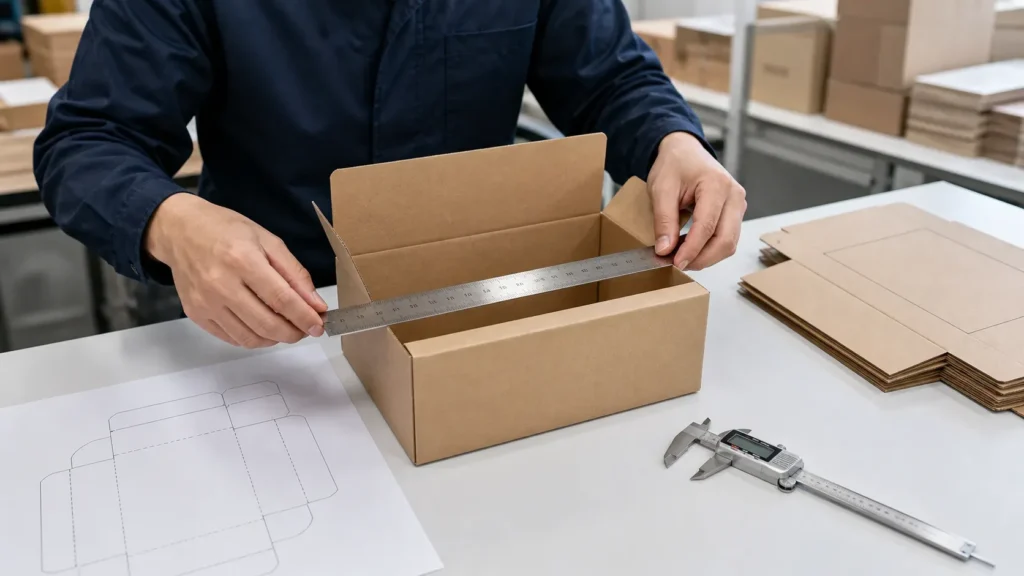
Test the actual pack-out: product, box, insert, label, documentation, master carton, and order data. Record what the pilot proves, the acceptance criteria, responsible approvers, and any scenario still untested.
Production handoff notes
Issue the controlled specification, artwork, sample ID, SKU list, packing instructions, receiving rules, service levels, reporting fields, exception ownership, and change procedure together. Require acknowledgement from both factory and warehouse owners.
The risk is that if the supplier cannot show one controlled handoff, packaging changes can create obsolete stock, order errors, or unpriced rework. For product context after the proof check, review custom paper packaging and attach the controlled files to the quote request.
How to move Custom Packaging Suppliers Order Fulfillment Services checks into an RFQ
Turn the scorecard into a controlled pilot and commercial handoff. The selected supplier should acknowledge the exact packaging, SKU, inventory, order, reporting, and exception rules that earned its score.
Specification details to confirm
Freeze structures, materials, artwork, inserts, labels, pack-out, SKU identifiers, receiving units, storage requirements, order profiles, carrier boundary, returns, and reporting fields. Mark every deviation and assign an owner before the pilot.
MOQ, capacity, and lead-time signals to verify
Link the approved packaging sample to a real receiving and dispatch test. Record the sample ID, test order, expected inventory movements, packing result, shipment evidence, exceptions, acceptance criteria, and approvers.
Quality-control risks before you shortlist a supplier
Issue the final specification, SKU master, artwork, work instructions, service scope, rate card, responsibility matrix, reporting template, escalation route, and change log as one release set. Require acknowledgement from every operational owner.
The risk is that a supplier can pass a packaging sample while the inventory or order workflow remains untested. Release full volume only when the pilot closes both physical and data handoffs.
In conclusion
Decision output: select the supplier whose verified manufacturing, inventory, order, quality, and change-control evidence best fits the planned SKU and service profile. The result should include the approved scorecard, normalized rate comparison, pilot record, responsibility matrix, and open conditions.
Why this route: packaging production and fulfillment share specifications, inventory, pack-out, and customer-delivery risks. Keeping them in one controlled decision record makes cost drivers and capability gaps visible before scale-up.
The risk is that choosing from unit price or a packaging sample alone can leave stock accuracy, order execution, exceptions, or handoff ownership untested. Hold full-volume release until the pilot closes the critical physical and data flows.
Send the controlled quote request and pilot scope to the finalists, reconcile the returned deviations and rates, and use Xiamen ZHY Packing Co.,Ltd to confirm the matching commercial contact and supplier capability before approval.
Custom packaging suppliers order fulfillment services FAQ
What should buyers confirm before ordering Custom Packaging Suppliers Order Fulfillment Services?
Confirm the packaging specification, SKU list, quantity and inventory model, production site, receiving rules, storage scope, pick-and-pack instructions, inserts and labels, order cut-off, dispatch proof, returns, reporting, exception ownership, and change procedure. Require a signed service scope and responsibility matrix so a factory, warehouse, or carrier gap is not discovered after launch.
How should buyers compare MOQ, lead time, and quote terms?
Clarify whether the production minimum applies per SKU, artwork, size, or combined order, then reconcile it with warehouse release quantities and reorder triggers. Separate approval, material, production, receiving, and order-processing time. Compare itemized production, receiving, storage, pick-and-pack, kitting, labels, returns, reporting, freight boundary, minimum fees, overage rates, and price validity using the same operating profile.
What sample, quality, or supplier checks reduce risk?
Run a pilot that uses the intended packaging, SKU data, receiving label, pack-out, order feed, shipping label, and exception route. Check inventory updates, pick accuracy, damage evidence, dispatch records, and the change workflow. Keep the approved sample ID, work instruction, service report, and corrective-action route with the commercial agreement.
After the scope is controlled, review Zhypacking and send the same operational quote request to each finalist.
quote request handoff: Send product specs, quantity, artwork, target market, sample needs, and supplier-evaluation questions through the contact page. Send Specs for Review.
Ask a Packaging Question