
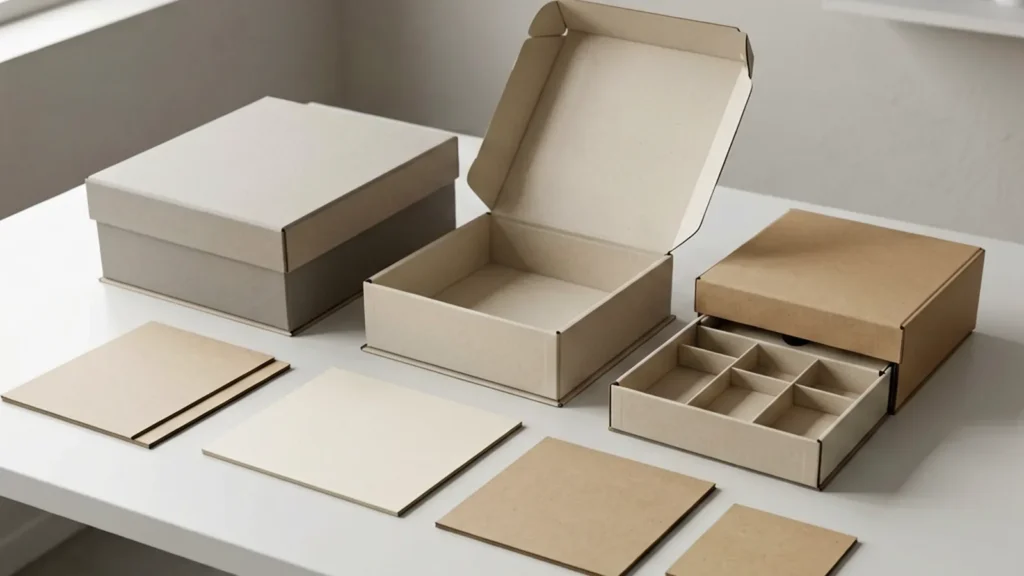
Direct answer: Quote a chocolate paper box from the actual product layout, primary wrapper, insert, temperature and distribution route—not from outer dimensions alone. Specify food-contact boundaries, board and insert construction, artwork, finishes, pack-out, quantity by SKU, and approval evidence. Release production only after a loaded sample and its records match the same controlled revision.
- State whether chocolate touches the paper component or remains in a primary wrapper.
- Confirm cavity fit, orientation, removal, and movement on a loaded sample.
- Separate board, insert, print, finish, tooling, packing, and freight assumptions.
- Keep compliance evidence, approved sample, and inspection plan on one revision.
Safety method and limits: The U.S. FDA food-contact packaging guidance and the EU’s Regulation (EC) No 1935/2004 make intended use and market part of the review. They do not make every paper, ink, coating, adhesive, or recycled fibre suitable for every chocolate application. Confirm the contact boundary, time, temperature, food type, and target market with current supporting evidence. Reviewed 24 August 2026.
| Pack route | Trade-off | Evidence to verify |
|---|---|---|
| Individually wrapped pieces | Simpler contact boundary; wrapper and insert still affect fit | Loaded layout, movement, and removal check |
| Paper component in direct contact | More stringent intended-use review | Market-specific evidence for every relevant component |
| Gift or e-commerce shipment | Presentation versus distribution protection | Loaded retail pack tested in the shipping configuration |
Chocolate paper box packaging takes more than a quote; buyers need to know who owns samples, design changes, inspection, lead time, and reorder consistency.
For chocolate paper box packaging, a supplier shortlist should show sample control, communication path, QC responsibility, and repeat-order records before price comparison.
The article turns supplier selection into sample, QC, lead-time, and RFQ questions a buyer can use.
For brand owners and importers, keep chocolate paper box packaging quote-ready: specs to send, proof to request, sample checks to approve, and reorder notes to retain.
Quick Decision: Define the Approval Standard
- Verify the incoming material record: Match the paperboard or corrugated grade, grammage or caliper, insert material, and lot reference to the approved specification and sample. Keep project-specific tolerances in the signed inspection plan.
- Compare the physical sample with the dieline and artwork proof: Check cavity layout, print registration, foil or emboss position, window patch, and product removal on the loaded sample. Issue corrections under a new sample ID before production.
- Define pre-shipment evidence: Agree the inspection frequency and require records covering closure, pack orientation, protective packing, and identified deviations for each production release where those checks apply.
- Control reorders: Record which changes to paper, insert, finish, adhesive, contact boundary, or supplier require written buyer review before the next run.
Decision owner
Identify who accepts structure and graphics and who controls the production reference. Store those owners with the marked dieline, material record, and approved physical pack.
Evidence handoff
Check the dieline, board or paper specification, printed proof, insert, and loaded pack as one packaging version. Record unresolved differences before the next handoff.
Critical Specifications and Tolerances
- Supplier cannot provide a signed QC plan with dimensional and color tolerance checks. Without recorded tolerances, production may deviate from the approved sample, causing quality disputes and rework. Request a written QC plan that includes dimensional tolerance, color acceptance, and finish verification against the approved sample. A signed QC plan that matches the approved sample revision and specifies measurement methods. Shortlist only suppliers who submit a QC plan with documented tolerances before sample approval.
- Quote does not itemize tooling, sample, and unit price separately. Hidden costs inflate total project cost and create budget overruns during bulk production. Ask for a proforma invoice with all cost breakdowns, including tooling as a one-time charge. Itemized quote or proforma invoice showing separate lines for tooling, sample, and unit price. Compare itemized costs against the spec sheet and confirm with the supplier before approving the quote.
- Pre-production sample lacks recorded tolerances for dimensions, color, or finish. Production may deviate from the approved sample without a baseline for inspection, leading to rejected goods. Require a sample approval document that ties the sample to the specification revision and lists measured tolerances. Signed-off pre-production sample with recorded tolerances and the approved specification revision number. Document the sample approval record in the evidence file before authorizing bulk production.
- Supplier quote line items do not match the spec sheet for paper type, GSM, dimensions, or finish. Wrong box structure or material can fail direct contact requirements and cause costly rework. Request a revised quote that matches the spec sheet exactly, or ask the supplier to document any deviations. A line-item quote that matches every field in the spec sheet (paper, GSM, dimensions, colors, finish). Verify the updated quote against the spec sheet; if deviations persist, shortlist an alternative supplier.
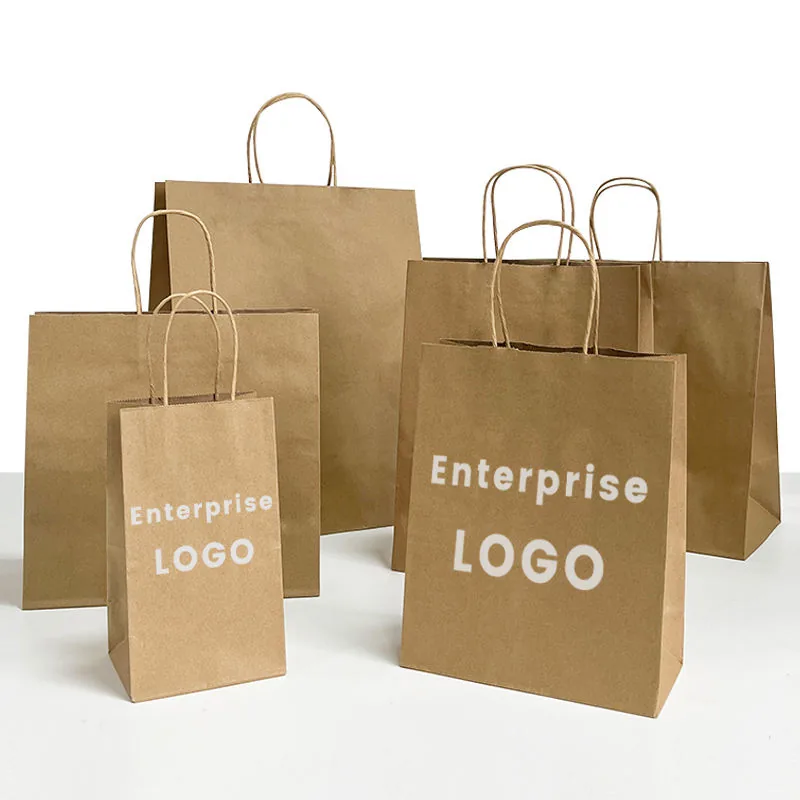
Review paper bags format and sample approval before carrying these requirements into the wider chocolate paper box packaging sourcing decision.
Release condition
Release this checkpoint only when the product fit, structure, decoration, and pack-out evidence describe the same approved packaging configuration.
Handoff record
Keep the accepted packaging structure, artwork revision, physical reference, and responsible owner together before release.
RFQ checkpoint
Check the product route for sizes, structures, materials, finishes, and RFQ details before sampling chocolate paper box packaging.
How to Inspect the Sample
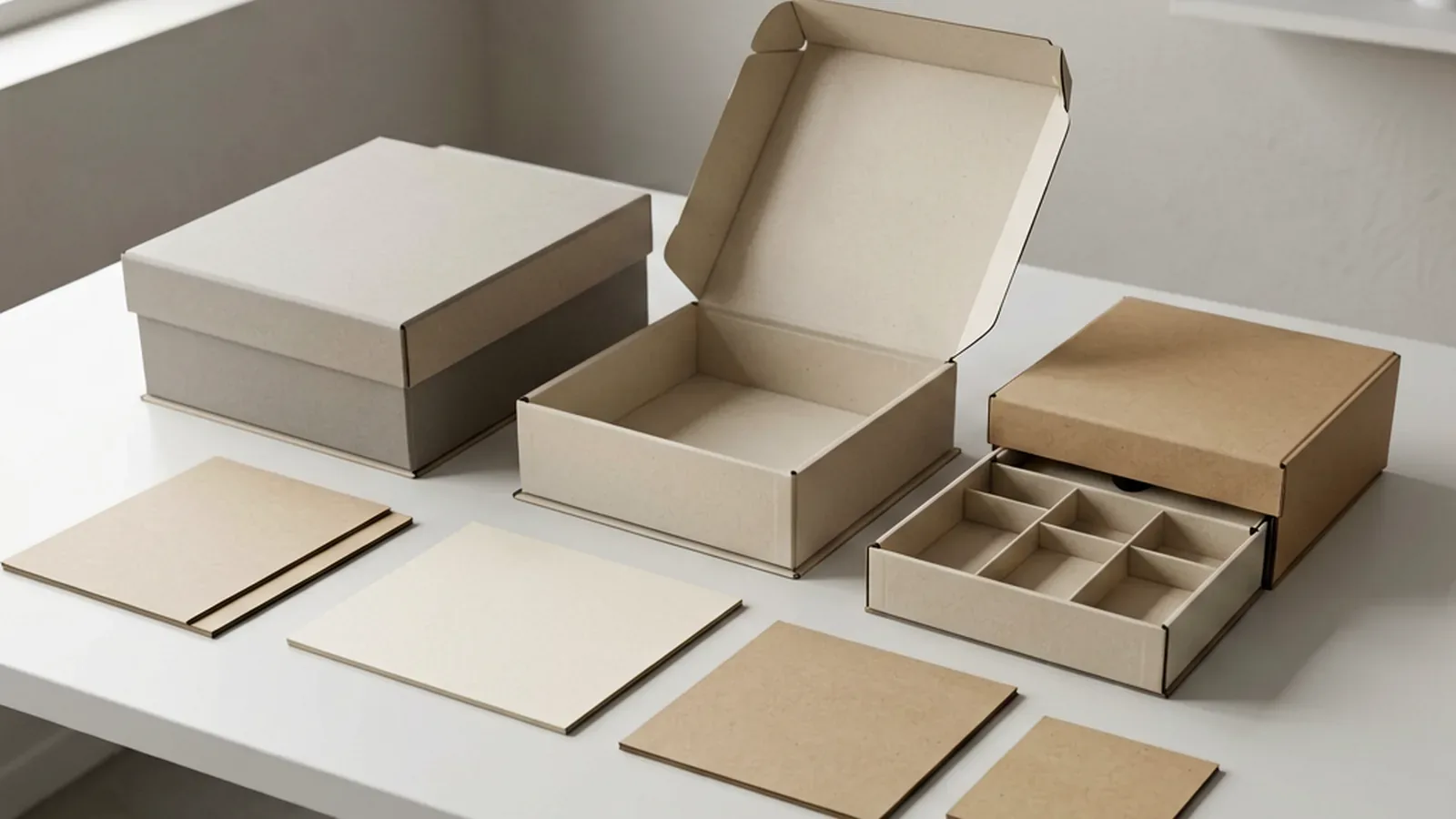
Quality-check evidence. Each sample checkpoint below states what to check, why it matters, and what buyer action follows before the chocolate box is released. Keep the measured result, artwork revision, material reference, and approval decision together so a visual pass cannot hide a structural or direct contact packing assumption.
- How does the sample’s paperboard weight, print registration, and box construction match the approved spec sheet? To confirm the sample is a production-intent representation, not a hand-made mock-up. Supplier provides a signed sample approval card listing the exact GSM, print tolerance, and structural dimensions. Approving a representational sample that cannot be reproduced in bulk leads to color, fit, or strength failures. Document the sample approval record and tie it to the production spec before releasing the PO.
- Which parts of this sample are production-intent and which are representational? To identify any deviations that could change in bulk production, such as hand-assembled vs. machine-folded corners. Supplier labels limitations on the sample card, e.g., ‘hand-folded, not production-folded’. Accepting a sample without labeling limitations means production may deliver a different structure. Require the supplier to mark all representational aspects and confirm the production process will match the labeled intent.
- What is the MOQ and lead time for this chocolate paper box, and are they conditional on sample approval? To confirm the sample represents the exact MOQ and lead time terms, avoiding hidden cost or schedule changes. Supplier states the 200 pcs project-level MOQ (unless a product-specific exception is confirmed) and 15–30 working days after specifications, artwork, and sample requirements are confirmed. Assuming the sample can be ordered at lower MOQ or shorter lead time may result in price or delay surprises. Confirm the MOQ and lead time in writing on the sample approval document and include them in the PO.
- What is the process if the sample fails inspection or a correction is needed? To establish how deviations are recorded, corrected, and re-approved before production. Supplier assigns a new sample ID for any corrected sample and requires written buyer approval before production. Without a clear correction process, a failed sample may be silently replaced, leading to mismatched production. Define the re-sample approval gate in the sample approval record and ensure the supplier uses a new sample ID for each revision.
Review packaging dieline and custom packaging specs before carrying these requirements into the wider chocolate paper box packaging sourcing decision.
Evidence and Approval Records to Keep
Before approving the packaging route, assemble an evidence file that connects the paperboard, print, finish, dieline, and insert records to one revision. Unresolved assumptions should remain open rather than passing into production.
- Verify the paperboard grade, GSM, and any certification (e.g., FSC Mix) against the supplier’s certificate scope. Request the supplier to provide the certificate number and verify it on the issuing body’s registry.
- Compare the print and finish specifications (CMYK, Pantone, lamination, foil) against the quoted sample. Keep a signed sample card with the approved color target and gloss level. Risk if ignored: production batches may drift from the approved visual standard.
- Document the box dimensions, dieline revision, and any insert or cavity tolerance. Request the supplier’s QC record for the sample. Risk if ignored: product fit may fail in bulk, causing rework or returns.
- Record the MOQ (200 pcs project-level, unless a product-specific exception is confirmed), lead time (15–30 working days after specifications, artwork, and sample requirements are confirmed), and any setup or tooling charges separate from unit price. Compare these across suppliers. Risk if ignored: hidden costs emerge after the order is placed.
Retain the approved sample, the signed evidence file, and the supplier’s written confirmation of the reorder baseline. This record becomes the QC gate for bulk production. For ecommerce shipments, ensure the pack-out assumptions align with the distribution route.
The factory-side check: before bulk production, the supplier should confirm that the QC method for the first article matches the evidence file. A common gap is that the supplier accepts a visual check without recording the measurement. Request a written QC plan that includes dimensional tolerance, color acceptance, and any certification re-verification.
Bulk Production Risks and Change Control
The useful proof is the supplier’s revision-controlled production record that ties the approved sample, specification, and QC plan to the same identifier. Without this record, any change in paper type, artwork, or box structure can create untraceable deviations that lead to rework or quality disputes at scale.
Before bulk production, verify the following:
- Request a written change control procedure that names which changes require buyer approval before production. A common gap is that the supplier accepts a verbal substitution without updating the file.
- Confirm the MOQ (200 pcs project-level, unless a product-specific exception is confirmed) and the lead time (15–30 working days after specifications, artwork, and sample requirements are confirmed) are stated in the quote.
- Inspect the first article against the approved sample using calibrated tools. The supplier should record dimensional tolerance, color acceptance, and finish condition in a written QC plan.
- Require that the supplier maintains one revision number across the quote, sample card, artwork proof, and production record. When an input changes, the supplier must reopen the affected gate and document the reason.
Factory-side check: In the sample room, verify that the pre-production sample is labeled with the approved spec revision and any limitations. A visual mockup without recorded tolerances is not sufficient for production release. Ask the supplier to provide a sample approval document that ties the sample to the spec revision.
Carry the signed production record into the paper packaging quality control review. Confirm the controlled revision, inspection method, acceptance owner, and response to any reported deviation before release.
RFQ Handoff and Supplier Questions
At sample approval, the buyer must have a documented supplier capability file that ties the factory’s material, print, finish, and QC proof to the approved chocolate paper box packaging specification. Without this file, the next stage—bulk production—inherits assumptions that are not traceable, creating reorder risk and potential quality disputes.
- Verify material and print proof. Request the supplier’s material spec sheet (board grade, GSM, coating) and a production-intent print proof. Compare these against the approved sample. Risk: a mismatch between quoted material and production run can cause color shift, structural failure, or finish defects. Buyer action: shortlist only suppliers who provide a written material declaration and a signed print proof tied to the sample revision.
- Confirm QC method and tolerance. Ask the supplier to state the dimensional tolerance, color acceptance method (e.g., spectrophotometer or visual check under buyer-approved viewing conditions), and finish verification step. Risk: without a documented QC plan, the factory may accept visual-only checks that miss out-of-tolerance boxes. Buyer action: request a written QC plan that includes measurement tools, pass/fail criteria, and the person responsible for each check.
- Document change control. Ask the supplier: “Which changes to material, artwork, structure, or finish require written buyer approval before production?” Risk: an undocumented change can alter box fit, print appearance, or structural integrity without the buyer’s knowledge. Buyer action: record the change trigger list in the approval file and require the supplier to confirm that no deviation will proceed without a signed revision.
- Lock the reorder baseline. Ask the supplier to identify the approved paper, box dimensions, artwork file, finish spec, and pack-out method that will be compared at reorder. Risk: a statement such as “same as last order” is incomplete without the baseline revision. Buyer action: document the approved sample ID, QC plan, and change control owner in the same revision file, and carry this file into the purchase order and production handoff.
Use the signed capability file when reviewing paper box size options. Advance only the route whose material, structure, artwork, and inspection records identify the same packaging revision.
In conclusion
The sourcing choice for chocolate paper box packaging is resolved when the buyer compares each supplier’s documented proof against a single, revision-controlled specification.
Shortlist only those suppliers who can provide a line-item quote that matches the spec sheet, a signed QC plan with dimensional and color tolerance checks,
and a sample approval record tied to the approved revision.
Verify that the 200 pcs project-level MOQ and the 15–30 working day lead time are explicitly stated in the quote,
and document any deviation as a red flag before moving to sample approval.
Approving the final supplier requires a complete evidence file that ties the RFQ inputs, sample measurements, and production QC plan to the same specification revision. Without this file, the next stage inherits untraceable assumptions that create reorder risk and quality disputes. Check that the supplier’s proof of material, print, finish, and QC method matches the approved sample, and confirm that any change in paper type, artwork, or box structure triggers a written buyer approval before production begins.
Frequently Asked Questions
What inputs should buyers confirm for chocolate paper box packaging?
Buyers should confirm the box dimensions, paper type and GSM, print colors, finish, and quantity.
It depends on the product size and branding requirements
the supplier will need a detailed spec sheet to produce an accurate quote.
Verify that the supplier’s quote line items match your spec sheet, and request a sample to confirm the spec before bulk production.
The MOQ is 200 pcs project-level, unless a product-specific exception is confirmed, with a lead time of 15–30 working days after specifications, artwork, and sample requirements are confirmed.
Approving the wrong structure or supplier proof can create quality, cost, or delivery problems.
What sample evidence is needed for chocolate paper box packaging?
The sample evidence should include a signed-off pre-production sample with recorded tolerances for dimensions, color, and finish. It depends on the design complexity; a simple single-color print may require less evidence than a multi-color foil-stamped box. Verify that the sample is labeled with the approved specification revision and any limitations. Risk: Without recorded tolerances, production may deviate from the approved sample. Follow-up: Request the supplier to provide a sample approval document that ties the sample to the spec.
What should be included in a chocolate paper box packaging RFQ?
The RFQ should include the box dimensions, material grade, print colors, finish, quantity, and destination. It depends on the supplier’s capability; provide a dieline or artwork file if available. Include the 200 pcs project-level MOQ (unless a product-specific exception is confirmed) and the lead time of 15–30 working days after specifications, artwork, and sample requirements are confirmed as reference. Verify that the supplier itemizes tooling, sample, and unit price separately. Risk: Hidden costs can increase total project cost. Follow-up: Request a proforma invoice with all cost breakdowns before approving.
How do MOQ and lead time affect the chocolate box quote?
The MOQ for custom chocolate paper box packaging is 200 pcs project-level unless a product-specific exception is confirmed.
It depends on the box complexity and material
standard folding cartons and rigid boxes both follow this MOQ.
Verify with the supplier if a lower quantity is possible, as it may incur additional setup fees.
Lead time is 15–30 working days after specifications, artwork, and sample requirements are confirmed.
Risk: Ordering below MOQ may not be accepted or may increase unit cost.
Follow-up: Confirm the MOQ in the RFQ and ensure the supplier includes it in the quote.
Ask how QC will check the sample, color, finish, packing, and bulk order.


Ask a Packaging Question