
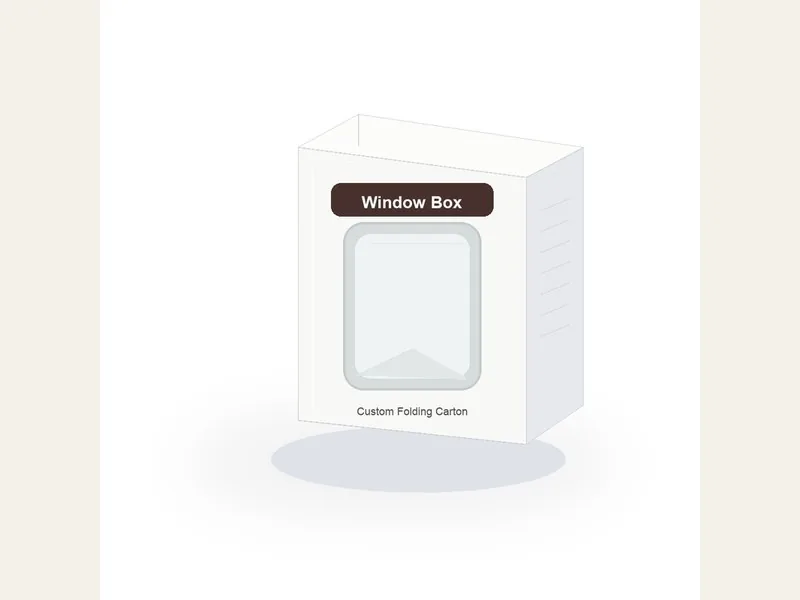
A window box combines structure, visibility, retention, print, and pack-out in one decision. Approving the cutout by itself leaves unanswered questions about film, product movement, artwork, and the final packed view.
Key takeaways
- Use CUT, FILM, FIT, and PACK as four separate gates.
- FILM may be N/A for an open cutout only when the reason and owner are recorded.
- Check visibility and retention with the actual product orientation.
- Treat regulatory and process-control requirements as conditional project inputs; this guide reports no test outcomes.
The CUT-FILM-FIT-PACK framework turns window box packaging into a controlled sample and RFQ handoff.
The CUT-FILM-FIT-PACK decision
Release the box to production only when every applicable gate closes against one revision. Quantity, tooling, setup, film choice, and added assembly can change MOQ and quote structure, so an unresolved gate is also a commercial risk.
| Gate | Use it to decide | Failure to prevent | Evidence to check | Release action |
|---|---|---|---|---|
| CUT | Whether the window shape and structural boundaries work together | Weak edge, wrong view, or conflict with crease and glue areas | Revisioned dieline, cut sample, product-view mark | Approve the cut geometry or reopen structure |
| FILM | Whether a patch is required and how it is defined | Unowned film choice, attachment issue, or false compliance assumption | Film ID, thickness basis, patch overlap, attachment note, or N/A reason | Lock the film route or record open cutout N/A |
| FIT | Whether the actual product stays positioned for visibility and protection | Blocked view, contact with window, or movement during handling | Packed sample, orientation marks, retention method, observation record | Approve the fit route or revise retention |
| PACK | Whether artwork, code zone, closing, and outer pack remain compatible | Print conflict, scan issue, packing delay, or shipper mismatch | Artwork revision, code check, pack sequence, outer-pack plan | Release pack-out or hold the affected item |
Use CUT ∧ FILM ∧ FIT ∧ PACK = RELEASE. Open-cutout designs may mark FILM as N/A only when the reason and accountable owner are written in the ledger.
Read the table above by use case, not by surface appearance alone. Shortlist the construction whose handling risk can be checked on a representative sample, then carry that choice into the later specification record.
Compare open cutouts and film-patched windows
The choice changes protection, touch access, appearance, assembly, and evidence needs. Compare it with the product and target market in view.
| Option | Use case | Trade-off | Risk to avoid | Verification check |
|---|---|---|---|---|
| Open cutout | Intentional touch or ventilation where exposure is acceptable | Product contact, dust, tamper expectations, and edge strength need review | Cut sample with actual product and handling observation | Record why FILM is N/A and who accepts it |
| Film patch | Visibility with a covered opening | Film identity, overlap, attachment, glare, and disposal route need definition | Film record, patched sample, packed-product view | Approve film and cutout as one revision |
| Reduced or shaped window | Programs balancing a controlled view with more board area | Artwork, product position, and the intended viewing angle can conflict | Marked dieline and shelf-view mockup | Confirm the exact view before tooling release |
If any component is intended to contact food, the target-market regulatory route becomes a separate production input. The European Commission materials-contact overview explains the EU framework; applicability must be confirmed for the actual component, use, and market.
Compare the structure with the folding carton options. Hold approval when the team cannot state whether FILM applies or cannot show the product in its intended position.
Before comparing suppliers, review packaging dieline and custom packaging specs for the related product or solution route.
RFQ checkpoint
Send the completed CUT-FILM-FIT-PACK ledger with product, artwork, quantity, destination, and sample requirements for a scoped RFQ review.
RFQ inputs for the window, product, and artwork
The production RFQ must join structural, visual, and packing inputs. Use these questions to expose the risk from missing evidence before a quote or sample is approved.
- What product position and viewing angle should CUT reveal? Attach product dimensions, orientation, view target, dieline revision, and any no-cut zones; request a marked structural file.
- Is FILM required? If yes, define the proposed identity, thickness basis, appearance, patch overlap, attachment route, and target-market requirements. If no, record the N/A reason and owner.
- What keeps the product in position for FIT? Describe inserts, tabs, trays, or other retention assumptions and ask for an actual-product packed sample.
- Which artwork, code, finish, closing, and outer-pack inputs control PACK? Name current files, approval methods, and any buyer- or lab-owned check.
Resolve these questions before approval: what quantity, delivery window, and destinations are being quoted? Ask which tooling, setup, film, assembly, packing, or freight choices change the commercial response.
For print-process terminology, ISO 12647-2 covers offset-lithographic parameters and methods, including cardboard packaging. For code placement, GS1 guidance advises avoiding folds, flaps, edges, or covering layers that impair scanning. Neither source chooses the project’s acceptance rule.
Every answer should identify the record to inspect and whether the buyer should approve, revise, or hold.
Use custom retail packaging to align the related specifications and RFQ inputs.
Build a reproducible window release ledger
The ledger is a blank planning form.
- Input: gate, product ID, box revision, artwork revision, and date.
- Evidence: cut sample, film record or N/A reason, packed-product image set, code check, or buyer/lab report.
- Observation: what the reviewer saw at the intended view, orientation, opening, closing, and pack-out.
- Decision: pass, revise, hold, or N/A with owner and reason.
Trigger: product, cut, board, film, retention, artwork, code, finish, pack, destination, or market change.
The reproducible string is input + evidence + observation + owner + decision + trigger. A missing field creates release risk and leaves the gate open. Request a new check when a trigger changes, then verify any dependent evidence.
Questions that reveal window-box risk
These questions show whether a production partner can connect the visible window to controlled structure, film, fit, and pack records. Record the supplier named in the handoff.
Which product position must remain visible?
Ask the production partner to mark the intended view on the dieline and show it with the actual product. Verify the orientation, viewing angle, and permitted movement. A generic “window looks good” answer does not support approval.
What keeps the product away from the cutout or film?
Ask how the proposed structure or retention route controls contact and movement, then request the packed sample and observation record. The quality check should reflect the intended handling situation, not an unsupported test claim.
Which material or artwork change reopens approval?
The buyer should ask the production partner to name the changes that require new cut, film, fit, print, code, or pack evidence. A strong response identifies document owners and stop points rather than treating every reorder as automatically equivalent.
In conclusion — Window box packaging
For window box packaging, the next procurement action is a written RFQ and sample approval record, not only a preferred style or unit price. Confirm the specification, MOQ assumption, artwork version, supplier capability, sample approval method, QC checkpoint, approval risk, and quote follow-up before bulk production.
If any material, structure, logo, finish, packing detail, or supplier proof changes, ask the supplier to update the quote and sample record before approving production.
For the next step on this route, see our soap Boxes: Material, Window, and Print Checks.
FAQ — Window box packaging
What should buyers approve on a window box sample?
Approve the cut geometry, film route or written N/A, product visibility and retention, artwork and code position, closing sequence, and pack-out record. Verify that all evidence uses the same revision and that production or inspection owners can trace each decision to its sample or file.
When is a clear film patch optional?
It is optional when the approved design intentionally uses an open cutout and the product, market, handling, protection, hygiene, and tamper requirements allow it. Record the reason and owner rather than assuming N/A, and reopen the decision if the product or market changes.
How should product visibility and movement be checked together?
Place the actual product in the intended orientation, observe the target view, then handle the pack according to the agreed check plan. Record movement, contact, blocked areas, and the decision; request a retention change if the view is not stable or cannot be reproduced.
What changes should reopen window box approval? Reopen the affected gate when the product, cutout, board, film, retention, artwork, code, finish, closing, outer pack, destination, or target market changes.
When do food-contact requirements apply to window packaging? Ask a qualified regulatory specialist to confirm the rules and evidence for the actual component, intended contact, use conditions, and target market.
RFQ handoff: Send the completed CUT-FILM-FIT-PACK ledger with product, artwork, quantity, destination, and sample requirements for a scoped RFQ review. Send Specs for Review.

Ask a Packaging Question