

Planning mailer boxes starts with the product dimensions and distribution route, because both affect board, structure, print, insert clearance, packing, and the sample used to release production.
This packaging guide turns those choices into a dieline brief, sample sign-off record, and quote checklist for comparing suppliers on the same specification.
Direct answer: Place a mailer box order only after its specification, application fit, sample route, quantity rule, and supplier exceptions have been confirmed in writing.
Define the Buyer Requirement
| Requirement | Factory control | Evidence to verify | Order risk | RFQ follow-up |
|---|---|---|---|---|
| Sample approval | Factory holds pre-production sample against signed spec sheet; records dimensional and visual check. | Measure sample with calipers; compare to approved die line and color target under buyer-approved viewing conditions. | Unapproved sample may shift dimensions or print registration, causing assembly line rejects. | Request a signed sample approval report with the RFQ; retain one sealed reference sample. |
| MOQ and order quantity | Factory confirms MOQ per product line; batch quantity locked before material procurement. | Check MOQ in written quote; confirm no hidden split-order surcharge for quantities below standard. | Under-ordering triggers reorder at higher unit cost; over-ordering ties capital in slow-moving stock. | Document your forecast quantity in the RFQ; ask supplier to confirm MOQ and price breaks. |
| Material / substrate | Factory sources board grade per spec; mill certificate or inbound inspection record available. | Request material data sheet; verify grammage, flute type, and liner color against your spec. | Substituted substrate may fail crush resistance or print adhesion, causing field failures. | Approve material grade in writing; request a certificate of conformance with the sample. |
| Width or size tolerance | Factory sets the buyer-approved tolerance on length/width; records first-piece and in-process dimension checks. | Measure five random samples from production run; reject if any exceeds the buyer-approved tolerance deviation. | Oversized boxes waste void-fill; undersized boxes damage product during transit compression. | State acceptable tolerance in the RFQ; ask supplier to include dimensional check report. |
| Finish or color control | Factory uses spectrophotometer to verify CMYK or Pantone target; maintains gloss/lamination log. | Compare production sheet to signed color proof under 6500K light; check for streaks or haze. | Off-color finish erodes brand consistency; lamination defects cause peeling in humid storage. | Submit Pantone references with the RFQ; require a wet-proof approval before production run. |
Approving a mailer box specification without verifying each control point—sample, material, tolerance, finish—exposes your order to dimensional drift, substrate substitution, or color mismatch that can delay launch and inflate rework cost. The factory relies on your signed spec sheet to set its process limits; any gap between what you expect and what the supplier interprets becomes a contractual risk. Confirm every parameter in the written RFQ, not in a later email thread, to lock both parties to the same baseline before production begins.
Your buyer follow-up after reviewing this checklist is to compile a complete quote request package that includes material grade, dimensional tolerance, finish target, and sample approval protocol. Do not rely on verbal agreements or generic supplier brochures; each line item must be documented and acknowledged by the factory. Once the supplier returns a quote with these specifics, request a pre-production sample that matches the approved spec. Only after physical verification of that sample should you authorize the full production run.
Use this evidence to compare the supplier record with ISO 2859-1 sampling inspection standard before accepting the requirement.
Compare the Available Routes
| Option | Best fit | Trade-off | Risk to avoid | Verification | Follow-up |
|---|---|---|---|---|---|
| Current specification | Matches your existing die-line, material, and print file with no revision | Higher unit cost if original spec used premium board or custom size | Supplier may have changed paper source or flute grade without notice | Request a fresh sample against your archived spec sheet and measure caliper | Approve only after physical sample matches archived dimensions and GSM |
| Alternative specification | Lowers cost by substituting E-flute for B-flute or switching to kraft liner | Reduced crush resistance may require thicker wall or insert for heavy items | Box stack strength drops below shipping carrier minimums | Run an edge crush test on the alternative board before approving | Compare ECT values with your logistics handler's stacking requirement |
| Custom option | Adds window patch, magnetic closure, or custom insert for unboxing experience | Extends lead time for tooling and sample rounds | Custom die-line may not fit standard shipping carton dimensions | Confirm the custom dieline fits your master carton and pallet pattern | Lock the dieline file and request a paper mockup before production |
| Safer fallback | Uses stock-size mailer with generic print for low-risk trial or emergency reorder | Branding is limited to one-color print; no custom insert or window | Stock box dimensions may cause product shift during transit | Place one product unit in the stock box and shake-test for movement | If fit is loose, add an insert or void fill before bulk run |
Use this evidence to compare the supplier record with Top 12 Trusted Custom Mailer Box Manufacturers in the . before accepting the requirement.
Review the Required Proof
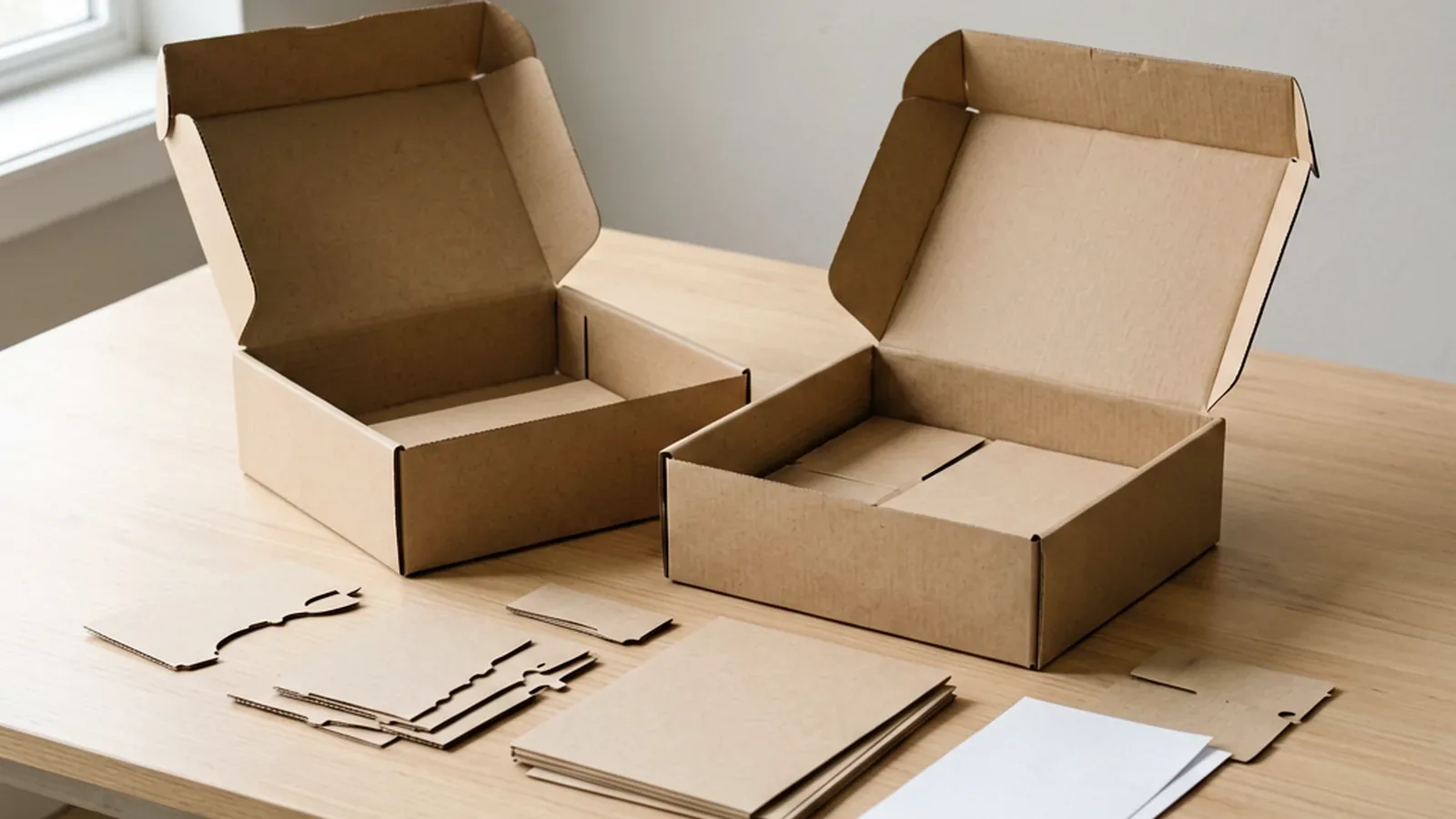
Before approving any custom packaging solutions box order, demand a physical or digital mockup that matches your spec sheet. Measure dimensions, board thickness, and print registration against your quote request. If the proof deviates by more than the approved tolerance or shows color mismatch, reject it and request a corrected sample. This step verifies factory execution and prevents costly production errors.
Practical Checklist
- Confirm dimensions and material grade match your quote request
- Check print alignment and color accuracy against approved artwork
- Verify structural integrity (e.g., fold, glue, die-cut)
- Request a signed proof approval form before production
Use this table to compare proof outcomes across shortlisted suppliers:
| Supplier | Proof Match | Action Required |
|---|---|---|
| Supplier A | Dimensions within tolerance, color OK | Approve with note |
| Supplier B | Board thickness outside tolerance | Request corrected sample |
| Supplier C | Print misaligned beyond tolerance | Reject, request new proof |
After proof approval, proceed to quote request/sample handoff with a signed document to lock in specs, cost, and MOQ. This eliminates ambiguity and reduces production risk.
Build the Decision Asset
At this checkpoint, you must have a finalized spec sheet and a shortlist of suppliers. The output before the next stage is a verified decision asset that confirms supplier reliability, sample accuracy, and reorder control.
Supplier Proof Check
Request from each supplier a process flow document that details their quality gates for mailer boxes. Ask: “What is your procedure for verifying board grade and print registration before production?” Reject any supplier that cannot provide a written process or a video walkthrough of their line.
Sample Approval Check
Before approving a sample, measure it against your spec sheet using a digital caliper and a scale. Confirm that the dimensions match within the approved tolerance and the weight matches the specification. If the sample fails, request a revised sample with a corrective action report.
Reorder Control Check
Establish a reorder trigger: when your stock falls below an agreed number of weeks of forecasted demand, initiate a new quote request. Require the supplier to confirm the same MOQ and lead time as the original order. Document this in a reorder agreement signed by both parties.
| Check | Buyer Verification Question | Pass Criteria |
|---|---|---|
| Supplier Proof | What is your quality gate for board grade? | Written process or video walkthrough provided |
| Sample Approval | Does the sample match spec within the approved tolerance? | Yes, with corrective action report if not |
| Reorder Control | Can you confirm same MOQ and lead time? | Signed reorder agreement |
Use this decision asset to move to production handoff. For more on customization, see our packaging customization and dieline specs.
Prepare Comparable RFQ Inputs
- Does the supplier have a dedicated mailer box production line with automated folding and gluing? A dedicated line indicates consistent wall thickness and glue seam strength across every unit, not just prototypes. Supplier provides a line layout diagram and shows a video of the folder-gluer running at full speed with a recent order. A general box shop may run mailer boxes on shared equipment, causing dimensional drift and weak seams in bulk. Request a short video of the dedicated line running your box size and material grade before sample approval.
- How does the factory verify board quality for burst strength and edge crush on incoming reels? Incoming material variance is a common cause of field failures; a supplier that tests reels can reject bad stock before it hits the die-cutter. Factory shows a written incoming inspection protocol with a burst tester and crush tester, plus a log of recent rejections. Without reel-level testing, a weak batch of linerboard can pass through and cause split seams during fulfillment. Ask for the last three incoming inspection reports for the paper grade specified in your quote request.
- What is the supplier's defect rate on the last three mailer box orders, and how are defects sorted? Historical defect rate reveals process stability; a supplier that tracks and sorts defects can contain issues before shipment. Supplier shares a three-order summary with defect categories (print, dimension, glue) and shows a sorting station with trained inspectors. A supplier without defect tracking may ship mixed-quality boxes, leading to customer complaints and return costs. Request a copy of the last order's final inspection report and confirm that your order will be inspected under the same AQL standard.
In conclusion
The final approval for your mailer boxes comes down to verifying that the specification, cost, lead time, and quality checks are all aligned. Compare your documented product weight and dimensions against the supplier’s mockup, confirm the 200 pcs project-level MOQ (unless a product-specific exception is confirmed) and the standard 15–30 working day production lead time after specifications, artwork, and sample requirements are confirmed, and validate the structural integrity through a drop test or edge crush test on the physical sample. Once you have shortlisted a supplier that meets these criteria, request a quote and approve the sample only after the spec is locked and the reorder trigger is documented. This checklist ensures your mailer boxes are ready for production without surprises.
To request a quote for mailer boxes product, use mailer boxes to confirm the final specification, quote assumptions, sample approval, QC evidence, approval risk, and supplier follow-up before bulk order.
Frequently Asked Questions
How should a b2b buyer choose product type?
Start by documenting the product weight, dimensions, and unboxing experience. Shortlist the material (e.g., corrugated flutes, paperboard thickness) and print method that match your budget. Confirm the 200 pcs project-level MOQ (unless a product-specific exception is confirmed) and the 15–30 working day lead time after specifications, artwork, and sample requirements are confirmed. Then request a physical sample to test structural integrity and verify the supplier’s production capability before sending the quote request.
Which supplier proof should buyers request for mailer boxes?
Request a physical or digital mockup that matches your exact dimensions, material, and print colors. Verify the supplier’s proof includes your artwork and box dieline. Check that the 200 pcs project-level MOQ (unless a product-specific exception is confirmed) and the 15–30 working day lead time after specifications, artwork, and sample requirements are confirmed apply to the approved proof. Before approving, test the proof for structural integrity and document the supplier’s factory process reference. Then sign off and request a sealed sample for production.
What should buyers lock before approving a mailer box order?
Lock the full specification: material, dimensions, print colors, and finish. Confirm the 200 pcs project-level MOQ (unless a product-specific exception is confirmed), the 15–30 working day lead time after specifications, artwork, and sample requirements are confirmed, and payment terms in the quote request. Verify the supplier’s quality standards and request a sealed sample for drop test and edge crush test. Document the approved sample and supplier risk checks (e.g., certifications) before finalizing the order.
quote request handoff: Send Specs for Review.

Ask a Packaging Question