

Direct answer: Do not approve folding-carton paperboard by grammage or thickness alone. Compare the named board grade, basis weight, caliper, grain direction, surface, converting result, decorated sample, packing method, and agreed tolerance as one specification.
Decision summary: Choose the lightest production board that passes the project’s fit, crease, closure, print, finish, packing-line, and distribution checks—not the highest number on a material list.
Choosing paperboard for a folding carton is not a matter of selecting the highest grammage on a supplier list. Two boards described with similar weight can behave differently because composition, density, coating, fiber direction, moisture, and converting conditions are not the same.
The board must convert cleanly, protect the product, run through the planned packing process, carry the print and finish, and remain practical to ship flat.
This guide helps brand owners, importers, distributors, ecommerce sellers, and retail packaging teams define carton duty, compare board proposals without confusing caliper and grammage, and approve a production-intent sample.
The procurement risk is a substitution described only as “equivalent.” Equivalence should be demonstrated against the carton’s structural, converting, print, packing, and appearance requirements, then tied to a named sample and written board specification.
Start with carton duty, not a board number
Describe what the carton will hold and how it will be handled. Record product dimensions, mass, support points, orientation, fill method, and whether the carton is a primary pack, retail sleeve, inner pack, or shipping component. A lightweight bottle that is supported by an insert presents a different board demand from a dense part resting directly on a broad panel.
Identify the panels that carry load. A long unsupported span may bow even when smaller panels feel stiff. A hanging carton places demand around the hang feature. A window removes board area and can change panel rigidity. A large tuck flap, crash-lock base, or auto-bottom introduces different converting and assembly needs.
Also define the sales and distribution environment. Will cartons be packed by hand or machine, displayed upright, chilled, exposed to changing humidity, bundled, or placed in a master carton? These conditions guide the supplier’s board and structure proposal. If a performance requirement matters, state how it will be evaluated instead of asking for a generic “strong board.”
Separate caliper, basis weight, and board grade
Caliper describes thickness; basis weight describes mass per area; board grade describes a material family or construction. They are related but not interchangeable. A denser board may have more mass without being proportionally thicker. Different fiber compositions and coatings can change stiffness, fold behavior, surface appearance, and moisture response.
Ask the supplier to identify the proposed grade, manufacturer or approved source where applicable, nominal basis weight, nominal caliper, coating or surface, color, and relevant tolerances. If the project requires recycled content, regulated-use suitability, certification, or another claim, request project-appropriate documentation and have the responsible buyer or compliance owner verify it.
For supplier comparison, keep the product, dieline, board specification, print process, finish, and packing assumptions aligned. One quote based on a named production board cannot be compared directly with another that says only “white card.” Mark proposed alternatives separately and request a sample before accepting them.
| Specification field | Why it matters | Evidence to retain |
|---|---|---|
| Board grade and source | Defines the intended material construction and reduces ambiguous substitution. | Supplier specification or approved material record linked to the sample. |
| Caliper and basis weight | Helps distinguish thickness from mass and supports incoming comparison. | Agreed nominal values, tolerances, and measurement method. |
| Fiber or grain direction | Affects creasing, folding, panel behavior, and sheet yield. | Dieline orientation and approved production layout. |
| Surface and coating | Influences print, color, rub, glue, and appearance. | Production-intent proof or printed sample with material identity. |
Map board direction to folding behavior
Paperboard has direction. The relationship between fiber direction and the carton’s main folds can affect crease quality, resistance to opening, panel stiffness, and cracking risk. It can also affect how many cartons fit on a sheet, so the production layout is both a technical and commercial decision.
Ask the structural designer or converter to show the intended direction on the dieline. Review it with critical folds, long panels, curved areas, and machine-running direction in mind. Do not change sheet layout only to improve yield without checking the physical carton again.
Board direction should be assessed on the proposed production material. A white mockup may confirm shape and product fit but may not predict how a coated, laminated, heavily printed, or differently sourced board will crease. Identify what each sample is intended to prove.
Review creases, cuts, windows, and glue together
As board thickness and stiffness change, the converting setup may also need to change. Crease geometry, rule selection, channel, cut-to-crease relationship, fold sequence, and make-ready all influence the finished carton. Buyers do not need to prescribe factory settings, but they should require a clean, repeatable production-intent result.
Inspect the converted blank, not only material data
Inspect folds for cracking, delamination, excessive spring-back, whitening, or crushed edges. Check that tuck flaps engage without tearing and that lock features assemble as intended. Where panels are glued, confirm adhesive compatibility with the surface and finish. A coating or lamination can change glue performance even when the board itself is unchanged.
Treat windows as a structural change
Windows and apertures deserve separate attention. They reduce board area and may introduce film, glue, or edge-quality requirements. Pack the actual product and observe whether the remaining panel supports the load and whether the product presses against the window. Any structural change to solve this should be reflected in the dieline revision.
RFQ checkpoint
For paperboard thickness for folding cartons, share product size, material, artwork, quantity, sample need, packing method, and deadline so the RFQ can be reviewed before sample approval.
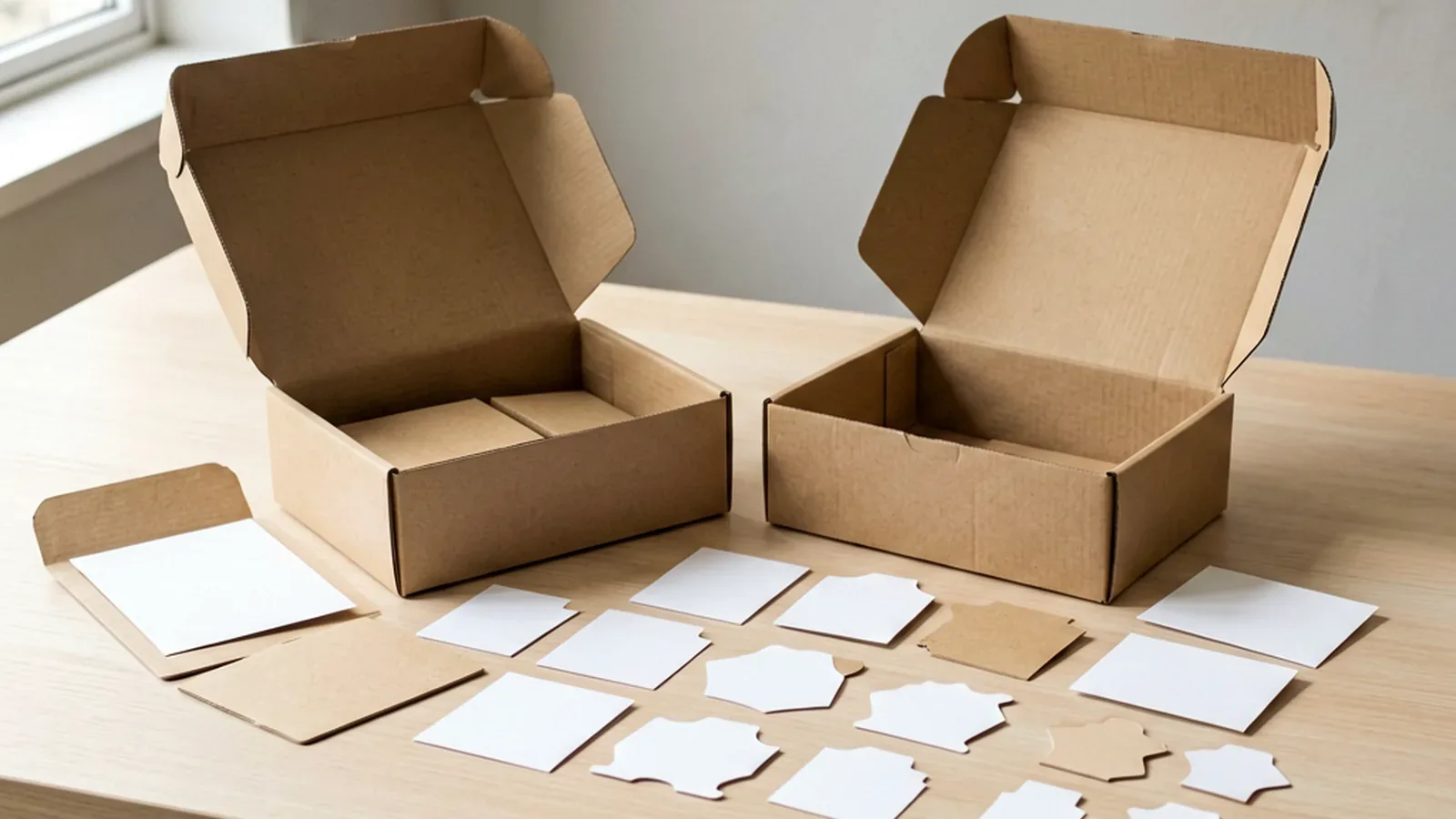
Test print and finish on the proposed substrate
Board surface affects ink holdout, color appearance, detail, drying, rub behavior, and the appearance of foil, varnish, embossing, or lamination. A design approved on a digital rendering does not establish how the production substrate and process will look.
Use the appropriate proof sequence for the project. Confirm artwork content and placement on a dieline proof, then use a printed or finished sample when color, surface, or special effects are important. Record the material and process represented by the proof. If an exact production method is not present, list the remaining approval risk.
Heavy ink coverage or a finish crossing a crease may change fold appearance. Embossing, debossing, perforations, and closely placed foil can also interact with structure. Review the decorated carton assembled around the product, not only as a flat sheet.
Qualify the carton on the packing line
A carton that can be assembled by a sample maker may not run consistently in production. Confirm whether the carton will be erected, filled, and closed by hand, semi-automatically, or on a defined machine. Share equipment constraints, loading direction, glue or closure method, and required line speed with the supplier or converter.
Use production-intent blanks for a packing trial when line performance matters. Observe opening force, panel squareness, flap engagement, product insertion, closure, coding area, and reject causes. A stiffer board is not automatically better if it resists erection or causes flaps to reopen. Conversely, a board that packs easily may not provide adequate display or product support.
Check the completed carton in its master pack. Flat-pack count, bundle pressure, master-carton dimensions, orientation, and pallet conditions can affect curl or pre-break behavior before cartons reach the packing line. Keep the approved pack-out with the carton specification.
Freeze the board specification for reorders
The release record should connect the final dieline, board grade and source basis, caliper, basis weight, direction, print and finish, glue route, approved sample, packing method, quantity, and deviations. The purchase order should refer to that revision. Avoid approving a description that allows an undefined “similar material.”
Keep quote assumptions tied to the approved board
Require the quote to separate unit cost, material or print setup, tooling, samples, finishing, packing, and freight basis. Record the MOQ basis, the event that starts lead time, and the commercial impact of an approved board alternative. Suppliers can then be compared against the same carton build.
Requalify material substitutions before production
If the named board becomes unavailable, require the supplier to disclose the proposed replacement before production. Compare specification data and repeat the checks affected by the change, such as crease quality, print appearance, glue, packing-line behavior, and packed-product performance. The decision belongs in a new approval record.
For a repeat order, ask whether the material source, production site, tooling, artwork, finish, or structure has changed. Retained samples can help identify visible drift, but use them together with written material and production records.
Review structures and customization paths on the folding cartons page. For a supplier review, submit the product dimensions, dieline status, proposed board, print, finish, quantity, and sample needs through the folding carton quote request.
Use the custom packaging specification page to align dielines and proof inputs, then compare the release record with the ZHY production process.
In conclusion — Paperboard thickness for folding cartons
Source check: ISO 534:2011 specifies methods for determining the thickness and apparent bulk density or apparent sheet density of paper and board. It does not establish which thickness is suitable for a carton, and the standard notes limits for corrugated board and certain bulking materials; use the relevant material method and approve the converted folding carton.
A sound folding-carton board decision combines a defined structural job, named material specification, correct direction, successful converting result, decorated sample, packing-line evidence where relevant, and a controlled reorder baseline. Thickness is one input, not the approval decision by itself.
The best sourcing path for folding carton paperboard thickness is to make the decision visible before the supplier quotes: define the specs, request the proof, approve a sample, and keep the approval record with the order.
Review folding cartons as the next RFQ or sample approval step after this board decision.
Use the custom paper box overview when the product could also fit a rigid box or corrugated structure and the box family has not yet been fixed.
Paperboard thickness for folding cartons FAQ
Can buyers convert paperboard grammage directly into thickness?
Not reliably. Density, fiber composition, coating, and manufacturing process influence the relationship. Ask for both caliper and basis weight for the proposed grade, confirm how they are measured, and approve the actual production-intent board in the carton structure.
Is a thicker paperboard always safer for a folding carton?
No. Greater thickness may improve some structural conditions but can create issues with creasing, tuck engagement, glue, sheet yield, or packing equipment. Select the board by testing the complete carton against product support, converting, decoration, packing, and distribution needs.
Which paperboard changes should require buyer approval?
Changes to grade, source, composition, caliper, basis weight, direction, coating, color, or certification basis should be disclosed and reviewed. Repeat the relevant physical and documentary checks before allowing the replacement into production or a reorder.
If this stage leads into that check, compare it against our who Makes Custom Folding Cartons for Beauty and Cosmetics Brands?.


Ask a Packaging Question