

The sourcing record for packaging accessories is incomplete until quote-ready specifications are prepared before contacting suppliers.
MOQ on accessories is set by tooling and material run length rather than by the finished item. Which of the two binds your order changes what you should be asking for.
Direct answer: For packaging accessories, buyers should prepare quote-ready specifications before contacting suppliers.
Define the Buyer Decision for Packaging Accessories MOQ Planning
Compare these criteria against one RFQ revision. Each row should identify the requirement, approval evidence, and buyer action before production.
| Requirement | Factory control | Evidence to verify | Order risk | RFQ follow-up |
|---|---|---|---|---|
| Sample approval | Factory holds pre-production sample for sign-off | Request physical sample; compare to spec and artwork | Mass production deviates from approved sample | Approve sample in writing before production |
| MOQ and order quantity | MOQ confirmed per accessory type in the RFQ | Confirm MOQ in RFQ; check for product-specific exceptions | Order below MOQ causes delays or price increase | Request RFQ with target quantity; confirm MOQ |
| Lead time after approval | Production lead time stated in the quote | Verify lead time in quote; track from approval date | Delays in approval push out delivery | Request lead time in RFQ; plan approval early |
For this packaging accessories minimum order sourcing record, keep the supplier response, marked sample, and approval owner under the same revision number. If any proof conflicts with the approved record, hold the quote, sample, or production release until the supplier explains the deviation in writing. Before closing the checkpoint, reconcile the latest drawing, sample, quotation, and approval comments, identify which record controls if they disagree, and document the resolution. Carry the signed table into the purchase order and production handoff so the same checks support quote comparison, sample approval, shipment release, and later reorders.
Material and specification cost drivers
Material choice directly impacts minimum order and unit price. For packaging accessories, substrate type, thickness, and finish determine cost. Buyers should specify exact material grades and dimensions to avoid surprises. Request a detailed spec sheet and compare quotes based on material equivalence. Verify that the factory's material source is consistent, as substitutions can affect quality and compliance.
Customization, setup, and MOQ impact
Customization level influences setup costs and minimum order quantities. Complex printing, embossing, or custom shapes may require higher MOQs to amortize tooling. Buyers should clarify which customizations are included in the quoted minimum order and whether additional setup fees apply. Ask for a breakdown of setup costs and how they scale with order volume. This helps in negotiating better terms for trial orders.
Hidden risks in quotes and delivery
Quotes may hide costs for packaging, freight, or compliance documentation. Delivery terms can be vague, leading to unexpected delays. Buyers should request a full cost breakdown including incoterms and estimated shipping times. Verify that the factory's lead time includes production only, not transit. Ask for a written commitment on delivery dates and penalties for delays to mitigate supply chain risks.
Questions to confirm before ordering:
Build the RFQ around the items below. Match every listed buyer input to written supplier confirmation, approval evidence, and the risk that would hold the quote.
- Confirm material grade, GSM, and finish for each accessory: Material choice drives cost and minimum order; premium finishes raise minimums. For a custom paper bag, specify 120 GSM kraft vs. 250 GSM art paper. Supplier quotes generic material, leading to price hikes or quality mismatch. List exact material specs in quote request and request a sample swatch.
- Check lead time for sample and bulk production: Lead time impacts launch dates and reorder planning. Confirm if sample approval adds days before production starts. Missed launch window or rushed shipping costs; production bottlenecks. Request a production schedule with sample and bulk milestones.
- Document quality control checkpoints for each accessory: QC ensures consistency across batches; accessories like labels need color and size checks. For printed labels, verify color accuracy against Pantone and die-cut tolerance. Defects slip through, causing rework or customer complaints. Ask for QC report samples and agree on inspection criteria before bulk.
- Confirm approval process for artwork and pre-production sample: Approval gates prevent costly errors; unapproved specs lead to rework. Send digital proof, then physical sample; sign off before bulk. Bulk run with wrong artwork or finish, incurring replacement costs. Set a written approval deadline and require sign-off for each spec change.
Material choice is the first lever on accessory quotes. A heavier paper or a soft-touch lamination raises both unit cost and minimum order because the mill and finishing line need longer runs to stay efficient. When you list exact GSM, coating, and ink coverage, you give the factory a clear cost base. Without that, you get a vague quote that changes after sampling.
Every custom element—die-cut shape, foil stamp, emboss, or custom size—adds setup time and tooling cost. That is why MOQs exist: to spread setup across enough pieces. If you need a lower minimum order, expect a higher unit price or a setup fee. Ask for a cost breakdown that separates tooling from per-piece cost, so you can compare options and decide what to cut.
Quotes often hide risks like sample approval delays, color variation, or shipping damage. A low price may mean thinner material or looser tolerances. Always confirm what is included: artwork setup, proof, and QC checks. Also ask about lead time in working days, not calendar days, and what happens if the run is late. These details turn a quote into a reliable plan.
Confirm Product and Order Scope
| Cost driver | What changes it | Quote signal | Risk to avoid | Buyer action |
|---|---|---|---|---|
| Material grade and GSM | Heavier paper or specialty coating raises unit cost and may lift MOQ. | Quote lists material spec and price break per grade. | Unspecified material leads to surprise upcharge at sample stage. | Confirm material grade and GSM in RFQ before comparing quotes. |
| Customization level | Die-cut shapes, foil stamping, embossing add setup fees and minimums. | Setup cost appears as a separate line item. | Hidden setup costs inflate total for small orders. | Request itemized setup fees and MOQ per custom feature. |
| Lead time | Rush orders or sample iterations extend production and delivery. | Lead time stated in working days after artwork approval. | Delays disrupt launch or reorder schedules. | Verify lead time fits your launch date and plan sample rounds. |
| Quality control | Inspection points and tolerance checks affect reject rates and rework. | Supplier includes QC steps like color check and dimension test. | Poor QC leads to off-spec packaging and customer complaints. | Ask for QC checklist and sample approval before bulk production. |
For packaging accessories minimum order, preserve the material grade and gsm decision under one revision number: keep the supplier response, marked sample, approved specification, quotation, and approval owner together. If the evidence conflicts with the approved record, hold the quote, sample, or production release until the deviation is explained in writing. Once the buyer and designated technical authority have accepted the evidence, carry the signed record into the purchase order, production handoff, shipment release, and later reorder review so every team works from the same baseline.
Decision criteria to confirm
Before you commit to a packaging accessories order, verify that the minimum order and cost drivers align with your actual usage. Compare material, customization, and quantity against your forecast. A lower minimum order may look attractive, but if the per-unit cost is high, your total spend could exceed a larger order. Confirm the trade-offs before you approve.
RFQ details to send
When you prepare the quote request, include every specification that affects cost: material grade, dimensions, finish, and quantity. Missing details force the supplier to guess, which leads to vague quotes and later change orders. A complete quote request lets you compare apples to apples and shortlists suppliers who can meet your exact needs.
Production handoff details
After you approve the sample, document the agreed specifications and lead time in writing. Confirm the production schedule and QC checkpoints before the bulk run starts. This handoff prevents miscommunication and gives you a clear reference if issues arise. A simple approval email with the final specs protects both you and the supplier.
quote request checkpoint

Build the Verification Checklist
- Supplier lacks die-cut or finishing capability for custom retail packaging: In-house limits force outsourcing, adding lead time and quality variance. Ask for process videos or line walkthroughs showing die-cutting, folding, gluing. Factory capability list or video of finishing line. Shortlist only suppliers who show in-house finishing.
- No documented QC checkpoints for color or dimension tolerance: Bulk runs may drift from approved sample, causing rework or rejection. Request their QC plan for incoming material, in-process, and final inspection. QC checklist or inspection report template. Verify QC steps match your critical specs before order.
- Sample approval gate is verbal or not tied to a written record: Disputes over color or finish become he-said-she-said, delaying production. Require a signed sample approval form with date and sign-off. Signed sample approval sheet or email confirmation. File the approval record with your PO.
- Supplier cannot state a clear verification method for material grade or GSM: Substituted materials can change stiffness, print quality, or durability. Ask how they verify incoming material against your spec. Material test certificate or incoming inspection record. Confirm the verification method is part of the quote request.
- minimum order quoted is above your planned order quantity without a clear reason: Forces overbuying, tying up cash and storage for unneeded stock. Ask for the cost breakdown per quantity tier and any setup or tooling fees. Tiered price list or minimum order rationale in writing. Negotiate a lower minimum order or split order with confirmed lead time.
Compare Quote and Production Assumptions
Hold the review while any answer below is unresolved; record the discrepancy, supplier owner, and release condition before approval.
- Does your factory run custom paper packaging accessories like tags and labels in-house? In-house production reduces handoff errors and keeps minimum order and lead time under one roof. Supplier confirms in-house die-cutting and printing for accessories. Outsourced steps can inflate minimum order and add approval delays. Request process flow and in-house capability list.
- How do you verify that the quoted minimum order matches the production run for custom accessories? Quotes may hide setup costs that only appear at higher volumes. Supplier ties minimum order to setup and material waste, not just a round number. Under-quoted minimum order leads to surprise price breaks or rework. Ask for a cost breakdown per minimum order tier.
- What is your sample approval process before bulk production? Sample sign-off is the gate that prevents color and finish drift. Supplier requires written approval and keeps a signed sample for reference. Verbal approval can cause bulk mismatch and dispute. Document approval criteria and keep a counter-sample.
- How do you handle reorders for custom packaging accessories? Reorder minimum order and lead time often differ from first order, affecting inventory planning. Supplier offers same minimum order and lead time for reorders with stored tooling. Unexpected reorder minimum order spikes can stall replenishment. Confirm reorder terms and tooling storage in writing.
- What drives the cost per unit for custom accessories at different quantities? Setup, material, and finishing costs shift the price curve; knowing drivers helps you negotiate. Supplier itemizes setup, material, and finishing costs per quantity. Hidden cost drivers can make the minimum order uneconomical. Compare cost drivers across quotes and shortlist the most transparent.
Run the Review Before Approval
Before approval, you need a written decision record: one quote request revision that consolidates every spec, cost, and minimum order change into a single document. Without this, the approval meeting becomes a re-negotiation, not a review.
Questions to send back to the supplier
Before you approve, send a short list that forces the factory to confirm the details that cause most rework:
- Which minimum order line items changed after sampling, and what is the new cost per unit at each tier?
- Are there any hidden setup, tooling, or finishing charges not listed in the original quote?
- What is the exact tolerance for color, die-cut, and assembly, and how is it measured?
- Can the factory commit to the same quality standard for the full order, or does it vary by batch?
- What is the final artwork approval step, and who signs off on the print proof?
When to revise, escalate, or reject
Use the table below to classify each answer. If the supplier’s response matches the ‘revise’ or ‘escalate’ column, update the quote request and send it back. If it matches ‘reject’, stop the process and re-source.
| Response type | Example | Action |
|---|---|---|
| Revise | MOQ is higher than expected, but cost per unit drops at a higher tier | Adjust order quantity and re-run cost comparison |
| Escalate | Factory cannot confirm die-cut tolerance or finishing capability | Request a sample or a process video before approval |
| Reject | Supplier adds a surcharge for a standard material or process | Terminate negotiation and look for an alternative |
When you revise, update the quote request with the new numbers and send it back for written confirmation. When you escalate, ask for evidence, not promises. When you reject, document the reason so the next supplier review starts with that risk flagged.
Finally, attach the approved artwork and the final quote request to the sample handoff note. This closes the loop between the approved scope and the production run.
Move from Review to RFQ or Sample
The most common failure at this stage is sending a vague follow-up that asks the factory to ‘confirm everything’ without a single consolidated document. That ambiguity invites the supplier to reinterpret specs, reprice MOQs, and shift lead times—each interpretation a new risk. The control is a single quote request revision that locks every decision made in the previous review steps.
Inputs to include in the next message
Your quote request revision must be a complete package, not a list of questions. Include every element that affects cost, minimum order, or production risk:
- Final artwork files with die-cut lines, finishing specs (e.g., lamination, embossing), and color codes.
- Exact material grades and thicknesses, with tolerance ranges.
- Packaging dimensions and inner/outer carton quantities.
- Target unit price and minimum order, plus any tiered pricing you expect.
- Required certifications or test reports (e.g., application-grade, recyclability).
- Production timeline milestones and shipping terms.
Ownership and sign-off for the next gate
Assign one person to own the quote request package and one to approve it before sending. The owner consolidates inputs from design, sourcing, and quality; the approver verifies that every spec matches the agreed scope. Without this sign-off, you risk sending an incomplete package that triggers a costly revision cycle.
After the factory receives the quote request, the next gate is either a formal quote or a sample run. If you request a sample, specify the exact sample type (e.g., pre-production, gold-seal) and the criteria for approval. This handoff ensures the factory executes against a locked scope, not a moving target.
Source check: ISO 2859-1 sampling inspection standard.
In conclusion
The sourcing choice for packaging accessories minimum order planning for custom orders comes down to a disciplined comparison of supplier capabilities against your verified specification. Before you request a quote, confirm that the factory’s minimum order quantity aligns with your projected volume, and validate that the quoted lead time fits your launch calendar. Document every cost driver—tooling, material grades, and finishing—so that the minimum order reflects a fair setup amortization rather than an arbitrary threshold.
Shortlist a supplier only after they have provided evidence of their production process and quality control, and approve a sample that matches your signed specification sheet. Retain the approved sample and artwork as the baseline for the final order, and stop the process if the supplier cannot meet the confirmed minimum order or lead time. This verification loop turns a routine quote into a reliable procurement decision.
To request a quote for packaging accessories, use packaging dieline and custom packaging specs to confirm the final specification, quote assumptions, sample approval, QC evidence, approval risk, and supplier follow-up before bulk order.
Packaging Accessories MOQ Planning FAQ
What should buyers confirm first?
Turn the answer into a written quote request note: intended use, accessory dimensions, material, finish, packing method, and approval owner. Ask the supplier what sample proof or QC record will confirm the same result in production. A vague answer can turn into quote mismatch, sample delay, packing damage, or repeat-order drift.
Which proof should be retained for approval and reorders?
Retain the approved sample, the signed specification sheet, and the final artwork files as proof for approval and reorders. Also keep the supplier’s written confirmation of the minimum order, lead time, and unit cost. Before approving, verify the sample against the spec for dimensions, color, material, and print quality, and document any deviations. For reorders, reference the same spec and sample to ensure consistency, and confirm the minimum order and lead time again in the quote request.
Which warning signs should stop the order?
Stop the order if the supplier cannot meet the confirmed minimum order, if the lead time exceeds the quoted lead time without a valid reason, or if the sample fails to match the approved specification. Also halt if the unit cost changes significantly from the quote, or if the supplier cannot provide the required certifications or quality documentation. Verify the supplier’s production capability and request a pre-production sample before mass production to mitigate risk.
quote request handoff: Send Specs for Review.
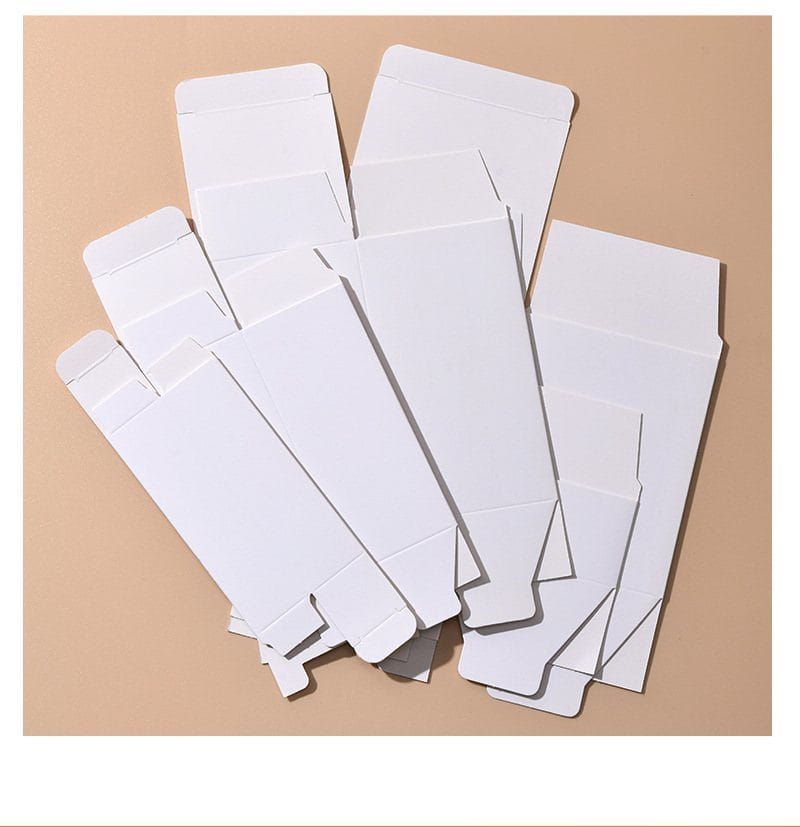
Compare formats in the packaging accessories range before consolidating MOQ, color, and pack-out assumptions.

Ask a Packaging Question