
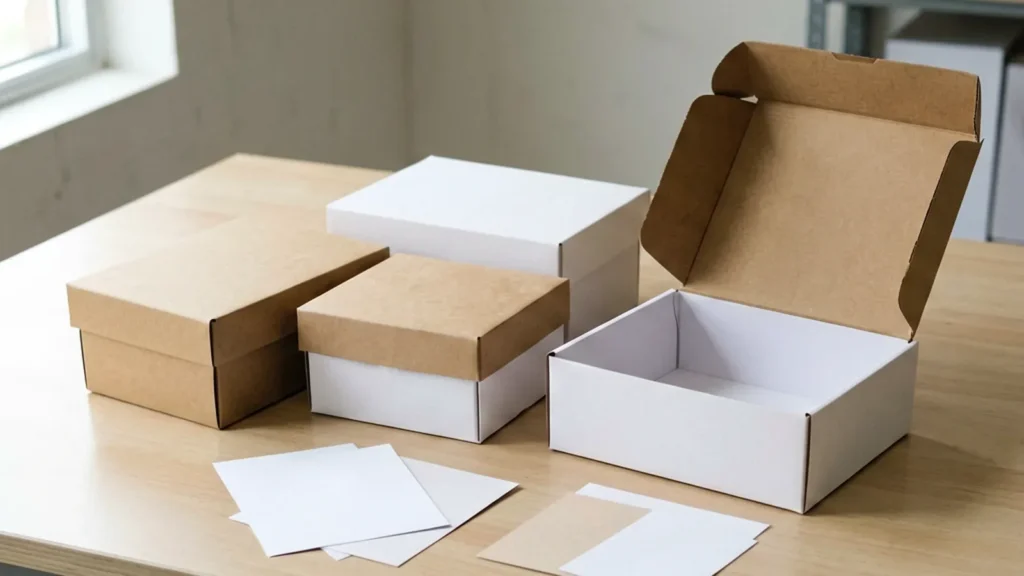
The sourcing record for gift card presentation box is incomplete until it shows whether the box fits the use case, specs, MOQ, sample approval path, and supplier quote process.
A presentation box is chosen for the card and judged on the shipment. Matching construction to both is what this fit check is for.
Direct answer: For gift card presentation box, buyers should decide whether the box fits the use case, specs, MOQ, sample approval path, and supplier quote process.
Quick Decision: Match the Product to the Order
| Option | Best fit | Trade-off | Risk to avoid | Verification | Follow-up |
|---|---|---|---|---|---|
| Current specification | Approved internal dimensions and material grade already on file | May lock out cost-saving substrate or finish alternatives | No recent sample approval; spec drift from prior run | Pull last approved spec sheet and compare to current RFQ | Request a pre-production sample against the filed spec |
| Alternative specification | Different board grade or closure that meets the same gift card fit | Tooling or die-line adjustment may add time | Insert cavity depth mismatch if internal dimensions are not re-verified | Confirm insert cavity depth matches the gift card thickness | Send alternative spec as a formal RFQ variant for pricing |
| Custom option | Branded foil stamp, embossed logo, or custom insert shape | MOQ 200 pcs minimum; artwork proof and tooling add steps before production | Artwork proof approval gate missed; production starts without sign-off | Require a digital proof and a physical sample before bulk | Submit artwork files and request a die-line template |
| Safer fallback | Standard two-piece tuck box with no custom insert | Less premium unboxing; lower perceived gift value | Gift card may shift during transit if no insert is used | Test ship a small quantity with the intended card to check movement | Order a small run to validate the fallback design |
Use this decision matrix as one approval sequence. For current specification, a poor decision can mean no recent sample approval; spec drift from prior run. Ask the supplier to pull last approved spec sheet and compare to the current RFQ.
For gift card presentation, preserve the current specification decision under one revision number: keep the supplier response, marked sample, approved specification, quotation, and approval owner together. If the evidence conflicts with the approved record, hold the quote, sample, or production release until the deviation is explained in writing. Once the buyer and designated technical authority have accepted the evidence, carry the signed decision record into the purchase order, production handoff, shipment release, and later reorder review so every team works from the same baseline.
Application and Specification Fit
Before approving a paper box size options sample, confirm the internal cavity depth matches your card’s thickness. Use this checklist during RFQ handoff:
- Verify internal dimensions against your card’s exact length, width, and thickness.
- Confirm material type (e.g., rigid paperboard vs. folding carton) matches your durability requirement.
- Check that the closure mechanism (magnetic, ribbon, or tuck) aligns with your unboxing experience.
- Request a production sample from the same tooling as the final order to assess consistency.
After sample approval, request a pre-production sample from the first production run to catch any tooling drift. This step reduces risk of a full batch mismatch.
| Checkpoint | Buyer Verification Question |
|---|---|
| Internal fit | Does the sample hold the card without forcing or rattling? |
| Material thickness | Is the board gauge within the range quoted in the RFQ? |
| Closure force | Does the lid close firmly without gaping? |
| Print alignment | Is the artwork registered within the approved tolerance of the die line? |
Document each verification in your quote request handoff notes. This creates an auditable trail for factory execution and reduces disputes during fulfillment.
quote request checkpoint
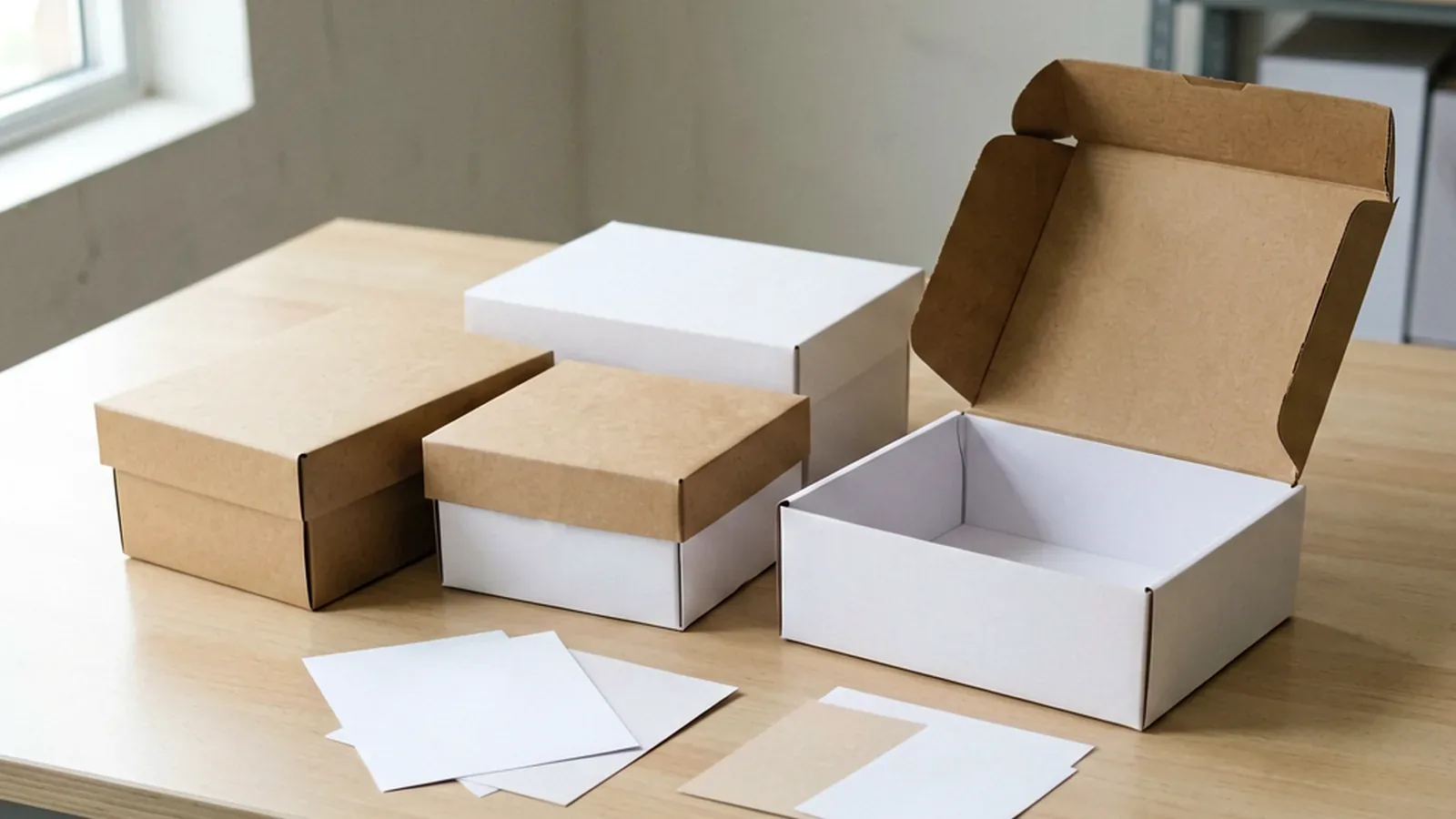
Compare the Available Construction Options
| Criteria | Baseline option | Confirmed option | Buyer meaning | Risk to avoid | Follow-up |
|---|---|---|---|---|---|
| Specification details | Standard internal dimensions for a single card slot | Custom internal dimensions with foam or ribbon insert | Option A fits a generic gift card; Option B requires exact card thickness and insert design for a snug fit. | Option B may cause production delays if insert specs are not finalized before die-cutting. | Verify internal dimensions against the card sample and approve insert layout before tooling. |
| Cost driver | Plain board with matte lamination | Premium board with foil stamping or embossing | Option A uses lower-grade paperboard and simple finish; Option B adds decorative effects that raise unit cost. | Option B may exceed budget if multiple decorative elements are specified without cost review. | Request a cost breakdown for each decorative element and compare against the approved budget. |
| Quality control | Visual inspection of print and cut alignment | Dimensional check plus glue-bond pull test | Option A catches surface defects; Option B verifies structural integrity and assembly consistency. | Option A alone may miss loose inserts or misaligned folds that cause returns. | Document both QC checks in the inspection plan and request photos of the glue-bond test. |
| Approval risk | Flat sample approval before production | Mock-up sample approval with full assembly and insert | Option A shows print and board only; Option B confirms fit, feel, and function of the assembled box. | Option A may lead to a production run where the assembled box does not close properly. | Shortlist only suppliers that provide a fully assembled mock-up for sign-off. |
| Verification method | Check dimensions on a flat die-cut sheet | Measure internal cavity of a glued sample with a caliper | Option A is quick but does not account for folding tolerances; Option B confirms the usable space. | Option A may pass a flat sheet that folds into a box too tight for the card. | Approve only after measuring the internal cavity of a glued sample; reject flat-sheet-only approvals. |
Use this comparison table as one approval sequence. For specification details, a poor decision can mean Option B may cause production delays if insert specs are not finalized before die-cutting. Request written proof and compare it with the approved sample or specification.
For gift card presentation, preserve the specification details decision under one revision number: keep the supplier response, marked sample, approved specification, quotation, and approval owner together. If the evidence conflicts with the approved record, hold the quote, sample, or production release until the deviation is explained in writing. Once the buyer and designated technical authority have accepted the evidence, carry the signed comparison record into the purchase order, production handoff, shipment release, and later reorder review so every team works from the same baseline.
Sample Evidence to Request
When evaluating a gift card presentation box sample, the decision rule is: approve only if the sample matches the quote request-confirmed requirement for card fit and structural integrity. Start by requesting evidence that the supplier has verified the internal dimensions against your card stock using a calibrated gauge, not a generic template.
Supplier evidence to request
Ask the supplier to provide a photo or video of the measurement process, showing the card inserted and the box closed without force. This confirms the box is not too tight or too loose, reducing production risk of rejects.
Sample approval evidence
Before signing off, test the sample with your actual card stock. Verify that the card slides in and out smoothly and that the box closes securely. Document any deviations from the quote request requirement, such as a gap or warp, and request a corrected sample.
Reorder control records
For reorders, request a new sample from the same production batch to confirm consistency. Compare it to the approved sample using a buyer verification question: does the reorder sample match the approved sample within the agreed tolerance? This prevents cost overruns from rejected batches.
For more on factory execution, see our packaging dieline and custom packaging specs.
Cost, MOQ, and Lead-Time Trade-Offs
When a specification is unclear or the quote basis is not aligned with your approval record, the commercial consequence is delayed production and unexpected cost overruns. This section helps you navigate the trade-offs between cost, minimum order quantities, and lead times.
MOQ structure by material and process
Minimum order varies significantly by material and process. For example, a standard paperboard box with simple printing may have a lower minimum order compared to a rigid box with foil stamping or embossing. To avoid surprises, confirm with your supplier the minimum order for your specific combination of material, size, and finishing. Ask: “What is the minimum order quantity for this exact specification?”
Sampling and bulk lead-time assumptions
Sampling lead time typically ranges from a few days to a couple of weeks, depending on complexity. Bulk production lead time is longer and should be confirmed in writing. Before placing an order, verify the lead time for both sample approval and bulk production. A common question to ask: “What is the estimated lead time from sample approval to shipment?”
Rush-order and reorder constraints
Rush orders may be possible but often incur a premium and require available production capacity. Reorder constraints include minimum reorder quantities and potential price changes due to material cost fluctuations. Always clarify these terms upfront. Ask: “What are the rush-order fees and reorder minimum order?”
- Material and process minimum order: What is the minimum order for my selected material and finishing?
- Sampling lead time: How long does sample production take?
- Bulk lead time: What is the lead time from sample approval to bulk shipment?
- Rush order feasibility: Can you accommodate a rush order, and what are the costs?
- Reorder terms: What is the minimum reorder quantity and price validity?
By addressing these questions during the quote request and sample handoff, you reduce production risk and ensure factory execution aligns with your expectations.
Build the RFQ and Supplier Shortlist
- Does the supplier manufacture rigid gift card boxes in-house? In-house production ensures consistent wall thickness and insert fit, reducing dimensional variation. Supplier confirms dedicated rigid box line with automated wrapping and insert cutting. Trading desks may outsource, causing tolerance drift and delayed sample corrections. Request factory floor photos or video of the wrapping and insert assembly area.
- What is the standard lead time for a pre-production sample? Sample turnaround directly affects your product launch calendar and reorder flexibility. Supplier states a sample lead time for a first article with dimensional and print approval. Extended sample cycles can push bulk production past seasonal deadlines. Confirm sample lead time in writing and include a penalty clause for delays.
- Can the supplier match a specific insert cavity depth for the card? Insert depth must hold the card securely without rattling or damaging the edge. Supplier provides a die-line drawing with cavity depth tolerance within the buyer-approved tolerance. Loose inserts cause returns; tight inserts risk card scratching during insertion. Send a sample card with the quote request and request a cavity-fit test report.
- What is the minimum order for a custom-printed rigid box with foil stamping? Foil stamping requires setup plates; low MOQs may increase per-unit cost or be refused. A stated MOQ per SKU with shared setup across multiple designs. Suppliers with higher MOQs force over-ordering and inventory carrying cost. Request a tiered minimum order quote for 200, 500, and your target quantity.
- How does the supplier verify color accuracy on foil-stamped logos? Foil color shifts under different lighting; a visual standard prevents approval disputes. Supplier uses a Pantone foil book and provides a light booth photo with the sample. Color mismatch on branded boxes leads to rework or rejected shipments. Require a signed foil color standard sheet before sample approval.
Source check: Custom Gift Card Presentation Boxes | Luxury Gift Card Packagin…; Rigid Box minimum order, Material and Structure Guide for Packaging Buyer…; How Much Do Custom Boxes Cost? Pricing, MOQs & Lead Times Guide.
For gift card presentation, use custom packaging solutions to align the applicable specification, proof record, supplier responsibility, and quote request handoff before comparing quotes.
In conclusion
The sourcing choice for a gift card presentation box comes down to verifying that the internal dimensions, material thickness, and printing specifications match your exact card size and brand requirements. By comparing the cost and minimum order trade-offs against the supplier’s lead time and quality control steps, you can shortlist a factory that provides a physical pre-production sample for approval. Documenting these checks in the quote request and sample handoff reduces production risk and ensures the final box meets your presentation standards.
To request a quote, visit gift pr packaging solutions and confirm the final specification, quote assumptions, sample approval, QC evidence, approval risk, and supplier follow-up before bulk order.
Frequently Asked Questions
What inputs should buyers confirm for gift card presentation box?
Buyers should confirm the internal dimensions to ensure the gift card fits snugly, the material type (e.g., rigid paperboard or corrugated), and the printing method (offset, digital, or foil stamping). Verify the closure style—magnetic, tuck flap, or ribbon—and request a cost breakdown per unit at your target minimum order, noting that the standard project minimum order is 200 pcs. Document any supplier risk by checking if the factory has produced similar presentation boxes and request a reference order. Ask how QC will check the sample, color, finish, packing, and bulk order.
What sample evidence is needed for gift card presentation box?
Request a physical pre-production sample that matches the final specification, including the insert or slot that holds the card. Check the sample for color accuracy, structural sturdiness, and print registration. Approve the sample only after measuring the internal dimensions against your gift card and verifying the material thickness. Document the sample approval in writing and keep a reference sample for production QC.
What should be included in a gift card presentation box RFQ?
Include the exact internal dimensions, material type and thickness, printing specifications (colors, finish, and artwork files), closure style, and quantity. State the target minimum order (200 pcs as the project baseline) and ask for a per-unit cost, tooling or setup fees, and the standard production lead time of 15–30 working days after specifications, artwork, and sample requirements are confirmed. Request a sample policy and ask for a QC checklist that covers dimensional tolerance, print quality, and assembly strength.
How does a custom gift box project usually start?
A custom gift box project typically starts with the buyer defining the product dimensions, material, and quantity, then submitting a quote request to shortlisted suppliers. The buyer should compare quotes based on unit cost, minimum order, lead time, and included services like design support or sampling. After selecting a supplier, approve a pre-production sample before full production begins. Ask for a sample, specification confirmation, or QC evidence before approval.
What is the MOQ for a custom gift box?
The minimum order for a custom gift box is 200 pcs as the project-level standard, unless a product-specific exception is confirmed. Buyers should confirm the minimum order in the quote request and ask if lower quantities are possible with a price adjustment. Verify that the minimum order applies per design or per SKU, and document the agreed minimum order in the purchase order. Ask how QC will check the sample, color, finish, packing, and bulk order.
quote request handoff: Send Specs for Review.

Ask a Packaging Question