

Custom gift boxes with logo quotes become unreliable when artwork files, print targets, board choice, finishing, and sample approval are handled in separate messages.
For custom gift boxes with logo, quote review should connect the design file to physical sample evidence before the buyer approves print or finish details.
Use this guide to decide what to send, what to sample, and what proof to keep before bulk production.
Direct answer: For custom gift boxes with logo, the direct buying decision is whether the written specification, supplier proof, sample result, quotation assumptions, and approval owner describe the same order.
Copy this custom gift boxes with logo approval record into the RFQ file. Keep every checked item on the same revision before releasing the order.
- ☐ Final specification and intended use
- ☐ Supplier feasibility and documented exceptions
- ☐ Sample or inspection evidence
- ☐ Commercial assumptions, owner, decision, and date
Move the custom gift boxes with logo order forward only when each gate leaves written evidence for the next. Return an unresolved specification, sample, or quote exception to its owner before bulk production.
What buyers should confirm before choosing custom gift boxes with logo
For custom gift boxes with logo, compare custom gift boxes with logo against one RFQ revision. Each row should identify the requirement, approval evidence, and buyer action before production.
| Specification | Quality control | Verification method | Risk to avoid | Buyer action |
|---|---|---|---|---|
| Artwork or logo file | Confirm the agreed artwork or logo file in the quote and approval record. | Compare supplier evidence with the approved specification before release. | An unrecorded artwork or logo file can change cost, quality, or delivery. | Add the requirement and acceptance method to the RFQ. |
| Sample approval | Lock written sample approval before bulk production starts. | Compare the sample with the specification sheet and approved measurements. | Production can drift when no approved reference sample is recorded. | Attach the signed sample record to the purchase order. |
| Material / substrate | Record material grade, construction, color, and approved substitution rules. | Match supplier documents and the physical sample to the specification. | Unapproved substitutions can change fit, durability, appearance, or compliance. | List material requirements and substitution limits in the RFQ. |
| Width or size tolerance | Record nominal dimensions and the tolerance accepted for production. | Measure the sample at agreed checkpoints with the stated method. | Unclear tolerance can create fit disputes and inconsistent sizing. | Add measurement points, tolerance, and approval owner to the specification sheet. |
Keep the custom gift boxes with logo supplier response, marked sample, and approval owner under the same revision number. If any proof conflicts with the approved record, hold the quote, sample, or production release until the supplier explains the deviation in writing. Before closing the checkpoint, reconcile the latest drawing, sample, quotation, and approval comments, identify which record controls if they disagree, and document the resolution. Carry the signed custom gift boxes with logo table into the purchase order and production handoff so the same checks support quote comparison, sample approval, shipment release, and later reorders.
Supplier proof to verify
For custom gift boxes with logo, request a pre-press proof showing artwork placement and color registration before plate making. Ask the supplier to provide a material certificate for board thickness and burst strength, plus a spectrophotometer report confirming color tolerance within buyer-approved color tolerance. These documents tie the quote assumptions to measurable production evidence.
Use cases that fit
Custom gift boxes with logo suit brand owners launching seasonal promotions, e-commerce sellers requiring unboxing presentation, and importers needing consistent retail packaging. The table above applies when the buyer controls artwork, material choice, and finish specification. It is less suitable for stock boxes or when the supplier provides full design and production without buyer input.
RFQ and sample checks
Include the artwork file format, material grade, size tolerance, and color control requirements in the RFQ. After receiving the sample, measure dimensions with a caliper, check color with a spectrophotometer, and verify finish adhesion. Approve the sample only when all checks pass, then document the approval with the supplier before bulk production begins.
Questions to confirm before ordering:
Compare suppliers on the same requirements, proof records, and hold points.
- What is the exact material grade and GSM for the custom gift box? Material grade determines box rigidity, print quality, and shipping durability. A vague spec leads to cost overruns or structural failure.
- How is the logo applied and what is the color tolerance? Logo application method (foil stamp, screen print, digital) affects cost, durability, and lead time. Color tolerance prevents brand mismatch.
- What is the MOQ per SKU and does it include setup or tooling costs? MOQ per SKU affects total order cost and inventory risk. Hidden setup fees can raise the per-unit price for small runs.
- What is the standard production lead time and what events trigger delays? Lead time impacts campaign launch dates. Delays often stem from artwork approval, sample sign-off, or material shortages.
Resolve these questions before approval: how is the sample approved and what QC evidence is provided before bulk production? Sample approval is the last quality gate before bulk. Without QC evidence, production may deviate from the approved sample.
Request a material certificate, color proof, and sample inspection report from the supplier. These documents confirm the box meets your specifications for grade, color tolerance, and structural integrity. Without them, you risk approving a product that deviates from the agreed standard, leading to costly rework or customer dissatisfaction.
Custom gift boxes with logo are ideal for corporate gifting, product launches, and retail packaging where brand presentation matters. They suit e-commerce brands needing unboxing experiences, event giveaways, and subscription boxes. Confirm the box size, insert, and finish align with the product weight and shipping method to avoid damage.
Include material grade, logo application method, MOQ per SKU, lead time, and sample approval process in your RFQ. Before bulk production, verify the physical sample against the spec sheet, record any deviations, and obtain written approval from the decision owner. This ensures the factory executes the order as agreed.
Freeze logo size, color target, finish stack, and placement tolerances
Treat these items as RFQ inputs. Match each buyer input to written supplier confirmation, approval evidence, and the risk that would hold the quote.
- Box dimensions, material grade, and finish type: Dimensions affect shipping cost and product fit; material grade determines durability; finish type controls brand appearance and cost. Specify 250 gsm art paper with matte lamination and spot UV on logo area. Supplier may quote a lower-grade material or incorrect size, causing fit failures or rework. Compare supplier spec sheet against your approved drawing before sample production.
- Production lead time after sample approval: Standard lead time is 15–30 working days after specs, artwork, and sample are confirmed. Ask: ‘What is the lead time for 200 pcs after signed sample approval?’ Unrealistic delivery promises may cause campaign delays or air freight costs. Document lead time in the RFQ and confirm it aligns with your launch schedule.
- Cost driver breakdown: material, print, finish, insert: Material grade and finish complexity are primary cost drivers; inserts add significant cost. Request a cost breakdown: board cost, printing plates, lamination, and insert fabrication. Unexpected cost increases during production or after sample approval. Ask supplier to itemize each cost driver in the quote and confirm no hidden charges.
- QC evidence: sample inspection report and color tolerance: A spectrophotometer report and material certificate confirm the box meets your color and strength specs. Request a sample inspection report with caliper measurements and color tolerance within buyer-approved color tolerance. Approving a sample without QC evidence risks bulk production deviations and customer complaints. Hold sample approval until supplier provides the inspection report and certificate.
Decision criteria to confirm
Premium buyers must verify that the box dimensions, material grade, and finish type match the product weight and brand guidelines. A physical sample with a signed spec sheet ensures the supplier understands the exact requirements before production begins.
RFQ details to send
Include the artwork file format, material grade, MOQ per SKU, lead time, and cost driver breakdown in the RFQ. Request a line-item quote that separates material, printing, finishing, and insert costs to avoid hidden charges during production.
Production handoff details
Before bulk production, reconcile the approved sample, QC report, and signed RFQ under one revision number. Document any deviations in writing and carry the approval record into the purchase order to ensure factory execution matches the agreed specification.
Use packaging dieline and custom packaging specs to align the related specifications and RFQ inputs.
RFQ checkpoint
Check the product route for sizes, structures, materials, finishes, and RFQ details before sampling custom gift boxes with logo.

How Custom Gift Boxes with Logo choices affect launch timing and approval
The custom gift box requirements must be fully documented, including material, dimensions, print method, and finish, before the factory can proceed with execution. This prevents costly rework.
Define the requirement and success criteria
Begin by listing all specifications. Use the following ordered list to capture key decisions:
- Box dimensions and structure (e.g., rigid vs. folding)
- Material type and thickness
- Printing technique (offset, digital, screen) and number of colors
- Finish options (lamination, foil stamping, embossing)
Additional RFQ items include quality criteria such as color tolerance and surface uniformity.
Each choice affects launch timing and production risk. Complex finishes can add setup, proofing, and approval steps, so the project schedule should reserve time for those checkpoints before production release.
Confirm execution details with the factory
Share the documented requirements with the factory via an RFQ. Verify that the factory can meet the specifications within your budget and timeline. Discuss production risks such as color matching, die-cutting accuracy, and register alignment. Request a sample or proof before committing to full production. The handoff of an approved sample is critical for launch timing. For more on gift packaging solutions, see our gift and PR packaging solutions guide.
Approve samples and control reorder risk
Once the sample is approved, document the approval criteria and set a reorder standard. Use ISO 2859-1 sampling inspection to ensure consistent quality across batches. This reduces reorder risk by establishing acceptable defect levels. Maintain a sample archive for future reference.
Lock artwork, color, and finish evidence for custom gift boxes with logo
For custom gift boxes with logo, the decision rule is: approve artwork only after all color and finish samples match the approved reference file. This option fits when the buyer has provided a Pantone reference, a physical finish swatch, and a die-line template. Without these, production risk increases—misaligned foil stamping or off-shade CMYK can cause rejection.
Reference files to approve for custom gift boxes with logo
Before production, confirm three reference files: a vector artwork file (AI or PDF) with embedded fonts, a color proof (digital or physical) showing the exact PMS or CMYK values, and a finish mock-up indicating spot UV, embossing, or foil areas.
Production checks that protect the custom gift boxes with logo result
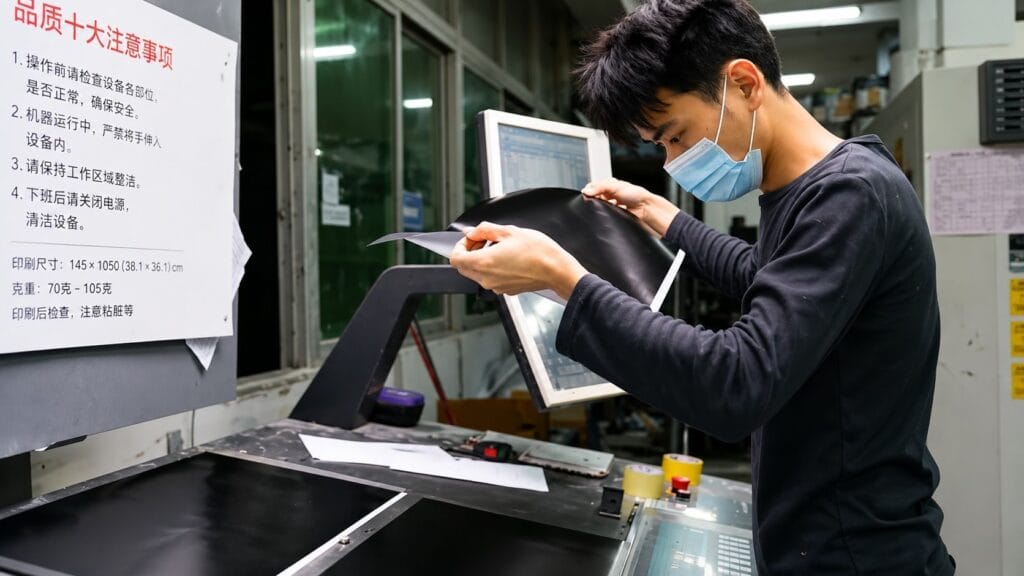
Ask whether factory execution includes a first-article inspection (FAI) where the press operator compares the printed sheet against the approved proof, whether any delta in density or registration triggers a stop, and whether a random sample from each production lot is measured with a spectrophotometer before the batch proceeds to cutting and assembly.
| Checkpoint | Action | Risk if skipped |
|---|---|---|
| Artwork approval | Verify vector file, fonts, and die-line | Misaligned print or cut |
| Color proof sign-off | Match PMS/CMYK to physical swatch | Off-shade boxes |
| Finish mock-up review | Confirm spot UV, foil, embossing positions | Finish defects |
| First-article inspection | Compare press sheet to proof | Mass production errors |
For RFQ handoff, attach the approved reference files and a signed proof. This locks the spec and avoids cost overruns from rework. Ask for a sealed production sample to retain at sample handoff.
Use paper packaging quality control for related checks.
How to move Custom Gift Boxes with Logo checks into an RFQ
Before approving a custom gift box with logo, verify the supplier’s proof against your RFQ-confirmed requirement. For example, confirm that the box dimensions match your product’s fit tolerance, the material grade meets your durability needs, and the logo application method (e.g., hot stamping, screen printing) aligns with your approved color standard. This proof check ensures the factory can execute your exact specs before production begins.
Supplier evidence to request
Request a detailed proof that includes material thickness, finish type (e.g., matte lamination, gloss UV), and logo placement coordinates. Compare each item to your RFQ revision. If any spec deviates, ask the supplier to revise and resubmit. This step prevents costly rework later.
Sample approval evidence
Once the proof is accepted, order a physical sample. Inspect it under consistent lighting for color accuracy, logo clarity, and structural integrity. Use a buyer verification question: “Does the sample match the approved proof in all dimensions, colors, and finishes?” Only approve after a yes.
Reorder control records
For repeat orders, require the supplier to reference the original approved sample and proof. Ask: “Are you using the same material batch and print settings as the approved sample?” This maintains consistency and reduces risk.
| Checkpoint | Buyer Verification Question | Decision Rule |
|---|---|---|
| Proof | Does the proof match my RFQ-confirmed specs? | Approve only if all specs match |
| Sample | Does the sample match the approved proof? | Approve only if sample matches |
| Reorder | Are production settings identical to approved sample? | Approve only if settings are identical |
These checks form a verifiable decision path from RFQ to reorder, ensuring every custom gift box with logo meets your quality and cost expectations.
In conclusion
The final approval for custom gift boxes with logo requires you to check the supplier’s sample against the approved specification, verify material grade, logo application method, and finish type, and document every cost driver and MOQ in the signed RFQ. Shortlist only those suppliers whose evidence—sample measurements, QC report, and factory audit—matches the agreed revision before production release. This structured handoff ensures every reorder starts from a verified baseline, reducing risk and rework.
To shortlist a supplier, visit gift boxes and confirm the final specification, quote assumptions, sample approval, QC evidence, approval risk, and supplier follow-up before bulk order.
Custom gift boxes with logo FAQ
What should buyers confirm before ordering custom gift boxes with logo?
Confirm the box dimensions, material grade, logo application method, and finish type against your product weight and brand guidelines. Request a line-item RFQ that separates material, printing, finishing, and insert costs so you can compare supplier quotes on the same specification. Verify the MOQ per SKU and standard production lead time with the supplier, and document these terms in the signed RFQ before sample approval.
How should buyers compare MOQ, lead time, and quote terms?
Compare MOQ, lead time, and quote terms by requesting each supplier to quote against the same specification sheet, including artwork file format, material grade, and finish type. Ask for a line-item cost breakdown to identify cost drivers such as setup fees or complex finishes that may increase the MOQ or per-unit cost. Confirm the lead time starts only after sample approval, and document all assumptions in the RFQ revision to avoid hidden charges during production.
What sample, quality, or supplier checks reduce risk?
Request a physical sample and a material certificate from the supplier before bulk production. Measure the sample dimensions with a caliper, check color against the approved Pantone reference using a spectrophotometer, and verify finish adhesion. Approve the sample only when all checks pass, then document the approval with the supplier. For ongoing quality control, use ISO 2859-1 sampling inspection to ensure consistent quality across batches and reduce reorder risk. Confirm production lead time after specifications and sample approval are fixed. Separate material, setup, packing, freight, and reorder cost drivers in the RFQ.
RFQ handoff: For custom gift boxes with logo, send artwork files, logo placement, material, finish target, quantity, and sample timing so print and structure can be reviewed together. Send Specs for Review.

Ask a Packaging Question