
Direct answer: Approve a folding carton only after the actual product fits, panels square, scores fold cleanly, flaps close without excessive force, glue areas hold, openings work as intended, and artwork remains aligned after assembly. Record inside dimensions, board, caliper, grain direction, dieline, tolerances, packing orientation, and sample ID on one revision.
- Measure product fit and finished carton size separately.
- Check score, grain, flap, glue, opening, and loaded shape.
- Approve print and finishes after the carton is assembled.
- Carry the signed structure sample into bulk inspection and reorders.
Method and limits: TAPPI/ANSI T 409 sp-23 covers machine direction in paper and paperboard, while ISO 534:2011 covers thickness measurement. Neither specifies carton clearance, score geometry, closure force, glue performance, or structural tolerances. Agree those values with the converter and verify them on the actual loaded sample. Reviewed 24 August 2026.
| Condition | Trade-off | Approval evidence |
|---|---|---|
| Manual retail assembly | Easy erection versus closure security | Observed assembly and loaded closure check |
| Automated filling line | Machine tolerance versus material variation | Line trial on production-intent board |
| Decorated premium carton | Finish impact versus fold performance | Assembled finish and score-cracking review |
A folding carton structural design sample can become hard to compare when specs, quote assumptions, samples, and approval responsibility sit in different messages.
For folding carton structural design sample, the supplier answer should turn the buyer’s use case into written specs, sample checks, and quote assumptions.
The article below turns that sourcing question into buyer checks, supplier proof requests, and RFQ handoff details.
For brand owners and importers, keep folding carton structural design sample quote-ready: specs to send, proof to request, sample checks to approve, and reorder notes to retain.
Set the procurement decision and approval boundary
Direct answer: Use this guide to verify samples, materials, print, tolerances, certifications, and bulk-production risk. In this article, “Folding Carton Structural Design Sample” means the buyer-side process of fixing inputs, checking supplier evidence, closing exceptions, and carrying one approved record into the order.
Prepared by Zhypacking Editorial Team: For this Folding Carton Structural Design Sample guide, the Zhypacking editorial team works from Zhypacking company facts, factory process references, and packaging buyer questions to create practical B2B buying guides.
Last updated: July 19, 2026 · Article revision 1.0.
Buyer scope → comparable RFQ → supplier evidence → identified physical approval → exception closure → controlled order or reorder handoff.
Scope: This guide supports procurement control and does not replace laboratory testing, project engineering, regulatory review, or a qualified professional’s decision where those are required.
Confirm buyer-owned specifications before supplier review
- Have you documented board grade, dieline, finish, and packing quantity in one RFQ input file? Without a written spec, suppliers price different assumptions, causing unreliable cost comparisons and rework.
- Does the supplier provide a QC checklist for in-line and final inspection of the folding carton sample? The supplier’s QC process ensures the sample matches the approved spec and production consistency.
- Have you established a change freeze that assigns a unique version number to the approved sample, dieline file, and packing specification? Without a change freeze, the supplier can alter the carton between sample sign-off and bulk production, creating a non-matching box.
- Have you verified that the physical sample packed with the actual product matches dieline, board thickness, print registration, and closure? Approving a sample based on empty visual inspection may miss fit and function issues.
After sample approval, have you documented accepted points and unresolved risks with the sample ID and responsible owner? This record prevents cost surprises between sample approval and bulk production and provides a baseline for reorder control.
Use paper bags format and sample approval to align the related specifications and RFQ inputs.
RFQ checkpoint
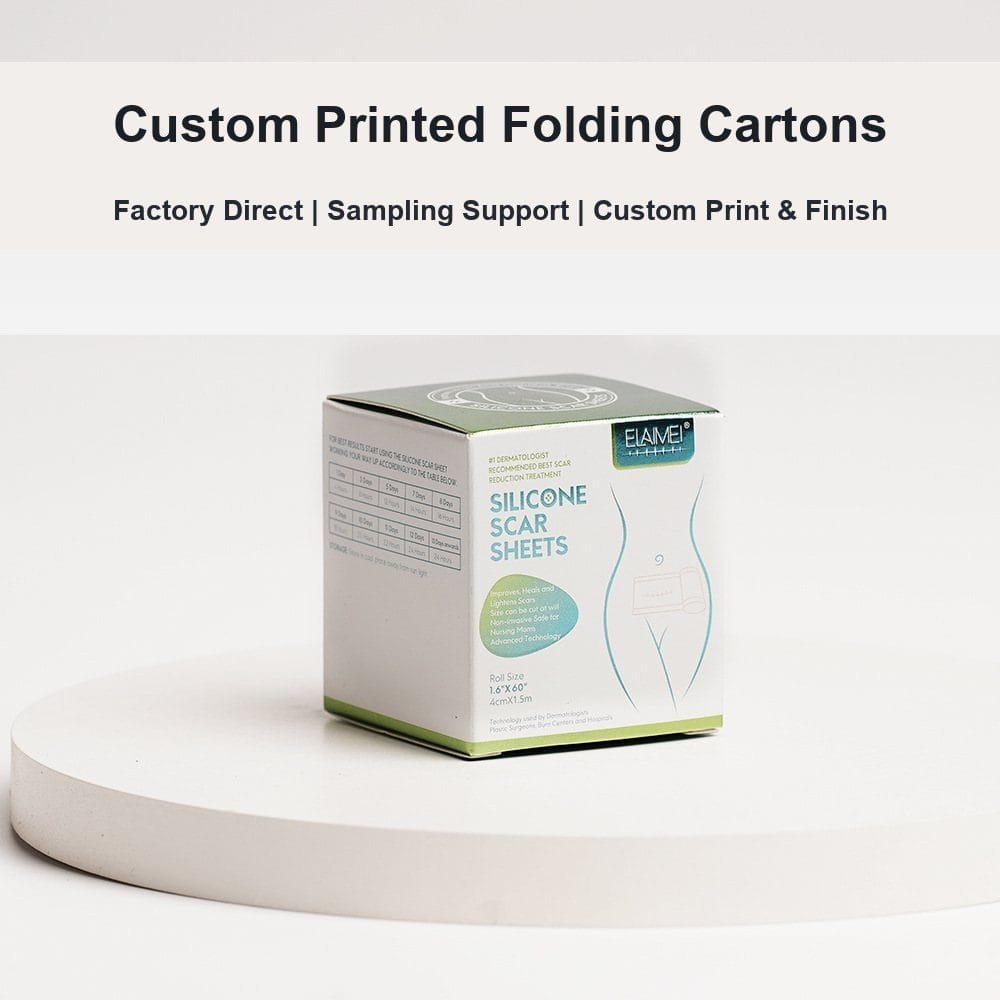
Check the folding carton product range for sizes, structures, materials, finishes, and RFQ details before sampling a folding carton structure.
Build the carton structure checklist
- The supplier’s production-record document ties the approved dieline revision, board grade and thickness, finish type, and QC checklist to a single sample ID and revision number. Supplier provides a visual sample without a revision-controlled record or QC checklist. Supplier provides a revision-controlled record with sample ID, revision number, and a detailed QC checklist covering board thickness, print registration, glue integrity, and closure.
- A change freeze is documented that assigns a unique version number to the approved sample, dieline file, and packing specification, specifying which changes require a new sample and written buyer approval. Request a written change freeze document that assigns a unique version number to the approved sample, dieline file, and packing specification, and lists trigger conditions for a new sample. Supplier agrees to a change freeze verbally but has no written record or version numbers. Supplier provides a written change freeze document with version numbers, trigger conditions, and a commitment to written buyer approval for any changes.
- The RFQ input file includes board grade, dieline complexity, finish, and packing quantity, and matches the approved sample specification. Request the RFQ input file that includes board grade, dieline complexity, finish, and packing quantity, and compare it against the approved sample. Supplier responds to a verbal specification without a written input file, leading to quote drift. Supplier provides a written RFQ input file that matches the approved sample and is used as the baseline for quoting and production.
- The supplier confirms the project-level MOQ of 200 pcs per design and standard lead time of 15–30 working days (counted after specifications, artwork, and sample requirements are confirmed) in writing, and documents quality risk controls for board substitution or finish drift. Request written confirmation of the project-level MOQ of 200 pcs per design and standard lead time of 15–30 working days, plus a statement on how the supplier prevents board substitution or finish drift in bulk production. Supplier states MOQ and lead time verbally but does not provide written confirmation or a quality risk mitigation plan. Supplier provides a written quote or confirmation including the MOQ of 200 pcs, lead time of 15–30 working days, and a documented process for preventing material or finish substitution.
For related specifications, sample inputs, and RFQ details, review custom packaging solutions.
Request supplier evidence without assuming capability
The risk of approving a folding carton structural design sample without documented supplier capability is that a visually correct sample can conceal inconsistent dieline cutting, board grade substitution, or finish drift in bulk production. Prevent this by requiring a revision-controlled production-record package before the shortlist decision.
Request the supplier’s production-record document that ties the approved dieline revision, board grade and thickness, finish type, and QC checklist to a single sample ID and revision number. Without this record, a change in board or dieline can go undetected until the production run does not match the approved reference.
Verify that the record includes the project-level MOQ of 200 pcs per design and a commitment that any material or dieline change triggers written buyer approval and a new sample. Shortlist only suppliers who can provide this revision-controlled evidence before the quote is accepted.
Review packaging dieline and custom packaging specs before finalizing supplier questions and proof requests.
Review quote or sample evidence before approval
Before sampling, the buyer should have a documented record that lists each acceptance point and its unresolved risk. Without this record, the supplier can proceed with assumptions that shift cost or quality after approval. This record turns the quote or sample evidence into a shortlist decision: which supplier signals are strong enough to proceed.
For each structural design element—board grade, dieline complexity, finish, and packing quantity—document whether the supplier’s quote or sample evidence confirms the specification or leaves a gap. A gap that is not resolved before sampling can become a production deviation that increases cost or delays delivery.
- Confirm the supplier’s quote matches the specified board grade, dieline file, and finish. Risk: a mismatch hides cost drivers like tooling or material substitution. Verify by comparing the quote line items against the spec sheet.
- Check that the sample evidence includes a recorded dieline revision and board thickness. Without this, a change in material can go undetected until bulk production. Request the supplier’s production-record document.
- Verify that the finish type (lamination, foil, spot UV) is stated in the quote and matches the sample swatch. An unrecorded finish change can alter cost and lead time. Compare the swatch against the approved reference.
- Record the packing quantity and master-carton arrangement. If the supplier’s quote assumes a different carton count, the unit price shifts. Confirm the packing method in writing before sampling.
Document any unresolved risk—such as an unconfirmed tolerance or pending artwork revision—and assign an owner. This prevents the assumption from becoming the production baseline. Carry the signed record into the purchase order.
Factory-side check: In the sample room, verify that the supplier’s production-intent sample is labeled with the approved spec revision and any limitations. If the supplier cannot label the sample with the recorded acceptance points, the evidence is not sufficient for shortlisting. A visual mockup without recorded tolerances cannot guarantee production consistency.
Carry this signed record into the purchase order and production handoff. To align the approved sample with QC, review paper packaging quality control.
Freeze changes for bulk production or repeat orders
The main risk of approving a folding carton structural design sample without a change freeze is that the supplier can alter the dieline, board grade, or finish between sample sign-off and bulk production, creating a box that does not match the approved reference. Prevent this by requiring a revision-controlled record that ties the sample ID, SKU, and packing specification to one production baseline.
Before releasing the order, verify that the supplier assigns a unique version number to the approved sample, the dieline file, and the packing specification. Ask the supplier to confirm in writing which changes—such as board thickness, print registration, or carton count per master—require a new sample and written buyer approval. Without this control, a silent substitution at reorder can deliver a different carton under the same SKU. Document the approved version and the change trigger in the purchase order so production and repeat batches use the same baseline. For folding cartons, the project-level MOQ is 200 pcs per design; confirm whether each version or finish variation triggers its own minimum.
Prepare a comparable RFQ and handoff record
Before production release, the buyer should have a complete RFQ input document that turns the structural design concept into verifiable quote inputs. Without this document, suppliers price different assumptions, making cost comparisons unreliable and creating rework after sample approval. The steps below list what to include, the risk of omitting each, and the verification method.
Buyer inputs to send to the supplier
- Lock the dieline and board grade. Provide the exact dieline file and specify board type (e.g., white card or greyboard) and grade. Risk: missing board grade causes structural failure or cost overrun. Verify by requesting a material spec sheet from the supplier before quoting.
- Define print and finish requirements. State CMYK or Pantone colors, lamination, foil stamping, embossing, or spot UV. Risk: unapproved finish changes can cause artwork rejection at sample stage. Request a printed proof and physical swatch before sampling.
- Confirm MOQ per design. The project-level MOQ is 200 pcs per design. Ask the supplier whether each finish or artwork variation triggers its own minimum. Risk: assuming a single MOQ across all variations leads to hidden setup costs.
- State packing and lead-time assumptions. Include export-carton count, pallet arrangement, and required delivery window. Standard production lead time is 15–30 working days after sample approval. Risk: lead-time miscalculation delays the launch or incurs rush fees.
Document these inputs in a single RFQ file and send to suppliers. When the supplier returns a quote, compare it against the input file to ensure the same basis. Use the approved sample and revision number as the handoff record for production. For more on folding carton specification, review our folding cartons product page.
Record the handoff decision
Keep the controlled input revision, open exceptions, evidence received, approval owner, and buyer follow-up in the same handoff record. This lets procurement compare the supplier response against the approved baseline before quote, sample, or production release.
Buyer questions about folding carton structural design sample
Quote drift starts when the buyer and supplier assume different board grade, dieline complexity, or finish. Prevent this by locking the specification before the RFQ is sent. Without a written spec, the supplier prices a different box, making cost comparisons unreliable and creating rework after sample approval.
What must be confirmed before quotation?
Provide the product dimensions, board type and thickness, dieline file, print coverage and finish, packing quantity, and shipping method. Ask the supplier to confirm what is included in the unit price and what is charged separately for tooling, setup, sampling, and special finishes. Risk: an incomplete RFQ leads to hidden costs or a box that does not fit the product. Verify that the supplier returns a quote against the same input file.
What evidence belongs in sample approval?
Approve a physical sample packed with the actual product. Check dimensions, board thickness, print registration, glue integrity, and closure. Request the supplier’s QC checklist for in-line and final inspection. Record the sample ID and revision number so the approved result becomes the production baseline. Without this record, a silent substitution at reorder can deliver a different carton under the same SKU. For related specifications, review packaging dieline and custom packaging specs.
Conclusion and next procurement action
The practical decision for folding carton structural design sample procurement is to verify that every RFQ input—board grade, dieline complexity, finish, and packing quantity—matches the approved sample and supplier documentation before production release. Compare each quote against the specification file, confirm the project-level MOQ of 200 pcs and standard lead time of 15–30 working days after specifications, artwork, and sample requirements are confirmed, and document the sample ID, revision number, and change freeze triggers to prevent silent substitutions at reorder. Shortlist only suppliers who can provide a revision-controlled record tying the sample ID, SKU, and packing specification to one production baseline, ensuring the approved result becomes the verifiable standard for bulk runs.
To approve a sample, check the physical carton against the actual product for dimensions, board thickness, print registration, glue integrity, and closure, and request the supplier’s QC checklist for in-line and final inspection. Record each accepted point and unresolved risk with the sample ID and responsible owner, carrying this signed record into the purchase order and production handoff. This structured handoff from RFQ to sample approval locks the commercial terms and quality baseline, enabling a smooth transition to bulk production while minimizing cost surprises and rework.
Folding carton structural design sample FAQ
What should a buyer confirm for folding carton structural design sample?
Approval is appropriate only when the buyer first documents the board grade, dieline complexity, finish, and packing quantity in a single RFQ input file. The buyer should confirm the project-level MOQ of 200 pcs per design and standard lead time of 15–30 working days after specifications, artwork, and sample requirements are confirmed, then request a revision-controlled sample ID and SKU record from the supplier to prevent silent substitutions at reorder. Approving the wrong structure or supplier proof can create quality, cost, or delivery problems.
Which crease, fold, glue, fit, and compression evidence should the supplier return?
The supplier should provide a revision-controlled record that ties the sample ID, SKU, and packing specification to one production baseline. The buyer should also request the supplier’s QC checklist for in-line and final inspection, and verify that the supplier can explain what will be checked before production starts.
How should changes be recorded before production or reorder?
Before bulk production or reorder, the buyer should require a change freeze that assigns a unique version number to the approved sample, the dieline file, and the packing specification. The supplier should confirm in writing which changes—such as board thickness, print registration, or carton count per master—require a new sample and written buyer approval, and this trigger should be documented in the purchase order.
Which artwork files and logo details should buyers include in the RFQ?
The buyer should check print registration on the formed carton, not just on a flat sheet. Approve a physical sample packed with the actual product, verify that the artwork aligns with the dieline, and record the sample ID and revision number so the approved result becomes the production baseline.


Ask a Packaging Question