
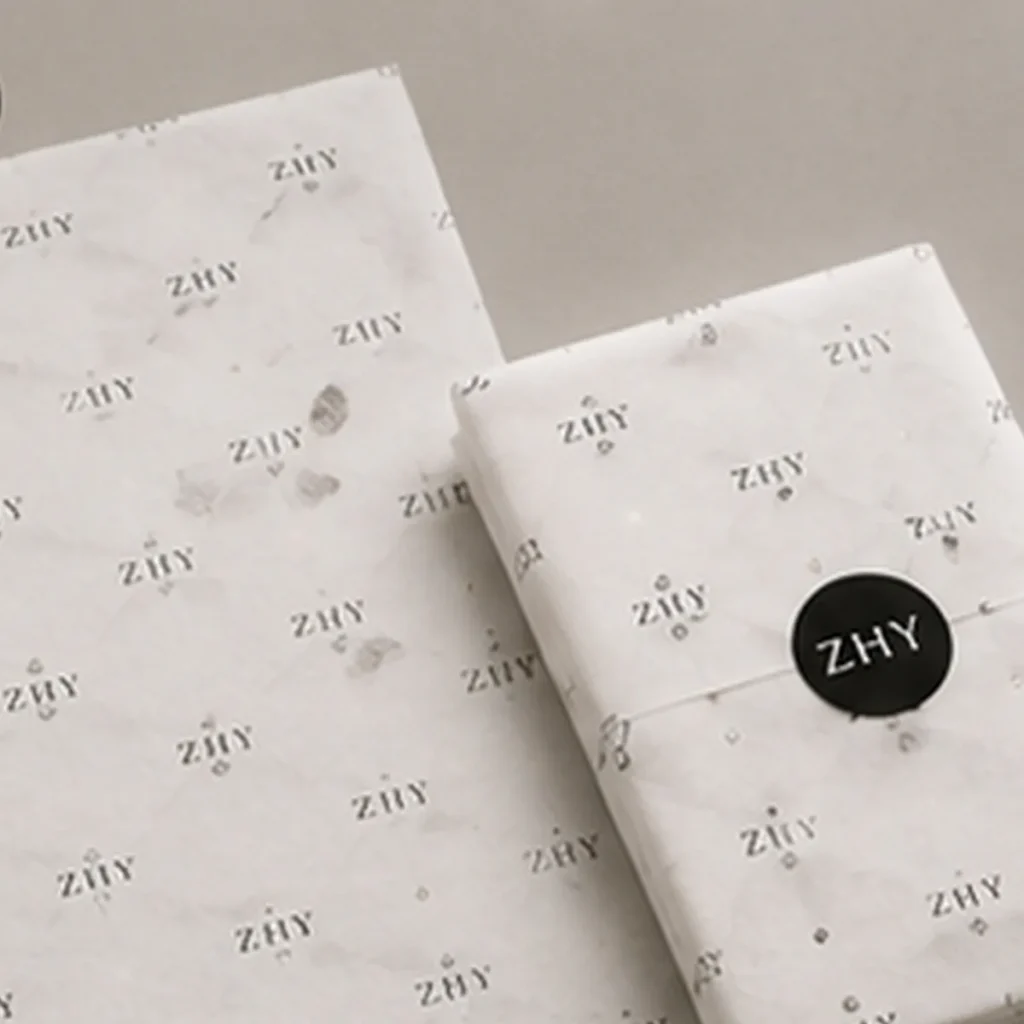
Quotes drift when artwork files, print targets, material choice, finishing, and sample sign-off live in separate messages.
Quote review should connect the design file to physical sample evidence before print or finish is approved.
Use this guide to decide what to send, what to sample, and what proof to keep before bulk production.
Direct answer: Release this program only after artwork revision, production material, finish sample, packing proof, and commercial terms are approved together.
For brand owners and importers, keep custom printed tissue paper ink rub color sample checklist quote-ready: specs to send, proof to request, sample checks to approve, and reorder notes to retain.
Define the Tissue Paper Use and Contact Conditions
Start Define the Tissue Paper Use and Contact Conditions with evidence for custom printed tissue paper ink rub color sample checklist:
- Verify tissue paper use case: wrapping, lining, void-fill, or presentation layer. Each use case imposes different ink rub and moisture exposure levels. Wrapping and lining require higher rub resistance than void-fill. Request a written use-case statement from the buyer and compare it with the supplier’s recommended GSM and ink type. Approving a tissue designed for void-fill for wrapping may cause ink transfer onto product surfaces during transit. Document the primary and secondary use cases in the specification sheet before sample production.
- Confirm the tissue’s intended contact surface: product-facing, bag lining, or outer wrap. Product-facing tissue must use buyer-approved inks and pass transfer tests; outer wrap may tolerate lower rub resistance. Cross-reference the intended surface with the supplier’s ink safety data sheet and rub test results. Using non-buyer-approved inks on product-facing tissue can cause chemical migration and regulatory non-compliance. Specify the contact surface in the order spec and request ink safety certification if product contact is intended.
- Assess the tissue’s role in the unboxing experience: premium presentation or protective padding. Premium presentation requires consistent color and no ink transfer; padding-only allows lower print quality standards. Review the buyer’s packaging brief and compare with the supplier’s sample finish and color accuracy report. Approving a padding-grade tissue for premium presentation may result in color drift and poor brand perception. Define the presentation tier in the approval record and set corresponding rub resistance and color tolerance limits.
Map wrapping lining void-fill and presentation needs
Each tissue use case—wrapping, lining, void-fill, or presentation—demands a different ink rub resistance level. Wrapping and lining require higher rub resistance because the tissue contacts product surfaces directly. Void-fill only needs minimal print quality. Document the primary use case in the specification to guide the supplier’s ink and substrate selection.
Identify rub moisture and transfer risks
Moisture from humidity, condensation, or direct product contact accelerates ink bleeding and color drift. Require both dry and wet rub tests on the exact substrate before sample approval. Dry rub tests simulate friction during packing and transit; wet rub tests simulate humid storage or condensation. This prevents ink transfer that damages brand presentation and increases return rates.
Specify Paper Weight Size and Folding Format
For custom printed tissue paper ink rub color sample checklist, treat Specify Paper Weight Size and Folding Format as a release rule: approve only when the supplier evidence matches the written requirement.
- Sheet dimensions, basis weight, and pack count must match the approved specification and RFQ. Request a dimension/GSM log from the slitting or sheeting stage and a packing log from the QC line. Supplier production or QC department.
- The folding format—flat, folded, or rolled—must be documented and reproducible for bulk production. Request a signed folding format specification sheet with fold dimensions and crease allowance. Supplier production engineering or sample room.
- Supplier capability to produce the specified paper weight and folding format consistently across the run. Request a capability statement or recent production log for the same GSM and format. Supplier sales or production manager.
- Approval risk is mitigated when the paper weight, size, and folding format are verified before bulk packing. Request a signed-off approval record with the archived master reference sheet. Supplier QC and buyer-side approver.
Additional RFQ items include specification details for paper weight, size, and folding format must be locked before sample production. Request a written specification sheet with GSM, dimensions, fold type, and tolerance limits. Supplier sales or specification team.
Confirm sheet dimensions basis weight and pack count
Request a dimension and GSM log from the slitting or sheeting stage to verify the sheet matches the approved specification. Compare the pack count against the RFQ to ensure the correct number of sheets per carton. This check prevents folding defects, pack count errors, and reorder mismatch that can delay production.
Set flat folded or rolled presentation requirements
Specify whether the tissue is delivered flat, folded, or rolled, and confirm the exact fold dimensions or roll diameter. The presentation format affects how the tissue is packed, how it fits your carton, and how it is used by the end customer. Request a sample of the folded or rolled format to verify it meets your packing line requirements and your brand’s unboxing experience.
Use paper bags format and sample approval to align the related specifications and RFQ inputs.
RFQ checkpoint
For custom printed tissue paper ink rub color sample checklist, send artwork files, logo placement, material, finish target, quantity, and sample timing so print and structure can be reviewed together.
Prepare Print and Color Approval Inputs
Start Prepare Print and Color Approval Inputs with evidence for custom printed tissue paper ink rub color sample checklist:
- Supplier does not provide a dry rub test report specifying stroke count and substrate weight. Without a defined test method, ink rub resistance cannot be verified, risking ink transfer onto product surfaces during transit. Request a dry rub test report with exact stroke count, substrate weight, and pass/fail criteria before sample sign-off. Dry rub test report with stroke count, substrate weight, and comparison to approved color reference. Document the test result in the approval record and reject if any ink transfer exceeds the approved limit.
- Supplier offers a wet rub test only on a different substrate or without humidity simulation. Wet rub resistance varies by substrate; testing on a different material may miss ink bleeding in humid storage or condensation. Insist on a wet rub test on the exact tissue substrate, simulating humidity or condensation as per your use case. Wet rub test report on the exact substrate, with humidity/condensation simulation and pass/fail result. Compare the wet rub result against the approved color reference and reject if any bleeding or transfer occurs.
Define repeat pattern scale coverage and color references
Specify the exact repeat pattern dimensions and coverage percentage in the artwork file. Request a color separation report showing each print pass and a physical drawdown for every ink. This ensures the supplier can reproduce the pattern at scale without color drift or misregistration, preventing costly rework during bulk production.
Separate screen appearance from physical sample approval
Digital proofs show layout but cannot simulate ink rub resistance, substrate texture, or color accuracy on tissue. Approving based on screen appearance alone risks approving ink that will transfer or bleed during transit. Require a physical mock-up on the exact substrate for dry and wet rub tests before final sample sign-off.
See packaging dieline and custom packaging specs for how print and color approval inputs fits into the order.
Run Ink Rub and Transfer Sample Checks
The main failure mode in Run Ink Rub and Transfer Sample Checks is approving custom printed tissue paper ink rub color sample checklist before the supplier has resolved the listed evidence gaps.
- Does the supplier perform a wet rub test simulating humidity or condensation on the exact substrate? Moisture accelerates ink bleeding; a wet rub test on the actual tissue reveals whether the ink formulation withstands humid storage or condensation. Supplier provides a wet rub test procedure with water application and stroke count, showing no ink transfer or bleeding on the tested surface. Skipping a wet rub test can lead to color drift or ink bleeding in humid conditions, causing off-spec product and costly rework. Require a wet rub test on the exact substrate and compare the result against the approved color reference.
- Does the supplier provide a physical mock-up on the exact substrate for both dry and wet rub tests before final sample approval? Digital proofs cannot simulate ink rub resistance, substrate texture, or color accuracy on tissue; a physical mock-up is the only reliable verification. Supplier submits a physical mock-up on the exact tissue substrate with documented dry and wet rub test results and no ink transfer. Approving based on screen appearance alone risks approving ink that will transfer or bleed during transit, leading to costly rework. Hold sample approval until the physical mock-up and rub test results are received and verified.
- Does the supplier have a documented QC process for checking ink rub and color match during bulk production? Supplier capability includes consistent QC during production; without a documented process, bulk units may deviate from the approved sample. Supplier describes a QC step that pulls one carton per pallet layer, performs a dry rub test, and compares against the archived master reference. Lack of in-process QC can result in bulk units with ink transfer or color drift, requiring re-inspection or rejection at your warehouse. Ask the supplier to share their bulk QC protocol for ink rub and color match before production starts.
- Does the supplier retain a signed-off production sample as a master reference for the entire run? A sealed, archived sample per print position ensures that any later color drift or rub failure can be traced back to the approved standard. Supplier confirms they will hold one signed-off sheet per print position in a sealed, light-protected envelope as the visual benchmark. Without an archived master reference, you cannot verify whether bulk units match the approved sample, increasing reorder mismatch risk. Confirm the supplier will archive the signed-off sample and provide a photo or record of the sealed envelope.
Test dry handling and relevant contact surfaces
Dry rub tests simulate friction during packing and transit. Require the supplier to specify the stroke count and weight used on the exact tissue substrate. Compare the tested surface against the approved color reference to confirm no ink transfer occurs. This check prevents ink from transferring to product surfaces, protecting your brand presentation and reducing return rates.
Inspect smearing offset odor and visible color drift
Smearing or offset occurs when ink is not fully dry before sheeting or folding. Odor indicates residual solvents that may affect product perception. Color drift between sheets signals inconsistent print passes or substrate absorption. Request a spectrophotometer report for delta-E values and a physical drawdown per print pass. Reject any lot showing visible drift or solvent smell.
Use custom packaging solutions to align the sample and production handoff.
Freeze Packing and Bulk Quality Controls
At this checkpoint, the production line is paused for a final physical audit before bulk packing. The required output is a signed-off archive of approved printed sheets and a verified print reference that matches the approved color sample. Without these, the next stage cannot proceed.
Archive approved sheets and print references
Request that the factory set aside one full set of approved printed sheets from the first production run. These become the master reference for the entire order. Compare each sheet against the approved color sample under standard lighting. If any sheet shows a deviation in ink rub or color density, reject the run and request a new setup. Document the approval with a dated signature on the archive sheet.
Set pack-count folding carton and lot checks
For bulk packing, confirm the exact pack count per folding carton with the factory before sealing. Ask the buyer: ‘What is the verified quantity per carton you require?’ Use that number as the lot check standard. Randomly open one carton per pallet layer and count the sheets. If the count deviates, reject the entire layer and request a recount. Record the lot check result on the packing list.
| Checkpoint | Action | Pass Criteria |
|---|---|---|
| Archive sheet approval | Compare against approved color sample | No visible ink rub or color shift |
| Pack count verification | Count sheets in one carton per layer | Matches buyer-verified quantity |
| Lot check documentation | Sign and date the packing list | All layers pass count check |
After these checks, the bulk packing can proceed. The archive sheet and signed packing list become the handoff documents for the next stage. If any check fails, stop the line and request a corrective action plan from the factory before resuming.
See paper packaging quality control for how packing and bulk quality controls fits into the order.
Conclusion: Approve Print Performance in the Intended Pack-Out
The final approval comes down to one rule: release the order only after the evidence matches the approved sample. Before you approve, check that the supplier’s dry and wet rub test reports on the exact substrate match the approved color reference. Verify the spectrophotometer delta-E values against your agreed tolerance. Compare the pack count per carton against the quoted quantity. Reject any lot showing visible ink transfer, color drift, or solvent smell. This set of checks prevents ink transfer that damages brand presentation and increases return rates. Document the approval with a dated signature on the archive sheet and carry the signed record into the purchase order and production handoff.
The Zhypacking Editorial Team compiled this checklist from industry standards, factory process references, and packaging buyer experience. This guide is intended for procurement planning; confirm current specifications, test methods, and commercial terms with your selected supplier before purchase. For additional context on custom tissue paper printing, see Jukebox Print, Seaman Paper, and ULINE.
Ready to proceed? Send your approved specification and sample evidence to our team for review: Send Specs for Review.
Printed Tissue Paper Sample FAQ
Which sample or QC proof should buyers request for Custom printed tissue paper ink rub color sample checklist?
Request a physical mock-up on the exact tissue substrate, not a digital proof. The supplier must provide a dry rub test report (stroke count and weight) and a wet rub test report on that substrate. Without these, you cannot verify ink adhesion or color stability before bulk production.
What should buyers verify before approving printed tissue paper ink rub color?
Compare the physical sample against the approved color reference under standard lighting. Confirm the supplier has run both dry and wet rub tests on the exact substrate and that the spectrophotometer report shows delta-E values within your agreed tolerance. Reject if any ink transfer or color drift is visible.
Which artwork files and logo details should buyers include in the RFQ for Custom printed tissue paper ink rub color sample checklist?
Only if the supplier provides a substrate and ink drawdown that matches the intended design. Without final artwork, you cannot verify ink coverage, color accuracy, or rub resistance. Approving a sample before artwork is final risks approving ink that will transfer or bleed during transit.
How many colors can I have in my tissue paper design?
The number of colors depends on the supplier’s press capability and your budget. Each additional color adds a print pass and setup cost. Confirm the maximum number of spot colors or full-color CMYK passes with your supplier during the RFQ stage, and request a color separation report before sample approval.
Use the printed tissue and accessories route to align sheet size, ink, fold, and packing requirements.
Review the custom printed tissue paper range before locking sheet size, ink, fold, and packing requirements.


Ask a Packaging Question