
Before you can decide whether a paper tube fits the use case, specs, MOQ, sample approval path, and supplier quote process, the specification has to say enough for a supplier to price the same job you have in mind.
Choosing a paper tube comes down to the closure and what the tube has to protect. Narrowing on those two happens before print and MOQ enter the conversation.
Direct answer: Choose a paper tube by product fit, internal diameter, usable height, lid style, liner, wrap, and finish, then approve an undecorated fit sample and a printed sample before bulk production.
Define the Buyer Requirement
Build the shortlist around the product fit, internal diameter, usable height, wall construction, lid and base, surface finish, order quantity, and sample evidence. Keep only suppliers that can translate those requirements into a controlled drawing, representative sample, measurable tolerances, and a repeatable bulk-production check.
| Requirement | Factory control | Evidence to verify | Order risk | RFQ follow-up |
|---|---|---|---|---|
| Sample approval | Factory holds signed-off reference sample and retains first-article for each production lot. | Compare production sample against approved master using caliper, grammage, and crush test per AQL II. | Deviation in wall thickness or inner diameter causes line jams or product damage. | Request three production-equivalent samples and approve in writing before PO release. |
| MOQ and order quantity | Factory confirms the 200 pcs project-level MOQ unless a product-specific exception is confirmed. | Confirm MOQ in written quotation and check that per-unit price holds at your target volume. | Under-ordering triggers per-piece surcharge; over-ordering ties capital in slow-moving stock. | Request RFQ with your annual volume to negotiate tiered pricing. |
| Material / substrate | Factory sources virgin kraft or recycled board with documented basis weight and moisture content. | Request material data sheet and verify grammage via lab scale on incoming roll stock. | Substrate substitution reduces crush strength or causes print adhesion failure. | Specify material grade and supplier in RFQ; ask for mill certificate with each shipment. |
| Width or size tolerance | Factory holds the buyer-approved tolerances on inner diameter and cut length. | Measure 20 random tubes per pallet with digital caliper; reject the lot if more tubes than the agreed limit exceed tolerance. | Oversized tubes fail to fit automated filling equipment; undersized tubes cause product shift. | Document acceptable tolerance range in RFQ and request first-article measurement report. |
| Finish or color control | Factory uses Pantone-matched ink and applies UV coating or matte lamination per approved proof. | Hold printed proof against production run under buyer-approved viewing conditions; check for banding or scuffing. | Color drift across batches creates retail shelf inconsistency and brand rejection. | Submit Pantone reference and approve wet-proof before production; agree any overrun allowance for color matching. |
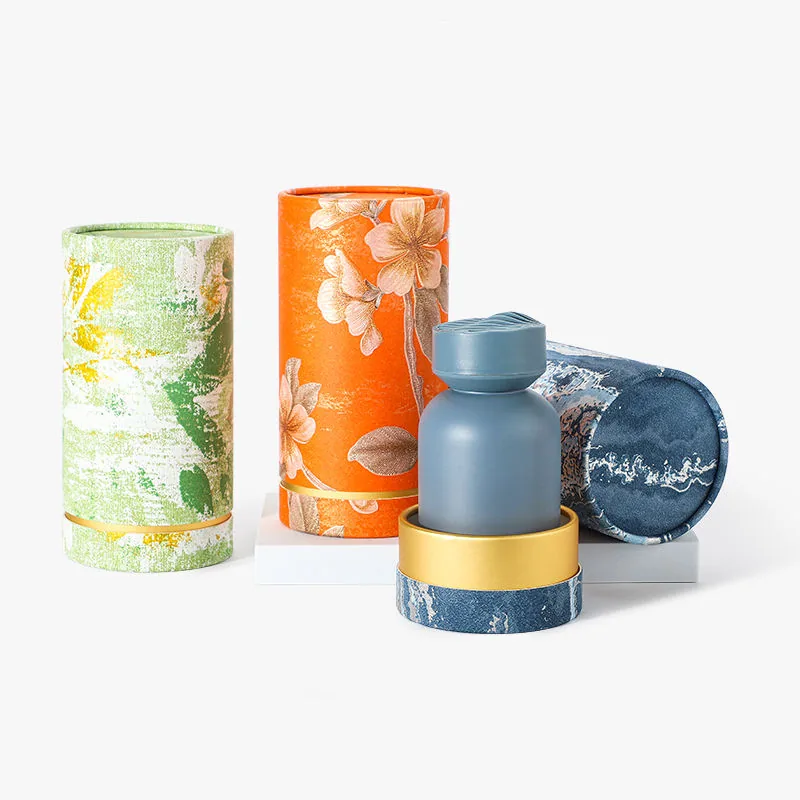
Use the table to define the paper tube as a complete packaging system. Lock the internal diameter, usable height, wall build, paper and liner, lid and base style, fit clearance, surface wrap, print and finish, insert needs, product weight, and packing method. Request a structural drawing, material swatches, undecorated fit sample, printed sample, and transit-pack example. Compare suppliers only after the tube fit, opening force, edge finish, print alignment, and accepted tolerances are documented for production and reorders.
Compare the Available Routes
| Option | Best fit | Trade-off | Risk to avoid | Verification | Follow-up |
|---|---|---|---|---|---|
| Current specification | Approved inner diameter, wall thickness, and material grade already in production | No flexibility for new product dimensions or print placement changes | Inherited tolerances may not match your crush strength or moisture barrier requirements | Request a dimensional compliance report from the last three production lots | Compare your required specs against the archived QC records before reorder |
| Alternative specification | Different wall ply count or spiral angle for higher axial load | Requires new tooling setup and additional sample approval cycle | Alternative construction may shift the crush resistance curve outside your acceptable range | Run a crush test on five pre-production samples at your receiving dock | Document the revised wall construction in the RFQ and request a dimensional tolerance sheet |
| Custom option | Unique inner diameter, length, or printed surface finish not in standard catalog | Longer lead time for die‑cutting and print plate creation | Custom dimensions increase the chance of winding defects if the paper grade is changed mid‑run | Inspect the first‑off sample for concentricity and edge straightness with a micrometer | Lock the approved inner diameter, wall thickness, and material grade in the spec sheet before bulk production |
| Safer fallback | Standard stock tube dimensions with a kraft outer wrap for quick delivery | Limited print area and no barrier coating for moisture‑sensitive contents | Stock tubes may have wider length tolerance than your automated filling line requires | Measure 10 random tubes from the stock batch for length and ovality | Confirm the stock tube ID matches your mandrel size before committing to a full pallet order |
Preserve the current specification decision under one revision number: keep the supplier response, marked sample, approved specification, quotation, and approval owner together. If the evidence conflicts with the approved record, hold the quote, sample, or production release until the deviation is explained in writing. Once the buyer and designated technical authority have accepted the evidence, carry the signed record into the purchase order, production handoff, shipment release, and later reorder review so every team works from the same baseline.
Review the Required Proof
Before shortlisting any factory, verify the physical evidence that confirms production capability. A single wall thickness measurement or a crush test report eliminates guesswork. For example, a supplier that provides a 3-point bend test result for its paper tubes demonstrates process control. Use this checklist to evaluate proof:
- Specs: Confirm tube inner diameter, wall thickness, and length match your print-ready drawing. Request a signed specification sheet.
- Cost or MOQ: Ask for a cost breakdown per tube size and a minimum order quantity that aligns with your trial run.
- Production risk: Check if the factory has a documented quality check at tube winding and cutting stages.
- Factory execution: Visit or video-call the production line to see real-time winding, gluing, and curing.
- RFQ/sample handoff: Require a sample set with a traceable lot number and a written test report.
Once you hold the proof, you can confidently move to the next decision stage. For more on factory vetting, see our paper packaging quality control.
Build the Decision Asset
At this process checkpoint, the record needed before the next stage is a validated supplier shortlist with confirmed production capability. Connect the supplier proof, sample approval, and reorder control checks into a single decision asset that guides your final selection.
Supplier evidence to request
Verify physical evidence of production capability. Request a factory walkthrough video showing the paper tube winding line, glue application, and curing area. Confirm the supplier uses application-grade adhesives if your product requires it. Cross-check their quality certifications against your industry standards. This step eliminates suppliers who cannot match your spec requirements.
Sample approval evidence
Evaluate samples against your dimensional tolerances, wall thickness, and crush strength. Measure the inside diameter and length with a caliper. Test the paper tube under your expected load conditions. Approve only samples that pass all functional tests. Document the approval criteria and share them with the supplier to ensure repeatability.
Reorder control records
Establish a reorder process that maintains consistency. Define the lead time buffer, minimum reorder quantity, and quality hold points. Agree on a sampling plan for each production lot. Use a simple table to track key metrics:
| Checkpoint | Action | Pass/Fail |
|---|---|---|
| Supplier proof | Verify factory video & certifications | Pass |
| Sample approval | Measure dimensions & test strength | Pass |
| Reorder control | Define lead time & sampling plan | Pass |
With these checks completed, you have a decision asset that reduces production risk and streamlines quote request and sample handoff. For more on ecommerce packaging dieline and custom packaging specs solutions, see our ecommerce packaging page.
Prepare Comparable RFQ Inputs
- Does the supplier have a dedicated paper tube winding line with documented changeover procedures? Paper tube quality depends on consistent spiral or parallel winding. A dedicated line with written changeover steps reduces dimensional drift between orders. Supplier provides a line list showing winding machine model, age, and changeover procedures used before each production run. Shared lines without changeover controls risk wall thickness variation and glue-line defects that fail crush tests. Request a photo of the winding line and a copy of the changeover procedure during the factory walkthrough.
- What is the supplier's method for verifying inside diameter and wall concentricity during production? Inside diameter and concentricity tolerances affect how your paper tube fits with end caps, cores, or automated filling equipment. A supplier that measures these inline catches rejects before packing. Supplier uses a digital micrometer or laser gauge at the winder exit and records every hour's first-piece and last-piece measurements. Tubes that pass visual inspection but fail concentricity will jam your assembly line or cause cap leakage. Ask for the last three hourly measurement logs from a comparable tube order.
- How does the supplier handle glue-line inspection and bond-strength testing on spiral-wound tubes? The glue line determines whether the tube delaminates under humidity or axial load. A supplier that tests bond strength can prove the adhesive system is right for your product's storage conditions. Supplier performs a peel test or shear test on each production shift's first tube and documents the result in a log. Tubes with weak glue lines may separate during shipping or in high-humidity warehouses, causing product spillage. Request a copy of the bond-strength test procedure and ask for the last five test results from similar tube orders.
Source check: ISO 2859-1 sampling inspection standard; What Is the minimum order for Custom Paper Packaging? 2026 Pricing Guide…; 6 Step to How to Select the Perfect Product Packaging – Custom….
In conclusion
The final approval for your paper tubes comes down to checking that the supplier’s quoted inner diameter, wall thickness, and crush strength match your product’s required tolerances, then comparing those specs against the minimum order and lead time that fit your project budget. Verify physical evidence of production capability—a factory walkthrough video or recent third-party audit report—to confirm the supplier can deliver consistent quality. Once you have validated the spec and shortlisted a supplier, document the approved dimensions and material grade in your quote request, then request a sample to lock in the decision before moving to production.
To request a quote for paper tubes product, use paper tubes to confirm the final specification, quote assumptions, sample approval, QC evidence, approval risk, and supplier follow-up before bulk order.
Frequently Asked Questions
How should a b2b buyer choose product type?
Compare your product’s required inner diameter, wall thickness, and crush strength against standard tube grades. Check the cost impact of custom lengths or printing versus stock sizes, and confirm the minimum order (project-level minimum order is 200 pcs unless a product-specific exception is confirmed) and lead time (15–30 working days after specifications, artwork, and sample requirements are confirmed) with the supplier. Verify that the tube’s material and adhesive match your end-use environment—moisture resistance, for example—and request a sample to test dimensional tolerances and seam integrity before approving the specification.
Which supplier proof should buyers request for paper tubes?
Request a factory walkthrough video or recent third-party audit report that shows the spiral or convolute winding process, quality control checkpoints, and storage conditions. Ask for a physical sample that matches your required wall thickness and crush load, then measure the inner and outer diameters with a caliper. Document the supplier’s defect rate and rework process in writing, and compare their lead time reliability against your production schedule.
What should buyers lock before approving a paper tube order?
Lock the approved inner diameter, wall thickness, length, and material grade in a signed specification sheet. Confirm the unit cost and minimum order (200 pcs project-level unless a product-specific exception is confirmed) in the quotation, and agree on the lead time (15–30 working days after specifications, artwork, and sample requirements are confirmed) and payment terms. Require a pre-production sample for dimensional and crush test approval, and define the reorder process—including acceptable tolerance ranges and quality checkpoints—to ensure consistency across future batches.
quote request handoff: Send Specs for Review.


Ask a Packaging Question