
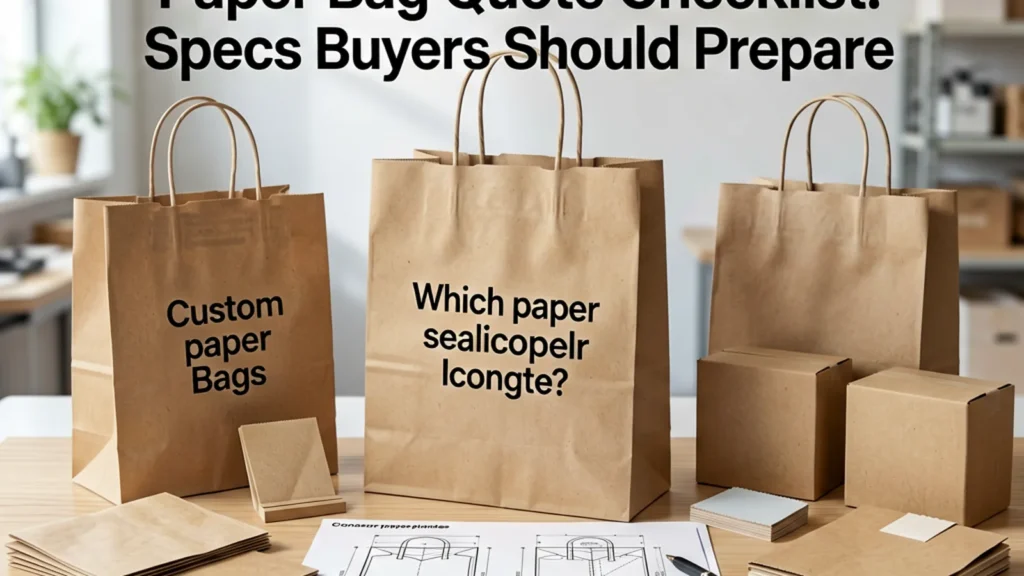
Choosing paper bag GSM is not only a thickness decision. For retail orders, it affects handle strength, print feel, folding behavior, quote assumptions, and whether the approved sample can be repeated in bulk production.
The safest RFQ names the bag size, paper weight target, handle construction, print coverage, finish, packing method, and sample approval rule together. If any of those inputs change after sampling, the buyer should ask for a revised quote or a revised sample.
Use this checklist to turn GSM from a loose material preference into a paper bag specification that ZHY can quote, sample, and control in production.
Quick buyer answer: GSM is the mass of paper per square metre, not a finished-bag strength grade. Use it to define the material being quoted, then approve carrying performance with the actual bag size, paper grade, handle and reinforcement, adhesive construction, packed weight and use condition. A higher GSM may change feel and stiffness, but it cannot by itself prove handle or bottom performance.
How this guide was prepared: This guide separates material measurement from finished-bag performance and maps both to RFQ and sample records. ISO 536:2019 specifies a method for determining paper and board grammage. It does not prescribe the correct GSM or safe load for a retail bag; those decisions depend on the complete construction and must be verified on the project sample. Reviewed 24 August 2026.
A comparable quote states which paper is being measured, how the bag is built and what the sample must prove. “Use thicker paper” is not a complete corrective action unless the handle, bottom and packing conditions are checked again.
How GSM changes paper bag strength, print, and quote assumptions
GSM should be selected against the real bag job: what the bag carries, how the handle is attached, how much ink or finish sits on the surface, and how the bag will be packed. A heavier paper can feel more premium, but it can also change folding, cost, and sample expectations.
| Spec | Acceptable range or buyer target | approval risk | Verification check | buyer follow-up |
|---|---|---|---|---|
| Product load and bag size | Match GSM to product weight, gusset, bottom style, and handle construction. | Wrong GSM can cause handle failure, weak creases, or a bag that feels too light for retail use. | Check a physical sample with the actual product or comparable load. | Approve the GSM in the RFQ record or request a revised sample. |
| Print coverage and finish | Confirm ink coverage, lamination, foil, embossing, or simple logo print before choosing paper weight. | A paper weight that works for plain bags can crack, scuff, or print poorly after finishing. | Review a printed sample on the selected paper surface. | Keep the approved sample and finish note for production. |
| Packing and delivery use | Confirm flat packing, nested packing, master carton quantity, and delivery route. | Packing pressure can deform handles, corners, or printed panels before the bags reach retail use. | Inspect packed samples or packing photos before shipment. | Add packing requirements to the quote and reorder file. |
Match GSM to carry weight, handle style, and bottom construction
A twisted handle shopping bag, a die-cut handle bag, and a luxury rope-handle bag do not use GSM in the same way. The buyer should confirm how the handle is attached and where stress appears when the bag is lifted, then approve the sample with the actual product or a comparable load.
Confirm print coverage and finishing before choosing paper weight
Ink coverage, lamination, foil, and embossing can change how stiff or flexible the paper feels. Before bulk approval, keep the artwork file, finish note, paper weight, and printed sample together so the production team is not matching color and structure from separate approvals.
Ask what changes when GSM moves up or down
If the buyer asks for a stronger or more premium feel after seeing the sample, the supplier should explain the cost, fold, handle, MOQ, and packing impact before production is released. Treat a GSM change as a spec change, not a casual material swap.
What buyers should put in the RFQ before sampling
A useful paper bag RFQ lets the supplier quote the structure and sample the same target. If the RFQ only says kraft bag, white paper bag, or logo bag, the supplier still has to guess the paper weight, handle, finish, and packing assumptions.
| RFQ input | Why it matters | approval risk | Supplier question | buyer follow-up |
|---|---|---|---|---|
| Bag size, gusset, handle, paper type, and GSM target | These inputs decide whether suppliers quote the same bag. | A low quote may hide a lighter paper, weaker handle, or different packing method. | Which GSM and handle construction are included in this quote? | Compare quotes only after the same inputs are confirmed. |
| Artwork, print coverage, finish, and color reference | Print and finish can change paper feel and sample approval. | The sample may look different from the approved design if the surface is not confirmed. | Will the proof be made on the same paper surface and finish? | Request a printed sample or revised proof before bulk approval. |
| Packing, carton quantity, and reorder expectation | Packing and repeat control affect landed condition and future consistency. | The first order may pass but the reorder can drift without records. | What sample and packing records will be kept for repeat orders? | Store the approved sample and packing notes with the order file. |
- Bag size, gusset, bottom style, and expected product load.
- Paper material, GSM target or desired feel, and whether the bag needs kraft, white, coated, or specialty paper.
- Handle type, handle color, reinforcement method, and how the handle should be tested on the sample.
- Artwork files, logo size, print position, print method, finish, and color reference.
Keep these checks in the same approval record: packing method, carton quantity, shipping route, reorder needs, and who signs off on the retained sample.
Size, handle, paper grade, finish, and packing inputs
Send these inputs together so the quote and sample use the same assumptions. A buyer comparing quotes should check whether each supplier included the same paper weight, handle construction, print coverage, and packing method.
Sample proof checks for load, crease, color, and handle attachment
The sample should be checked as a working bag, not only as a printed surface. Put the expected product inside, lift it by the handle, check creases and bottom folds, and compare print color against the approved reference.
Cost and MOQ variables buyers should compare
GSM, handle type, paper grade, finish, and packing can all affect quote tiers and production setup. If two quotes are far apart, ask each supplier to state which of those assumptions are included before choosing on price alone.
Review custom paper boxes before sending the RFQ.
Ask the supplier to confirm production lead time after specifications and sample approval are fixed, plus the date when packing and delivery handoff can start.
RFQ checkpoint
Check the product route for sizes, structures, materials, finishes, and RFQ details before sampling custom retail paper bags.
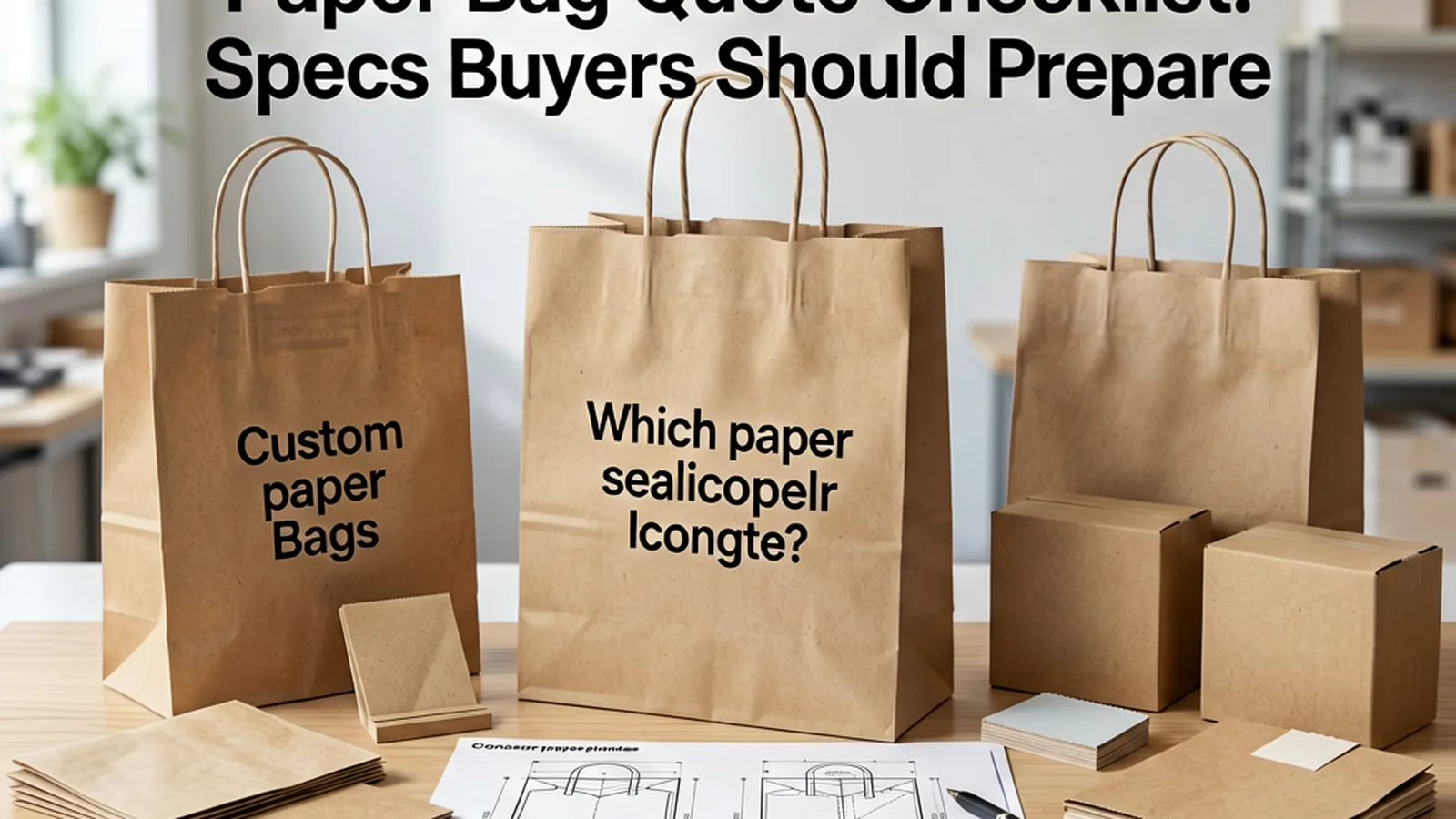
How to approve GSM before paper bag production
Approval should end with a written record, not only a verbal yes. Keep the approved sample, paper weight, handle details, artwork version, finish target, and packing notes together so the bulk order and the next reorder can be checked against one source.
| Step | Owner or input | approval risk | Verification check | buyer follow-up |
|---|---|---|---|---|
| Compare sample to spec sheet | Buyer-approved GSM, handle, size, print, finish, and packing notes. | Approving from memory can release a bulk order that differs from the intended bag. | Check the physical sample against the written specification. | Approve, revise, or request another sample before production. |
| Retain sample for reorder | Approved bag sample and photos of key details. | Repeat orders can drift in stiffness, color, handle feel, or finish. | Keep the retained sample with the reorder record. | Send the sample reference when reordering. |
| Review any GSM or handle change | Supplier explanation of cost, MOQ, lead time, and sample effect. | A stronger paper or different handle can change price and production behavior. | Ask for a revised quote and sample if the change affects use. | Update the RFQ before bulk release. |
Compare the sample against the approved spec sheet
If the sample looks right but the spec sheet is incomplete, the buyer should pause approval and request written confirmation. The bulk team should know exactly which GSM, handle style, finish, and packing method were approved.
Keep a retained sample for repeat orders
A retained sample helps control color, stiffness, handle feel, and finish across reorders. If a repeat order uses a different paper stock or finish, record it as a new approval rather than assuming it matches the old bag.
When to request stronger paper or a different handle
Obtain a stronger GSM, reinforced handle, or different handle type when the sample bends too much, the handle attachment feels weak, or the bag will carry heavier retail items. The buyer should also ask how that change affects quote and lead time.
Process details to confirm
- Confirm the buyer requirement and approval owner.
- Check material, size, artwork, color target, quantity, packing, and deadline assumptions.
- Approve the sample or proof before bulk production and keep the record for reorders.
Review packaging dieline and custom packaging specs before sending the RFQ.
In conclusion — Paper bag GSM for custom retail bags
paper bag GSM should be approved as part of a full bag specification: size, handle, print, finish, packing, sample proof, and reorder record. Send ZHY the working use case and the desired paper feel, then use the sample to confirm whether the bag is strong enough, printable enough, and repeatable enough for the order.
When the RFQ is ready, use ZHY’s custom paper bags page so product scope, sample proof, and supplier questions are reviewed in one place.
The commercial handoff is simple: if GSM, handle, finish, or packing changes after sample review, treat it as a revised specification. That reduces approval risk because the quote, sample, production note, and reorder record all describe the same paper bag.
Paper Bag GSM FAQ
What GSM is usually used for retail paper bags?
There is no single safe GSM for every retail bag. The right paper weight depends on bag size, product load, handle type, print coverage, finish, and packing method. Ask the supplier to recommend a range for the specific bag and confirm it with a physical sample.
Does higher GSM always make a better paper bag?
No. Higher GSM can improve stiffness and perceived quality, but it may also change folding, cost, handle behavior, and print feel. Buyers should approve the complete sample, not the GSM number alone.
What should buyers test before approving production?
Test product fit, handle strength, crease quality, print position, color, finish, and carton packing. Keep the approved sample and written specification together before releasing bulk production.
Review paper packaging quality control before sending the RFQ.


Ask a Packaging Question