
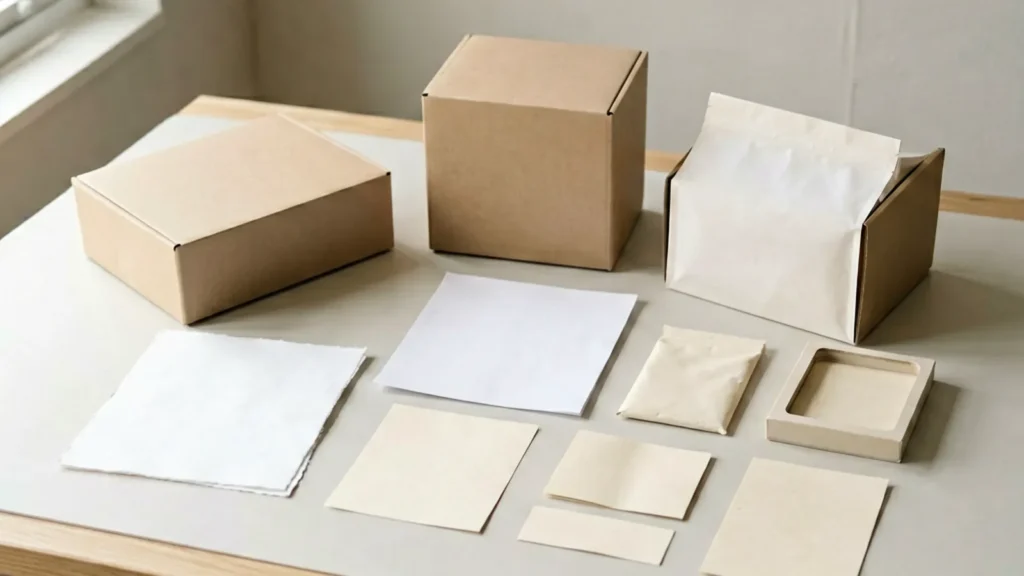
Kraft weight is the number buyers compare; handle construction is the one that decides whether the bag survives the trip. Both belong in the comparison.
Direct answer: Compare paper bag materials by product load, print and finish needs, and handle construction, then confirm gsm, coating, and handle attachment on a pre-production sample before bulk production.
Define the Buyer Decision for Paper Bag Material Comparison for Custom Orders
| Option | Best fit | Trade-off | Risk to avoid | Verification | Follow-up |
|---|---|---|---|---|---|
| Virgin kraft paper (80-120 gsm) with aqueous coating | Retail and e-commerce orders needing print clarity and surface strength for handle attachment | Higher material cost per bag; virgin fiber may not meet internal sustainability targets | Over-specifying gsm or coating adds cost without functional gain for lightweight items | Request a gsm and coating sample swatch; check tear resistance at the handle punch area | Confirm gsm and coating type in the RFQ spec sheet before sample production |
| Recycled kraft paper (70-100 gsm) with water-based adhesive | Brands with eco-packaging goals or cost-sensitive bulk orders for non-food items | Lower tear strength may require double-ply construction; shorter fiber reduces print sharpness | Recycled content claims need third-party certification; bag may fail under heavy loads | Ask for recycled content certificate and a load test report at the specified gsm | Document the recycled percentage and test load limit in the approval checklist |
| White kraft paper (100-140 gsm) with matte lamination | Premium retail or gift orders where brand image and color accuracy are critical | Lamination adds unit cost and complicates recyclability claims | Matte lamination can scuff during transit; not all recycling streams accept laminated paper | Inspect a laminated sample under bright light for even coating; confirm recyclability with local facility | Request a scuff-resistance test on the laminated sample before bulk approval |
| Kraft paper (70-90 gsm) with twisted paper handles, no coating | Cost-driven bulk orders for lightweight takeaway or promotional use | No coating limits moisture resistance; twisted handles may detach at higher gsm thresholds | Bag may tear at handle attachment if gsm is too low for the intended load | Check handle attachment by filling the bag with the target weight and lifting 10 times | Set a minimum gsm for handle orders in the spec sheet and test the sample |
For the virgin kraft paper (80-120 gsm) with aqueous coating checkpoint, keep the supplier response, marked sample, approved specification, quotation, and approval owner under the same revision number. If the evidence conflicts with the approved record, hold the quote, sample, or production release until the deviation is explained in writing. Carry the signed decision record into the purchase order, production handoff, shipment release, and later reorder review so every team works from the same baseline.
Material and specification fit
Paper bag material choice starts with the bag's intended load and print requirements. Virgin kraft offers strength and print clarity for retail bags, while recycled kraft suits eco-focused projects at a lower cost. White kraft with lamination works for premium branding but adds cost and recyclability questions. Match gsm and coating to the item weight and handle type to avoid over-specifying.
MOQ, cost structure, and lead time
MOQ for custom paper bags is 200 pcs at project level unless a product-specific exception is confirmed, with standard production at 15–30 working days after specifications, artwork, and sample requirements are confirmed. Cost structure depends on gsm, coating, handle type, and print complexity. Higher gsm and lamination increase unit cost, while recycled kraft may reduce material expense. Confirm minimum order and lead time during RFQ to align with your order timeline.
Supplier reliability and quality checks
Supplier reliability is verified through sample approval, not just price quotes. Request a production sample that matches the approved spec, including gsm, coating, and handle attachment. Check for consistent print registration and bag dimensions. A factory video or sample room visit can confirm process control. Document each approval gate to avoid bulk run surprises.
Confirm Product and Order Scope
- Can the supplier produce the chosen paper bag material at the required GSM and finish? Verifies the factory has the right equipment and stock for your spec, avoiding delays or substitution. Supplier confirms exact GSM range, coating type, and provides a material data sheet or swatch. Ordering a material the supplier cannot consistently source or run leads to off-spec bags and rework. Request a physical sample of the proposed material before approving the production order.
- What is the verification method for material weight and coating thickness? Ensures the factory uses measurable checks, not visual estimates, to match your spec. Supplier describes a calibrated scale for GSM and a micrometer for coating thickness, with records kept. Without documented verification, you may receive bags that are lighter or less durable than approved. Ask for a copy of the QC check sheet from the last similar run.
- What is the approval risk if we change material after sample sign-off? Changes late in the process can reset lead time and increase cost; you need to know the gate. Supplier states a clear cutoff point (e.g., after die-cutting) and provides a cost impact estimate. A late material swap without re-approval can cause structural failure or print mismatch in bulk. Document the material approval gate in your order confirmation and freeze spec at sample sign-off.
- What buyer follow-up is needed to confirm material consistency across the full run? Bulk production can drift from the approved sample; you need a check point to catch it early. Supplier offers in-process inspection at the reel stage and a final random sampling plan. Without follow-up, you may receive a mix of acceptable and off-spec bags, causing returns. Schedule a mid-production check or request photos of the first production reel before full run.
- How does quality control handle material defects like pinholes or uneven coating? Defects affect bag strength and print quality; you need to know the rejection criteria. Supplier has a written defect threshold (e.g., max 2 pinholes per sqm) and a quarantine process. Unchecked defects can lead to bag failures during filling or transport, damaging your brand. Request the supplier's QC standard for paper bag material and agree on acceptable defect limits.
Decision criteria to confirm
Before you commit to a paper bag material, confirm the supplier can actually run it. Ask for a material data sheet and a physical swatch. This avoids the risk of approving a spec the factory cannot source or produce consistently, which would delay your order and increase costs.
RFQ details to send
When you send the quote request, include the exact GSM, coating type, and finish you need. Ask the supplier to confirm they have the material in stock or can source it within your lead time. This prevents surprises later and helps you compare quotes on the same spec.
Production handoff details
Once the sample is approved, freeze the material spec in writing. If you need to change it later, know the cutoff point—usually before die-cutting. A late change can reset lead time and add cost, so document the approval gate clearly in your order confirmation.
Build the Verification Checklist
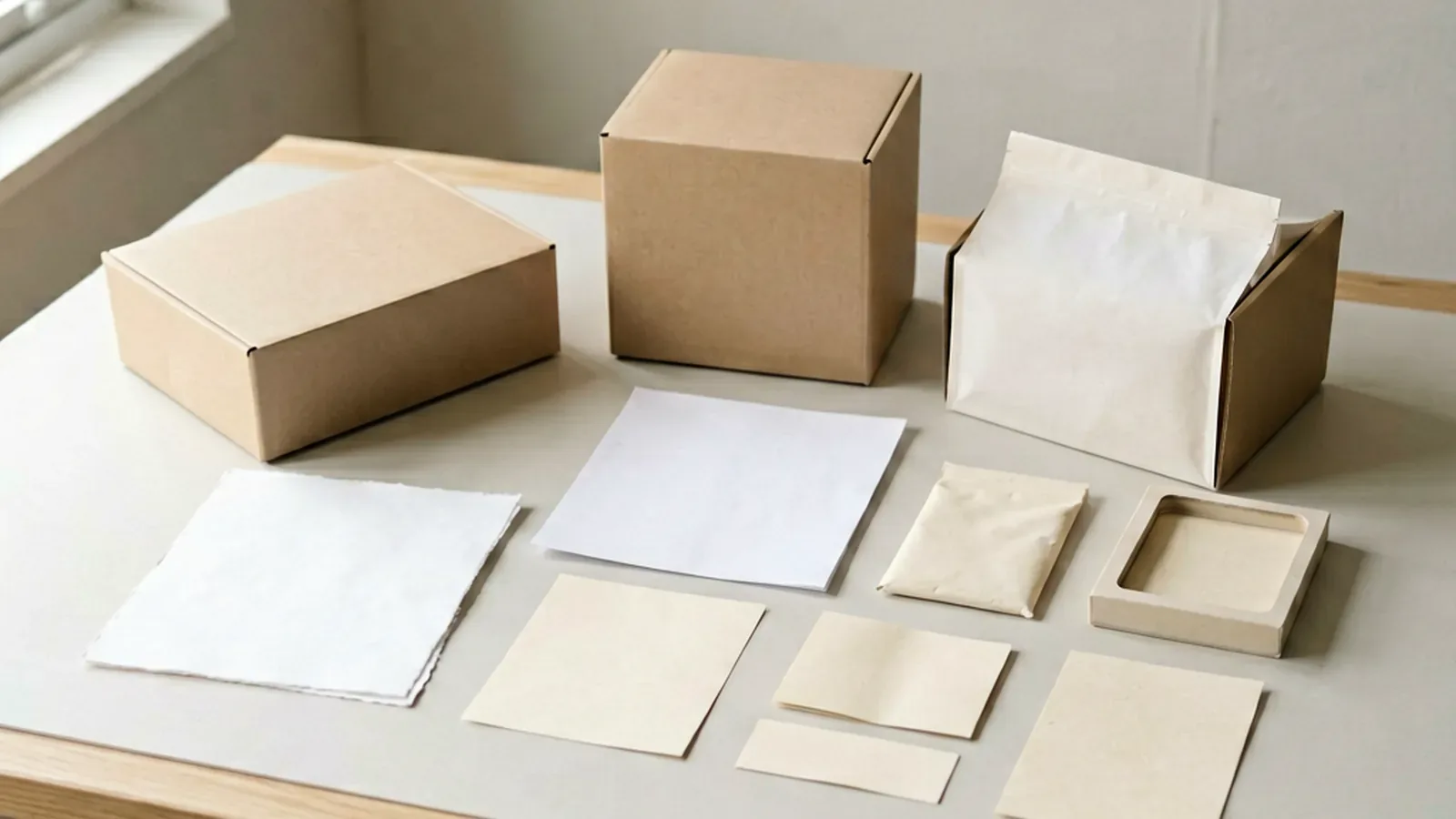
At this stage, you must have a confirmed product and order scope—including paper bag material type, size, and quantity—before moving to supplier evaluation. Use this ordered list as your approval sequence to verify each requirement during quote request review and sample handoff.
- Specs & Material Match: Confirm the supplier’s offered paper grade (e.g., kraft, coated, recycled) matches your custom order’s required basis weight and finish. Ask: “Can you provide a mill certificate or in-house test report for the exact paper specified in my quote request?”
- Cost & minimum order Feasibility: Verify that the quoted unit price aligns with your budget for the verified quantity. Request: “Please confirm that the price per bag holds for my order quantity, and list any additional tooling or setup fees.”
- Production Risk Assessment: Evaluate the supplier’s capability to handle your material without defects. Ask: “What is your process for controlling moisture and print registration on this paper type during production?”
- Factory Execution & Lead Time: Validate that the factory can deliver on schedule. Request: “Share a recent production timeline for a similar custom paper bag order, including any buffer days for quality checks.”
- quote request-to-Sample Handoff: Ensure clear communication of specs from quote request to sample. Confirm: “Will the pre-production sample be made from the same paper lot and print setup as the final order?”
Use the table below to cross-check supplier responses against your checklist items. Mark each as verified or flag for follow-up.
| Checklist Item | Buyer Verification Question | Supplier Response |
|---|---|---|
| Specs & Material Match | Provide mill certificate or test report for specified paper. | |
| Cost & MOQ Feasibility | Confirm unit price holds for the quoted quantity; list all fees. | |
| Production Risk | Describe moisture and registration control for this paper. | |
| Factory Execution | Share recent timeline for similar custom bag order. | |
| RFQ-to-Sample Handoff | Confirm sample uses same paper lot and print setup. |
After completing the checklist, you can confidently proceed to sample approval and production. For more on custom packaging specifications, visit our packaging dieline and custom packaging specs.
Compare Quote and Production Assumptions
| Criteria | Baseline option | Confirmed option | Buyer meaning | Risk to avoid | Follow-up |
|---|---|---|---|---|---|
| Specification details | Kraft paper 70-120 GSM | Art paper 128-300 GSM | GSM range determines bag strength and print finish. | Mismatched GSM causes breakage or poor print quality. | Confirm GSM against product weight and finish. |
| Cost driver | Material grade and GSM | Printing and finishing complexity | Higher GSM and specialty finishes raise unit cost. | Overspecifying finish inflates budget without need. | Request quote with exact GSM and finish specs. |
| Quality control | Physical sample approval | Bulk production inspection | Sample validates look; inspection ensures consistency. | Skipping inspection risks batch defects. | Approve sample and schedule inspection before shipment. |
| Approval risk | Color and finish sign-off | Material data sheet review | Sign-off locks visual specs; data sheet confirms material. | Missing data sheet may hide non-compliance. | Require material data sheet and sign-off before bulk. |
| Verification method | Pre-production sample | In-line QC check | Sample confirms specs; QC check catches issues early. | No QC check allows defects to reach shipment. | Arrange sample and QC check with supplier. |
For custom packaging solutions, preserve the specification details decision under one revision number: keep the supplier response, marked sample, approved specification, quotation, and approval owner together. If the evidence conflicts with the approved record, hold the quote, sample, or production release until the deviation is explained in writing. Once the buyer and designated technical authority have accepted the evidence, carry the signed record into the purchase order, production handoff, shipment release, and later reorder review so every team works from the same baseline.
Run the Review Before Approval
At this stage, you must have a confirmed product and order scope—including paper bag material type, size, and quantity—before moving to final approval. The review ensures specs, cost, and production risk are aligned with your custom order requirements.
Questions to send back to the supplier
- What is the exact paper weight (GSM) and finish (matte/glossy) for the confirmed material?
- Does the quoted price include all custom printing, lamination, and handle options?
- What is the minimum order quantity for this specific material and size combination?
- Can you provide a sample of the exact paper stock before bulk production?
- What is the typical production risk for this material (e.g., color variation, tearing at folds)?
When to revise, escalate, or reject
If the supplier cannot confirm the paper weight or finish, revise the spec sheet. If the minimum order is higher than your budget, escalate to negotiate a lower quantity or alternative material. Reject the quote if the supplier refuses to provide a pre-production sample or if the production risk (e.g., high waste rate) is not mitigated. Use this checklist to ensure factory execution matches your quote request and sample handoff requirements.
Move from Review to RFQ or Sample
If the paper bag material matches your spec sheet, cost tolerance, and production risk profile, proceed to quote request or sample request. If not, pause and resolve discrepancies before moving forward.
Inputs to include in the next message
- Material type (e.g., brown kraft, white kraft, coated, recycled content) and grammage (gsm)
- Dimensions, handle type, and printing method (flexo, digital, offset)
- Quantity and target unit price range
- Required certifications (e.g., FSC, application-grade) and any special coatings or laminations
- Preferred sample type (production sample vs. pre-production sample) and quantity
Ownership and sign-off for the next gate
Assign one person to own the quote request/sample handoff—typically the procurement lead or packaging manager. That person must confirm the spec sheet is final, the budget is approved, and the timeline is feasible before sending the request. No handoff should occur without written sign-off from both the design and sourcing teams.
Use this table to verify readiness:
| Checkpoint | Status | Owner |
|---|---|---|
| Material spec finalized | Yes/No | Design lead |
| Cost/MOQ within budget | Yes/No | Sourcing lead |
| Production risk assessed | Yes/No | Quality lead |
| Factory execution capability confirmed | Yes/No | Procurement lead |
Once all checkpoints are green, send the quote request or sample request with the inputs listed above. This structured handoff reduces rework and ensures the factory receives a clear, actionable brief.
Source check: ISO/TC 122 packaging standards; Federal Register :: Certain Paper Shopping Bags From Cambodia,…; Cost Drivers in Paper Bag Material Specifications: How Paper Gr….
In conclusion
The sourcing choice ultimately depends on your product weight, desired finish, and budget. For lightweight items, 80–100 gsm kraft paper with a matte finish often balances cost and durability, while heavier products may require 120 gsm or coated paper. Compare these options against your spec sheet, then verify the supplier’s material data sheet and production lead time. At Zhypacking, the project-level minimum order is 200 pcs unless a product-specific exception is confirmed, with a 15–30 working day lead time after specifications, artwork, and sample requirements are confirmed. To lock in your material choice, request a quote and a pre-production sample to validate the grammage, finish, and handle attachment before approving the order.
To request a quote for paper bag material, use custom paper bags to confirm the final specification, quote assumptions, sample approval, QC evidence, approval risk, and supplier follow-up before bulk order.
Paper Bag Material Comparison for Custom Orders FAQ
What should buyers confirm first?
It depends on your product weight and desired finish. Check the paper’s grammage (gsm) against your product’s typical weight, then compare the cost and minimum order impact of bleached white vs. natural kraft—the supplier should confirm the exact upcharge in the quote request. Verify that the chosen material can accept your printing method (flexo, offset, or digital) and that a pre-production sample is included in the lead time for surface and strength approval.
Which proof should be retained for approval and reorders?
Retain the signed-off pre-production sample and the corresponding spec sheet that documents the paper weight, finish, dimensions, and handle type. This physical proof becomes your approval benchmark for the bulk run and a reorder reference—store it with the supplier’s QC report and your own inspection photos. For reorders, confirm with the supplier that the same paper stock and production parameters are still available before issuing the PO.
Which warning signs should stop the order?
Stop the order if the supplier cannot provide a material data sheet or a physical swatch before quoting, or if they refuse to include a pre-production sample in the lead time. Also halt if the quoted minimum order or cost changes after you submit the spec sheet, or if the sample shows uneven coating, weak glue seams, or color deviation beyond your approved tolerance. Document each discrepancy and request a revised sample or corrected quote before proceeding. Ask for a sample, specification confirmation, or QC evidence before approval.
quote request handoff: Send Specs for Review.



Ask a Packaging Question