

Direct answer: Gate a packaging launch through product and channel scope, supplier fit, comparable RFQ, structure approval, artwork and finish proof, loaded sample, production handoff, inspection, packing, and dispatch. Each gate needs an owner, due date, required evidence, open-deviation record, and release decision. Do not let a campaign date silently override an unresolved fit or quality gate.
- Plan backward from the required delivery and launch date.
- Separate product, supplier, quote, sample, production, and shipment gates.
- Give every gate an owner, evidence requirement, and hold condition.
- Carry approved revisions and deviations into the purchase order and inspection.
Method and limits: This workflow applies documented-control principles from ISO 9001:2015. Where a trade term is used, the ICC Incoterms rules define incorporated delivery responsibilities. Neither sets the project schedule, supplier capability, MOQ, sample rounds, acceptance limits, or campaign buffer. Confirm these from the current order and responsible parties. Reviewed 24 August 2026.
When choosing a custom packaging launch checklist supplier sample first order, supplier comparisons fail if buyers start from catalogs instead of sample control, QC ownership, production change rules, and communication evidence.
When choosing a custom packaging launch checklist supplier sample first order, the useful proof is process ownership: who controls samples, finishing, QC records, and production changes.
The checks below show what evidence to request before treating a supplier as quote-ready.
For brand owners and importers, keep custom packaging launch checklist supplier sample first order quote-ready: specs to send, proof to request, sample checks to approve, and reorder notes to retain.
Use five launch gates before committing to a packaging supplier
- Does the supplier list board grade, GSM, and flute type in the quote line item? Without fixed material grade, the supplier can substitute lower-cost board on reorder, changing rigidity and print quality.
- Can the supplier provide a physical pre-production sample with measured dimensions and tolerances? A physical sample verifies fit, closure, material thickness, and print accuracy before production release. Supplier ships a signed-off physical sample with dimensional tolerance record.
- Does the supplier separate tooling, die-cut, and setup costs from the unit price? Hidden tooling costs inflate first-order total and make reorder unit price comparisons inaccurate. Itemized proforma invoice shows tooling as a separate one-time charge.
- Does the supplier commit to a lead time that starts after artwork and sample approval? Lead time can drift if the clock starts only after deposit clearance, causing stock-out risk.
Resolve these questions before approval: can the supplier demonstrate a documented QC process for incoming material and in-process checks? A documented QC process reduces the risk of defective packaging reaching your fulfillment center. Supplier provides a pre-shipment inspection report with photos for the first three production orders.
Supporting evidence includes supplier capability to match material specification: Verify supplier provides line-item material grade, board weight, and print coverage. Supplier includes exact GSM, flute type, and board grade in quote. Verification method for physical sample acceptance: Compare physical sample against dieline, material spec, and product fit. Signed-off pre-production sample with recorded tolerance for production QC. Approval risk from hidden tooling and setup costs: Check if tooling, sample, and unit price are itemized separately in quote. Itemized proforma invoice with tooling as one-time charge.
Gate 1 — confirm supplier fit and proof for the launch
| Option | Best fit | Trade-off | Risk to avoid | Verification | Follow-up |
|---|---|---|---|---|---|
| Standard spec from RFQ (existing dieline, material, and finish) | First-time buyer with complete spec sheet and approved physical sample | Faster path to production if supplier holds the dieline; limited flexibility for last-minute changes | Approval risk: sample approval omitted or tolerance not recorded, leading to reorder variation | Require signed-off physical pre-production sample with recorded tolerances for fit, closure, and print | Store approved proof, buyer approver, and reorder reference in one RFQ record before production release |
| Alternative material grade (e.g., recycled board instead of virgin kraft) | Sustainability-driven order or cost-reduction trial within same dieline | Lower board weight may reduce rigidity; print appearance can shift due to recycled fiber content | Supplier may substitute lower-cost board on reorder if grade is not locked in quote line item | Request material data sheet with GSM, flute type, and board grade; confirm availability and lead time | Insert material specification row into RFQ comparison sheet and update spec pack before sample approval |
| Custom print finish (spot UV, foil stamping, embossing) | Brand launch requiring premium shelf impact and unboxing experience | Adds setup tooling costs, longer sample cycle, and MOQ may apply per finish variation | Hidden plate or die charges inflate first-order cost; reorder may incur same setup if tooling not stored | Ask for itemized line-item quote separating tooling, plate, and run cost per finish; confirm tooling ownership and storage terms | Verify tooling reuse policy in writing and include finish approval in sample sign-off gate |
The RFQ should also cover simplified design (single-color print, no specialty finishes, stock dieline): Document functional requirements in spec sheet; approve sample before moving to bulk production.
custom retail packaging provides the related product or service context for Gate 1 — confirm supplier fit and proof for the launch.
Read the Gate 1 — confirm supplier fit and proof for the launch table by use case, not by surface appearance alone. Shortlist the construction whose handling risk can be checked on a representative sample, then carry that choice into the later specification record.
RFQ checkpoint
Send the product brief, artwork status, sample requirement, target quantity, packing plan, and launch deadline for review.
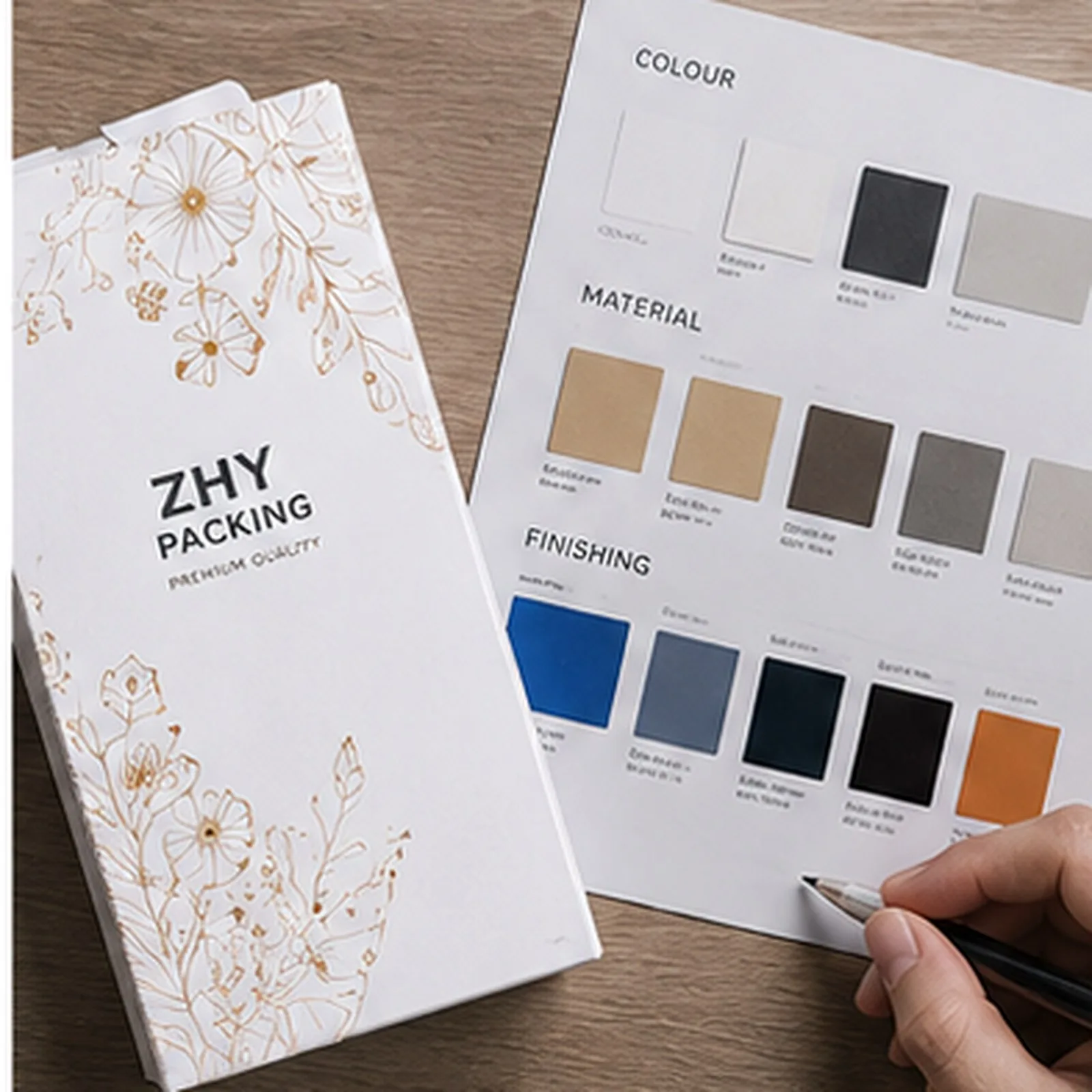
Gate 2 — prepare quote inputs that suppliers can price consistently
A launch quote is comparable only when every supplier receives the same product, structure, artwork, quantity, finish, packing, and destination basis. Keep unknowns visible as confirmation items instead of letting each supplier make a different assumption.
| Red flag | Why it changes the decision | Proof or clarification to request | Buyer action before sampling |
|---|---|---|---|
| Material is described only as “paper” or “cardboard”. | Board construction, surface, rigidity, print result, and quote basis can differ. | The quoted material specification and any permitted substitution. | Add a material row to the comparison sheet and keep it conditional until confirmed. |
| Tooling, setup, and sample charges are bundled into one total. | The first-order cost and the repeat-order basis cannot be compared cleanly. | An itemized quote that separates one-time and recurring charges. | Confirm tooling ownership, storage, and reuse terms in writing. |
| Lead time has no start trigger. | Suppliers may count from deposit, artwork approval, sample approval, or another milestone. | The event that starts production timing and the inputs required at that point. | Put the agreed trigger and pending inputs into the launch handoff. |
The RFQ should also cover no physical sample or defined approval route is included.: Choose the sample path before releasing production files or the purchase order.
Review custom packaging services after the input sheet is complete, then ask the supplier to mark every assumption that still needs buyer confirmation.
Use the Gate 2 — prepare quote inputs that suppliers can price consistently table to keep quantity, quote basis, and schedule assumptions comparable. Separate sample approval from production and shipping milestones, and ask the supplier to identify which change would trigger a requote or revised ready date.
custom cosmetic packaging provides the related product or service context for Gate 2 — prepare quote inputs that suppliers can price consistently.
Gate 3 — define the sample path and approval record
During quote review, the sample path must be defined before production approval. At Gate 3, the sample must prove that the spec, material, print, and fit are production-ready before the supplier releases the first order. The commercial risk of skipping this gate is that the first order may deviate from the approved sample, causing rework, rejection, or launch delay.
- Verify dimensional accuracy, material grade, print registration, and finish against the spec sheet.
- Check product fit by packing the actual product into the sample and confirming closure, insert, and handling.
- Document all sample revisions, version numbers, approval owner, and date of each change.
- Sign off the physical pre-production sample as the production reference, including tolerances.
Additional RFQ items include archive the approved sample, signed spec sheet, and approval record for reorder consistency.
What the sample must demonstrate before production
The sample must confirm that the spec inputs—material, dieline, print colors, and finish—match the RFQ. The sample room should pack the real product, close the box, and check for structural integrity, closure fit, and any insert alignment. Record the accepted tolerance for each dimension so production QC has a measurable pass/fail standard. Without this, a visually correct sample can hide a structural failure.
How to record revisions, approvers, and the accepted reference
Keep a single record that names the approved sample version, the buyer approver, the supplier contact, and the date of each revision. Attach the signed spec sheet and a photo of the approved sample. This record becomes the production handoff baseline and prevents reorder drift. For reorder consistency, store the record with the PO file so the same material, finish, and packing reference is used. For product context, review custom paper packaging options before finalizing the sample approval record.
Gate 4 — convert the approved sample into a production handoff
Choose the handoff that locks every approved spec, file, tolerance, packing method, and QC checkpoint into a single production record before the supplier starts the first order. Without this gate, production may use outdated files or mismatched tolerances, causing rework or launch delay.
Final files, specifications, tolerances, packing, and QC checkpoints
Verify that the final vector artwork, dieline with measured tolerances, material spec (board grade, GSM, finish), packing instruction (carton qty, pallet pattern), and QC checkpoints (dimensional, color, glue seam) are included in the handoff. The sample room should confirm the approved sample version matches this record before cutting the first production sheet. The risk: missing or ambiguous specs lead to out-of-spec product and rejection.
Change control when a launch detail moves after approval
Document any change to structure, material, print, finish, or packing in a written change order and re-approve it. If the supplier deviates without approval, the handoff record becomes invalid. Require a revised sample if the change affects fit or strength. The commercial buyer follow-up is to attach the signed handoff record to the PO and confirm the lead time clock starts after this sign-off. For product context, review custom packaging options before finalizing the handoff.
Gate 5 — approve the first-order commercial and delivery basis
The commercial consequence of approving the first order without a locked commercial basis is that the supplier may proceed with unconfirmed assumptions, triggering rework, cost overruns, or launch delays. The quote is only comparable when the buyer has verified each assumption in writing.
Quantity, payment, packing, destination, and schedule assumptions to confirm
Confirm the quantity meets the 200 pcs project-level MOQ per SKU unless a product-specific exception is confirmed. Verify payment terms, packing format (bulk or retail-ready), destination incoterm, and that the lead time clock starts only after specifications, artwork, and sample requirements are confirmed. The supplier should provide a written schedule with these triggers. Without this, production may start on unapproved specs, causing out-of-spec product and rejection.
Records to retain for the first reorder
Retain the approved sample, signed spec sheet, material certificate, QC report, and final PO in a single file. This record prevents reorder drift. The sample room should confirm that the production handoff matches the approved version before the first production sheet is cut. For reorder consistency, store the record with the PO file so the same material, finish, and packing reference is used. The buyer follow-up is to attach the signed handoff record to the PO and confirm the lead time clock starts after this sign-off.
Score launch readiness before sending the purchase order
The purchase order should point to one agreed handoff set: the final specification, current artwork, approved sample reference, packing instructions, quality checkpoints, commercial basis, and any accepted change. Score the five gates against that set before release.
Ready, conditional, and hold decisions
Ready means the supplier, quote, sample, production handoff, and first-order basis are confirmed. Conditional means a named item remains open, its approval risk is understood, and a buyer owns the deadline. Hold means a missing item can still change fit, appearance, price, production instructions, or delivery assumptions. A hold is a workflow decision, not a supplier accusation.
What to send the supplier next
Send the purchase order with the current handoff set attached and ask the supplier to acknowledge the same file versions and unresolved conditions. When transit testing is part of the approval plan, review ISTA guidance on testing the actual product and packaging, then define which report or test result the current launch needs.
In conclusion
The practical decision is to verify that every gate—supplier fit, quote inputs, sample approval, production handoff, commercial basis, and change orders—is documented in a single approval record before the PO is released. This record must include the signed spec sheet, approved sample photo, material certificate, and QC report with accepted tolerances. Without it, the first order may deviate from the approved spec, triggering rework, rejection, or launch delay. The buyer should shortlist a supplier that can demonstrate a locked handoff process and confirm the lead time clock starts only after this sign-off.
To shortlist a supplier, visit custom packaging and confirm the final specification, quote assumptions, sample approval, QC evidence, approval risk, and supplier follow-up before bulk order.
Custom packaging launch checklist FAQ
What proof should a packaging supplier provide before sampling?
A supplier should provide a material specification sheet, a structural drawing or digital proof, and a sample production timeline before sampling. The buyer must verify that the material grade, dieline dimensions, and print colors match the RFQ; the MOQ of 200 pcs applies to the first order, and the sample lead time is typically separate from the standard 15–30 working day production lead time, which starts after specifications, artwork, and sample requirements are confirmed. The risk of skipping this proof is that the sample may be made from the wrong material or size, causing rework or launch delay. Verification requires comparing the drawing against the RFQ and confirming the sample cost is itemized. Follow up by requesting a pre-production sample only after the proof is approved and the spec is locked.
What inputs should a brand lock before the first packaging order?
Before the first order, a brand should lock the final vector artwork, material spec (board grade, GSM, finish), structural dieline with measured tolerances, packing instructions, and the approved sample reference. The buyer must confirm that the quote assumptions—including MOQ of 200 pcs per SKU, lead time of 15–30 working days after specifications, artwork, and sample requirements are confirmed, payment terms, and incoterm—are signed in writing. The commercial risk of missing inputs is that production may start on outdated specs, leading to out-of-spec product and rejection. Verification requires a signed handoff record that matches the PO. Follow up by attaching the handoff record to the PO and confirming the lead time clock starts only after this sign-off.
How should buyers record sample approval for a launch?
Buyers should record sample approval by maintaining a single file that includes the signed spec sheet, an approved sample photo, a material certificate, and a QC report with the accepted tolerances for each dimension. The record must name the approved sample version, the buyer approver, the supplier contact, and the date of each revision. The risk of not recording is that reorder or production may deviate from the approved spec, causing drift or rejection. Verification requires storing the record with the PO file so the same material, finish, and packing reference is used for future orders. Follow up by using this record as the baseline for any reorder to ensure consistency.
Which sample or QC proof should buyers request?
Buyers should request a physical pre-production sample made from the same material and process as the intended production run, along with a QC report measuring dimensional tolerances, color accuracy, and structural integrity. The sample must be packed with the actual product to check fit, closure, and insert alignment. The risk of relying on a digital proof or hand-cut sample is that structural failures or fit issues may be hidden. Verification requires recording the accepted tolerance for each dimension so production QC has a measurable pass/fail standard. Follow up by approving the sample in writing before production release and retaining the QC report for the order file.


Ask a Packaging Question