
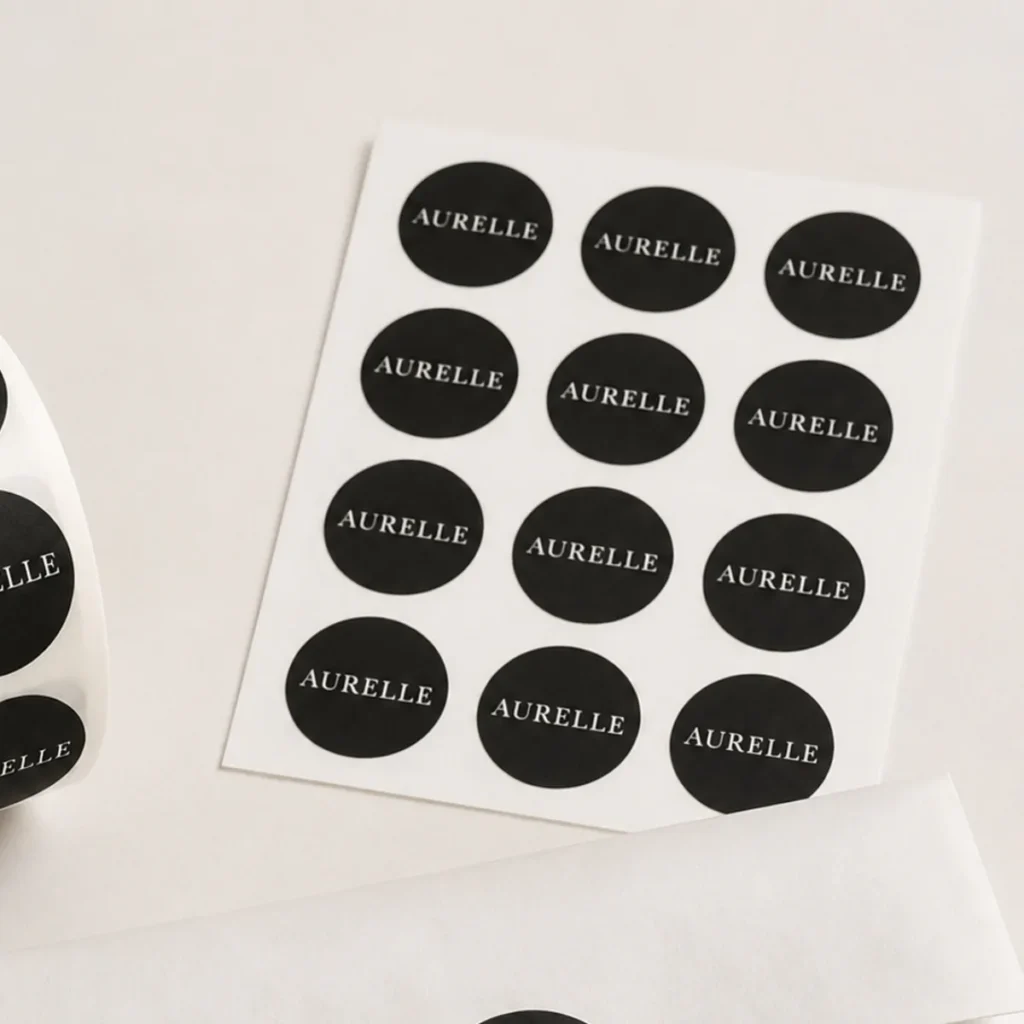
The sourcing record for custom labels and stickers is incomplete until it covers artwork, dielines, samples, finishes, and production handoff.
Adhesive is chosen for the surface it lands on, not for the label. Testing on the actual packaging is the only check that settles it.
Direct answer: For custom labels stickers adhesive material, buyers should plan custom artwork, dielines, samples, finishes, and production handoff.
Define the Label Application Surface and Environment
Use this table as one RFQ checkpoint. Each row should identify the requirement, approval evidence, and buyer action before production.
| Requirement | Factory control | Evidence to verify | Order risk | RFQ follow-up |
|---|---|---|---|---|
| Material / substrate | Factory logs substrate lot against approved spec sheet. | Compare incoming roll ID to the approved material data sheet. | Wrong substrate causes adhesive failure or print bleed. | Request the material data sheet with the sample. |
| Finish or surface effect | Operator checks gloss, matte, or soft-touch against a sealed master. | Hold the sample at 45° under a daylight lamp and compare to the approved finish chip. | Finish mismatch makes the label look cheap or unreadable. | Ask for a finish chip alongside the production sample. |
| Artwork or logo file | Prepress verifies file resolution, bleed, and color space. | Check the PDF has 300 dpi, the approved bleed, and CMYK or Pantone references. | Low-res art prints blurry; missing bleed causes white edges. | Supply a print-ready PDF with all fonts outlined. |
| Sample approval | QC holds the signed-off sample as the production benchmark. | Compare the production run to the approved sample under the same light and surface. | Without a signed sample, a bad run is hard to dispute. | Sign and date the sample, then return a photo confirmation. |
Read the rows as one approval sequence for this custom labels stickers order. Start with material / substrate; use the risk and buyer-action columns to decide whether its evidence is sufficient. Verify it with the inspection method and approval evidence recorded in the table.
Keep the supplier response, marked sample, and approval owner for custom labels stickers under the same revision number. If any proof conflicts with the approved record, hold the quote, sample, or production release until the supplier explains the deviation in writing. Before closing the checkpoint, reconcile the latest drawing, sample, quotation, and approval comments, identify which record controls if they disagree, and document the resolution. Carry the signed table into the purchase order and production handoff so the same checks support quote comparison, sample approval, shipment release, and later reorders.
Identify substrate texture coating and curvature
Before requesting a quote, document the product surface where the label will be applied. Note whether the substrate is smooth glass, rough cardboard, curved plastic, or textured metal. Each surface type demands a specific adhesive tack and material flexibility. A glossy coating may require a different adhesive than a matte finish. Curved surfaces need a thinner facestock to prevent lifting. Share these details with the supplier so the sample matches the actual application environment and passes the first adhesion test.
Compare Label Material and Adhesive Options
Keep each label material and adhesive requirement beside its supplier proof and approval owner.
- Match material spec to application surface: Submit surface type, temperature range, and exposure conditions Provide recommended paper or film grade with data sheet Wrong material leads to delamination or legibility loss Approve material selection before sample production
- Confirm adhesive type with performance evidence: Specify permanent, removable, or freezer-grade requirement Share adhesive test report and application temperature range Adhesive failure causes label lift or residue on substrate Require signed adhesive approval before bulk order
- Validate lead time and MOQ in writing: State required quantity and target delivery date Confirm the MOQ and lead time in the RFQ Unverified schedule causes production delays or split shipments Issue a purchase order with agreed lead time clause
- Inspect sample against approved specifications: Provide approved spec sheet, artwork, and color reference Submit labeled sample with dimensional and color check results Undetected color or cut variation triggers reprint costs Document sample approval via signed checklist
Match paper film and finish to the application
Choose paper or film based on surface texture and exposure. Paper works for dry indoor use; film resists moisture and UV. Gloss finish enhances color, matte reduces glare. Test a sample on your actual substrate to confirm adhesion and appearance before bulk production.
Confirm permanent removable or freezer needs with evidence
Adhesive choice is not a guess. Ask the supplier for a short performance test: peel adhesion at expected temperature, residue check on the substrate, and freezer hold time if applicable. For permanent adhesives, ask for a 180° peel test; removable adhesives should leave no glue line. Without proof, bulk labels may fail during application or removal.
Before comparing suppliers, review packaging dieline and custom packaging specs for the related product or solution route.
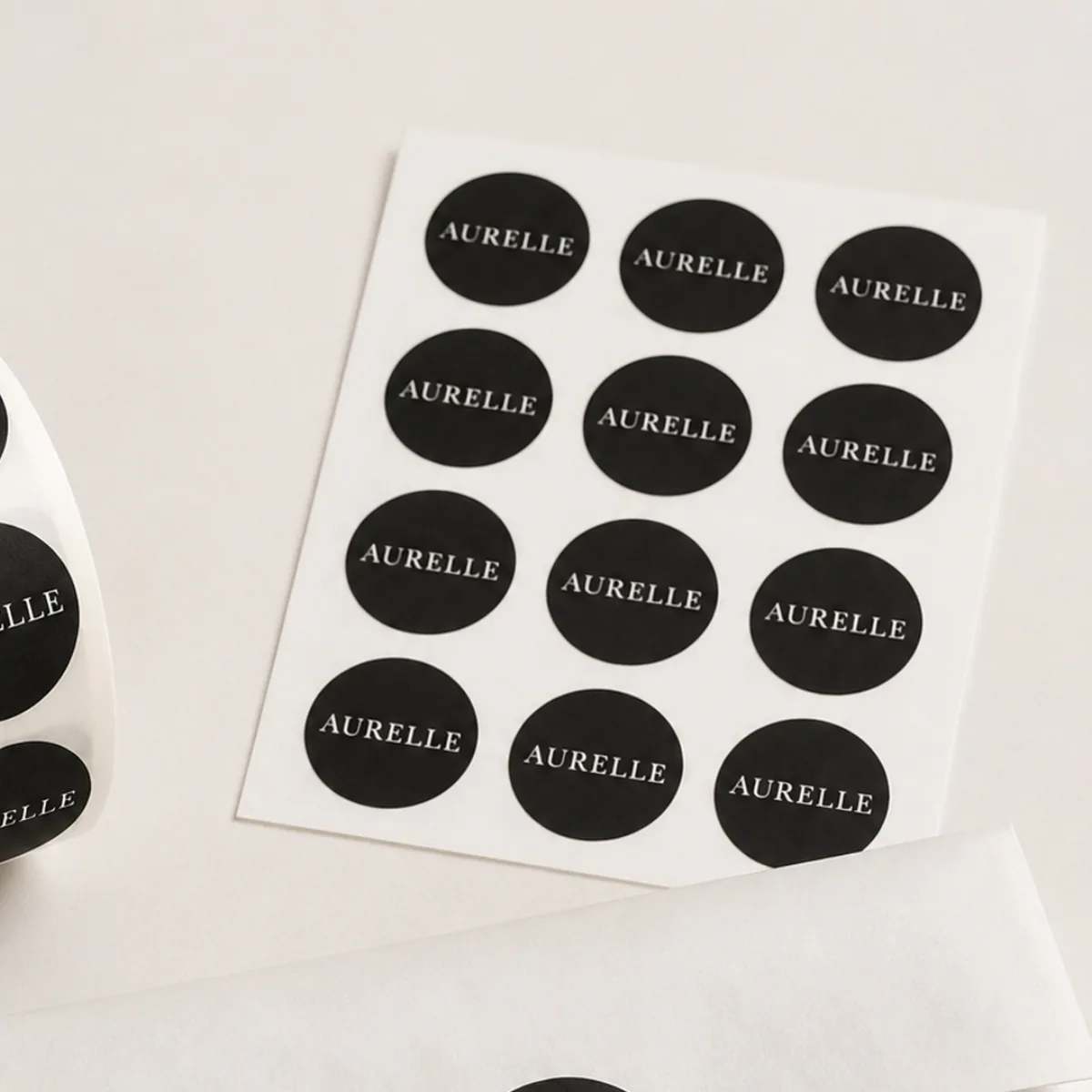
Prepare Artwork Color and Dieline Inputs
- Artwork dimensions, bleed, barcode, and color references: Misaligned cut or incorrect barcode leads to reprint costs and delivery delays Production manager Compare against approved dieline and PMS values, then measure barcode quiet zone Sign off and archive the final file version
- Change order to approved artwork: Alters production schedule, may extend the lead time Procurement manager Confirm revised lead time with production planner and check material availability Update purchase order with new timeline and resample if needed
- Color proof and finish sample: Off-spec color or missing varnish causes brand inconsistency and rejections Quality control lead Conduct visual match under buyer-approved viewing conditions and check varnish coverage Request revised sample if fail; approve and archive reference if pass
Identify white ink varnish and finishing requirements
If your label stock is clear or metallic, the white ink underprint must be mapped on a separate layer with full opacity. Varnish or spot UV should also be isolated so the printer can apply them without contaminating adhesive zones. Missing these layers leads to a dull finish or delamination during application.
Run Adhesion and Print Sample Checks
If the sample fails to stick firmly or the print smudges, the production run will waste material and delay delivery. Use this decision rule: approve the sample only when it passes both adhesion and print checks on the actual production surface.
Use the real surface and repeatable dwell time
Test the label on the exact substrate (e.g., corrugated box, glass jar, HDPE bottle) that will be used in production. Apply the label with the same pressure and dwell time as the factory line. Ask your supplier: What is the recommended dwell time for full adhesion on this surface? If the supplier cannot confirm, request a written adhesion test report.
Inspect peel edge lift rub color and application behavior
After application, check for edge lift, color accuracy, rub resistance, and how the label behaves during application (e.g., wrinkling, air bubbles). Use this checklist:
- Peel test: Does the label edge lift within agreed response time?
- Rub test: Does the print fade or transfer when rubbed with a dry cloth?
- Color match: Is the sample within the agreed tolerance (e.g., buyer-approved color tolerance)?
- Application behavior: Does the label lay flat without bubbles or wrinkles?
Before approving the sample, decide: What is the minimum peel strength required for your application? and How many consecutive passes must the rub test survive? Document the answers in the RFQ handoff.
- Peel edge lift: No lift after agreed response time on real surface; Request adhesive re-selection
- Rub resistance: No color transfer after standard rub test; Request overlaminate or ink change
- Color match: Within agreed tolerance; Request color adjustment
- Application behavior: No wrinkles or bubbles; Adjust liner or application method
Passing these checks reduces production risk and ensures the sample is ready for quote confirmation and sample handoff. For more on label testing, see custom packaging solutions.
Freeze the Approved Label for Reorders
Once the sample passes adhesion and print tests, archive the exact material, adhesive, artwork, and physical sample. This frozen record prevents drift during reorders. Without it, a supplier may substitute a different adhesive batch or roll orientation, causing delamination or misalignment on the application line.
Archive material adhesive artwork and sample
Store the approved material spec sheet, adhesive data sheet, final CMYK+Pantone artwork, and a signed wet sample. Label each with the approval date and version number. This eliminates guesswork when reordering.
Control substitutions lot changes and roll orientation
Require written approval before any lot change or adhesive substitution. Specify roll orientation (winding direction, core size) in the frozen record. A misoriented roll can jam automatic labelers, halting production.
- Material: Supplier spec sheet, thickness, facestock type
- Adhesive: Adhesive data sheet, tack level, temperature range
- Artwork: Final print-ready file with color codes
- Sample: Signed physical sample with approval date
Freezing the approved label reduces reorder risk and speeds quote request handoff. Provide the archive to your factory with each new purchase order to ensure consistent execution.
Use paper packaging quality control for related checks.
Conclusion: Approve Adhesive Fit on the Actual Packaging Surface
The final approval of your custom label adhesive fit must be performed on the actual packaging surface, not a flat sample sheet. Compare the adhesion, peel resistance, and print durability under real-world conditions—curved corners, textured substrates, and sealed closures. Document the exact material, adhesive type, and finish that passed, and shortlist only suppliers who provide production-equivalent samples for this test. Validating the spec now prevents costly reorders and production delays, so request a quote with the approved sample reference to lock in the correct adhesive configuration for your run.
To request a quote, visit packaging accessories and confirm the final specification, quote assumptions, sample approval, QC evidence, approval risk, and supplier follow-up before bulk order.
Custom Label and Sticker Sample FAQ
How should buyers confirm packed box dimensions?
Confirm packed box dimensions by measuring length, width, and height of the outer carton after the labels are applied. Compare these against your shipping carrier’s maximum limits to avoid surcharges, and request the supplier’s packed carton spec sheet for verification before production. Ask how QC will check the sample, color, finish, packing, and bulk order.
Which sample or QC proof should buyers request?
Request a production-equivalent sample on the exact adhesive material and finish you specified. This sample should be tested for peel adhesion, rub resistance, and color accuracy under your actual application conditions before you approve the run.
Ask yourself: Are you verifying a new supplier's standards?
Yes, when verifying a new supplier, shortlist only those who provide a material data sheet and a pre-production sample with documented QC checks. Compare their adhesive spec and lead time against your project requirements, and request a second round of samples if the first fails adhesion or print tests.
What should buyers verify before approving labels stickers adhesive material sample approval?
Before approving the label sample, request a sample or written proof that matches the final material, structure, print, finish, and packing requirement. Ask what QC evidence the supplier can return and who owns approval if the sample changes. The risk is moving to bulk production without a shared reference for defects, color, fit, or reorder consistency.
Unsure which material or finish is right for your project?
If you are unsure about material or finish, request a sample pack from the supplier covering the top two adhesive options and surface finishes. Test each on your product for adhesion and durability, then compare cost and MOQ before finalizing your spec.
quote request handoff: Send Specs for Review.
Source check: ISO 2859-1 sampling inspection standard.
Ask a Packaging Question