

The sourcing record for a paper bag order is incomplete until it covers samples, materials, print, tolerances, certifications, and bulk-production risk.
Sample approval is the point where a paper bag order stops being negotiable. This sets out what gets locked at each stage and what can still move afterwards.
Direct answer: Before bulk paper bag production, buyers should verify samples, materials, print, tolerances, certifications, and bulk-production risk.
Define the Buyer Decision for Paper Bag Sample Approval Workflow before production
- Confirm sample matches written spec sheet: Prevents bulk production from deviating from approved dimensions, material, and print. Compare sample against spec sheet for size, GSM, color, and finish. Bulk order may be rejected due to non-conforming product. Document any discrepancies and request revised sample before approval.
- Verify print registration and color accuracy: Poor print quality affects brand image and customer perception. Use a loupe to check registration and compare colors against Pantone references. Off-spec print leads to costly reprints or order cancellation. Request a press proof or digital color sample for sign-off.
- Assess handle strength and attachment: Weak handles cause breakage during use, leading to returns and damage claims. Perform a pull test on the handle attachment and check for secure stitching or gluing. Handle failure in the field results in customer complaints and liability. Ask supplier for handle strength test data or conduct a simple stress test.
- Check MOQ and lead time alignment: Ensures order quantity and production timeline fit your procurement plan. Confirm MOQ of 200 pcs and standard lead time of 15–30 working days after specifications, artwork, and sample requirements are confirmed with supplier. Order delays or minimum quantity mismatch disrupts inventory and launch schedule. Place sample approval with explicit MOQ and lead time confirmation in PO.
Confirm Product and Order Scope
For paper bag samples, use a release rule: approve only when the supplier evidence matches the written requirement.
- Paper bag material and dimensions match the approved spec sheet exactly. Signed spec sheet with material GSM, size, and finish tolerances. Supplier quality team during sample submission. Bulk production may use wrong substrate or dimensions, causing rejection. Compare the spec sheet against the physical sample before signing off.
- Print color and registration are within the agreed tolerance. Color proof or Pantone reference with signed approval. Supplier production team with the sample. Color mismatch in bulk leads to costly rework or order cancellation. Verify the proof against the approved color standard under daylight.
- Sample passes the functional test for bag weight capacity and seal strength. Test report or video of the weight and seal check. Supplier QC department. Bags may tear or open during filling, causing product loss. Request the test report and retain a sealed reference sample.
- Artwork and branding elements are correctly placed and free of errors. Final artwork proof with buyer sign-off. Supplier pre-press team. Misprinted branding or missing elements damage brand reputation. Review the proof line by line and confirm approval in writing.
- Supplier has capacity to deliver the order within the agreed lead time. Production schedule or capacity confirmation letter. Supplier production planner. Late delivery disrupts your launch or retail shelf dates. Cross-check the schedule against your required delivery window.
Material and specification fit
Before bulk production begins, confirm that the paper bag sample matches every written specification. Compare GSM, dimensions, handle type, and finish against the approved spec sheet. A signed spec sheet from the supplier provides the baseline. Without this check, the bulk run may use the wrong substrate or size, leading to rejection at your receiving dock.
Supplier reliability and quality checks
Assess supplier capability by reviewing their sample approval process and quality control documentation. Request evidence of past paper bag runs, such as test reports or production photos. The buyer must verify that the supplier's production team can consistently replicate the approved sample. A signed approval sample and written confirmation from the supplier reduce the risk of bulk deviations.
RFQ checkpoint
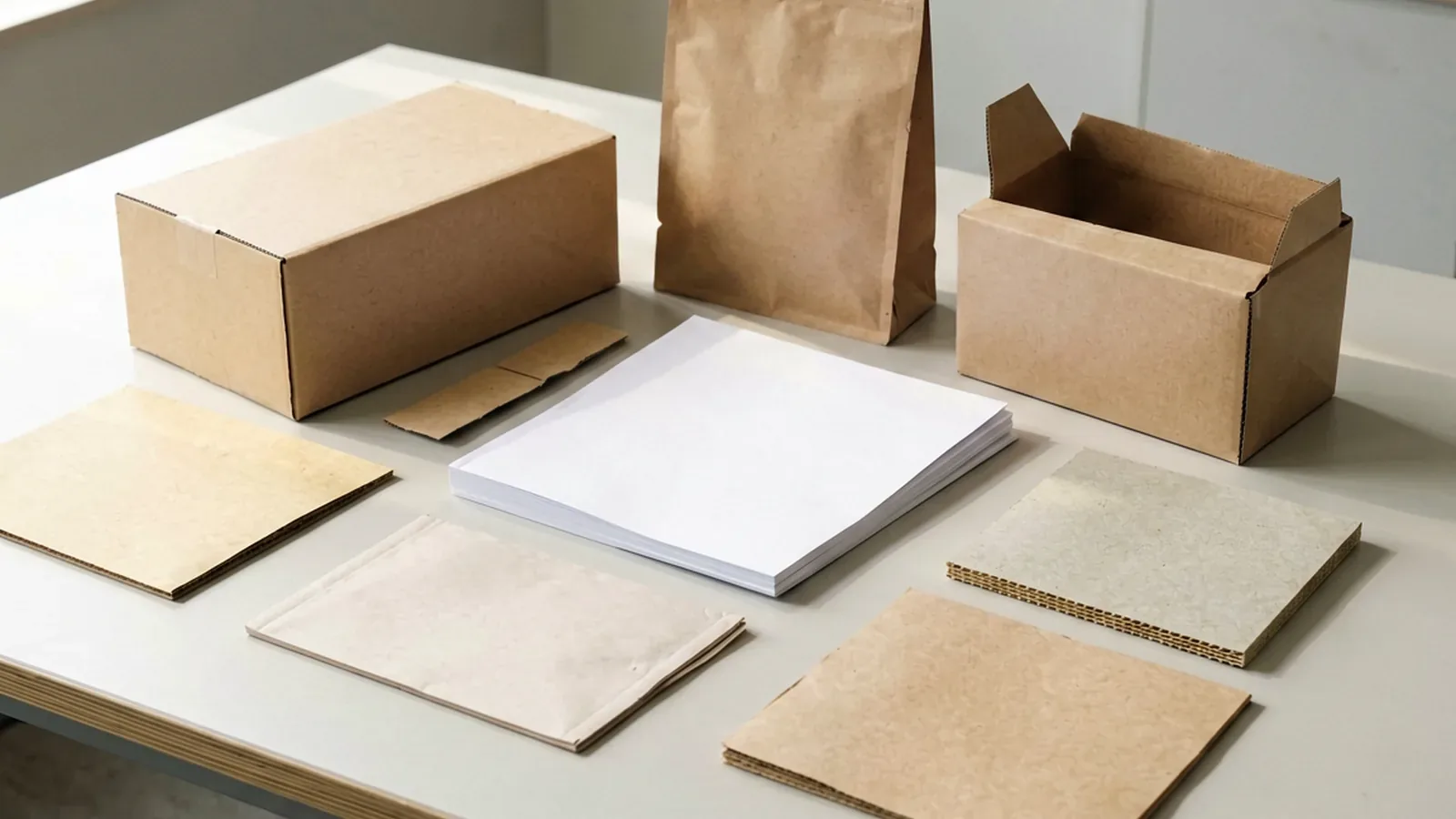
Build the Verification Checklist
- Supplier cannot demonstrate paper bag sample approval workflow before bulk production: Without a documented approval gate, bulk production may start with unverified dimensions, material grade, or print registration, leading to costly rework. Request a written sample approval workflow that includes sign-off steps for material, size, and print before production release. Supplier's internal sample approval checklist or workflow document with sign-off dates and responsible roles. Verify the workflow includes a formal gate for paper bag sample approval before bulk production.
- Supplier has no record of GSM or material grade verification on the sample: Unverified material grade leads to bags that tear under load or fail buyer's quality standards, risking brand reputation. Ask the supplier to provide the GSM test result and material certificate for the sample's paper stock. GSM test report and material grade certificate from the paper mill or supplier's incoming inspection log. Document the verified GSM and grade in the sample approval record before authorizing bulk production.
- Sample approval record lacks a comparison to the approved artwork and color standard: Print color variation, misaligned logos, or wrong finish (matte vs. gloss) can make the bag unusable for retail or branding. Require the supplier to attach the approved artwork and a color standard (Pantone number or physical chip) to the sample approval record. Signed sample approval record that includes a side-by-side photo of the sample next to the approved artwork and color standard. Shortlist only suppliers that provide a complete sample approval record with artwork and color comparison.
- Supplier cannot provide a production timeline that starts after sample approval: Starting bulk production before sample sign-off bypasses quality control and may produce non-conforming goods. Confirm the supplier's production schedule shows bulk start only after the sample approval date, not before. Production timeline or order confirmation that lists the sample approval date as the trigger for bulk start. Add a contract clause that bulk production begins only after written sample approval is issued.
Compare Quote and Production Assumptions
The main failure mode for paper bag samples is approval before the supplier has resolved the listed evidence gaps.
- Does the quote assume a specific paper grade and GSM that matches the approved sample? Switching to a lower GSM or different grade after sample approval is a common cost-saving tactic that changes bag strength. The quote references the exact paper grade, GSM, and finish that were used in the approved sample. A downgraded paper grade can cause bag tearing during filling or transit, leading to returns. Cross-check the quote's material spec against the sample's recorded GSM and grade before signing.
- What is the supplier's process for locking the sample specification before bulk production? Without a formal lock, the factory may interpret the sample as a reference rather than a fixed standard. The supplier uses a signed sample approval sheet that freezes material, dimensions, and print colors. An unlocked spec allows the supplier to substitute materials or change dimensions without notice. Require a written sample approval sheet that both parties sign before the bulk production start.
- How does the supplier handle color variation between the sample and the bulk run? Color drift is a common complaint in paper bag orders, especially for branded bags with Pantone matches. The supplier provides a color tolerance standard and a proof of the Pantone match. Uncontrolled color variation can make the final bags look off-brand and unsellable. Ask for a color measurement report on the sample and confirm the same standard applies to bulk.
Run the Review Before Approval
At this checkpoint, the buyer must confirm that the sample matches every written specification from the RFQ—including dimensions, paper weight, and construction details—before authorizing bulk production. The output required is a signed-off sample report with no open deviations.
Questions to send back to the supplier
- Does the sample match the approved tolerance range from the RFQ?
- Is the paper weight within the tolerance stated in your purchase order?
- Are all print colors aligned with the approved Pantone references, and is the registration within the approved tolerance?
- Does the gusset depth match the drawing provided during the sample handoff?
- Has the supplier provided a signed checklist confirming each spec point?
When to revise, escalate, or reject
If any dimension or material property falls outside the quote request-confirmed tolerance, the buyer obtains a revised sample before moving forward. Escalate to a senior quality manager when the supplier cannot demonstrate a clear corrective action plan. Reject the sample outright if the deviation exceeds the agreed rejection limit or if the construction defect (e.g., misaligned glue line) creates a production risk. Use the table below to guide the decision.
| Checkpoint | Action |
|---|---|
| Dimension deviation within tolerance | Approve and proceed to bulk |
| Dimension deviation outside tolerance but within the agreed rejection limit | Request revised sample with corrective plan |
| Deviation beyond the rejection limit or structural defect | Reject sample; escalate to sourcing team |
| Missing RFQ-confirmed spec evidence | Hold approval until supplier provides proof |
After the review, update the sample approval log and attach the signed-off report to the bulk production order. This ensures the factory execution matches the buyer’s verified requirement.
Move from Review to RFQ or Sample
Before you send the next message, the failure mode is a paper bag sample that looks right in photos but fails in hand feel, ink adhesion, or crease placement. The control is a release rule: approve only when the supplier evidence matches the written requirement. If the sample passed your checklist, you still need to close the loop with a formal handoff to quote request or sample production.
Inputs to include in the next message
- State the approved sample reference number and date.
- List every spec that was verified: dimensions, paper weight, handle type, glue seam, print finish, and color tolerance.
- Include the exact cost or MOQ assumptions that were confirmed during review.
- Flag any production risk that remains open, such as ink bleed on recycled stock or handle pull strength.
- Request a written confirmation of factory execution steps for the next gate.
Ownership and sign-off for the next gate
Assign one owner for the quote request or sample handoff. That person must confirm the supplier has the same checklist you used. The sign-off should be a written release, not a verbal ok, and it must state which deviations are acceptable and which are not. This prevents the next stage from starting with ambiguity.
Use the table below to map the handoff responsibilities.
| Gate | Owner | Required Evidence |
|---|---|---|
| Sample review | Procurement | Checklist with pass/fail per spec |
| RFQ release | Procurement + Quality | Approved sample reference and cost basis |
| Sample production | Factory QC | In-process inspection report |
After the table, confirm that the next message includes the approved sample reference, the verified specs, and the owner’s sign-off. This closes the review loop and moves the project forward without rework.
Source check: ISO/TC 122 packaging standards; How to Review a Custom Bag Sample Before Bulk Production; Paper Bag Sample Testing Questions Retail Buyers Can Ask Suppli….
In conclusion
The sourcing choice for paper bag bulk production rests on a disciplined sample approval workflow that compares every physical attribute—dimensions, print registration, color, handle attachment, and material weight—against the written specification before any production order is released. Buyers review that the approved sample is accompanied by a signed confirmation from the supplier, that the minimum order and lead time are locked in the quote request, and that a clear handoff document exists between the procurement and quality teams. This approach shortlists only those suppliers who can demonstrate consistent quality at the sample stage, reducing the risk of costly rework or shipment rejection.
Documenting each approval gate—from the initial sample review through to the final sign-off—creates an auditable trail that protects both the buyer and the supplier. By checking for color mismatch, poor print registration, incorrect dimensions, or inadequate handle reinforcement, and by retaining a sealed reference sample, the buyer ensures that the bulk run matches the approved standard. This verification step, combined with a confirmed minimum order of 200 pcs and a standard production lead time of 15–30 working days after specifications, artwork, and sample requirements are confirmed, transforms the sample approval process into a reliable foundation for the entire procurement cycle.
Paper Bag Sample Approval Workflow before production FAQ
What should buyers confirm first?
Buyers should first confirm that the paper bag sample matches every written specification—including dimensions, paper weight, handle type, and printing colors—before any cost or minimum order discussion. Compare the sample against your spec sheet and document any deviation, then verify that the supplier’s minimum order aligns with your order volume; for custom paper bags the project-level minimum order is 200 pcs unless a product-specific exception is confirmed.
Which proof should be retained for approval and reorders?
Retain a signed approval sample and a written confirmation from the supplier that the production run will match that sample exactly. For reorders, keep the original sample and the approval document so you can compare future samples against the same benchmark, and confirm lead time remains 15–30 working days after artwork and spec confirmation. Approving the wrong structure or supplier proof can create quality, cost, or delivery problems.
Which warning signs should stop the order?
Stop the order if the sample shows color mismatch, poor print registration, incorrect handle attachment, or any deviation from your written requirement that the supplier cannot explain or correct. Also halt if the supplier cannot provide a sample approval document or cannot confirm the minimum order and lead time in writing before production begins.
quote request handoff: Send Specs for Review.

Ask a Packaging Question