

An online box builder is useful for exploring a known format, but its instant estimate can hide assumptions about material, print, inserts, proofing, packing and freight. A manufacturer review becomes necessary when those assumptions affect whether the package can be produced and repeated.
Quick buyer answer: Use an online builder when you have a standard structure, confirmed dimensions, simple artwork and a clearly stated price basis. Move to a manufacturer-led RFQ when the order needs a custom dieline, insert fit, controlled color, special finishes, physical sampling, export packing or repeat-order QC. Treat the online result as an estimate until those production assumptions are returned in writing.
How this guide was prepared: The comparison covers specification ownership, quotation scope, sampling, production control and delivery terms. ISO 9001:2015 is relevant to documented quality-management processes, while the ICC Incoterms rules define recognized buyer/seller delivery obligations. Neither validates an instant price or guarantees a supplier; buyers must confirm the exact quote inclusions, sample and contract. Reviewed 24 August 2026.
The useful boundary is evidence: a self-service estimate can frame options, while a production quote must identify the structure, material, proof, packing and commercial assumptions the supplier will actually follow.
What an online box builder can and cannot confirm
An online box builder is useful when the buyer already knows the size, board, style, print coverage, and quantity. It becomes risky when the order needs a custom structure, insert fit, color approval, finish sample, or factory-side quality control before the quote is trusted.
| Option | Use case | Tradeoff | approval risk | Verification check |
|---|---|---|---|---|
| Online box builder | Simple mailer, carton, or folding box with a known dieline and low customization risk. | Fast estimate, but limited review of material, artwork, finish, insert, packing, and freight assumptions. | The price may look complete while sample approval, color control, or production tolerance is still undefined. | Confirm whether the builder can issue a dieline proof, material spec, print proof, and repeat-order production record. |
| Template plus supplier check | A buyer starts with a standard size but still needs artwork, insert, or finish confirmation. | The template speeds the brief, but the supplier must still verify the spec before sample approval. | A quote based only on dimensions can miss setup, MOQ, finish, packing, or freight cost drivers. | Ask the supplier to check the dieline, print area, material grade, and sample approval path before final quote. |
| Manufacturer-led RFQ | Custom paper boxes, bags, rigid boxes, inserts, or multi-item packaging sets. | Slower than an instant estimate, but stronger control over specification, cost, quality, and reorder risk. | If factory review is skipped, the buyer may approve a sample that cannot be repeated in bulk production. | Request factory confirmation of material, color, finish, tolerance, packing method, MOQ, lead time, and QC checks. |
Standard dielines and instant pricing assumptions
Use a builder estimate as a planning number, not as final approval. The buyer should check the specification behind the estimate: box style, board or paper grade, size tolerance, print coverage, finish, packing quantity, and whether freight or setup cost is excluded.
Limits around inserts, color proof, and production changes
When the design includes an insert, special finish, tight color target, barcode position, or launch deadline, ask for proof before the order moves forward. The safer action is to turn the builder output into an RFQ brief and ask the manufacturer to confirm what can be sampled and repeated.
Where a custom packaging manufacturer changes the decision
A manufacturer changes the decision when the buyer needs the factory to verify a packaging specification before sampling. That includes material choice, print method, finish, insert fit, packing workflow, quality control, MOQ, lead time, and the cost drivers that are not visible in a simple online estimate.
| Option | Best fit | approval risk | Verification check | buyer follow-up |
|---|---|---|---|---|
| Repeat standard carton | Stable reorder with approved size, material, and artwork. | Low if the supplier can match the last production spec and QC record. | Compare the new quote against the approved sample, packing spec, and previous order notes. | Request a reorder quote and confirm any material, MOQ, or freight changes. |
| Custom paper box or bag | Brand packaging with structure, print, finish, and sample approval requirements. | Medium to high if the quote is based on dimensions only. | Ask the manufacturer to confirm paper grade, print method, finish, handle or closure, sample cost, and lead time. | Send artwork, target quantity, product dimensions, and approval deadline for RFQ review. |
| Rigid box, insert, or multi-component set | Premium launch, gift, retail, or ecommerce packaging where fit and presentation matter. | High if insert tolerance, color, finish, and packing method are not controlled together. | Request a fit sample, color proof, finish sample, packing test, and supplier QC checklist. | Shortlist the supplier only after sample proof and production handoff are clear. |
- Criterion: the manufacturer can review dieline, material, print, finish, insert, packing, MOQ, and lead time before the quote is treated as final.
- What to verify: request sample photos, proof files, QC checkpoints, and confirmation that the same requirement will be controlled in bulk production.
- Risk signal: a supplier quotes only from size and quantity, with no question about artwork, color, packing, approval, or freight.
- Proof to request: ask for material sample, color or finish proof, dieline check, and a clear sample-to-production approval step.
Custom structure, material, and finish review
Factory review matters when a small change affects assembly, display, protection, or cost. Ask the manufacturer to flag any material substitution, finish limitation, print risk, or packing change before the sample is approved.
Sample approval and production handoff
The buyer should know who approves the sample, what is locked after approval, and which changes require a new quote. That handoff is where manufacturer support reduces reorder risk.
RFQ checkpoint
Use the custom packaging page to confirm dieline, material, print, finish, sample, and quote inputs before asking for a production-ready RFQ.
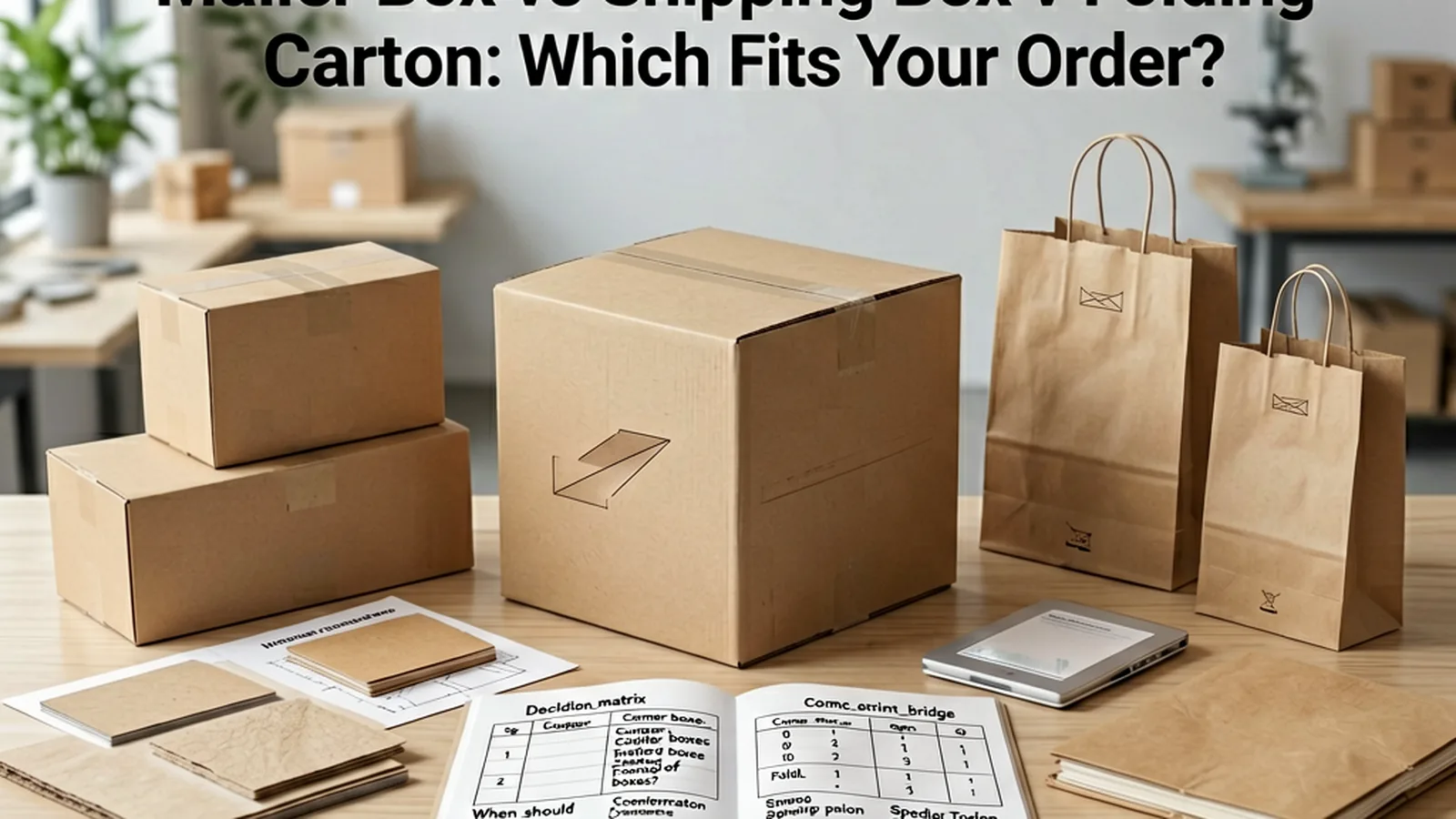
RFQ details that need factory review before sampling
A buyer can use an online estimate to frame budget, but the factory quote should be built from RFQ inputs that a production team can verify. The missing details usually sit in artwork, material, finish, packing, MOQ, freight, sample approval, and repeat-order control.
- RFQ input: product dimensions, weight, packing quantity, and target sales channel. Why it matters: these decide size, strength, and void space. approval risk: wrong fit can cause damage, crushed corners, or excess freight. Supplier question: ask how the structure will be verified before sampling. buyer follow-up: include the product sample or drawing in the RFQ.
- RFQ input: artwork, color target, print coverage, coating, foil, embossing, window, handle, or insert. Why it matters: each option changes setup, sample proof, quality control, and cost. approval risk: the cheapest quote may exclude the finish that the brand expects. Supplier question: ask what proof is needed for color, finish, and production repeatability. buyer follow-up: request a sample proof before bulk approval.
- RFQ input: order quantity, launch date, delivery address, and reorder plan. Why it matters: MOQ, lead time, freight, and packing method can change the real quote. approval risk: a quote without logistics assumptions can fail budget or schedule. Supplier question: ask what cost drivers are included and what will be rechecked before production. buyer follow-up: shortlist only suppliers that document these assumptions.
Quote inputs and hidden cost drivers
Do not compare only unit price. Ask whether setup, sampling, print plates, finish, packing, freight, and repeat-order changes are included or need separate approval.
Supplier proof, QC checks, and reorder support
For retail launches, align the RFQ with custom retail packaging requirements so shelf presentation, barcode placement, and finish approval are checked before the sample is signed off.
Online estimate vs factory quote: buyer checklist
The safest use of an online box builder is as a starting worksheet. Before the buyer approves a supplier or sample, convert that worksheet into a factory quote checklist that controls specification, cost, quality, lead time, MOQ, and approval responsibility.
- RFQ input: box or bag style, open size, finished size, board or paper grade, and tolerance. Why it matters: the manufacturer needs the specification to confirm production fit. approval risk: a vague size can create sample variance, freight waste, or packing delay. Supplier question: ask what size tolerance and material proof will be used. buyer follow-up: attach the dieline or request one before quote approval.
- RFQ input: artwork file, print side, color target, coating, and finish. Why it matters: color and finish often drive setup, sample proof, and QC checks. approval risk: the supplier may quote a simpler print method than the brand expects. Supplier question: ask whether a digital proof, color chip, or physical sample is required. buyer follow-up: lock proof approval before bulk production.
- RFQ input: insert, tray, window, handle, closure, label, barcode, and packing method. Why it matters: these details affect assembly, damage risk, and labor. approval risk: the final package may look correct but fail fulfillment or display. Supplier question: ask for a fit sample and packing confirmation. buyer follow-up: review related custom paper boxes if the structure is still undecided.
- RFQ input: quantity range, MOQ expectation, destination, deadline, and reorder plan. Why it matters: quote terms change when the buyer changes quantity, freight, or delivery timing. approval risk: a low estimate can become expensive after setup, freight, or urgent lead time is added. Supplier question: ask what price drivers can change after sample approval. buyer follow-up: compare the quote only after every supplier answers the same checklist.
RFQ inputs to prepare
Prepare the file package before asking for a final price: dieline, artwork, size, material, finish, product dimensions, quantity, delivery target, and approval deadline.
Proof to request before sampling
Request proof that matches the buying risk: material sample for structure, color proof for print, finish sample for surface treatment, fit sample for inserts, and QC confirmation for repeat orders.
- Supplier proof checklist: ask for sample records, production confirmation, QC checkpoints, and packing evidence before approval.
- Approval record: keep the approved artwork, dieline, material, finish, sample version, and supplier confirmation in one file.
- RFQ handoff: make each supplier answer the same requirements so price, lead time, and quality risk are comparable.
Where this fits: Beyond the product specs above, see custom packaging solutions to match the right packaging program, confirm supplier capability, and line up the RFQ inputs before requesting samples or comparing quotes.
In conclusion
An online box builder is useful for early sizing and budget framing, but it should not replace manufacturer review when the package needs custom structure, material, finish, insert, sample, MOQ, lead-time, freight, or QC confirmation. The buyer’s decision is not just where to click; it is whether the order is simple enough to estimate or complex enough to verify before sampling.
If the order includes custom artwork, retail presentation, ecommerce protection, or repeat-order risk, use custom packaging as the matching route. The buyer follow-up is to send product dimensions, artwork, quantity, finish targets, packing needs, and approval timeline so the quote can be checked before sample approval.
FAQ
When is an online box builder enough for a packaging order?
An online builder is usually enough for an early estimate when the buyer already knows the structure, size, print coverage, material, quantity, and packing method. It is less reliable when the order needs sample approval, special finish, insert fit, or factory QC confirmation.
When should buyers work with a packaging manufacturer instead?
Work with a manufacturer when the package must be reviewed against product fit, material choice, artwork, color proof, finish, MOQ, lead time, freight, and production repeatability. Those checks need supplier proof, not only a template price.
What proof should buyers request before approving samples?
Ask for a dieline check, material sample, print or color proof, finish sample, insert or fit sample, packing confirmation, and a written approval rule for bulk production. The proof should match the risk of the order.
Why can two packaging quotes carry different risk?
Two quotes can use different assumptions for material, print method, finish, setup, packing, MOQ, lead time, freight, and sample approval. A lower price is not better if it excludes checks that the buyer needs before production.


Ask a Packaging Question