

Skincare packaging projects stall when brands fall in love with finishes before structure, insert, and claim language are fixed. Pretty boards do not fix a bottle that rattles or a claim that cannot be printed.
Sequence structure, insert, finish, and claim boundaries so samples and bulk can be judged against one RFQ.
Direct answer: Start with the bottle, jar, tube, or kit dimensions, filled weight, breakage risk, sales channel, and required label copy. Use those inputs to choose the structure and insert; then approve color and finishes on production-intent stock and verify the packed product for its intended shelf or distribution route.
Decisions Skincare Brands Should Make First
Decide these before collecting decorative options:
- Primary pack (bottle, jar, tube, kit) dims and weight.
- Channel: retail shelf, DTC mailer, or both.
- Unboxing level: folding carton, rigid, sleeve, or set.
- Must-have claims and regulatory text owners.
If retail and DTC need different outer packs, specify both early — one hero rigid rarely solves both cost models.
Where two structures both seem to fit, a head-to-head trade-off on fill speed, damage risk, and shelf presence settles it faster than another mood board.
Assign an owner to product data, structure, artwork, claims, sample approval, and launch release. Open information should appear in the RFQ as an explicit decision, not as a supplier assumption.
Structure and Insert Planning for Skincare
Choose structure from the product’s physical behavior, not from reference images. Plan the insert around the product footprint, cap or pump clearance, filled weight, vulnerable surfaces, and breakage risk before discussing decorative finishes.
For kit-level insert specification, see the skincare set packaging insert quote checklist.
| Structure choice | When it fits | approval risk if wrong | Proof to request | buyer follow-up |
|---|---|---|---|---|
| Rigid box with lid | Premium sets and gift launches where unboxing is part of the product story | Higher unit cost and storage volume; overbuilding for a mass line | Request board grade and lid-fit tolerance with the quote | Approve structure before finish sampling |
| Folding carton | Single-SKU retail lines with shelf turnover | Crush risk for heavy jars if board is underspecified | Confirm jar weight and stack load against board choice | Ask for a loaded shelf sample |
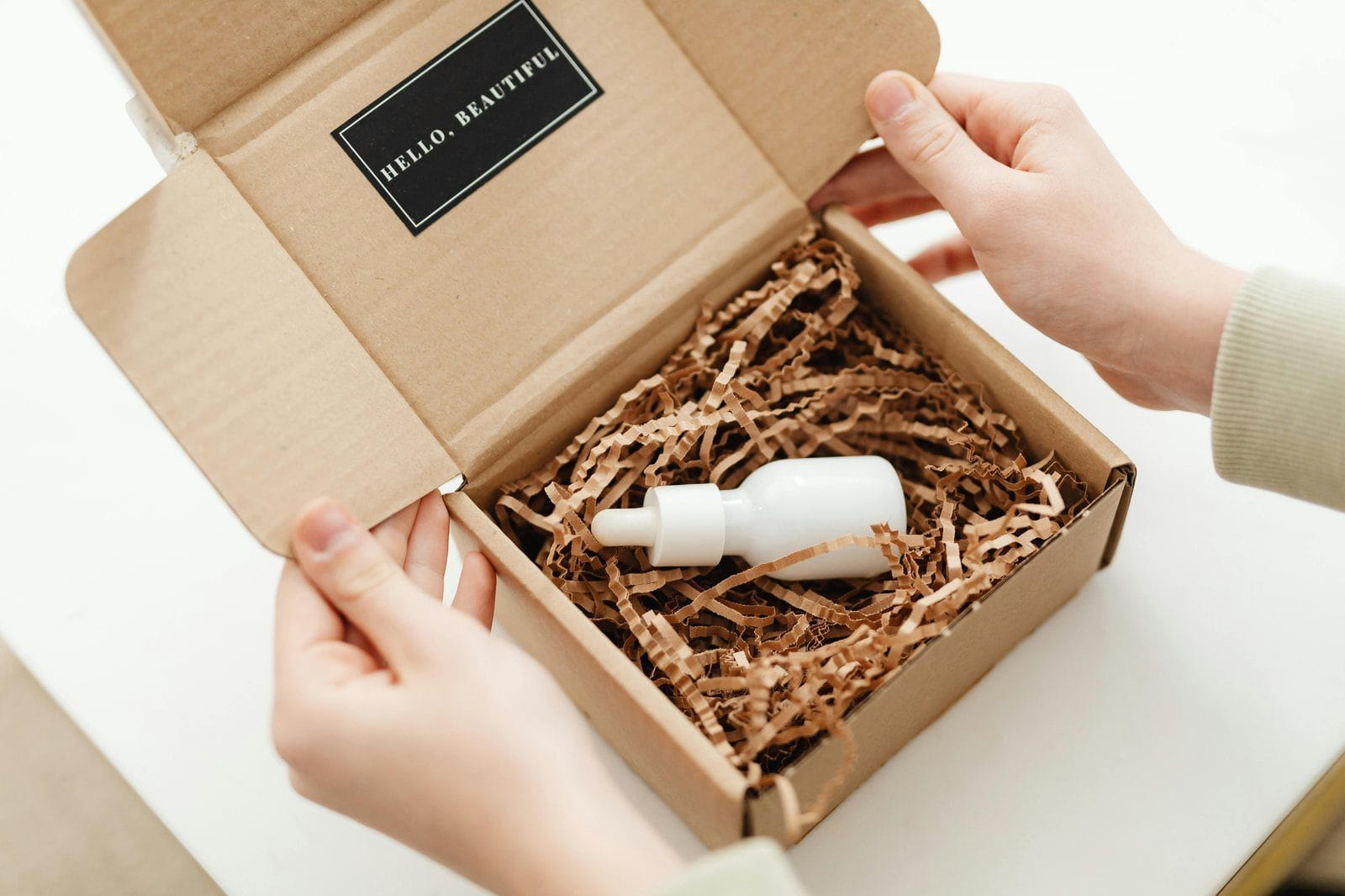
| Mailer with insert | DTC subscription or direct shipping | Insert movement causing glass contact in transit | Specify insert material and retention per bottle size | Run a drop check before bulk |
| Sleeve or belly band over base box | Seasonal variants without new tooling | Band position drift across print runs | Agree placement marks and acceptable range | Approve a banded production sample |
See custom paper boxes for structure and insert planning for skincare.
RFQ checkpoint
Match the solution route to the buyer scenario, proof requirement, and quote step before sampling this order.
Finish and Color Consistency Checks
Source check: Pantone explains that print and packaging color references depend on substrate and production route. Use its color guide selection overview to identify an appropriate physical reference, then approve the actual ink, coating, foil, and stock combination with the converter.
Premium finishes need production-stock samples:
- Soft-touch, foil, emboss — registration and scuff risk.
- Color on white vs kraft or specialty board.
- Batch-to-batch color method for reorders.
- Small text and barcode readability after finish.
Approve finish on the board you will buy, not only on a laminated marketing mock.
Label and finish suppliers describe the same consistency discipline in their own process notes — see cosmetic industry labeling capabilities for how color and material consistency is controlled across a product line.
See custom paper packaging for finish and color consistency checks.
Compliance and Sustainability Claim Boundaries
Keep claims inside what packaging and legal can support:
- Sustainability claims need defined scope (board, inks, recyclability path) — no vague green language.
- Regulatory text ownership sits with brand/regulatory, not the printer guessing.
- Language versions and markets affect panel space and fold layout.
If legal copy is late, freeze structure first and treat text panels as a controlled revision.
Packaging QC can verify approved copy placement, legibility, dimensions, construction, print, and finish. The brand’s qualified compliance owner must approve whether claims and regulatory wording are correct for the destination market.
Keep the approved claim text, evidence owner, market and language, artwork revision, and sign-off date with the packaging release record.
See paper packaging quality control for compliance and sustainability claim boundaries.
Skincare Packaging Sample Checklist
- Fit: primary packs seat without rattle or hard press.
- Insert: components stay put through tilt.
- Open/close and unboxing sequence as brand intended.
- Color/finish match locked files on production stock.
- Ship or shelf check for the intended channel.
Photograph the approved set with revision IDs for bulk and reorders.
Use the same identified product units and artwork revision throughout the check so fit, retention, opening sequence, appearance, and channel performance are not approved against different baselines.
Use custom paper boxes to align the sample and production handoff.
Move From Ideas to Quote-Ready Specs
- Product facts dimensions, weights, and closure behavior of every component.
- Structure and insert map per SKU, with board and finish targets.
- Revision IDs for artwork and claim text so quotes track the right files.
- Quantities and rounds expected sample rounds plus channel packing method.
Use the brand’s cosmetics packaging route so kit and single-SKU lines stay consistent and the factory quotes against one controlled revision set.
Ask the supplier to mark confirmed specifications, proposed alternatives, and missing inputs before issuing the final quote or starting the sample.
Conclusion: When to Approve Bulk for a Launch
Approve bulk when fit, insert, finish, and claim text all pass on one revision for the launch channel.
Request a packaging review with product photos and channel goals.
If claim text or insert map is still open, keep sampling.
For skincare packs sold in the EU, cross-check the artwork and label map against Article 19 of Regulation (EC) No 1223/2009. Then compare the required name and address, nominal content, durability information, precautions, batch reference, product function, and ingredients with the approved sample. Confirm the current market-specific requirements with a qualified compliance reviewer before release.
Hold approval until the parameters that drive cost — board grade, insert material, finish spec, and quantity split — are all confirmed in writing, because changing any of them after award resets both price and schedule.
Skincare Cosmetic Packaging FAQ
Do I need rigid for every skincare launch?
No. A well-fitted folding carton may be more suitable for a single retail SKU, while a rigid box may make sense for a gift set or presentation kit. Choose from product protection, channel, packing, freight, and brand requirements rather than from a premium appearance alone.
How early should I involve regulatory copy?
Early enough to size panels. Late legal text is a common dieline restart.
Can one mailer replace the retail carton?
Sometimes for pure DTC. If retail exists, plan both or accept different brand experiences.
What causes most beauty packaging bulk complaints?
Insert rattle, color drift, scuffed soft-touch, and lid/fit issues on rigid sets.


Ask a Packaging Question