
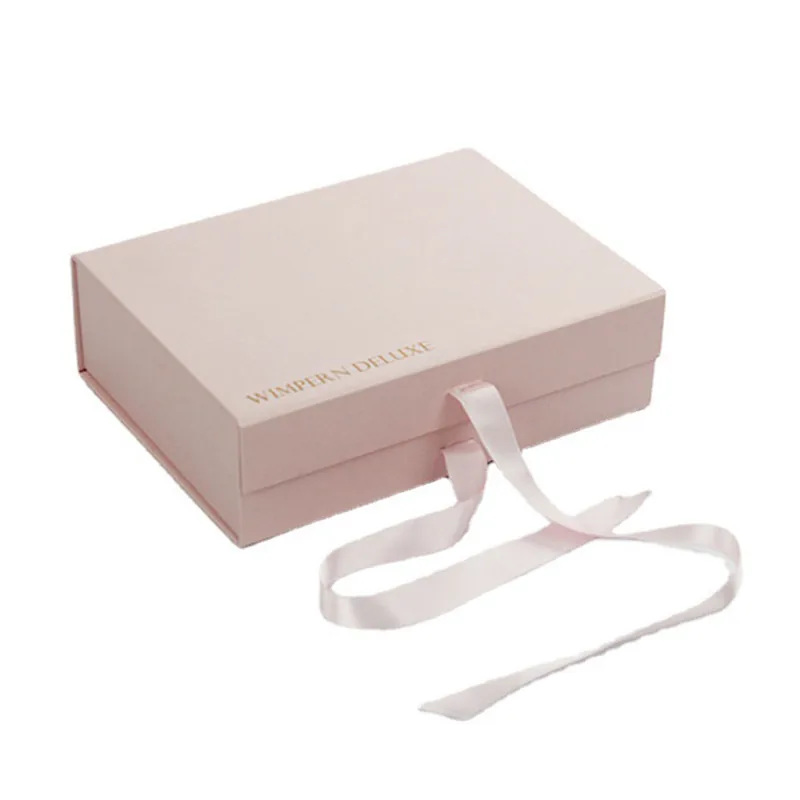
Magnetic closure boxes come in three sizing routes: A-series paper-size references (A5, A4, A3, plus deeper variants), photographed stock styles, or fully custom dimensions built from 200 pcs per size. Which route fits depends on your quantity, timeline, and how deep your branding goes — and the size family you pick decides what your product sits on inside the box.
From the factory side, the size question is the first thing we resolve before quoting: the same magnetic closure on a different size is a different dieline, a different greyboard caliper decision, and a different sample plan.
Use this guide to pick your size family, understand the spec options — closure styles, board thicknesses, wrap materials — and send specs that get a same-basis quote.
Magnetic Box Sizes, Answered First
Magnetic closure boxes are specified in three ways, and all three can mix in one order:
- A-series references — A5, A4, and A3 magnetic gift boxes, plus deeper variants for taller products. These are sizing shorthand buyers and designers already know.
- Stock styles — photographed, ready-made magnetic styles shipped in full cartons from 50–60 boxes per style, with your logo printed.
- Fully custom dimensions — built to your product’s exact fit from 200 pcs per size, with the magnetic closure strength and wrap material specified.
The route decision is a genuine trade-off, not a sales script: stock wins on speed and small quantities; custom wins on fit and brand depth. The product selection checklist walks that choice in detail — this guide focuses on the sizes and specs themselves.
The size question and the route question interact: an unusual product dimension can push the custom route earlier than quantity alone would, because a stock style that nearly fits shows in the sample — a corner gap, a lid that sits proud, an insert that shifts. If the product is rigid and fragile, start the size conversation with the internal dimensions and let the A-series references be shorthand, not constraints.
Next action: measure your product’s outer dimensions at the largest point, and read the A-series section with those numbers in hand.
A-Series Magnetic Boxes: What Fits Each Size
A-series sizes are paper standards most buyers already know from document sizes — which makes them useful shorthand for gift box sizing too. The fit examples below are illustrative sizing references for orientation, not a factory catalog: every order is confirmed against your actual product.
A5 magnetic box (small)
Roughly a postcard-to-small-book footprint. Fits: jewelry sets, a single candle, skincare duos, a watch box, small confectionery assortments. The compact footprint means the magnetic closure carries the unboxing — keep the interior tight so the product does not rattle.
A4 magnetic box (medium, and the deep variant)
Roughly an A4 sheet footprint — the most requested size family. Fits: apparel pieces (shirts, scarves), skincare sets of three to five items, medium candle duos, board-game-sized gift sets. The deep variant adds internal height for taller products: rigid gift sets, two-tier cosmetic kits, products with handles or protruding caps. If your product plus insert exceeds roughly a hand’s height, the deep variant is the conversation to have.
A3 magnetic box (large)
Roughly an A3 sheet footprint — the large end of the gift range. Fits: apparel sets with accessories, premium multi-item gift collections, larger home-fragrance sets, presentation kits. At this size, board caliper and wrap material choices matter more (larger spans need more rigid construction), and freight per box becomes a real planning input. Three checks deserve extra attention at A3-class:
- Lid span and magnet count — a wider lid needs more magnet positions to close with the same snap; the proposed magnet layout comes back with the dieline for approval.
- Wrap seam placement — larger wraps may seam on a visible face; ask where the wrap seam lands relative to the front panel.
- Packing profile — assembled magnetic boxes at A3-class consume master-carton volume quickly; confirm the packing count if freight is quoted per carton.
The scale intuition: A5-class is jewelry-scale (smallest), A4-class is apparel-and-set scale (the most requested family), A3-class is collection scale (the large end). Depth varies by variant — shallow for flat goods, deep for candles and rigid sets — which is why the deep variants carry their own listings. The exact centimeter dimensions come with the quotation’s proposed dieline, matched to your product’s clearance rather than assumed from the sheet name.
The unboxing context differs by size as well: A5-class boxes open like a jewelry case — held in two hands, magnets doing the work; A4-class opens on a table; A3-class invites an unboxing sequence on camera, which matters if your launch plans include content creators. Size, in other words, is also a content decision for your brand.
One conversion note: A-series sizes are edge-of-sheet references, and the internal usable dimensions of a magnetic box are smaller than the sheet edge by the wall thickness and wrap — a 1.5 mm greyboard wall with wrap paper takes roughly 2 mm per side, so measure your product’s clearance against the stated internal dimensions, not the sheet name. For tight-fit products (a rigid insert, a boxed set), ask for the internal dimensions in writing and check them against the product at its largest point — caps, handles, and sleeves included.
Next action: place your product against an A5/A4/A3 sheet you have on hand — that one check usually settles the size family.
Closure and Lid Options
“Magnetic closure” is the family name; the closure mechanics have variants that change the unboxing and the cost drivers:
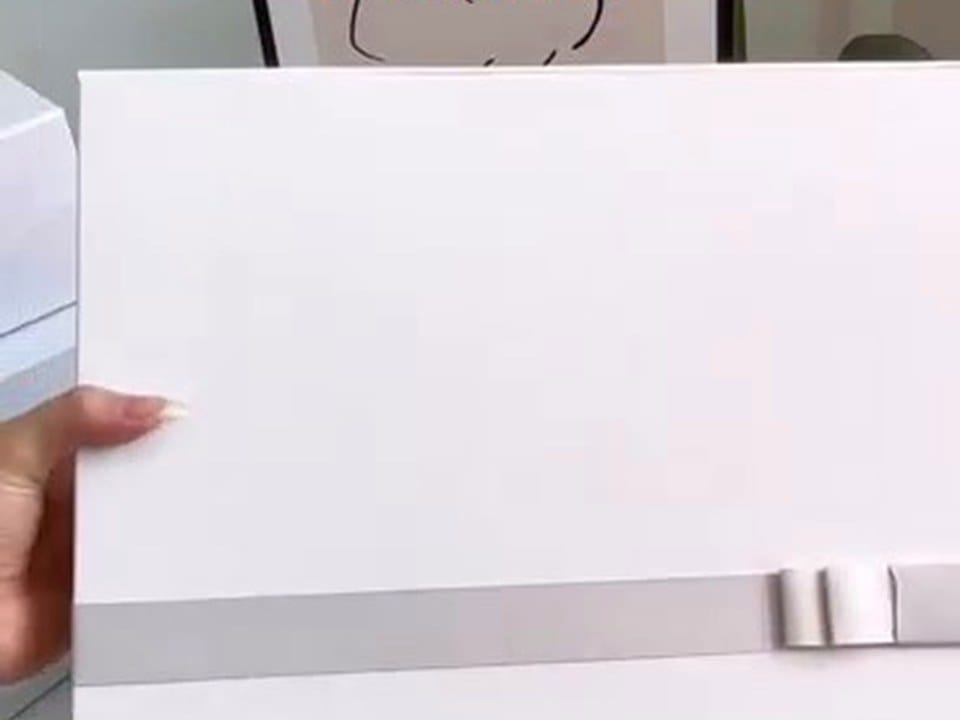
- Magnetic flap (classic) — the lid carries embedded magnets that snap onto a metal catch or a second magnet set in the base. Strongest “quality click” signal at opening.
- Ribbon and magnet combination — a ribbon pull assists the opening while the magnets hold the lid. The ribbon adds a finishing decision (width, material, print) and is the variant buyers often pair with luxury wrap papers. Search interest in a “magnetic gift box with ribbon” is exactly this construction.
- Clear lid variants — a PET/clear window in the lid so the product shows before opening. Changes the interior print logic (what is visible needs to be finished) and adds a material layer decision.
- Hinged magnetic lid — the lid stays attached to the base and opens like a book. Changes the dieline (hinge creases) and the packing profile.
Magnet strength and placement are part of the spec, not an afterthought: a large A3-class lid needs more magnet set or stronger catches to hold the same snap as an A5 lid, and the magnet positions decide where the lid ‘clicks’. The unboxing choreography differs too — a classic flap opens top-up on a table; a ribbon-assist invites a pull gesture; a clear lid wants the product visible without opening at all. Match the variant to how your customer will actually open the box, and the spec sheet carries that intent.
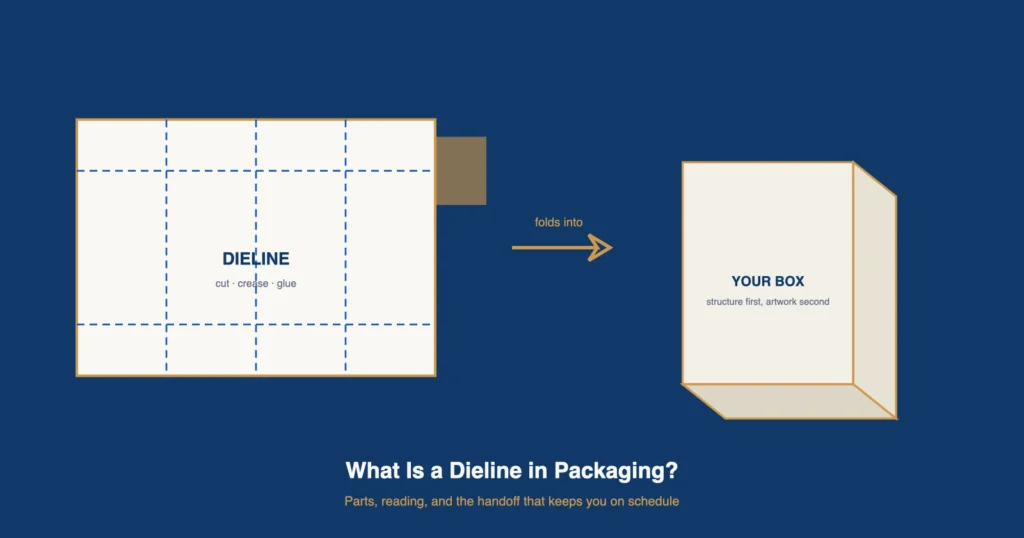
Each variant changes the dieline, the magnet count and placement, and the wrap coverage — which is why closure style belongs in the RFQ, not after it. The unboxing behavior differences are mapped by scenario in the buyer use-case fit checklist.
Next action: pick the closure variant that matches your unboxing intent, and name it in the RFQ with your size.
Material and Finish Specs
The construction standard for these boxes: rigid greyboard (1.0–3.0 mm) wrapped in coated art paper or specialty paper (128–157 gsm). The greyboard caliper is the rigidity decision — thicker board for larger spans and heavier products — and the wrap is the print surface.
Finish layers sit on top of the wrap:
- Matte lamination — soft-touch, muted color rendering; the common default for luxury feel.
- Gloss lamination — higher color punch; shows scuffs more readily.
- Specialty wraps — textured, metallic, or colored specialty papers change the base look before printing and pair with foil or spot finishes.
What buyers should confirm rather than assume: the exact caliper for the proposed size (larger A3 spans need stiffer board), the wrap gsm for heavy foil coverage, and the finish-safe areas where glue or magnets sit. These are quotation-confirmed details — the sample approval checklist catches them on the physical sample.
Freight reads the caliper too: heavier board and dense specialty wraps raise the per-box weight, and larger calipers add outside dimensions — both feed the dimensional-weight calculation that carriers charge on. For an A4-class box the difference between 1.0 mm and 2.0 mm greyboard is a quality decision at packing and a freight line at shipping; state your preference and let the quote carry both numbers.
Specialty wraps can change the conversation as well — textured, metallic, and colored wraps each carry their own availability and minimum considerations, so confirm wrap availability for your quantity and finish before the decision locks.
Next action: shortlist caliper and wrap preferences, and let the quotation confirm the structural feasibility for your size.
Stock Styles vs Fully Custom Specs
| Decision factor | Stock styles | Fully custom specs |
|---|---|---|
| Quantity floor | 50–60 boxes per style, full cartons | From 200 pcs per size |
| Chronologie | Stock order ships in about 15 working days | Sample, then bulk per the ordering table |
| Marque | Your logo printed on a photographed style | Fully custom: dimensions, wrap, print, closure layout |
| Ajustement | Approximate — sized ranges | Exact — built to your product’s clearance |
| Idéal pour | Launches, tests, small batches | Established products, retail lines, brand programs |
Both routes ship with the magnetic closure construction — the difference is who owns the dimensions. One order can mix sizes and styles at their minimums, and a common path is starting with stock on a first batch, then moving to custom once quantities justify it. The full route decision logic is in the product selection checklist and the program-level planning lives in the custom program planning checklist.
Next action: if your quantity per size is near or above 200 pcs, price the custom route in the same RFQ as stock — the comparison is the decision.
Two hybrid paths sit between the routes and suit a launch-then-scale pattern:
- Stock style + custom sleeve or band — the photographed box carries your printed logo, and a custom printed band or sleeve carries the campaign message. Fast, small-quantity, and the campaign element changes without touching the box inventory.
- Stock box + custom insert — the insert is cut to your product even at stock-quantity levels, so the opening moment looks fully custom while the box rides the stock program.
Both hybrids keep the stock timeline advantage and move the custom spend to the part the customer touches most.
Choosing the Right Size for Your Product
Mapping products to size families, as a starting table:
| Type de produit | Typical size family | Spec notes |
|---|---|---|
| Jewelry sets, watches | A5 | Tight interior, insert or foam holds pieces in place |
| Single candle | A5–A4 by diameter and height | Deep variant for tall vessels |
| Skincare sets (3–5 items) | A4 | Insert layout decides internal fit |
| Apparel (shirts, scarves) | A4, deep variant for folded thickness | Clearance for tissue wrap |
| Premium gift collections | A3 | Board caliper step-up for larger spans |
| Presentation kits | A3 or custom | Custom dims when the kit is fixed-content |
| Perfume/cologne bottles | A5 deep by bottle height | Deep variant by vessel height; insert holds bottle upright |
| Tea/coffee gift sets | A4 | Compartment insert separates tins and accessories |
| Board-game-sized sets | A4–A3 by component count | Depth accommodates stacked components |
| Chocolate/confectionery assortments | A5–A4 by count | Food-safe liner discussion belongs in the RFQ |
The clearance rule applies at every row: measure the product at its largest point, add wrap and movement clearance, and treat the result as your inside-dimension target. The fit-critical dimensions live on the inside of the box, and the inside/outside box dimensions rule — inside for fit, outside for freight — applies to magnetic boxes the same as any packaging.
For multi-item products, the insert decides the fit as much as the box: a molded cavity holds each item in place, a flat platform separates tiers, and a simple card divider prevents scuffing. State what the insert must hold and whether it is glued or loose — the magnetic box’s walls carry the insert’s weight at the lift, and the lift is part of the unboxing.
Common insert constructions, typically priced from simple to complex: a plain platform card (separates tiers), a die-cut cavity insert (holds each item in a cut-out), and a dual-density layout (firm cavity for the hero item, soft wrap recess for accessories). Each has a different sample timeline, so name the insert type in the RFQ rather than describing it at the sample stage.
If your product sits between two size families, the deciding inputs are the clearance your fragility requires and whether the launch plans include retail shelving — a box that must stand on a shelf is sized from the shelf spec inward, while a gift-and-ship box is sized from the product outward. Both start from the same measurement; they diverge on the clearance and the caliper.
Next action: find your product row, sanity-check with a sheet on hand, and carry the size family into the RFQ.
From Specs to Sample to Bulk
With specs confirmed — size family, closure variant, caliper and wrap direction — the chain runs through the checkpoints:
- 200 pièces au niveau projet ; minimum exact confirmé par taille et structure du sac. — built to the confirmed specs so the magnetic hold, wrap finish, and fit are all on real board before bulk. The sample approval checklist covers the physical checks.
- Bulk — standard production runs 15–30 working days after specs, artwork, and sample requirements are confirmed; stock styles ship in about 15 working days.
- Quantités — custom from 200 pcs per size; stock from 50–60 boxes per style in full cartons; sizes and styles can mix in one order at their minimums. Rush production can be arranged — scope confirmed in the quotation.
Each checkpoint has its own verification subject: the sample proves fit, closure hold, wrap finish, and print placement on real board; the bulk run proves consistency across the quantity — the same checks repeated on pulled units rather than on one hero sample. Rush production can be arranged when a launch date forces the timeline — scope and terms are confirmed in the quotation, never assumed.
Next action: carry the approved spec version number into the bulk order record, the same version discipline as any dieline-driven order.
For reorder planning, keep the spec sheet and the approved sample together as one record: the reorder RFQ then references the version instead of re-measuring, and the sample checklist re-runs only the physical checks. Collections that mix sizes reorder line by line — each size at its own minimum, confirmed against current stock availability.
Magnetic Box Specs FAQ
What is the smallest magnetic closure box you can make?
Fully custom runs from 200 pcs per size, and small A5-class footprints are common for jewelry and small sets — the practical floor is set by magnet size and board handling, so describe the product and confirm feasibility in the quotation rather than assuming a minimum dimension.
Can I print inside the box and on the magnetic flap?
Yes — the wrap carries print inside and out, including the flap. Confirm finish coverage on the flap’s magnet area so adhesives and magnets keep their hold; the sample shows the exact result.
Do magnetic boxes ship flat?
It depends on the construction, and the choice is a freight decision: collapsible magnetic boxes fold flat at their engineered hinges and re-assemble in seconds at use — the standard choice when storage, freight, or fulfillment volume matters. Fully rigid (non-collapsible) magnetic constructions ship assembled in master cartons, which preserves a seamless exterior at the cost of shipping volume. State which construction your order assumes so outer dimensions and packing counts are quoted on the right basis.
Can I mix sizes in one order?
Yes — custom orders can mix sizes and styles at their minimums (200 pcs per size), and stock styles order in full cartons per style. Mixing is the usual way collections and product lines ship together.
Ribbon closure or plain magnetic flap?
The plain flap is the strongest closure signal; the ribbon adds a pull assist and a finishing decision (width, material, and whether the ribbon carries print). Choose by unboxing intent — the use-case fit checklist maps scenarios to constructions.
Do deeper boxes cost proportionally more?
Depth adds board on the walls and can push the flat sheet into a larger cutting format, so cost rises with depth but not one-to-one with volume — the caliper may stay the same while the sheet format changes. Price the exact depth in the RFQ rather than scaling linearly from a shallow reference.
Can I order one custom size as a test before a full run?
The custom minimum is 200 pcs per size, so a first order at the minimum is the test — the sample confirms the spec before that quantity commits. Stock styles remain the lower-commitment test when 200 pcs is still above what the launch needs.
What decides the magnet strength for my box size?
Lid span and box weight: a larger lid needs more magnet positions to hold the same snap, and heavier contents pull the lid open at a lower angle. State the size family and contents in the RFQ and the proposed magnet layout comes back with the dieline for approval.
Get Your Magnetic Box Specs Quoted
Send four spec inputs — size family or custom dimensions, quantity per size, board and wrap direction, closure and finish — to the boîtes magnétiques sur mesure page and the quote comes back with stock and custom routes compared on the same basis. The program planning checklist turns the confirmed specs into an order plan.
Send four spec inputs — size family or custom dimensions, quantity per size, board and wrap direction, closure and finish — to get a magnetic box quote with stock and custom routes compared on the same basis.
Poser une question sur l'emballage