
Before approving a magnetic gift box, a sourcing team needs to know whether the actual contents fit and the proposed box can be assembled, closed and shipped as intended.
Separate product dimensions, insert support, closure construction and print approval, then bring the agreed details into one specification and quotation record.
Réponse directe : Choose custom magnetic packaging boxes from a loaded sample tied to the agreed structural drawing, print reference and packing plan. Keep unresolved features on hold and compare offers using the same quantity split, delivery state and approval conditions.
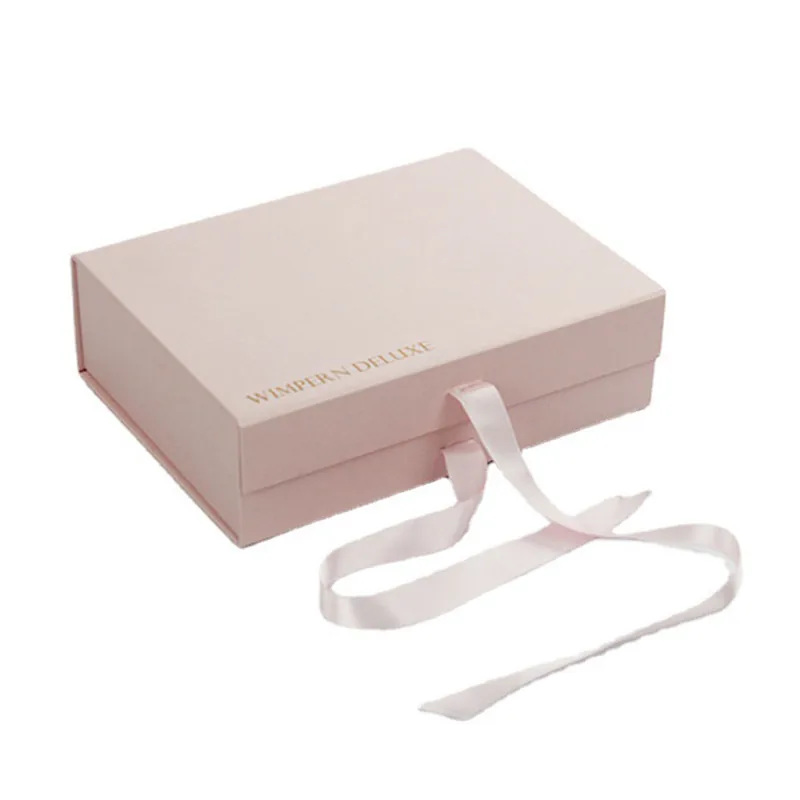
When a Fold-Flat Magnetic Box Fits the Product
Product fit, assembly work and the delivery route determine whether a fold-flat magnetic box belongs on the shortlist. The presentation box must stand square after assembly, hold the intended contents and close without being forced. A box photographed empty cannot answer those questions.
For the factory sample request, compare proposals using the actual packed weight and the condition in which the boxes arrive. Flat delivery moves an assembly step into your packing operation; assembled delivery changes the storage and freight calculation. Record both the flat bundle and the finished pack before comparing the landed offer.
| Product to pack | Reason to consider the format | Failure to avoid | Check on the loaded sample | Decision to record |
|---|---|---|---|---|
| Gift set with separate items | Presentation and an organised opening | Items move or obstruct the lid | Fit every item in its intended position and lift each out | Keep the proposed layout only if the set fits and can be removed |
| Fragile bottle or jar set | Presentation with a specified insert | Contact between fragile parts during handling | Inspect the fitted insert, clearances and proposed shipping outer together | Leave transport approval open until the complete pack is checked |
| Dense or heavy product | A rigid presentation pack, subject to structure review | Base distortion or unintended opening | Load the real weight and follow the agreed lifting and opening method | Change the structure if the loaded pack does not meet the agreed use |
Le GS1 package measurement standard helps distinguish measurement records for different packaging levels. Use the outside shipping dimensions for the logistics record and a separate fitted-product record for this choice; a trade-item measurement rule does not establish insert clearance. Send the chosen format and these two records with the sample request.
Choose a fold-flat magnetic box when the loaded sample fits the product and your packing operation can follow the demonstrated assembly method. If the contents obstruct closure or need support that the proposed insert does not provide, revise the construction before selection.
How to Set Box Size and Insert Clearance
Choose the box size only after the actual product, insert and lid have been checked together. A quoted outside dimension does not tell you how much usable space remains after the board, wrap, lining and insert are fitted. Separate those dimensions in the drawing so that a good-looking sample cannot hide a fit problem.
Record the product in its supplied condition, including caps, sleeves, accessories and any protective bag. For a set, show the orientation of every item. A sample made around an earlier bottle or an empty jar may give a misleading result when the final item is loaded.
| Spécification | Agreed value or range | Risque en cas d'erreur | Vérification | Suivi de l'acheteur |
|---|---|---|---|---|
| Usable internal box space | Supplier drawing with named axes, units and agreed tolerances | A product fits the outer size but not the inside | Compare the drawing and assembled sample with the actual product | Approved internal dimensions and drawing revision |
| Insert cavities and support | Fit to the product at its contact and support points | Movement, difficult removal or pressure on a fragile part | Load and remove each item in its intended orientation | Insert material, layout and accepted fit |
| Clearance above the fitted product | A lid position agreed for this loaded pack | The product presses against the lid or prevents closure | Close the assembled sample with all contents fitted | Accepted lid fit and any required adjustment |
| Magnet seating and closure alignment | The supplier’s proposed closure construction | Misalignment or a visible bulge at the closure | Inspect both mating faces and follow the intended opening method | Closure construction and observed sample condition |
The magnet recess belongs to the closure construction; insert thickness belongs to product support. There is no reason to specify that they must be equal. Ask the supplier to show how each interface is built rather than substituting one dimension for the other.
- Which dimensions are internal and which are external? Have the supplier label both on the drawing so a later size revision cannot be mistaken for a fit approval.
- Which product version was used for the sample? Keep its identifier with the sample record to prevent approval around obsolete contents.
- What changes if the insert or wrapping material changes? Request an updated fitted sample where the change affects clearance, then approve that revision before bulk production.
Utiliser les personnalisation de l'emballage sur mesure route to organise the drawing and artwork inputs for the selected construction. Keep the dimension record with those files when requesting a revised sample.
Point de contrôle RFQ
What to Agree for the Printed Wrap and Finish
A supplier-provided physical wrap reference on the agreed paper and finish gives the buyer a useful colour approval basis. The record should identify the artwork revision, printed areas and finishing process as well as the colour reference. An approved screen image alone leaves the paper and surface appearance unresolved.
Pantone explains that coated and uncoated paper change colour appearance. A Pantone reference therefore needs its suffix and substrate context. For this order, establish whether the proposal uses process printing or a spot colour, then agree what physical reference will control approval. A CMYK value is an artwork specification, not proof that the finished wrap matches a selected swatch.
- Artwork and position: identify the print-ready file, revision, dieline and orientation of the lid, spine and side panels. Compare text and logo placement on the assembled sample; send any position correction back into the controlled artwork file. The buyer supplies the controlled artwork and the supplier returns the proof; wrong panel orientation can cause rework.
- Paper and colour: record the proposed wrap paper and the agreed physical colour master. Review the actual printed surface under the viewing conditions agreed with the supplier, and record any accepted difference before sign-off. A colour mismatch left unresolved risks rejection of the finished order.
- Finish and detail: specify which areas receive the quoted finish. Inspect the sample for the appearance and registration of those areas, particularly where artwork crosses a wrapped edge or moving joint. A finish shown elsewhere in a catalogue does not approve this construction.
- What the proof represents: ask which materials and operations in the proof match the intended production order and which remain illustrative. Keep an unrepresented feature open for later approval rather than treating the whole package as signed off.
If a different paper or finish is proposed after approval, compare its effect with the retained reference and document the decision. This avoids relying on an old colour sign-off for a changed surface.
Examinez le process de contrôle qualité alongside the order-specific print approval record. General process information does not establish that this sample or batch has passed its agreed checks.
How to Approve the Sample and Control Changes
Unclear sample approval can leave the buyer and factory working to different references when a bulk-production dispute occurs. A useful sign-off states what was inspected, which documents control each feature, and which questions remain open. It also states whether the sample represents the intended construction and finish.
Follow the Agreed Assembly and Inspection Method
Have the supplier show the intended assembly sequence and identify which folds or joints are designed to move. Assemble the sample accordingly, load the real product and insert, then open, close and remove the contents as the recipient would. Record distortion, interference, unintended opening or difficulty removing an item against the requirement for that use.
Agree any repeated-use or handling assessment for the actual product and distribution route, including the method, repetitions and acceptance criteria. A few opening cycles do not demonstrate lifetime durability, and an arbitrary fold angle is not a common acceptance rule for every rigid box. Check the presentation pack together with its proposed outer packaging before making a transport decision.
If the closure construction raises a specific question, ask what applicable material or process evidence the supplier can provide and what the loaded sample still needs to demonstrate. A magnet report or adhesive data sheet is not a universal substitute for checking the finished pack.
Record Revisions before production
Use a versioned approval record that both sides can find. Assign each accepted feature to its controlling drawing, artwork, written specification or retained sample. Where references differ, resolve the discrepancy rather than assuming one document automatically overrides the others.
- Identify the sample, product and insert versions that were inspected.
- Record accepted differences and open issues, with the person responsible for the decision.
- List any required revised sample or document and the feature it must resolve.
- State the approved revision for bulk production and retain the agreed references for reorder comparison.
A changed product, wrap, insert or closure may affect a previously accepted feature. Review that effect before releasing the revision; keep the changed feature on hold until its evidence is agreed. Sample sign-off reduces ambiguity but does not guarantee every unit in a later batch.
Confirm Specs, MOQ and Lead Time Before the Box Quote
At the quotation stage, the required output is a written offer tied to a defined box, quantity and approval sequence. Send the supplier the known inputs together and have the offer identify its exclusions. This makes a lower price traceable to the actual construction instead of an unnoticed change in the insert, finish or packing.
- Identify the product and loaded weight, orientation, internal size requirement and insert arrangement. Attach the current drawing or marked sample record.
- State whether delivery should be flat or assembled. Include the proposed unit packing, shipping outer, destination and quantity split by style and size.
- Supply the artwork revision, wrap paper and finishing requirements. Identify which items are approved and which still need development or a physical proof.
- Request a written breakdown of what the quote covers: box, insert, printing, finishing, sample, packing and transport basis where applicable. Compare alternative offers using the same list and record any substitution.
Confirm MOQ for Custom Orders and Stock Pack Units
Zhypacking’s minimum order for custom rigid boxes is 200 pcs per size for each style. Several sizes or styles can be included in one order, but their quantities do not combine to meet each minimum. Put the allocation beside each quoted custom magnetic-box variant.
If a stocked option is proposed, ask the supplier to identify its exact size, construction, closure and available pack unit. Keep that availability check separate from the custom-order minimum; do not assume that a stocked collapsible box has the same closure or that the custom minimum defines its sales pack.
Check Lead Time After the Required Inputs Are Approved
Zhypacking’s standard production reference is 15–30 working days after specifications, artwork and sample requirements are confirmed. An enquiry reaching the factory does not by itself establish that start point.
Zhypacking’s sample reference for mailer and rigid boxes is around 7 working days after structure and specifications are agreed. For this magnetic-box order, ask the quote to state the sample scope, outstanding approvals, production start condition and expected dispatch date. Work backwards from the required arrival date with the agreed transport plan; neither reference by itself promises an arrival date.
For custom magnetic packaging, use les solutions d'emballage personnalisées pour aligner la spécification applicable, le dossier de preuve, la responsabilité du fournisseur et le transfert de demande de devis avant de comparer les devis.
Conclusion: Choose Against the Approved Box Specification
A magnetic presentation box is ready to order when its loaded fit, closure, wrap and delivery state have a clear approval basis. Keep the outside logistics record separate from the internal fit record, retain the chosen physical print reference, and make later changes visible in the drawing, artwork and sample record.
Utiliser les produits de boîtes magnétiques sur mesure page to compare the proposed fold-flat magnetic construction against those requirements. This reduces the risk of a construction mismatch. Send the selected construction and completed quote inputs for an order-specific offer. Where a feature remains unrepresented or untested, name it as an open item with an agreed decision before production. This gives the buyer and supplier a defined starting point for the order and a reference for the next revision.
Magnetic Box Selection FAQ
These checks help a buyer decide which proposal is ready for a loaded sample and which still needs development.
How should buyers choose a magnetic gift box?
Choose against the loaded product, required opening experience, assembly operation and delivery route. A magnetic closure is one part of that assessment: confirm that the product can be packed and removed, the assembled box closes as intended, and the proposed outer packaging suits the distribution plan. Compare the actual construction offered, including whether it arrives flat or assembled, before selecting a sample to approve.
What should buyers check on a magnetic box sample?
Inspect the product and insert fit, lid clearance, closure alignment, wrapped edges and agreed print finish on the identified sample revision. Follow the supplier’s assembly instructions and load the intended contents. Record the observed issue and affected feature if the pack distorts, opens unintentionally or prevents easy removal. Any repeated-use or transport assessment needs an agreed method for this pack; a universal fold angle or opening-cycle count has not been established here.
What should be fixed before ordering custom magnetic boxes?
Fix the controlling drawing, artwork, material and finishing references, accepted sample conditions, quantity split, delivery state and packing basis. The written order should identify remaining approvals and the event that starts the quoted production period. A late change to the product, insert or surface should trigger review of the affected feature, so the supplier does not manufacture against an obsolete approval.
Transfert de RFQ : Envoyer les spécifications pour examen..

Poser une question sur l'emballage