
A cosmetic carton can look approved while the filled product no longer fits, artwork versions disagree or the sampled finish differs from the order. At Zhypacking, folding cartons and rigid boxes both start at 200 pcs per size, and samples for these structures take about 7 working days once the structure is locked.
Use the fit, artwork, print-reference and pack-out checks below to decide what can be released and what needs a written hold.
직접 답변: Release cosmetic paper packaging only when the filled-product fit, released artwork, physical appearance references and bulk-check requirements identify the same agreed revision.
Lock the Filled Product and the Paper-Pack Scope
Release a cosmetics paper-packaging specification only after the filled bottle, jar or tube and its intended orientation are fixed. A carton that fits an empty prototype can still fail when the actual pump, cap, label or set arrangement changes.
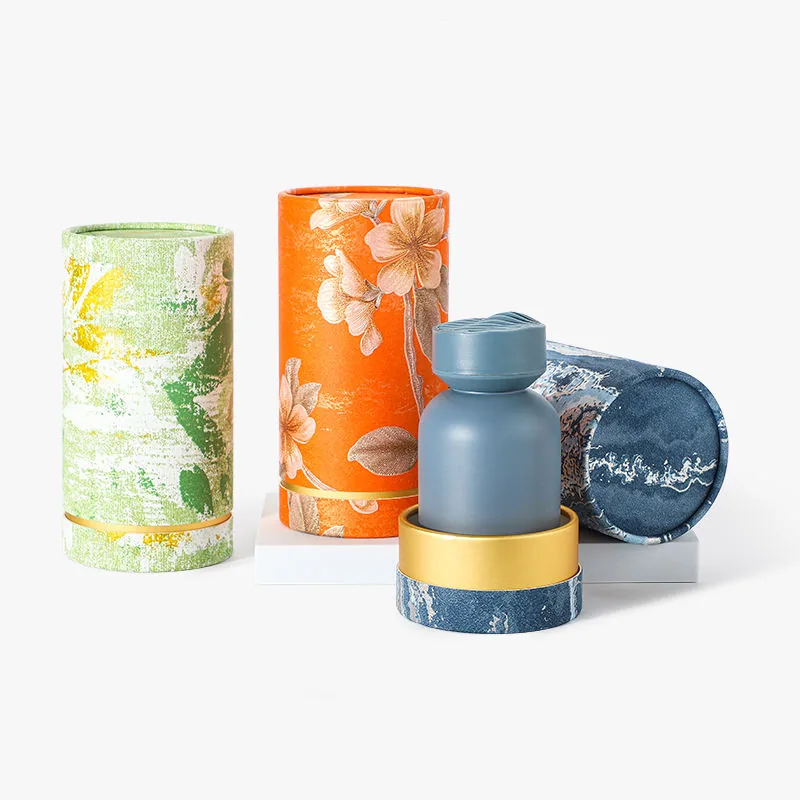
The documented product scope includes 접이식 상자, rigid setup boxes and paper tube boxes.
Its confirmed material options include kraft paper, coated/art paper, white card, greyboard and corrugated board. Specify the proposed material and construction for this order; the available material list does not establish that every combination suits the filled product.
Separate the primary container from the outer paper package in the purchase specification. The carton or presentation box may support, separate and identify the product; its approval does not establish that the formula is compatible with the bottle or that a closure prevents leakage. Give those checks to the team responsible for the filled product.
| 확인 지점 | 무엇이 잘못될 수 있나 | 확인 방법 | 승인 기록 | Before proceeding |
|---|---|---|---|---|
| Filled component envelope | A pump, cap or shoulder catches the opening or presses against a panel | Supply production-intent filled components and measure the widest points in the intended orientation | Dimensioned component drawing, internal pack size and an agreed fit range | Resolve conflicting dimensions before cutting the sample |
| Insert and contact points | A snug insert grips a label, decorative surface or fragile component | Load and remove the product; inspect where it touches the insert and whether it can rotate | Approved contact areas, orientation and removal method | Revise the insert if retention causes visible damage |
| Set contents | A leaflet, applicator or gift item changes how the pack closes | Assemble the complete set rather than checking the hero product alone | One packing diagram and contents list for each set version | Sample the whole set before fixing the dieline |
| Paper construction | The quoted construction differs from the one sampled | Record board identification, thickness or basis weight, wrap, closure and insert material | A specification tied to a labelled physical sample | Clarify any proposed material substitution in writing |
워크플로우의 경우 화장품 뷰티 포장 솔루션에서, send the actual component drawings with the intended shelf or delivery use. That lets the sample request describe a physical package instead of relying on a product photograph.
For the cosmetic manufacturer’s primary-product review, the FDA GMP inspection checklist covers raw materials, primary packaging, production and labelling. That reference does not demonstrate that this paper carton has passed its order-specific fit or print checks; keep the two approval records separate.
State the planned quantity by artwork version when defining this scope, and ask the supplier to confirm the minimum order for the specific construction. A combined total should not hide a version that has not been included in the sample or quotation.
Approve Artwork, Colour and Finishing Against Physical References
Approve the printed and finished appearance on identified references, with a separate owner for label text. A screen proof can locate a barcode or a foil layer, but it cannot show how the chosen stock and surface finish will look in the buyer’s hand.
ZHY’s confirmed printing options include CMYK offset and Pantone/PMS spot colour. State the proposed process in the order specification and approve the representative output.
Begin with one controlled artwork file. Give the dieline, text language, barcode, colour references and finishing layers a common revision identifier. Mark cut, crease, glue and print boundaries clearly so a late translation or logo adjustment does not enter production as an informal email attachment.
- Artwork and text: the brand’s designated approver supplies the released copy and market version. The printer returns a proof showing what will be printed. Compare every text panel, product identifier and version code before signing; an attractive print proof does not resolve an unapproved copy change. The requirement is the correct market text; the brand supplies that release and the printer supplies the matching proof. Wrong text can leave the buyer paying for a reprint, so return mismatches before print approval.
- Colour: agree a physical reference, viewing conditions and any measurement method before comparing results. Ask which parts of the proof represent the final stock and process. If a digital proof, drawdown or previous sample is only a guide, record that limitation and require the missing production-representative reference from the print supplier. The requirement is an agreed colour match; without a representative proof the buyer risks approving the wrong appearance and facing a bulk dispute.
- Foil, embossing and spot effects: use marked artwork plus a physical example to check position, edge definition and alignment with print. Fine lettering or features across a fold need inspection on an assembled sample. A flat image leaves those relationships unresolved. The finishing supplier should provide the assembled, marked example for the required placement and edge definition; misalignment may require rework, so return a failed example for correction.
- Surface and handling: compare the finished sample under the agreed lighting, then handle it as the packer and customer would. Note visible scuffing, fingerprint sensitivity or a finish that changes the intended colour. Record which reference controls acceptance rather than inventing a universal colour or abrasion limit. The requirement is the agreed visible surface condition. Have the supplier provide the finished reference and record a rejection or acceptance before production, because a buyer may otherwise receive a bulk finish it cannot use.
Keep the approved reference at the buyer and supplier ends, with a date and revision label. Use the 포장 맞춤화 및 다이라인 사양 route to resolve artwork layers and finish options before the release file is signed. Any changed stock, finish or printing route should return to the appropriate approval checkpoint.
Mirun’s golden-sample guidance calls for a sample identifier, approval date and named approvers. Use those identifiers to distinguish the accepted print-and-finish reference from an earlier mockup; retain the record with both parties’ physical references.
Inspect the Pack-Out Before Releasing Production
Judge the assembled package with its complete contents, then decide whether any remaining concern belongs to the paper package, the filled component or the shipping system. Inspecting an empty box alone leaves fit, removal and transport contact points untested.
Use the same contents, insert layout and packing sequence intended for the order. Watch the operator load the pack without forcing the product or bending a panel to make it close. Open it again and look for rubbing on the bottle, label, cap and printed surfaces. Record the starting condition so pre-existing component marks are distinguishable from marks created during packing.
- Does the closure work after loading? Check tuck engagement, lid alignment or any fastening feature on the filled sample. A closure that only works when empty should stop structural approval; send a marked sample or video showing the interference to the supplier.
- Can the product be removed as intended? Examine finger access, insert release and the direction of removal. Retention and removal are competing requirements: record the accepted method so the supplier does not tighten the fit to solve movement and create a new opening problem.
- What happens to the pack inside its shipper? Assemble the planned outer carton with its actual count, orientation, dividers and cushioning. Agree the distribution checks and acceptance criteria for that complete system with the responsible logistics or testing specialist. A presentation sample alone cannot establish parcel protection.
- Will inspection use the same reference? Give the inspector the approved sample, defect examples, specified measurement points and applicable order revision. Agree the inspection scope and disposition rules before production; do not treat an unspecified sampling level as a guarantee for every unit.
그 품질 관리 프로세스 is the right discussion point for the proposed inspection record and checkpoints. The buyer still needs order-specific evidence: observations, photographs, measurements and a clear accepted or rejected result against the agreed specification.
Put Red Flags and Changes on Hold
Hold an order when the evidence and the released specification disagree. A missing revision, unexplained substitute or unresolved sample defect needs a disposition before the affected production step, even if the overall package looks acceptable.
| Warning sign | 중요한 이유 | Evidence to examine | Hold or release rule | Required follow-up |
|---|---|---|---|---|
| Several files are called “final” | Different teams may print or inspect different versions | Compare the artwork identifier on the quote, proof, sample and order | Hold artwork release until one version supersedes the rest | Issue a controlled file list and withdraw the obsolete files |
| The sample stock or finish differs from the quote | Appearance and folding behaviour may not represent the ordered pack | Compare the sample label and material description with the quotation | Hold appearance or structural approval for the unrepresented features | Obtain the missing representative proof or explicitly limit the approval |
| A defect is accepted verbally | The exception can become an argument during bulk inspection | Keep a marked example, location and written disposition | Release only the stated exception for the stated quantity or revision | Name who accepted it and whether rework is required |
| A material or construction substitute is proposed after approval | The original fit and finish evidence may no longer apply | Identify every affected component, drawing and check | Hold the affected step until the change is evaluated | Re-sample or re-check the impacted features before release |
| A reorder uses an old sample without checking changes | Filled products, artwork and paper specifications may have moved independently | Compare the new SKU list and files with the retained order record | Reuse approval only for features confirmed unchanged | Create a new revision for the changes and keep the prior record |
A useful change request names the old requirement, proposed replacement, affected quantity, reason, cost or schedule consequence, and the evidence needed to accept it. Assign an approver for the change and an owner for withdrawing obsolete instructions. Where the effect is uncertain, resolve it with a sample or check rather than treating silence as consent.
This hold list is intentionally selective. It does not make every cosmetic blemish a shipment rejection. It makes departures from the agreed acceptance basis visible while the buyer can still decide whether to rework, accept a defined exception or stop.
If a supplier cannot identify the material used or explain a changed production process, hold approval until its production team provides a traceable answer. That response is a capability check tied to the actual discrepancy, rather than a general factory score.
Build One Cosmetics Packaging Release Record
Before sending a production instruction, put the approved drawings, artwork, sample references and inspection requirements into one order record. An inspector or production coordinator should be able to identify the controlling version without reconstructing an email thread.
Use the written quote inputs to collect commercial inputs, then add the approval evidence specific to this cosmetic pack. Keep price assumptions separate from acceptance evidence: a quotation describes the offer, while the released specification and references describe what the buyer has approved.
- Which SKU and market version are being made? Include the filled-component version, set contents, quantity by artwork, approved text file and packing orientation. Ask the supplier to repeat those identifiers on its order confirmation; unresolved mismatches should stay open.
- Which physical references control fit and appearance? List sample identifiers and the features each sample represents. Keep any limitations visible, such as an unprinted structural sample or a print proof made on a substitute stock.
- What will the bulk inspection actually compare? Specify dimensions and measurement locations, visible defect categories, agreed acceptance criteria and the evidence the buyer will receive. Ask who records the result and who can authorize a disposition.
- What remains conditional? Name each pending test, artwork sign-off or changed component, with its owner and required evidence. Do not convert “to be confirmed” into permission to produce the affected part.
- What must return for approval on a reorder? List changes to artwork, filled components, board, wrap, finish, insert, packing count and delivery route. Preserve accepted deviations as exceptions tied to their order, rather than silently carrying them into every future run.
Ask for a written acknowledgement of the release record before the affected work begins. Where timing depends on an outstanding approval, obtain the revised schedule with that dependency stated. This creates a practical handoff: the supplier receives a defined package to make, and the buyer retains a usable basis for checking it.
For cosmetic packaging order, use 맞춤형 포장 솔루션 견적을 비교하기 전에 아트워크 개정판, 실물 샘플, 생산 검증본, 책임 RFQ 담당자를 일치시키십시오.
결론적으로
Release the order when the filled-product fit, artwork, physical appearance references and bulk-check requirements all point to the same packaging revision. Keep an unresolved mismatch on hold at the step it affects; a good-looking sample cannot settle a different material, missing text approval or untested pack-out.
The most useful handoff is compact: one drawing set, one released artwork list, identified samples, agreed acceptance criteria and named owners for any remaining condition. Retain that set for incoming inspection and future reorders. When an input changes, identify the affected features and obtain the corresponding approval again.
For a project review, send ZHY the filled-component details, intended package scope, quantities by version and the approval evidence already available through the 화장품 뷰티 포장 솔루션에서 page. State the unanswered fit, print or packing question so the response can address the actual order decision.
자주 묻는 질문
What should a buyer lock before requesting a cosmetics packaging quote?
Lock the filled product or its dimensioned production-intent drawing, pack contents, target quantity by version and intended use. State whether the request covers an individual carton, a presentation set, inserts, a shipper or the complete system. Mark open choices explicitly so suppliers quote the same scope instead of assuming different constructions.
Who should approve cosmetic labelling on the paper package?
Name a brand-side owner responsible for the released text and market version, and involve the appropriate regulatory adviser where needed. The printer can check the supplied file against the approved proof and agreed layout; that approval should not be treated as a legal review of the product information. Keep text ownership separate from print-execution approval. Conflicting approvals can create reprint cost or shipment delays, so resolve the released version before printing.
How should colour and finishing be approved before production?
Use identified physical references suited to the final stock, printing and finish, with agreed viewing and acceptance conditions. Record what each proof represents and what it leaves unresolved. Check the assembled pack where foil, print or embossing crosses a fold, then retain the accepted reference for bulk comparison. Any changed process or substrate needs review of the affected approval.
RFQ 인계: 검토를 위해 사양을 보내주세요..


포장 질문하기